Visual attention is crucial for identifying the most salient regions in an image. However, when the objective involves higher-level visual tasks, such as target object detection, it becomes necessary to incorporate high-level information to guide the search for the target. This process, known as top-down saliency detection, leverages guidance sources like contextual information and target features to identify regions of interest that are more likely to contain the target object. In this paper, we propose a model that generates top-down saliency maps by adjusting the feature map weights of a universal visual attention model based on contextual information. While contextual information has traditionally been used to understand the gist of an image, it has not been integrated into the creation of saliency maps for target object detection. We demonstrate that incorporating contextual information into a visual attention model enhances target object detection performance. The proposed model, tested on six datasets, shows significant improvements in detecting target objects compared to models that do not utilize contextual information.
Over the last two decades, salient object detection (SOD) has received increasingly more attention due to its ability to handle complex natural scenes and its various real-world applications. The performance of an SOD method mainly relies on saliency features that are extracted with different levels of information. Low-level saliency features are often effective in simple scenarios, but they are not always robust in challenging scenarios. With the recent prevalence of high-level saliency features such as deep convolutional neural networks (CNNs) features, a remarkable progress has been achieved in the SOD field. However, CNN-based constructed high-level features unavoidably drop the location information and low-level fine details (e.g., edges and corners) of salient object(s), leading to unclear/blurry boundary predictions. In addition, deep CNN methods have difficulties to generalize and accurately detect salient objects when they are trained with limited number of images (e.g. small datasets). This paper proposes a new automatic feature construction method using Genetic Programming (GP) to construct informative high-level saliency features for SOD. The proposed method takes low-level and hand-crafted saliency features as input to construct high-level features. The constructed GPbased high-level features not only detect the general objects, but they are also good at capturing details and edges/boundaries. The GP-based constructed features have better interpretability compared to CNN-based features. The proposed GP-based method can potentially cope with a small number of samples for training to obtain a good generalization as long as the given training data has enough information to represent the distribution of the data. The experiments on six datasets reveal that the new method achieves consistently high performance compared to twelve state-of-the-art SOD methods.
The human vision system (HVS) pays more attention to the moving objects than the static areas. Due to this fact, motion becomes one of the important features of the visual attention model. In this paper, we have integrated motion features with the visual computational model to detect salient moving objects. To implement this objective, several sub-features such as colour, colour change between different frames, optical flow estimation and background subtraction are explored and integrated using arithmetic operation. Here, pyramidal and non- pyramidal approaches are used to analyse these features. Our study concludes that multiplication is a better operation for feature integration. The experiments revealed that the individual colour feature gives low precision-recall scores. However, integrating this colour feature with other features has positive impact on the performance of detecting moving salient objects.
Salient Object Detection (SOD) aims to model human visual attention system to cope with the complex natural scene which contains various objects at different scales. Over the past two decades, a wide range of saliency features have been introduced in the SOD field, however feature selection has not been widely investigated for selecting informative, non-redundant, and complementary features from the existing features. In SOD, multi-level feature extraction and feature combination are two fundamental stages to compute the final saliency map. However, designing a good feature combination framework is a challenging task and requires domain-expert intervention. In this paper, we propose a genetic programming (GP) based method that is able to automatically select the complementary saliency features and generate mathematical function to combine those features. The performance of the proposed method is evaluated using four benchmark datasets and compared to nine state-of-the-art methods. The qualitative and quantitative results show that the proposed method significantly outperformed, or achieved comparable performance to, the competitor methods.
Salient Object Detection (SOD) methods have been widely investigated in order to mimic human visual system in selecting regions of interest from complex scenes. The majority of existing SOD methods have focused on designing and combining handcrafted features. This process relies on domain knowledge and expertise and becomes increasingly difficult as the complexity of candidate models increases. In this paper, we develop an automatic feature combination method for saliency features to relieve human intervention and domain knowledge. The proposed method contains three phases, two Genetic Programming (GP) phases to construct foreground and background features and a spatial blending phase to combine those features. The foreground and background features are constructed to complement each other, therefore one can improve other's shortcomings. This method is compared with the state-of-the-art methods on four different benchmark datasets. The results indicate the new automatic method is comparable with the state-of-the-art methods and even improves SOD performance on some datasets.
Understanding the visual quality of a feature map plays a significant role in many active vision applications. Previous works mostly rely on object-level features, such as compactness, to estimate the quality score of a feature map. However, the compactness is leveraged on feature maps produced by salient object detection techniques where the maps tend to be compact. As a result, the compactness feature fails when the feature maps are blurry (e.g., fixation maps). In this paper, we regard the process of estimating the quality score of feature maps, specifically fixation maps, as a regression problem. After extracting several local, global, geometric, and positional characteristic features from a feature map, a model is learned using a random forest regressor to estimate the quality score of any unseen feature map. Our model is specifically tailored to estimate the quality of three types of maps: bottom-up, target, and contextual feature maps. These maps are produced for a large benchmark fixation data set of more than 900 challenging outdoor images. We demonstrate that our approach provides an accurate estimate of the quality of the abovementioned feature maps compared to the groundtruth data. In addition, we show that our proposed approach is useful in feature map integration for predicting human fixation. Instead of naively integrating all three feature maps when predicting human fixation, our proposed approach dynamically selects the best feature map with the highest estimated quality score on an individual image basis, thereby improving the fixation prediction accuracy.
The human vision system has the ability to detect visual saliency extraordinarily quickly and reliably. In computer vision, visual saliency object detection aims to replicate the mechanism of human visual system in selecting regions of interest from complex scenes. Salient object detection splits the image into two regions, i.e., foreground salient object and background. Different features of the underlying image might be useful for identifying the two regions. In this study, we develop a bottom-up method to detect salient objects using informative features and a convex-hull-based center prior. We explore complementary characteristics of features and develop one effective way to integrate those features. The performance of the new method is compared with seven state-of-the-art methods on three different benchmark datasets. The quantitative (e.g, precision-recall curve, receiver operating characteristic (ROC) curve, and F -measure) and qualitative results indicate the new method improves salient object detection (SOD)performance.
Humans and many animals can selectively sample necessary part of the visual scene to carry out daily activities like foraging and finding prey or mates. Selective attention allows them to efficiently use the limited resources of the brain by deploying sensory apparatus to collect data believed to be pertinent to the organisms current situation. Robots operating in dynamic environments are similarly exposed to a wide variety of stimuli, which they must process with limited sensory and computational resources. Computational saliency models inspired by biological studies have previously been used in robotic applications, but these had limited capacity to deal with dynamic environments and have no capacity to reason about uncertainty when planning their sensor placement strategy. This paper generalises the traditional model of saliency by using a Kalman filter estimator to describe an agent’s understanding of the world. The resulting modelling of uncertainty allows the agents to adopt a richer set of strategies to deploy sensory apparatus than is possible with the winner-take-all mechanism of the traditional saliency model. This paper demonstrates the use of three utility functions that are used to encapsulate the perceptual state that is valued by the agent. Each utility function thereby produces a distinct sensory deployment behaviour.
Different approaches to detecting objects have used either perceptionally nonuniform or human perception based colour spaces to mimics human vision in machines. In this paper, we have compared nonuniform RGB derived opponencies with the HSV colour space. The main motivation about this particular comparison is to improve the quality of saliency detection in challenging situations such as lighting change. Here, Precision-Recall curves are used to compare the colour spaces using bottom-up pyramidal and top-down non-pyramidal saliency models. Our study concludes that if we combine the Saturation-Value or Hue-Value channels then this improves the detection of salient objects and gives a higher Precision-Recall curve. We have also shown in the paper that the RGB colour space gives a low precision score as it detects the object using the colour information present in an image.
The generation of a sky model for calibration of Square Kilometre Array observations requires a fast method of automatic point source detection and characterisation. In recent years, point source detection in two-dimensional images has been implemented by using several thresholding approaches. In the first phase of the SKA we will need a fast implementation capable of dealing with very large images (80,000 x 80,000 pixels). While the underlying algorithms scale suitably with image size, the present implementations do not. We make some comments on the pertinent trade-offs for scaling these implementations to SKA-levels.
When completed the Square Kilometre Array (SKA) will feature an unprecedented rate of image generation. While previous generations of telescopes have relied on human expertise to extract scientifically interesting information from the images, the sheer data volume of the data will now make this impractical. Additionally, the rate at which data are accrued will not allow traditional imaging products to be stored indefinitely for later inspection meaning there is a strong imperative to discard uninteresting data in pseudo-real time. Here we outline components of the SKA science analysis pipeline being developed to produce a series of data products including continuum images, spectral cubes and Faraday depth spectra. We discuss a scheme to automatically extract value from these products and discard scientifically uninteresting data. This pipeline is thus expected to give both an increase in scientific productivity, and offers the possibility of reduced data archive size producing a considerable saving.
Multiple object tracking is a challenging research problem in which the path of multiple objects must be estimated from image sequences. We have developed a visual saliency based object tracker that alternates attention from one target to another using a measure of current uncertainty and the Kalman filter. We present results showing the effectiveness of the tracker in reducing the mean square error. By taking the measurements of the location, the tracker using the Kalman filter drives the uncertainty to a low level when it pays attention to an object. The uncertainty of the object grows to a high level when the tracker shifts attention to another object having high uncertainty from the previous frame. Our proposed tracking approach is tested with different scenarios and shows effective performance in shifting attention to the region that represents a scene.
A number of pro-superpixel based saliency models have recently been proposed, which segment the image into small perceptually homogeneous regions before saliency computation. Such approaches ignore important object properties, resulting in inappropriate object annotations and considerably different saliency assignment to the various regions of an object. Although previous techniques employ multi-scale saliency maps in an attempt to rectify this problem, it becomes difficult to retain the characteristics of proto-objects after the first stage of processing. We introduce matting components based saliency to address the problems of inappropriate object annotations and inappropriate saliency assignment to object regions. The matting components account for proto-object properties by employing object aware spectral segmentation. To complement the matting component based saliency, we also employ the smallest eigenvectors of a matting Laplacian matrix. Color spatial distribution features are employed to capture global relationships at the pixel-level and assist the process of matting components based saliency computation. A novel joint optimization framework is introduced to fuse the features and learn important associated parameters. The contributions of the proposed approach are two-fold. The first contribution is the introduction of proto-objects aware spectral segmentation to obtain an accurate foreground saliency. The second contribution is the joint optimization of important parameters in conjunction with learning feature importance. In contrast to superpixel based approaches, the proposed model is able to completely annotate salient objects and assign similar saliency to various regions of the salient object. Moreover, the proposed approach shows robust and efficient performance across five challenging benchmark datasets when compared with 10 recently proposed state-of-the-art saliency detection models.
Target detection using attention models has recently become a major research topic in active vision. One of the major problems in this area of research is how to appropriately weight low-level features to get high quality top-down saliency maps that highlight target objects. Learning of such weights has previously been done using example images having similar feature distributions without considering contextual information. In this paper, we propose a model that we refer to as the top-down contextual weighting (TDCoW) that incorporates high-level knowledge of the gist context of images to apply appropriate weights to the features. The proposed model is tested on four challenging datasets, two for cricket balls, one for bikes and one for person detection. The obtained results show the effectiveness of contextual information for modelling the TD saliency by producing better feature weights than those produced without contextual information.
Salient object detection is the task of automatically localizing objects of interests in a scene by suppressing the background information, which facilitates various machine vision applications such as object segmentation, recognition and tracking. Combining features from different feature-modalities has been demonstrated to enhance the performance of saliency prediction algorithms and different feature combinations are often suited to different types of images. However, existing saliency learning techniques attempt to apply a single feature combination across all image types and thus lose generalization in the test phase when considering unseen images. Learning classifier systems (LCSs) are an evolutionary machine learning technique that evolve a set of rules, based on a niched genetic reproduction, which collectively solve the problem. It is hypothesized that the LCS technique has the ability to autonomously learn different feature combinations for different image types. Hence, this paper further investigates the application of LCS for learning image dependent feature fusion strategies for the task of salient object detection. The obtained results show that the proposed method outperforms, through evolving generalized rules to compute saliency maps, the individual feature based methods and seven combinatorial techniques in detecting salient objects from three well known benchmark datasets of various types and difficulty levels.
Salient object detection is typically accomplished by combining the outputs of multiple primitive feature detectors (that output feature maps or features). The diversity of images means that different basic features are useful in different contexts, which motivates the use of complementary feature detectors in a general setting. However, naive inclusion of features that are not useful for a particular image leads to a reduction in performance. In this paper, we introduce four novel measures of feature quality and then use those measures to dynamically select useful features for the combination process. The resulting saliency is thereby individually tailored to each image. Using benchmark data sets, we demonstrate the efficacy of our dynamic feature selection system by measuring the performance enhancement over the state-of-the-art models for complementary feature selection and saliency aggregation tasks. We show that a salient object detection technique using our approach outperforms competitive models on the PASCAL VOC 2012 dataset. We find that the most pronounced performance improvements occur in challenging images with cluttered backgrounds, or containing multiple salient objects.
In computational visual attention systems, various feature maps are constructed and integrated to yield the final fixation map. These maps highlight interesting regions within an image that are deemed salient according to some task. According to Ehinger et al. [1], by combining three types of feature maps, the performance is boosted in terms of predicting where human fixate when searching for pedestrians. Although this procedure is effective, it lacks a dynamic approach. All three feature maps are computed for each image, resulting in efficiency performance degradation. In addition, combing all the feature maps does not always give the optimum performance for each image in the dataset. Hence, in this paper, we propose a dynamic way of integrating these feature maps on image basis. Our proposed approach is based upon estimating a quality score of a feature map using a regression model. We show that when estimating a quality score of a feature map accurately, it is possible to dynamically select appropriate feature maps to achieve better fixation prediction accuracy and efficiency than that achieved by integrating all feature maps [1].
Measuring distances accurately can be costly. To overcome complexity and cost of distance measurement equipment modified monocular optical system is proposed which uses only commonly available hardware. Pattern is printed on the marker to improve distance measurement accuracy. Results of simulations of proposed system show two orders of magnitude possible improvement in measurement precision.
In robotics, vision based navigation techniques are desirable as cameras are relatively cheap sensors that provide a rich range of information about an environment. However, visual based navigation is still hindered by place recognition performance in long time navigation situations. For example, the comparison of locations between day and night or sun and rain are tasks where common feature extraction techniques fail. Humans are considered capable of long term visual navigation. As part of this system humans fixate on various locations to gather salient visual information from a scene. It is hypothesised by mimicking human fixation, place recognition performance can be improved. This paper presents the initial investigation towards utilising a state-of-the-art vision attention model to locate salient regions within an image useful for place recognition performance. The preliminary results demonstrate that the visual attention model can reduce the total amount of the image used by 18% and still achieve similar place recognition performance to utilising the whole image. The results have also shown good place recognition performance with only 45% of the image, achieving 53% accuracy compared with the best performance of existing techniques 60% with 100% of the image.
 Will Neil Browne合作论文数Victoria University of Wellington12
 Mengjie Zhang (Meng)合作论文数School of Engineering and Computer Science, Victoria University of Wellington;Centre for Data Science and Artificial Intelligence, Victoria University of Wellington11
 Syed S. Naqvi合作论文数9
 Jesper Munch合作论文数The University of Adelaide7
 Marcus Frean合作论文数Victoria University of Wellington7
 Harith Al-Sahaf合作论文数School of Engineering and Computer Science, Victoria University of Wellington6
 Damien Mudge合作论文数6Ibrahim M. H. Rahman合作论文数5Mw Hamilton合作论文数5
 John Veitch合作论文数Institute for Gravitational Research, School of Physics and Astronomy, University of Glasgow5
 Aisha Ajmal合作论文数School of Engineering and Computer Science, Victoria University of Wellington4
 Shima Afzali合作论文数Corresponding author.4
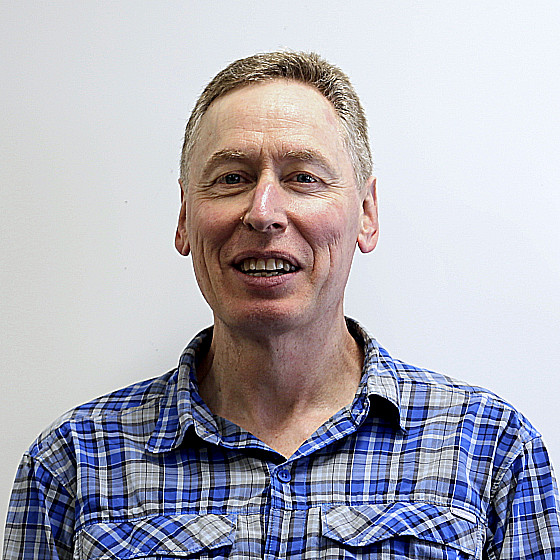 Malcom Gray合作论文数Centre for Gravitational Astrophysics, Research School of Physics, College of Science, The Australian National University4
 Bing Xue合作论文数School of Engineering and Computer Science, Victoria University of Wellington;Center for Data Science and Artificial Intelligence, Victoria University of Wellington4
 Melanie Johnston-Hollitt合作论文数Curtin Institute for Data Science, Curtin University;School of Electrical Engineering, Computing and Mathematical Sciences, Faculty of Science and Engineering, Curtin University3
 Susan Scott合作论文数Physics Education Centre, Research School of Physics, College of Science, Australian National University;Centre for Gravitational Astrophysics, Australian National University3
 David McClelland合作论文数Centre for Gravitational Astrophysics, Research School of Physics, Australian National University3
 David Blair合作论文数School of Physics, Maths and Computing, The University of Western Australia3D. Hosken合作论文数3John Winterflood合作论文数3M. Johnston-Hollitt合作论文数School of Maths & Physics;University of Tasmania;School of Maths & Physics, University of Tasmania3
 David Ottaway合作论文数School of Physics, Chemistry and Earth Sciences, Faculty of Sciences, Engineering and Technology, The University of Adelaide;Institute for Photonics and Advanced Sensing, The University of Adelaide3A. Brooks合作论文数2A Searle合作论文数2J S Jacob合作论文数2
 Muhammad Iqbal合作论文数2Benjamin S Sheard合作论文数2B Cusack合作论文数2
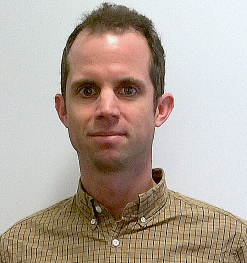 Kirk McKenzie合作论文数Department of Quantum Science, Research School of Physics, College of Science, The Australian National University2de Vine, G.合作论文数2Bhakta, A.合作论文数2Siamak Dehghan合作论文数2
 Daniel Shaddock合作论文数Liquid Instruments2D Paget合作论文数2
 Bram Slagmolen合作论文数Centre for Gravitational Astrophysics, Research School of Physics, Australian National University2Martin Ostermeyer合作论文数2Anna Friedlander合作论文数Victoria University of Wellington2Ahmed Sheikh Deeb合作论文数2C Mow-Lowry合作论文数1CN Zhao合作论文数1BJJ Slagmolen合作论文数1A Lun合作论文数1K T Lee合作论文数1M Hamilton合作论文数1J-C. Dumas合作论文数1helmuth thomas合作论文数1Jeff Foster合作论文数Sch Phys Sci, Univ Tasmania1Tony Butler-Yeoman合作论文数Victoria University of Wellington1P. Veitch合作论文数1




