Line balance in a company's production needs to be considered so that the products produced meet production targets. PT Alam Maisi is a bottled drinking water (AMDK) industry that often has problems at work stations. Where there is a production line that is piling up. For that, a method is needed to help balance the production line. To analyze this problem, the Rank Positional Weight (RPW) method is used, this method is used to identify failures in a production process and determine the weights of the production process. From the calculation results, it is known that there is a shortage of workers at the inspection work station. There needs to be an arrangement for adding workers to the inspection work station so that production targets can be met. Based on the results of the production line balancing, with the Rank Positional Weight (RPW) method, by improving the production line which previously had 5 workstations to 4 workstations. Where the path efficiency value, which was previously 47%, increased to 97%, can reduce the balance delay, which was previously 52%, decreased by 2%, can reduce the smoothness index, which was previously 103.19, decreased by 50.39, and reduce idle time, which was previously 183.42, decreased by 88.4.
This study investigates governance and operational challenges within Indonesia's halal ecosystem, focusing on sustainable value creation for halal-certified Micro, Small, and Medium Enterprises (MSMEs). Using a qualitative case study approach, the research involved 15 semi-structured interviews and field observations with MSME owners, certification bodies, local government officials, and religious leaders. Thematic analysis revealed three core findings: (1) institutional fragmentation and role ambiguity, (2) diverse interpretations of halal and tayyib principles, and (3) limited digital infrastructure for traceability and compliance. The study recommends an integrated halal governance platform to bridge regulatory, cultural, and technological gaps. Practical policy suggestions include localized certification support, digital capacity building, and inclusive stakeholder forums. These insight Halal ecosystem; MSMEs; governance; qualitative case study; Indonesia; sustainability; digital infrastructure; policy integrations contribute to halal value chain literature in emerging economies and propose pathways to strengthen sustainable halal development in Indonesia.
Panti Asuhan Al-Khaerat merupakan tempat yang pada penduduk. Sehingga seringkali bermasalah dengan sanitasi, kebersihan lingkungan dan Kesehatan. Penghuni Panti Asuhan Al-Khaerat masih minim pengetahuan akan pentingnya menjaga kebersihan lingkungan dan pentingnya memilah sampah sesuai dengan jenis sampahnya. Terlebihnya mereka tidak memiliki fasilitas yang memadai untuk memilah sampah-sampah tersebut seperti tempat sampah yang layak dan informatif. Para kader juga tidak pernah mendapatkan penyuluhan lingkungan sehingga masih kurang kesadaran peduli lingkungannya. Petugas pengangkut sampah yang seharusnya rutin dua kali dalam satu minggu datang mengangkut sampah di Panti Asuhan Al-Khaerat, sering kali hanya mengangkut satu kali seminggu bahkan satu kali dalam dua minggu. Sehingga banyak sampah membusuk yang bercampur dan menumpuk di Panti Asuhan Al-Khaerat yang memberikan dampak buruk terhadap Kesehatan maupun kenyamanan penghuni dan tetangga. Program PKM ini bertujuan untuk meningkatkan kepedulian kader terhadap lingkungan, juga meningkatkan pengetahuan serta keterampilan kader dalam memilah dan mengelola limbah organik dan anorganik. Sehingga dengan demikian diharapkan salah satu luaran PKM ini adalah adanya peningkatan pengetahan dan keterampilan dari kader Panti Asuhan Al-Khaerat dalam pemilahan sampah.
Bread is a processed food made from wheat flour which is considered practical and filling. Roti Maros Sanggalea Group, Roti Maros Sanggalea Group is a trading business with processed products in the form of wet bread. The type of moist bread that is the flagship of Roti Maros Sanggalea Group is Maros bread. However, there has been a decline in demand for Maros bread over the past year. This decline can be seen in Maros bread production for the period January to March 2023. The decline in sales each month requires producers to develop their products well so they can always compete in the market. Therefore, this research aims to provide suggestions for attributes that consumers prioritize for Maros Sanggalea Group Roti products using the QFD (Quality Function Deployment) method to improve the quality of Maros bakery products by identifying consumer needs and linking them to improvements in production techniques. The research results show that based on the priority level, the proposed improvement is by completing information about the product on the packaging, as well as adding a halal logo to the packaging, the price given to consumers must be in accordance with the quality of the product both in terms of ingredients and taste. Make the products being marketed easy for consumers to remember, for example uniquely designed packaging or distinctive flavors.
As halal tourism gains momentum, the tourist destination of Maros, Indonesia, with its predominantly Muslim population and stunning natural beauty, presents a unique opportunity. This paper explores the potential of halal tourism in Maros, exploring the benefits, challenges and main considerations for sustainable development. Analyzing Maros' unique assets with a variety of halal-friendly attractions and government support, this paper highlights the potential of Maros and its surroundings, such as Bonto Bunga village, Moncongloe sub-district, Maros Regency, to serve Muslim tourists looking for experiences according to their religion. However, there are challenges such as standardization, human resource development and infrastructure that need to be overcome. Recommendations focus on stakeholder collaboration, community empowerment, environmental sustainability, and targeted marketing of local products. By navigating these aspects, Maros and especially Bonto Bunga village will be able to open the potential of halal tourism, contribute to economic development, foster cultural understanding, and offer satisfying travel experiences while still upholding Islamic religious values and prioritizing responsible practices. answer.
Perekonomian Indonesia tidak bisa dilepaskan dari peran penting usaha mikro, kecil dan menengah (UMKM). Tidak diragukan lagi peran UMKM ini, baik di saat krisis moneter, saat pandemi maupun dalam menopang pertumbuhan ekonomi. Karena itu pemerintah terus memberikan dukungan bagi pengembangan UMKM, salah satunya melalui kemudahan perizinan. Melalui kemudahan perizinan merupakan upaya menciptakan iklim usaha yang kondusif khususnya bagi UMKM yang mempunyai sumberdaya terbatas. Tujuan dari Kegiatan Pengabdian untuk memberikan penyuluhan NIB dan pendaftaran sertifikasi halal pelaku UMKM. Metode ini menggunakan pendekatan partisipasi berperan serta kepada masyarakat sasaran sebagai subjek dan objek penyuluhan. Salah satu program yang ditempuh dengan menciptakan lingkungan yang kondusif bagi usaha kecil dan menengah, sehingga mereka dapat tumbuh dan berkembang menjadi bisnis yang kuat dan mandiri. Berbagai kegiatan pemberdayaan masyarakat telah dilakukan oleh pemerintah bekerjasama dengan pihak perguruan tinggi untuk program Nomor Izin Berusaha. Dengan memiliki NIB maka pelaku UMKM memiliki perlindungan hukum dan kelayakan beroperasi dan persyaratan untuk pengurusan izin dan legalitas lainnya. Kegiatan yang dilakukan dalam pengabdian ini adalah Sosialisasi Dan Pembuatan NIB Serta Pendaftaran Sertifiasi Halal Pelaku UMKM Di Kelurahan Lanna, Kecamatan Parangloe, Kabupaten Gowa. Dengan mengikuti kegiatan ini diharapkan para ibu-ibu pelaku UMKM yang tergabung dalam Ibu-Ibu PKK memahami pentingnya memiliki sertifikat NIB dan Sertifikat Halal bagi keberlanjutan UMKM. Kata kunci: Halal, Sertivikasi, UMKM
Download This Paper Open PDF in Browser Add Paper to My Library Share: Permalink Using these links will ensure access to this page indefinitely Copy URL Copy DOI
Dalam dua dekade terakhir, komunitas petani di Gombak telah terorganisir dengan nama MISA, yang berhasil mencapai sejumlah petani, institusi, organisasi sosial, penduduk kota, dan komunitas usaha menuju keberlanjutan. Malaysia Institut Pertanian Berkelanjutan (MISA) telah melakukan berbagai upaya lingkungan dan kegiatan agroekologi selama sepuluh tahun terakhir. Tujuan dari artikel ini adalah untuk mempromosikan pertanian berkelanjutan melalui pendidikan, ilmu pengetahuan, dan kesejahteraan. Metode pelaksanaannya dimulai dengan tahapan persiapan, yakni melakukan observasi awal di lokasi mitra untuk mengidentifikasi masalah dan potensi yang ada guna menentukan kegiatan pengabdian masyarakat; menyusun kesepakatan kegiatan pengabdian dengan mitra berdasarkan masalah dan solusi yang dipilih. Temuan dari pengabdian ini menunjukkan bahwa komunitas yang menjelajahi praktik agroekologi melalui pengalaman pribadi petani kecil menghasilkan komunitas yang solid. Agroekologi dipandang sebagai cara untuk mencapai kedaulatan pangan, di mana penguasaan benih tetap berada di tangan petani dan lahan dimanfaatkan secara berkelanjutan secara ekologis. Kesimpulannya, pertanian berkelanjutan di Komunitas Gombak mendorong sejumlah orang dan organisasi melalui pendidikan, ilmu pengetahuan, dan kesejahteraan dengan sistem Agroekologi. Mereka memanfaatkan lahan sempit yang ada untuk menghasilkan produk pertanian bagi kesejahteraan masyarakat sekitar dengan konsep konservasi lahan dan penggunaan lahan yang ramah lingkungan.
Download This Paper Open PDF in Browser Add Paper to My Library Share: Permalink Using these links will ensure access to this page indefinitely Copy URL Copy DOI
Service quality plays a crucial role in shaping the public's positive perception. This study applies the "Importance and Performance Analysis (IPA)" method to assess five dimensions of service quality at the Regional Revenue Agency of Jeneponto Regency, namely physical evidence, reliability, responsiveness, assurance, and empathy. Data were collected through interviews, observations, and questionnaires. The results show that the average service quality score of 0.9910 is still below customer expectations and requires improvement, especially in the reliability dimension with the largest gap (-0.4688). The attributes most influencing customer satisfaction include quick response, clarity of regulations, information security, physical facilities, reliable assistance, and employees' concern for individual taxpayer situations
This study aims to assess the success of a halal-conscious community model based on the Masjid in Makassar by examining the level of awareness and satisfaction of local communities and Muslim tourists. The quantitative method with a survey approach was used, and 300 local community respondents and 200 Muslim tourist respondents were randomly selected as the study sample. The data were collected using questionnaires that consist of questions about respondent characteristics, the level of awareness and concern for halal products and services, and satisfaction and recommendations for the halal-conscious community model. The collected data were analyzed using descriptive statistical and factor analysis methods to identify the factors that affect the success of the halal-conscious community model. The validity and reliability of the research instruments were tested using content validity and Cronbach's alpha method, respectively. The results showed that the local community respondents had a high level of awareness and concern for halal products and services, with an average score of 3.8 out of 5, indicating that the halal-conscious community model has successfully increased the awareness of local communities. Furthermore, Muslim tourists showed high levels of satisfaction with the halal-conscious community model, with an average score of 4.1 out of 5, indicating that the model has provided halal products and services that meet their needs. In conclusion, the halal-conscious community model based on the Masjid in Makassar has been successful in increasing the awareness and satisfaction of both the local community and Muslim tourists
Since the beginning of industrial development, humans have conducted many studies aimed at increasing factory productivity. In its development, along with the increasing qualifications and preferences of consumers for industrial products, many factories then employ researchers and carry out many Research and Development activities aimed at not only increasing productivity but also at the same time fulfilling consumers' desires as closely as possible. Consumer preferences in various performance measures such as design, product specifications, and delivery, utilization. In this context, the factory must design a production system in such a way that these requirements can be met. In the era of the Industrial Revolution 4.0, the trend that occurred was the fulfillment of design qualifications, specifications, delivery and utilization, as well as special needs for certain segments such as being environmentally friendly, friendly for users with disabilities, and currently worldwide. also Muslim friendly in terms of Halal requirements or criteria. There are countless studies examining various production systems with these specific objectives. This study will describe the extent of research work related to Halal characterization in industrial systems. This research is a review that will summarize, explain, and describe various research results related to the implementation of Halal in the production system, both food, beverages and medicines. In analyzing the relevant literature, we use destructive and inductive analysis by utilizing several analytical tools that we think can illustrate and map the results of the Halal research works.
The global halal market is estimated to be valued at USD2.3 trillion covering both food and non-food sectors. The halal industry ecosystem is dynamic and encompasses business networks, institutions, government and non-government agencies. However, the recent case of the non-halal meat cartel demonstrates a blatant abuse of the halal food industry. Halal governance in Malaysia is complex since it is a subject matter within the state jurisdiction under the administration of Islamic matters. The legal framework regulating the halal food industry has its weaknesses and strengths that may affect the rights of consumers in the event of halal food abuse. Thus, an effective legal framework and enforcement is needed to promote the halal industry as an important source of economic growth (SDG 12). The finding highlights that the halal food industry ecosystem promotes sustained economic growth and technological innovation. Monitoring and enforcement of halal labelling need to be enhanced, since the halal label is a powerful marketing medium that symbolizes healthy, good quality, clean, high-quality products and, most importantly, sharia compliance.
Today, earthworms have a huge potential to be cultivated professionally for commercial business purposes. This earthworm business business is very beneficial for the benefit of the animal and fish feed industry, the needs of the pharmaceutical industry. Earthworms are commodities that are useful both for soil fertility and for the world of medicine. Treatment by using earthworms has been widely attempted in the community, even according to the MUI in the MUI Fatwa Number: 139 year 2000, confirming that the law is permissible (mubah). The purpose of this research is to find out a feasibility study for the establishment of an earthworm cultivation business to meet market demand which is currently still low. Data were taken from interviews and analysis using 5 aspects to determine the location of the earthworm cultivation business. Based on the analysis of the market aspect of earthworm cultivation in Barru district using the linear regression method of forecasting where the production capacity in 2021 is 1,779 with a production plan of 10%. In market share per year. The conclusion is that the law using worm extracts is permissible meaning that it is halal to try and consume the results of worm extracts for treatment, then on the financial aspect that IRR > MARR is 37.06% > 6%, it can be said that the establishment of an earthworm cultivation business in the district just worth continuing.
Ahza Abadi Pharmacy Makassar is one of the businesses in the field of drug sales. In some data processing processes, there are problems due to manual recording of data into an archive book so that unwanted things often happen, such as what happened in the record book or damage to the book, while selling and buying transactions carried out without evidence. transactions thatoften occur between employees and buyers. This study aims to create an information system design to overcome problems in conducting transactions and storing data so that employees can easily input data and print receipts for buyers as proof of transactions. This research uses the prototype method in designing information systems that focus on the presentation of input and output in the form of use case diagrams and activity diagrams. The results of this study are the design of a transaction information system and data storage into a transaction information system and data storage
Pemberdayaan adalah proses kepada masyarakat agar menjadi berdaya, mendorong atau memotivasi individu agar mempunyai kemampuan atau keberdayaan untuk menentukan pilihan hidupnya, pemberdayaan juga harus ditujukan pada kelompok atau lapisan masyarakat yang tertinggal. Kegiatan Pengabdian Kepada Masyarakat kali ini sasarannya adalah kelompok usaha ibu rumah tangga di desa Belabori yang menekuni usaha dodol ketan hitam dengan nama usaha Pelita Belabori. Usaha ini telah berjalan sejak tahun 2019 dengan berbagai kendala yang dihadapi antara lain manajemen usaha, manajemen produksi, perhitungan harga pokok produksi dan harga pokok penjualan serta desain kemasan dan digitalisasi pemasaran. Setelah kami mengidentifikasi masalah maka kami menetapkan tujan pengabdian yaitu a) Memberikan materi tentang mengatur bisnis dengan manajemen usaha yang sesuai standar operasional begitu pula dengan manajemen industi mereka sehingga kami membuatkan SOP produksi dodol kepada mitra, b) Melakukan pelatihan dan pendampingan untuk mengidentifikasi, serta menghitung harga pokok produk dan menentukan harga pokok penjualan, c) Membantu mitra mendesain kemasan produk dodol dan mengajari digitalisasi pemasaran agar produk bisa dijual di kalangan yang lebih luas
Excellent product and service quality is important in the era of industrial competition to win the competition. Companies must play an important role and WIKA Beton as a leading Pile Construction company in Indonesia and even in Asia has taken part in having 14 factories with 1 mibile Plant. The problem that occurs is that some products are damaged or defective. Due to the low quality of the pile product and defects it will reduce the value of the product. Objective: To find out the cause of the recorded product using the seven tools method. Methods: identification and environmental mapping of the problems causing the occurrence of recorded products. Results and Discussion: Damage and defects in the concrete pile products must be repaired using the 7-Tools method (seven tools. Defective products after using the seven tools can be seen the types of defects that exist such as peeling, corrosion of steel bones, deflection, hollow and porous The secondary causes are due to environmental factors, humans, methods, materials, machines. The secondary causes are significant, namely, the environment is dusty and dirty, dirty air, noisy, and high temperature. Human factors are lack of discipline, tired eyes, lack of thorough, fatigue of workers. On the material, corrosion (rusting) occurs on the reinforcement, the mixture of materials changes in volume, evaporation of water in the concrete mixture, the thickness of the concrete blanket is too large. Applying 5S, improving work position, monitoring temperature during production, checking and cleaning tools after use, checking the machine every week by the maintenance division Conclusion: the cause of the occurrence note products are due to primary and secondary factors as well as halal awareness factors in the scope of work and work processes, it is very possible to create superior performance based on halal knowledge (halal knowledge), so that the seven tools can be equipped with Halal awareness factors as factors that affect performance towards zero product notes on the concrete product
Liquefied Petroleum Gas (LPG) or more commonly known as LPG gas is a gas stove fuel that comes from the results of liquefied petroleum gas and is then put into a tube, one of which is a 3-kilogram tube. The behavior of dependence on the consumption of 3-kilogram gas cylinders from the people of Banggai Regency can be seen from the use of non-subsidized 3 kilogram LPG gas, namely (±) 32. 002 people/group, the second is the consumption rate from subsidies and non-subsidies, namely 38. 864 units from total users, namely (±) 45. 000 people/groups with a supply of 30. 800 units and the third about frequent scarcity in 2020 and early 2021 reported by Banggai News and Obormotindok. Simulation Method Dynamic systems are modeling and running simulations of real systems to analyze problems and present solutions from policy scenarios from the researcher's perspective. By using this method, researchers can identify the behavior of 3 kilograms of gas consumption from the rate of consumption and demand through tables and graphs using the Powersim Studio 7 software. The results of the study present 3 policy scenarios, namely the first scenario regarding an increase in the transition to 99% non-subsidized gas cylinders with simulation results, namely September 1 2021 - October 1 2022 the demand is fulfilled, the second scenario regarding the addition of a 7th agent with simulation results, namely September 1 2021 - April 1 2023 demand can still be fulfilled and the third scenario regarding an increase in the transition to 99% non-subsidized gas cylinders and the addition of a 7th agent with simulation results, namely 1 September 2021 – 1 September 2023 the demand for needs is fulfilled. The conclusion is that the third policy scenario will be taken because among the policy scenarios presented, the preparation of tube supplies is fulfilled within two years, namely September 1 2021 - September 1 2023.
One of the global problems related to the future of cities is the environmental problem, namely the amount of municipal solid waste. From this waste, several issues arise in various aspects, such as health, aesthetics, and social and environmental problems. So that focused research is carried out on the management of urban solid waste produced by households. The research objective is to design a conceptual model and determine the variables and indicators that affect the generation of urban household solid waste and determine what prevention can be done. The model intended consists of 5 variables and 17 indicators. Data was collected based on a survey method with a closed questionnaire distributed to 120 respondents aged ≥ 17 years and residing in Yogyakarta. Analysis of the model and variable relationships was carried out based on the Structural Equation Modeling (SEM) method with the help of AMOS 24 software. The results showed that the designed model was valid. Socioeconomic variables, KAP level, waste reduction, and seasonality are direct predictors determining waste generation behavior. Socioeconomic variables are also direct predictors of KAP level and seasonal variables, and KAP level variables are direct predictors of waste reduction and seasonal variables
Supply Chain is a concept and regulatory system related to product flow, information flow and financial flows. Activities in the supply chain for broilers consist of the process of raising chicken products by breeders, then processing them into chicken meat that is ready to be marketed from breeders to consumers. The purpose of this study was to analyze the supply chain for chicken meat products and to determine the availability of chickens in the Chicken Slaughterhouse and the availability of chickens in the city of Makassar. Data collection methods are carried out by observation and interviews. Data processing with the preparation of problems in a hierarchy, Validity and Reliability Examiners, Supply chain mapping and hierarchical determination, Calculation of the actual value of each matrix, Inserting weights into the decision matrix, Calculating the normalization value . Data analysis that has been collected is then processed using the Supply Chain Operations Reference (SCOR) method. Of the 15 sub-districts in Makassar city, there are 4 sub-districts which are slaughter centers namely Tamalate (97,643), Manggala (100,762), Biringkanaya (999,554) and Tamalanrea (88,895). where 3 districts are directly adjacent to the buffer area for chicken products, namely Maros and Gowa. The potential supply of chickens to Makassar city will be even greater along with the demand for chicken meat protein. The conclusion is the supply chain channel for chicken products with 3 alternatives, starting from livestock producers, collecting traders, retailers, consumers, then the second alternative is starting from producers, collecting traders and consumers. And the third alternative is starting from the cage, basket, slaughterhouse and consumers.
 Anis Saleh合作论文数8
 Dirgahayu Lantara合作论文数Faculty of Technique, Universitas Muslim Indonesia4
 Ismail Suardi Wekke合作论文数Faculty of Education, Universiti Kebangsaan Malaysia4
 Nurul Chairany合作论文数Univ Indonesia3
 Andi Pawennari合作论文数Faculty of Technique, Universitas Muslim Indonesia3
 Nur Ihwan Safutra合作论文数Islamic University of Indonesia3
 Yan Herdianzah合作论文数3
 Nurlaila Abdullah合作论文数2
 Muhammad Fachry Hafid合作论文数2
 Taufik Nur合作论文数Universitas Muslim Indonesia2
 Nurhayati Rauf合作论文数Faculty of Technique, Universitas Muslim Indonesia2Abdul Mail合作论文数2Arfandi Ahmad合作论文数1
 St Hajrah Hajrah Mansyur合作论文数1
 Mohd Mahyeddin合作论文数1Ummu Kalsum合作论文数1Aida Aidel合作论文数1Lamatinulu Ahmad合作论文数1Hardi Ismail合作论文数1
 Idris Parakkasi合作论文数1Arminas Arminas合作论文数1
 Kamri Ahmad合作论文数Universitas Muslim Indonesia1
 Roslina Alam合作论文数Universitas Muslim Indonesia1
 Anshar Daud合作论文数STIE Nobel Indonesia1
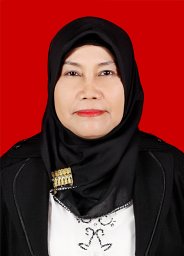 Tenriwaru Tenriwaru合作论文数Universitas Muslim Indonesia1
 Andi Nurwanah合作论文数Universitas Muslim Indonesia1
 Ahmad Padhil合作论文数Department of Industrial Engineering, Universitas Muslim Indonesia1
 Sudirman Numba合作论文数Magister1
 Tajuddin Abdullah合作论文数Politeknik Kesehatan Kemenkes Makassar1
 Dien Triana合作论文数Politeknik Negeri Ujung Pandang1
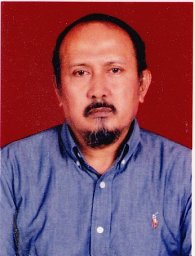 Takdir Alisyahbana合作论文数Universitas Muslim Indonesia1
 Sitnah Aisyah Marasabessy合作论文数Universitas Darussalam Ambon1
 Rahmaniah Malik合作论文数Dept Ind Engn, Univ Muslim Indonesia1
 Ahmad Firman合作论文数STIE Nobel Indonesia1
 Mustafa 'Afifi Ab. Halim合作论文数1
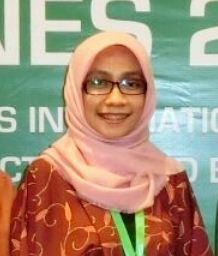 Irma Nur Afiah合作论文数Dept Ind Engn, Univ Muslim Indonesia1Abdul Muher合作论文数1
 Muhammad Dahlan合作论文数DiDi1Etik Prihatin合作论文数Universitas Muslim Indonesia1
 Puadi Haming合作论文数State University of Makassar1
 Mashur Razak合作论文数Dept Management, STIMIK Handayani1
 Zakir Sabara合作论文数Fac Ind Technol, Univ Muslim Indonesia1Azlin Alisa Ahmad合作论文数1
 Suhaimi Ab Rahman合作论文数1




