A discussion of the evolution of a notion of strong mixing as a measure of short range dependence and with additional restrictions a sufficient condition for a central limit theorem, is given. A characterization of strong mixing for stationary Gaussian sequences is noted. Examples of long range dependence leading to limit theorems with nonnormal limiting distributions are specified. Open questions concerning limit theorems for finite Fourier transforms are remarked on. There are also related queries on the use of Fourier methods for a class of nonstationary sequences.
This section will review those books whose content and level reflect the general editorial policy of Technometrics. Publishers should send books for review to Ejaz Ahmed, Department of Mathematics and Statistics, University of Windsor, Windsor, ON N9B 3P4 (techeditor@uwindsor.ca). The opinions expressed in this section are those of the reviewers. These opinions do not represent positions of the reviewer’s organization and may not reflect those of the editors or the sponsoring societies. Listed prices reflect information provided by the publisher and may not be current. The book purchase programs of the American Society for Quality can provide some of these books at reduced prices for members. For information, contact the American Society for Quality at 1-800-248-1946.
Random processes with almost periodic covariance function are considered from a spectral outlook. Given suitable conditions, spectral estimation problems are discussed for Gaussian processes of this type that are neither stationary nor locally stationary. Spectral mass is concentrated on lines parallel to the main diagonal in the spectral plane. A method of estimation of the support of spectral mass under appropriate restraints is considered. Some open questions are discussed. Extension of the methods for a class of nonGaussian nonstationary processes with mean value function a trigonometric regression is given. Consistent estimates for frequency, amplitude and phase of the regression are noted when the residual process is zero mean almost periodic. The resulting estimation of the spectral mass of the residual is also considered.
This note remarks on H. Tong's 1980 paper and associated aspects of chaotic systems.
The structure of random processes with almost periodic covariances is described from a spectral perspective. Under appropriate conditions methods for spectral estimation are described for such processes which are neither stationary nor locally stationary. Some spectral mass is then located off the main diagonal in this spectral plane. A method for estimating the support of the spectral mass is described in the Gaussian case. A number of open questions are mentioned.
On an exquisite March day in 2006, David Brillinger and Richard Davis sat down with Murray and Ady Rosenblatt at their home in La Jolla, California for an enjoyable day of reminiscences and conversation. Our mentor, Murray Rosenblatt, was born on September 7, 1926 in New York City and attended City College of New York before entering graduate school at Cornell University in 1946. After completing his Ph.D. in 1949 under the direction of the renowned probabilist Mark Kac, the Rosenblatts' moved to Chicago where Murray became an instructor/assistant professor in the Committee of Statistics at the University of Chicago. Murray's academic career then took him to the University of Indiana and Brown University before his joining the University of California at San Diego in 1964. Along the way, Murray established himself as one of the most celebrated and leading figures in probability and statistics with particular emphasis on time series and Markov processes. In addition to being a fellow of the Institute of Mathematical Statistics and American Association for the Advancement of Science, he was a Guggenheim fellow (1965-1966, 1971-1972) and was elected to the National Academy of Sciences in 1984. Among his many contributions, Murray conducted seminal work on density estimation, central limit theorems under strong mixing, spectral domain methods and long memory processes. Murray and Ady Rosenblatt were married in 1949 and have two children, Karin and Daniel.
An estimate of the spectral density of a stationary time series can be obtained by taking the finite Fourier transform of an observed sequence x0,x1,…,xN−1 of sample size N with taper a discrete prolate spheroidal sequence and computing its square modulus. It is typical to take the average K of several such estimates corresponding to different prolate spheroidal sequences with the same bandwidth W(N) as the final computed estimate. For the mean square error of such an estimate to converge to zero as N→∞, it is shown that it is necessary to have W(N)↓0 with NW(N)→∞ as N→∞ and significantly have K(N)≤2NW(N) but K=K(N)→∞ as N→∞.
N. Wiener conjectured that a necessary and sufficient condition for a stationary process to be representable as a one-sided function of a sequence of independent, identically distributed random variables and its shifts is that its backward tail field be trivial. Here it is shown that the condition is not sufficient for such a representation.
Processes with almost periodic covariance functions have spectral mass on lines parallel to the diagonal in the two-dimensional spectral plane. Methods have been given for estimation of spectral mass on the lines of spectral concentration if the locations of the lines are known. Here methods for estimating the intercepts of the lines of spectral concentration in the Gaussian case are given under appropriate conditions. The methods determine rates of convergence sufficiently fast as the sample size n → ∞ so that the spectral estimation on the estimated lines can then proceed effectively. This task involves bounding the maximum of an interesting class of non-Gaussian possibly nonstationary processes.
The first-order moving average model or MA(1) is given by $X_t=Z_t-\theta_0 Z_{t-1}$, with independent and identically distributed $\{Z_t\}$. This is arguably the simplest time series model that one can write down. The MA(1) with unit root ($\theta_0=1$) arises naturally in a variety of time series applications. For example, if an underlying time series consists of a linear trend plus white noise errors, then the differenced series is an MA(1) with unit root. In such cases, testing for a unit root of the differenced series is equivalent to testing the adequacy of the trend plus noise model. The unit root problem also arises naturally in a signal plus noise model in which the signal is modeled as a random walk. The differenced series follows a MA(1) model and has a unit root if and only if the random walk signal is in fact a constant. The asymptotic theory of various estimators based on Gaussian likelihood has been developed for the unit root case and nearly unit root case ($\theta=1 +\beta/n, \beta\le0$). Unlike standard $1/\sqrt{n}$-asymptotics, these estimation procedures have $1/n$-asymptotics and a so-called pile-up effect, in which P$(\hat\theta= 1)$ converges to a positive value. One explanation for this pile-up phenomenon is the lack of identifiability of $\theta$ in the Gaussian case. That is, the Gaussian likelihood has the same value for the two sets of parameter values $(\theta,\sigma^2)$ and $(1/\theta,\theta^2\sigma^2$). It follows that $\theta=1$ is always a critical point of the likelihood function. In contrast, for non-Gaussian noise, $\theta$ is identifiable for all real values. Hence it is no longer clear whether or not the same pile-up phenomenon will persist in the non-Gaussian case. In this paper, we focus on limiting pile-up probabilities for estimates of $\theta_0$ based on a Laplace likelihood. In some cases, these estimates can be viewed as Least Absolute Deviation (LAD) estimates. Simulation results illustrate the limit theory.
Conditions are given for a Markov chain to be extendable to the one point compactification of the integers to yield a transition function taking continuous functions into continuous functions. These chains give examples of equicontinuous and nonequicontinuous transition operators.
Non-Gaussian linear time series models are discussed. The ways in which they differ from Gaussian models are noted. This is particularly the case for prediction and parameter or transfer function estimation.
It has already been noted that use of the quasi-Gaussian likelihood in the case of a causal and invertible ARMA process leads to consistent and asymptotically normal estimates of the unknown parameters of the model. However, in the non-Gaussian context, even though and invertible (that is, minimum phase), the estimates are not efficient. In the nonminimum phase non-Gaussian case the estimates are not even consistent. However, because most estimation procedures use the quasi-Gaussian likelihood and maximize it in the minimum phase case to get estimates, it seems relevant to look at the likelihood as a surface in the parameters. There are good reasons to look at the likelihood surface rather than directly analyze the maximization. The approximation of the likelihood surface globally may yield an effective moderate sample representation that gives better insight than a direct large sample analysis of the estimate. The random fluctuation of the likelihood may lead to several local maxima that could lead a numerical optimization procedure away from the global maximum. In such a case, the quality of the estimate might depend to a great extent on the starting value obtained by an initial estimation procedure. This is especially the case if the local maxima due to random fluctuation occur in the case of likelihood functions that are relatively flat in a neighborhood of the true parameter values.
Let ξ(t), t G Zd, be a random field of real-valued random variables. L is a fixed finite set in Zd not containing 0. The set of points s ∈ Zd such that s — t ∈ L is called the L-boundary of the point t. The L-boundary of a set T ⊂ Zd is the set of points s not in T but in the L-boundary of some point t ∈ T.
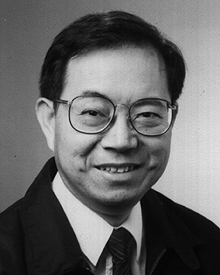 Keh-Shin Lii合作论文数10
 Ulf Grenander合作论文数Brown University4
 Richard A. Davis合作论文数Department of Statistics, Columbia University4
 KS LII合作论文数3
 John Rice合作论文数Department of Statistics, University of California2Lawrence R. Peaslee合作论文数2
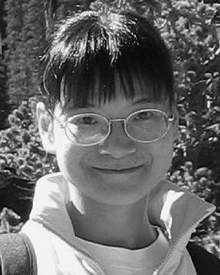 Nan-Jung Hsu合作论文数Institute of Statistics;National Tsing-Hua University;Institute of Statistics, National Tsing-Hua University2
 F. Jay Breidt合作论文数Dept Stat, Colorado State Univ2Julius R Blum合作论文数2john p barber合作论文数1henry r taylor合作论文数1athens conference on applied probability合作论文数1
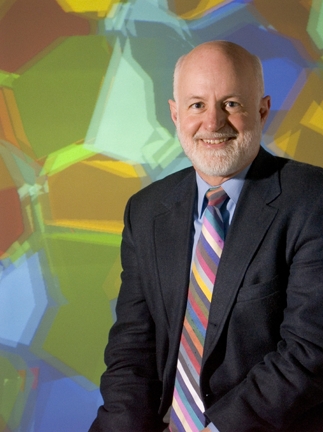 Robert L. Constable合作论文数Computer Science Department, Cornell University1
 Anirban Dasgupta合作论文数Computer Science and Engineering, Indian Institute of Technology Gandhinagar1
 Anil Nerode合作论文数Department of Mathematics 545 Malott Hall Cornell University1
 Richard A. Shore合作论文数Department of Mathematics, Cornell University1George Metakides合作论文数1Richard Davis合作论文数Department of Statistics
Colorado State University1
Richard A. Shore合作论文数Department of Mathematics, Cornell University1George Metakides合作论文数1Richard Davis合作论文数Department of Statistics
Colorado State University1 David R. Brillinger合作论文数Department of Statistics, University of California, Berkeley1Time Series Analysis合作论文数1Leigh H Royden合作论文数1
 Herman Chernoff合作论文数Department of Statistics,Harvard University1Bruce E. Wahlen合作论文数1Henry Teicher合作论文数1Irving Glicksberg合作论文数1J. L. Hodges合作论文数1KN HELLAND合作论文数1




