On-farm management of agrobiodiversity in the Western Ghats, the biodiversity hotspot and a UN-accredited World Heritage Centre has become difficult due to an array of reasons. In rice paddy ecosystem, the conversion of ricefields and dwindling diversity of rice landraces are found to be the biggest challenge. This chapter describes the case of Wayanad District of Kerala, India, where, recognising the importance of paddy fields in terms of ecological, food and livelihood security provided by them, M.S. Swaminathan Research Foundation (MSSRF) launched a rice conservation programme in 1998 and a Seed-Care movement. This movement has been facilitated since 1998 by involving the major farming groups of Wayanad, especially the tribal communities of Kurichya, Kuruma, Pathiyar and Wayanadan Chetty, to promote the conservation and sustainable use of the indigenous crop varieties. This case study illustrates a movement that has promoted conservation of seeds of indigenous varieties in smallholders' family farms in Wayanad District of Kerala. The active integration of agrobiodiversity into the overall issue of sustainable development is necessary, giving equal consideration to all the three dimensions of it: economic, ecological and social sustainability. Efforts have been made to integrate conservation issues, cultivation knowledge, consumption awareness and commercial aspects into one overarching policy strategy.
The tubers of wild yams (Dioscorea) form an important source of starchy food, which is consumed by the tribal inhabitants living dependent with the forest. Kerala, India, has a rich diversity of Dioscorea with unique properties, contributing to both food and health security needs of the local communities, especially the tribal communities. This chapter describes the diversity of wild Dioscorea that are found in Kerala part of Western Ghats and that are distinguished based on the morphotaxonomic characters. Wayanad district has about 22 different taxa of Dioscorea, of which 21 are edible and serve as vital food during famine months to forest-dwelling tribes. For classification of wild Dioscorea folk system relies chiefly on the use classes of tubers such as edibility, taste, colour of the flesh, size, direction of growth, fibre content, cooking properties and occasionally its number. A folk taxonomic classification system has been devised by the user communities like Kattunaikka, Muduga and Paniya for the optimum utilization of various Dioscorea taxa.
This paper deals with the anti-diarrheal property and phytochemical screening of four plants used in traditional medicine viz., Syzygium laetum, Symplocos cochinchinensis var.laurina, Memecylon randerianum and Vateria indica.Methanolic extract of four plants were tested for anti-bacterial activity against Staphylococcus aureus, Pseudomonas aeruginosa, Escherichia coli and Enterococcus faecalis which is associated with diarrhea.Phytochemical screening of these plants were performed for the constituents alkaloids, acidic compounds, anthraquinones, flavanoids, glycosides, carbohydrates, catacholamines, lipids, reducing sugar, resins, saponins, sterols, steroids, pholabatannins, tannins and terpenoids.Antibacterial activity revealed that all the plant extracts showed positive inhibitory activity against all tested pathogens.Memecylon randerianum possess highest number of phytochemicals with eleven out of sixteen.The study pointed out the importance of conservation of plant genetic resources which possess unique features in the control of awful diseases.Results of this study can be further taken up for the development of novel therapeutic compounds.
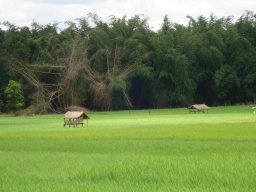
This study conducted in Wayanad District of Kerala has documented the usefulness of the vascular flora associated with wetland paddy fields (Vayals). The plants were recorded from the paddy fields and paddy levees (bunds) and associated habitats. 65 farmer participants of the study, through a total of 945 sightings, have identified 95 useful plants species each from Paddy Fields/Levees (dominated by the members of Cyperaceae, Asteraceae, Poaceae, Amaranthaceae) and Paddy Associated habitats (dominated by the members of Solanaceae, Asteraceae, Fabaceae, Moraceae). 33 species were common to these habitats. The study reveals the importance of the plant diversity associated with paddy fields, in meeting the multiple requirements of the rural and tribal people of Wayanad.
Agrobiodiversity is a confluence of the past, present and future and both a tangible and intangible resource critical for both rural and urban food and nutrition security. Transformation in agricultural technologies, land and water use and urbanization has been largely responsible for its rapid erosion. In-situ conservation of crops and varieties within the context of communities is being increasingly recognized an important pathway for sustainable use of agrobiodiversity. The present article describes a C4 Approach that pay concurrent attention to conservation, cultivation, consumption and commerce of agrobiodiversity resources, conceptualized and operationalized by the M. S. Swaminathan Research Foundation in three agrobiodiversity hotspots of India. The C4 Approach consists of a series of village level interventions like establishment of gene-seed-grain banks, participatory conservation systems, participatory varietal selection, seed purification, promotion of farmer to farmer seed exchange, promotion of good agronomic and planting practices, use of small machinery for processing rice and millets at local level, product diversification and linking to markets for strengthening livelihoods as well as mainstreaming use of agrobiodiversity among urban consumers. Training and capacity development and institutionalization of the efforts through formation of grassroots institutions dovetailed with science-based interventions were important components aimed at sustaining the efforts.
A new species, Salacia wayanadica Sujana, Nagaraju, Ratheesh & Anil Kumar, from Wayanad (Western Ghats), India is described and illustrated. Its distinctive characters are discussed and comments made on differences between this and related species. Information on habitat, distribution, phenology, local uses and conservation status are provided.
Dryopteris austro-indica Fraser-Jenk., an interesting south Indian endemic fern species of restricted occurrence belongs to the family Dryopteridaceae. It is a threatened species narrowly distributed in south India and hitherto unknown to fern flora of Kerala. This fern is attractive for its magnificent fronds and well suited for growing in gardens as pot plants. A detailed taxonomic account of the species along with necessary photographs has been provided to facilitate easy identification of the species.
This study investigated the phytochemical constituents, proximate analysis, antioxidant, antimicrobial properties of methanolic leaf extracts of Aspidopterys canarensis Dalz. Results indicated the presence of acidic compounds, phenols, flavonoids, alkaloids, tannins, terpenoids, steroids, carbohydrates and reducing sugar. The proximate analysis showed it has good amount of crude fibre (39.66%) while crude ash (1.0 %) was the least other compounds were protein (0.083 mg/ml), amino acids (0.026mg/ml) and carbohydrate (0.135 mg/ml).The total antioxidant capacity of plant was 60%. The antimicrobial activities of the extracts of A. canarensis were studied against five pathogenic bacterial strains and five fungal strains. The antibacterial activity index of A. canarensis was found to be highest against Staphylococcus aureus and least to Enterobacter aerogenes . The maximum antifungal property of the methanol extract of the leaves were found 90.59% inhibition to the growth of Phytophthora capsici followed by Curvularia geniculate (82.42%) and more than 45% inhibition showed to all the other tested organisms. The results of this study indicate that leaf extracts of A. canarensis possess antioxidant, anti-microbial activities which explain its use in animal nutrition and human medicine.
A study was conducted in Wayanad District of Kerala, India during 2011-2012 to document the diversity of vascular plants associated with wetland paddy fields ( vayals ). The plants were recorded from the paddy fields and paddy levees; stream sides, parts of homesteads, wasteland and road sides in the immediate vicinity of the paddy fields. One Hundred and Eighty Nine (189) genera (178 Angiosperm genera-nearly 20% of the total genera reported from the District and 11 Pteridophyte genera) were recorded. The total number of species recorded was 319 (308 Angiosperms, 11 Pteridophytes) which included 233 herbs, 40 shrubs, 17 climbers and 29 trees. Seventy Two (72) families (66 Angiosperms, 6 Pteridophytes) were recorded and the highest number of species was represented by Cyperaceae (34) followed by Poaceae (33), Asteraceae (27), Fabaceae (25), Scrophulariaceae (18) and Malvaceae (13).
A study was conducted to find out the diversity of endemic tree species of southern Western Ghats in Wayanad District of Kerala, India. For this several field trips were conducted in all area of Wayanad and collected materials for identification. A total number of 136 species comes under 38 family were recorded. Out of these family Lauraceae shows more number of plants with 17 species.
Impatiens theuerkaufiana, a new scapigerous species of Impatiens (Balsaminaceae) from Wayanad district, Kerala, India is described and illustrated. It differs from I. dendricola by having entire lateral sepals, a transversely elliptic, bilobed dorsal petal with wavy margins, a short straight spur less than 5 mm long, and tuberculate seeds; from I. agumbeana by having pendulous linear lanceolate leaves, shorter pedicels up to 3.5 cm long, non-auricled lateral united petals, and an ellipsoid capsule; and from I. stocksii by having long petioles of 5–8 cm, an elliptic lanceolate leaf lamina, long pedicels of 2.0–3.5 cm, and a pouch-like short spur.
Eriocaulon kannurense Sunil, Ratheesh & Nandakumar (Eriocaulaceae), a new species from the Kannur District, Kerala, India, is described and illustrated. The species is allied to Eriocaulon setaceum and E. capillus-naiadis in its submerged aquatic habit and elongated stem bearing filiform leaves, but differs mainly in having split sheath limb, white coloured heads and anther and isodiametric cells of seed coat without appendages.
The present paper gives ethnomedicinal information pertains to Celastrus paniculatus Willd., a plant that has wider use in ayurvedic system of medicine. The study was undertaken in Wayanad plateau of Western Ghats, a global biodiversity hotspot and a locality known for its biological and ethnic diversity richness. Ethno-medicinal information available from Wayanad, known to outside world is minimum and fragmentary. A total of 984 information-bits concerned with this plant species were recorded, based on a questionnaire survey conducted amongst four tribes of the region: Paniya, Adiya, Kattunaikka, and Kuruma. Parts such as roots, leaves, barks, seeds and seed oil of this plant species found to be useful for multiple human diseases and health disorders. The collected information was grouped into 22 major disease category based on the response of the knowledge holders who participated in this study. Plant part used and mode of administration were also tabulated. The semi-nomadic socially disadvantaged tribe Kattunaikka found to be more knowledgeable amongst the 4 tribal communities studied.
Lindernia madayiparense (Linderniaceae), - a new species of Linderniaceae from Kannur district, Kerala, India is described and illustrated. The new species resembles Lindernia parviflora by its 4- angled aerial stem; but differs in having dimorphic leaves, glandular puberulent pedicels and corolla with sharply 2-fid upper lip with acute lobes.
The present paper give s ethnomedicinal information pertain s to Celastrus paniculatus Willd . , a plant that has wider use in ayurvedic system of medicine. The study was undertaken in Wayan a d plateau of Western Ghats, a global biodiversity hotspot and a locality known f or its b iological and ethnic diversity richness . Ethno - medicinal information available from Wayanad , known to outside world is minimum and fragmentary . A total of 984 information - bits concerned with this plant species were recorded , based on a questionnair e survey conducted among st four tribes of the region: Paniya, Adiya, Kattunaikka, and Kuruma . Parts such as r oots, l eaves, barks, seeds and seed oil of this plant species found to be useful for multiple human diseases and health disorders . The collected i nformation was grouped into 22 major disease category based on the response of the knowledge holders who participated in this study . Plant part used and mode of administration were also tabulated. The semi - nomadic socially disadvantaged tribe Kattunaikka f ound to be more knowledgeable among st the 4 tribal communities studied.
Miliusa gokhalaei (Annonaceae), a new species from the Western Ghats, India, is described and illustrated. It is distinguished by unequal rounded leaf bases, sessile or shortly pedicellate flowers, thick fleshy petals, glabrous carpel, and included connective of anther. It is closely related to M. indica and M. eriocarpa , with which it shares sub-sessile or shortly petiolate, hairy-nerved leaves, axillary solitary flowers, and flask-shaped carpel with 1–2 ovules. Notes on interrelationships, population structure, conservation status and an identification key to the taxa of Miliusa in peninsular India are also provided.
A new species of Impatiens L. (Balsaminaceae) from Wayanad District, Kerala, India, Impatiens mohana Ratheesh, Sujana & Anil, is described, illustrated and compared with I. modesta Wight.
 M. K. Ratheesh Narayanan合作论文数17
 Ka Sujana合作论文数Division of Forest Ecology and Biodiversity Conservation;Kerala Forest Research Institute;Division of Forest Ecology and Biodiversity Conservation, Kerala Forest Research Institute9Sivadasan M合作论文数6p sujanapal合作论文数5Ahmed H. Alfarhan合作论文数5
 Jayesh P. Joseph合作论文数4
 Prajeesh Parameswaran合作论文数3
 Joseph John合作论文数Gulf General Atomic Incorporated3p r ragi合作论文数2nisha george合作论文数2C. N. Sunil合作论文数2
 Israel Oliver King合作论文数2
 Joseph F John合作论文数2V. Arivudai Nambi合作论文数2Kanjiraparambil Arjunan Sujana合作论文数1Nanu Sasidharan合作论文数1
 Nandakumar mk合作论文数1Smitha K P合作论文数1
 Nagaraju Siddabathula合作论文数Deccan Reg Circle, Bot Survey India1B. Jayashree合作论文数1
 Bhavani R V合作论文数1
 Manudev K.M.合作论文数Dept Bot, Univ Calicut1
 Jacob Matthew Thomas合作论文数Department of Microbiology, University of Illinois at Urbana-Champaign1Alatar Abdulrahman A合作论文数1Hemal Kanvinde合作论文数1G.N. Hariharan .合作论文数1smita mishra合作论文数1
 RENGALAKSHMI Raj合作论文数M.S. Swaminathan Research Foundation1




