We present an overview including the historical motivation, design principles, and experimental methodology of the LHCb experiment. Originally conceived as a dedicated experiment for CP violation and rare decays in the B-meson sector, LHCb evolved into a general-purpose experiment for physics in the forward direction at the LHC, while maintaining its core optimization on flavour physics. We review the key detector components for both the original LHCb set-up as well as its upgrade, with emphasis on design features that enable efficient reconstruction of forward-region events. Experimental techniques specific to the forward spectrometer are discussed, highlighting how detailed detector information is translated into event-level observables used in physics analyses. We present an overview of LHCb's major physics results on CP violation, rare decays, spectroscopy, long-lived particles, W- and Z-boson physics and heavy ion physics. In all cases we focus on the conceptual methods, while referring to the literature for detailed discussions. We end this review by comparing LHCb's performance to other experiments and shortly present the concept for a future, second upgrade of LHCb at the High Luminosity LHC.
The first measurement of phi(1020) meson production in fixed-target pNe collisions at root s(NN) = 68.5 GeV is presented. The phi(1020) mesons are reconstructed in their K+K- decay in a data sample consisting of proton collisions on neon nuclei at rest, corresponding to an integrated luminosity of 21.7 +/- 1.4 nb(-1), collected by the LHCb detector at CERN. The phi;(1020) production cross-section in the centre-of-mass rapidity range of -1.8 < y* < 0 and transverse momentum range of 800 < p(T) < 6500MeV/ c is found to be sigma = 182.7 +/- 2.7 (stat.) +/- 14.1 (syst) mu b/nucleon. A double-differential measurement of the cross-section is also provided in four regions of rapidity and six regions of transverse momentum of the phi(1020) meson and compared with the predictions from Pythia and EPOS4, which are found to underestimate the experimental values.
A bstract Measurements of CP observables and the CKM angle γ are performed in B ± → DK * (892) ± decays, where D represents a superposition of D 0 and $$ {\overline{D}}^0 $$ D ¯ 0 states, using the LHCb dataset collected during Run 1 (2011–2012) and Run 2 (2015–2018). A study of this channel is presented with the D meson reconstructed in two-body final states K ± π ∓ , K + K − and π + π − ; four-body final states K ± π ∓ π ± π ∓ and π + π − π + π − ; and three-body final states $$ {K}_{\textrm{S}}^0{\pi}^{+}{\pi}^{-} $$ K S 0 π + π − and $$ {K}_{\textrm{S}}^0{K}^{+}{K}^{-} $$ K S 0 K + K − . This analysis includes the first observation of the suppressed B ± → [ π ± K ∓ ] D K * ± and B ± → [ π ± K ∓ π ± π ∓ ] D K * ± decays. The combined result gives γ = (63 ± 13) ° .
The branching fraction ratios of B[over ¯]^{0}→D^{+}τ^{-}ν[over ¯]_{τ} and B[over ¯]^{0}→D^{*+}τ^{-}ν[over ¯]_{τ} decays are measured with respect to their muonic counterparts, using a data sample corresponding to an integrated luminosity of 2.0 fb^{-1} collected by the LHCb experiment in proton-proton collisions at sqrt[s]=13 TeV. The reconstructed final states are formed by combining D^{+} mesons with τ^{-}→μ^{-}ν[over ¯]_{μ}ν_{τ} candidates, where the D^{+} is reconstructed via the D^{+}→K^{-}π^{+}π^{+} decay. The results are R(D^{+})=0.249±0.043±0.047, R(D^{*+})=0.402±0.081±0.085, where the first uncertainties are statistical and the second systematic. The two measurements have a correlation coefficient of -0.39 and are compatible with the standard model.
Abstract The first full amplitude analysis of B + → ψ(2S)K + π + π − decays is performed using proton-proton collision data corresponding to an integrated luminosity of 9 fb−1 recorded with the LHCb detector. The rich K + π + π − spectrum is studied and the branching fractions of the resonant substructure associated with the prominent K 1(1270)+ contribution are measured. The data cannot be described by conventional strange and charmonium resonances only. An amplitude model with 53 components is developed comprising 11 hidden-charm exotic hadrons. New production mechanisms for charged charmonium-like states are observed. Significant resonant activity with spin-parity J P = 1+ in the ψ(2S)π + system is confirmed and a multi-pole structure is demonstrated. The spectral decomposition of the ψ(2S)π + π − invariant-mass structure, dominated by X 0 → ψ(2S)ρ(770)0 decays, broadly resembles the J/ψϕ spectrum observed in B + → J/ψϕK + decays. Exotic ψ(2S)K + π − resonances are observed for the first time.
Abstract A time-dependent, flavour-tagged measurement of CP violation is performed with B 0 → D + D − and B s 0 $$ {B}_s^0 $$ → D s + D s − $$ {D}_s^{+}{D}_s^{-} $$ decays, using data collected by the LHCb detector in proton-proton collisions at a centre-of-mass energy of 13 TeV corresponding to an integrated luminosity of 6 fb −1. In B 0 → D + D − decays the CP-violation parameters are measured to be S D + D − = − 0.552 ± 0.100 stat ± 0.010 syst , C D + D − = 0.128 ± 0.103 stat ± 0.010 syst . $$ {\displaystyle \begin{array}{c}{S}_{D^{+}{D}^{-}}=-0.552\pm 0.100\left(\textrm{stat}\right)\pm 0.010\left(\textrm{syst}\right),\\ {}{C}_{D^{+}{D}^{-}}=0.128\pm 0.103\left(\textrm{stat}\right)\pm 0.010\left(\textrm{syst}\right).\end{array}} $$ In B s 0 $$ {B}_s^0 $$ → D s + D s − $$ {D}_s^{+}{D}_s^{-} $$ decays the CP-violating parameter formulation in terms of ϕ s and |λ| results in ϕ s = − 0.086 ± 0.106 stat ± 0.028 syst rad , ∣ λ D s + D s − ∣ = 1.145 ± 0.126 stat ± 0.031 syst . $$ {\displaystyle \begin{array}{c}{\phi}_s=-0.086\pm 0.106\left(\textrm{stat}\right)\pm 0.028\left(\textrm{syst}\right)\textrm{rad},\\ {}\mid {\lambda}_{D_s^{+}{D}_s^{-}}\mid =1.145\pm 0.126\left(\textrm{stat}\right)\pm 0.031\left(\textrm{syst}\right).\end{array}} $$ These results represent the most precise single measurement of the CP-violation parameters in their respective channels. For the first time in a single measurement, CP symmetry is observed to be violated in B 0 → D + D − decays with a significance exceeding six standard deviations.
Measurements are presented of the cross-section for the central exclusive production of J/psi -> mu(+) mu(-) and psi(2S) -> mu(+)mu(-) processes in proton-proton collisions at root s = 13 TeV with 2016-2018 data. They are performed by requiring both muons to be in the LHCb acceptance (with pseudorapidity 2 < eta(mu +/-) < 4.5) and mesons in the rapidity range 2.0 < y < 4.5. The integrated cross-section results are sigma(J/psi ->mu+ mu-) (2.0 < y(J/psi) < 4.5, 2.0 < eta(mu +/-) < 4.5) = 400 +/- 2 +/- 5 +/- 12 pb, sigma(psi(2S)->mu+mu-)(2.0 < y(psi(2S)) < 4.5, 2.0 < eta(mu +/-) < 4.5) = 9.40 +/- 0.15 +/- 0.13 +/- 0.27 pb, where the uncertainties are statistical, systematic and due to the luminosity determination. In addition, a measurement of the ratio of psi(2S) and J/psi cross-sections, at an average photon-proton centre-of-mass energy of 1 TeV, is performed, giving sigma(psi(2S))/sigma(J/psi) = 0.1763 +/- 0.0029 +/- 0.0008 +/- 0.0039, where the first uncertainty is statistical, the second systematic and the third due to the knowledge of the involved branching fractions. For the first time, the dependence of the J/psi and psi(2S) cross-sections on the total transverse momentum transfer is determined in pp collisions and is found consistent with the behaviour observed in electron-proton collisions.
An amplitude analysis of B^{-}→D^{-}D^{0}K_{S}^{0} decays is performed using proton-proton collision data, corresponding to an integrated luminosity of 9 fb^{-1}, collected with the LHCb detector at center-of-mass energies of 7, 8, and 13 TeV. A resonant structure of spin-parity 0^{+} is observed in the D^{0}K_{S}^{0} invariant-mass spectrum with a significance of 5.3σ. The mass and width of the state, modeled with a Breit-Wigner line shape, are determined to be 2883±11±8 MeV/c^{2} and 87_{-47}^{+22}±17 MeV, respectively, where the first uncertainties are statistical and the second systematic. These properties and the quark content are consistent with those of the open-charm tetraquark candidate T_{cs0}^{*}(2870)^{0} observed previously in the D^{+}K^{-} final state of the B^{-}→D^{-}D^{+}K^{-} decay. This result confirms the existence of the T_{cs0}^{*}(2870)^{0} state in a new decay mode. The T_{cs1}^{*}(2900)^{0} state, reported in the B^{-}→D^{-}D^{+}K^{-} decay, is also searched for in the D^{0}K_{S}^{0} invariant-mass spectrum of the B^{-}→D^{-}D^{0}K_{S}^{0} decay, without finding evidence for it.
A measurement of the CP-violating parameters in B_s^0→D_s^∓K^± decays is reported, based on the analysis of proton-proton collision data collected by the LHCb experiment corresponding to an integrated luminosity of 6 fb−1 at a centre-of-mass energy of 13 TeV. The measured parameters are obtained with a decay-time dependent analysis yielding Cf = 0.791 ± 0.061 ± 0.022, A_f^ΔΓ = −0.051 ± 0.134 ± 0.058, A_f^ΔΓ = −0.303 ± 0.125 ± 0.055, Sf = −0.571 ± 0.084 ± 0.023 and S_f = −0.503 ± 0.084 ± 0.025, where the first uncertainty is statistical and the second systematic. This corresponds to CP violation in the interference between mixing and decay of about 8.6 σ. Together with the value of the B_s^0 mixing phase −2βs, these parameters are used to obtain a measurement of the CKM angle γ equal to (74 ± 12)° modulo 180°, where the uncertainty contains both statistical and systematic contributions. This result is combined with the previous LHCb measurement in this channel using 3 fb−1 resulting in a determination of γ =(81_-11^+12)^∘ .
An angular analysis of the B_s^0 → ϕe+e− decay is performed using the proton-proton collision dataset collected between 2011 and 2018 by the LHCb experiment, corresponding to an integrated luminosity of 9 fb−1 at centre-of-mass energies of 7, 8 and 13 TeV. The analysis is performed in the very low dielectron invariant mass-squared region between 0.0009 and 0.2615 GeV2/c4. The longitudinal polarisation fraction of the ϕ meson is measured to be less than 11.5 A_T^ℛ eCP observable, which is related to the lepton forward-backward asymmetry, is measured to be 0.116 ± 0.155 ± 0.006, where the first uncertainty is statistical and the second systematic. The transverse asymmetries, A_T^(2) and A_T^ℐ mCP , which are sensitive to the virtual photon polarisation, are found to be −0.045 ± 0.235 ± 0.014 and 0.002 ± 0.247 ± 0.016, respectively. The results are consistent with Standard Model predictions.
This paper presents the first measurement of $$\psi {(2S)}$$ ψ ( 2 S ) and $$\chi _{c1}(3872)$$ χ c 1 ( 3872 ) meson production within fully reconstructed jets. Each quarkonium state (tag) is reconstructed via its decay to the $${{J \hspace{-1.66656pt}/\hspace{-1.111pt}\psi }} $$ J / ψ ( $$\rightarrow $$ → $$\mu ^+\mu ^-$$ μ + μ - ) $$\pi ^+\pi ^-$$ π + π - final state in the forward region using proton-proton collision data collected by the LHCb experiment at the center-of-mass-energy of $$13\text {TeV} $$ 13 TeV in 2016, corresponding to an integrated luminosity of $$1.64\,\text {\,fb} ^{-1} $$ 1.64 \,fb - 1 . The fragmentation function, presented as the ratio of the quarkonium-tag transverse momentum to the full jet transverse momentum ( $$p_{\textrm{T}} (\text {tag})/p_{\textrm{T}} (\text {jet})$$ p T ( tag ) / p T ( jet ) ), is measured differentially in $$p_{\textrm{T}} (\text {jet})$$ p T ( jet ) and $$p_{\textrm{T}} (\text {tag})$$ p T ( tag ) bins. The distributions are separated into promptly produced quarkonia from proton-proton collisions and quarkonia produced from displaced b -hadron decays. While the displaced quarkonia fragmentation functions are in general well described by parton-shower predictions, the prompt quarkonium distributions differ significantly from fixed-order non-relativistic QCD (NRQCD) predictions followed by a QCD parton shower.
A time-dependent, flavour-tagged measurement of CP violation is performed with B0 → D+D− and B_s^0 → D_s^+D_s^- decays, using data collected by the LHCb detector in proton-proton collisions at a centre-of-mass energy of 13 TeV corresponding to an integrated luminosity of 6 fb−1. In B0 → D+D− decays the CP-violation parameters are measured to be [ S_D^+D^-=-0.552± 0.100(stat)± 0.010(syst),; C_D^+D^-=0.128± 0.103(stat)± 0.010(syst). ] In B_s^0 → D_s^+D_s^- decays the CP-violating parameter formulation in terms of ϕs and |λ| results in [ ϕ_s=-0.086± 0.106(stat)± 0.028(syst)rad,; |λ_D_s^+D_s^-| =1.145± 0.126(stat)± 0.031(syst). ] These results represent the most precise single measurement of the CP-violation parameters in their respective channels. For the first time in a single measurement, CP symmetry is observed to be violated in B0 → D+D− decays with a significance exceeding six standard deviations.
During the detector construction phase between 2004 and 2006, it was discovered that the LHCb Outer Tracker (OT) detector suffered from gain loss after irradiation in the laboratory at moderate intensities. Under irradiation an insulating layer was formed on the anode wire. The aging was caused by contamination of the counting gas due to outgassing of the glue used in construction namely araldite AY103-1. The gain loss was concentrated upstream the gas flow, and at moderate irradiation intensity only. The aging rate was reduced by longterm flushing and by the addition of a few percent of O2 to the gas mixture. Furthermore, applying a large positive high voltage (beyond the amplification regime) has shown to remove the insulating deposits without damaging the wire surface. This paper presents the history of the developments together with the characteristics and the culprit of the aging phenomenon and the resulting detector performance in situ.
An analysis of the flavour oscillations of the charmed neutral meson is presented. The ratio of D0 → K+π− and D0 → K−π+ decay rates is measured as a function of the decay time of the D0 meson and compared with the charge-conjugated system to search for charge-parity violation. The meson flavour at production is double-tagged by the charges of the muon and pion in the preceding B→D^∗(2010)^+μ^-X and D∗(2010)+ → D0π+ decays, respectively. These decays are selected from proton-proton collision data collected by the LHCb experiment at a centre-of-mass energy of 13 TeV and corresponding to an integrated luminosity of 5.4 fb−1. The flavour oscillation parameters, relating to the differences in mass and width of the mass eigenstates, are found to be y′ = (5.8 ± 1.6) × 10−3 and (x′)2 = (0.0 ± 1.2) × 10−4. No evidence for charge-parity violation is seen either in the flavour oscillations or in the decay, where the direct charge-parity asymmetry is measured to be AD = (2.3 ± 1.7)
The LHCb collaboration measures production of the exotic hadron χ_c1(3872) in proton-nucleus collisions for the first time. Comparison with the charmonium state ψ(2S) suggests that the exotic χ_c1(3872) experiences different dynamics in the nuclear medium than conventional hadrons, and comparison with data from proton-proton collisions indicates that the presence of the nucleus may modify χ_c1(3872) production rates. This is the first measurement of the nuclear modification factor of an exotic hadron.
The fraction of chi(c1) and chi(c2) decays in the prompt J=psi yield, F-chi c -> J=psi = sigma(chi c) -> J=psi/ sigma(J/ psi) , is measured by the LHCb detector in pPb collisions at root s(NN) = 8.16 TeV. The study covers the forward (1.5 < y* < 4.0) and sNN backward (-5.0 < y* < -2.5) rapidity regions, where y* is the J=psi rapidity in the nucleon -nucleon centerof -mass system. Forward and backward rapidity samples correspond to integrated luminosities of 13.6 +/- 0.3 and 20.8 +/- 0.5 nb(-1) , respectively. The result is presented as a function of the J=psi transverse momentum pT;J/ psi in the range 1 < pT -> J/ psi < 20 GeV=c. The F-chi c -> J=psi fraction at forward rapidity is compatible with the LHCb measurement performed in pp collisions at root s= 7 TeV, whereas the result at s backward rapidity is 2.4 sigma larger than in the forward region for 1 < pT,(J/ psi) < 3 GeV/ c. The increase of F-chi c -> J/ psi at low pT;J/ psi at backward rapidity is compatible with the suppression of the psi(2S) contribution to the prompt J/ psi yield. The lack of in -medium dissociation of chi(c) states observed in this study sets an upper limit of 180 MeV on the free energy available in these pPb collisions to dissociate or inhibit charmonium state formation.
For accurate determination of particle masses accurate knowledge of the momentum scale of the detectors is crucial. The procedure used to calibrate the momentum scale of the LHCb spectrometer is described and illustrated using the performance obtained with an integrated luminosity of $1.6~ fb^{-1}$ collected during 2016 in $pp$ running. The procedure uses large samples of $J/\psi \rightarrow \mu^+ \mu^-$ and $B^+ \rightarrow J/\psi K^+$ decays and leads to a relative accuracy of $3 \times 10^{-4}$ on the momentum scale.
A comprehensive study of the angular distributions in the bottom-baryon decays Λ^0_b→Λ_c^+ h^-(h=π, K), followed by Λ_c^+→Λ h^+ with Λ→pπ^- or Λ_c^+→pK^0_S decays, is performed using a data sample of proton-proton collisions corresponding to an integrated luminosity of 9 fb^-1 collected by the LHCb experiment at center-of-mass energies of 7, 8 and 13 Te -0.1em V. The decay parameters and the associated charge-parity (CP) asymmetries are measured, with no significant CP violation observed. For the first time, the Λ^0_b →Λ_c^+ h^- decay parameters are measured. The most precise measurements of the decay parameters α, β and γ are obtained for Λ_c^+ decays and an independent measurement of the decay parameters for the strange-baryon Λ decay is provided. The results deepen our understanding of weak decay dynamics in baryon decays.
A study of resonant structures in B^{+}→D^{*+}D^{-}K^{+} and B^{+}→D^{*-}D^{+}K^{+} decays is performed, using proton-proton collision data at center-of-mass energies of sqrt[s]=7, 8, and 13 TeV recorded by the LHCb experiment, corresponding to an integrated luminosity of 9 fb^{-1}. A simultaneous amplitude fit is performed to the two channels with contributions from resonances decaying to D^{*-}D^{+} and D^{*+}D^{-} states linked by C parity. This procedure allows the C parities of resonances in the D^{*±}D^{∓} mass spectra to be determined. Four charmonium or charmoniumlike states are observed decaying into D^{*±}D^{∓}: η_{c}(3945), h_{c}(4000), χ_{c1}(4010), and h_{c}(4300), with quantum numbers J^{PC} equal to 0^{-+}, 1^{+-}, 1^{++}, and 1^{+-}, respectively. At least three of these states have not been observed previously. In addition, the existence of the T_{c[over ¯]s[over ¯]0}^{*}(2870)^{0} and T_{c[over ¯]s[over ¯]1}^{*}(2900)^{0} resonances in the D^{-}K^{+} mass spectrum, already observed in the B^{+}→D^{+}D^{-}K^{+} decay, is confirmed in a different production channel.
Abstract Measurements of the branching fraction ratio $$ \mathcal{B}\left(\phi \to {\mu}^{+}{\mu}^{-}\right)/\mathcal{B}\left(\phi \to {e}^{+}{e}^{-}\right) $$ B ϕ → μ + μ − / B ϕ → e + e − with $$ {D}_s^{+}\to {\pi}^{+}\phi $$ D s + → π + ϕ and D+→ π+ϕ decays, denoted $$ {R}_{\phi \pi}^s $$ R ϕπ s and $$ {R}_{\phi \pi}^d $$ R ϕπ d , are presented. The analysis is performed using a dataset corresponding to an integrated luminosity of 5.4 fb−1 of pp collision data collected with the LHCb experiment. The branching fractions are normalised with respect to the B+ → K+J/ψ(→ e+e−) and B+ → K+J/ψ(→ μ+μ−) decay modes. The combination of the results yields$$ {R}_{\phi \pi}=1.022\pm 0.012\left(\textrm{stat}\right)\pm 0.048\left(\textrm{syst}\right). $$ R ϕπ = 1.022 ± 0.012 stat ± 0.048 syst . The result is compatible with previous measurements of the ϕ → ℓ+ℓ− branching fractions and predictions based on the Standard Model.
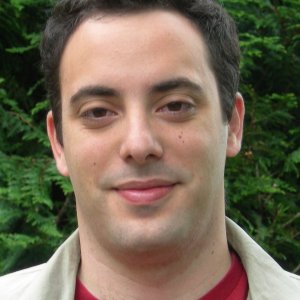 Ricard Vázquez Gómez合作论文数Facultat de Física, Universitat de Barcelona849
 Saverio Simone合作论文数Dipartimento di Fisica, Università degli Studi di Bari Aldo Moro829C a Dos Reis Filho合作论文数824
 Stefania Vecchi合作论文数INFN823Giovanni Valenti合作论文数CERN820
 Rafael Silva Coutinho合作论文数Department of Physics, College of Arts and Sciences, Syracuse University819J. M. Otalora Goicochea合作论文数817
 Eric van Herwijnen合作论文数Chiojdeanu816
 Tara Shears合作论文数Department of Physics, School of Physical Sciences, Faculty of Science and Engineering, University of Liverpool814
 Pablo Vazquez Regueiro合作论文数Department of Particle Physics, Faculty of Physics, Universidade de Santiago de Compostela;Galician Institute of High Energy Physics, Universidade de Santiago de Compostela814
 David Websdale合作论文数Department of Physics, Faculty of Natural Sciences, Imperial College London813O. Steinkamp合作论文数812Patrick Spradlin合作论文数School of Physics & Astronomy, University of Glasgow810M. Ferro Luzzi合作论文数809Mariusz Witek合作论文数The LHCb Experiment Department, The Henryk Niewodniczański Institute of Nuclear Physics, Polish Academy of Sciences809
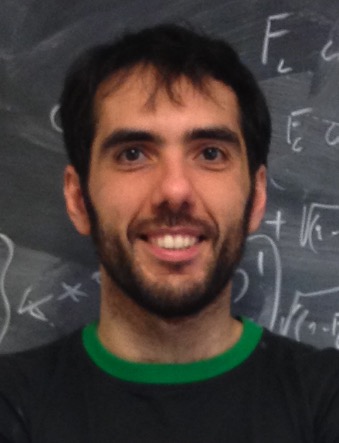 Nicola Serra合作论文数Physik-Institut, Universität Zürich807
 Paul Soler合作论文数School of Physics & Astronomy, University of Glasgow806
 Marie-Hélène Schune合作论文数Laboratoire De L’accélérateur Linéaire, CNRS806L. A. Granado Cardoso合作论文数803Vincenzo Vagnoni合作论文数802
 Cibrán Santamarina Ríos合作论文数Instituto Galego de Física de Altas Enerxías, Universidade de Santiago de Compostela799F. Ferreira Rodrigues合作论文数797C. Haen合作论文数796
 Daniel Souza Covacich合作论文数Revolv792
 Mark Whitehead合作论文数School of Physics & Astronomy, University of Glasgow;Department of Physics, The University of Warwick792
 A. (Antonio) Pellegrino合作论文数Faculty of Science and Engineering, University of Groningen792
 Nigel Watson合作论文数School of Physics and Astronomy, The University of Birmingham;Higher Education Academy;STEM.org791Martin van Beuzekom合作论文数Department of Detector Research and Development, National Institute for Subatomic Physics791
 Roberta Santacesaria合作论文数Istituto Nazionale di Fisica Nucleare, Sezione di Roma;Dipartimento di Fisica, Università di Roma "La Sapienza"791T'Jampens S合作论文数787A. Satta合作论文数785
 Monica Pepe Altarelli合作论文数European Organization for Nuclear Research785
 Frederic Teubert合作论文数European Organization for Nuclear Research784J. M. De Miranda合作论文数782D. Martinez Santos合作论文数780
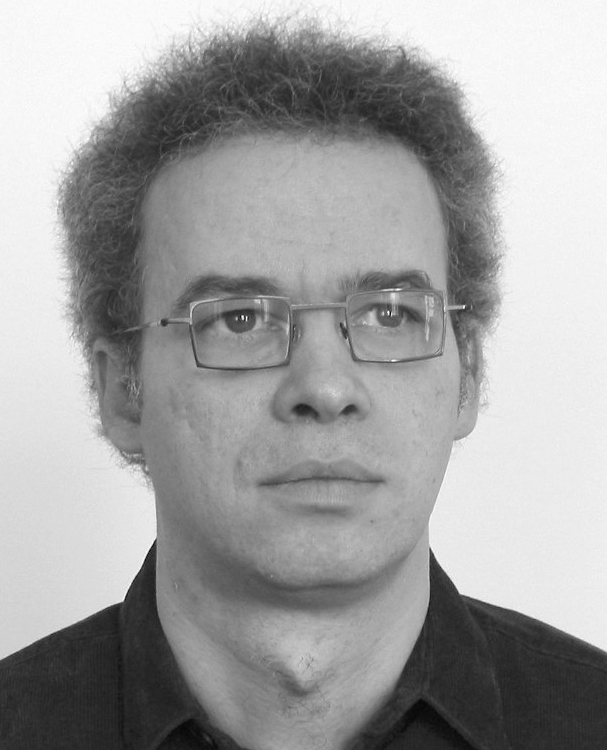 Renaud Le Gac合作论文数Centre de Physique des Particules de Marseille, Aix-Marseille Universite778
 Emanuele Santovetti合作论文数Dipartimento di Fisica, Università degli studi di Tor Vergata;INFN778
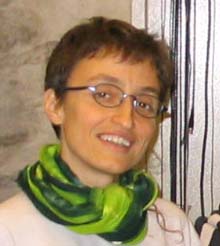 Barbara Sciascia合作论文数Laboratori Nazionali di Frascati, Istituto Nazionale di Fisica Nucleare776S. A. Wotton合作论文数Cavendish Lab, Univ Cambridge772Michele Veltri合作论文数772
 Michael Williams合作论文数Department of Physics, Massachusetts Institute of Technology771M. Tobin合作论文数771Michael Schmelling合作论文数Max-Planck-Institut fuer Kernphysik767Celestina Satriano合作论文数Department of Sciences, Università degli Studi della Basilicata767
 Kurt Rinnert合作论文数Department of Physics, School of Physical Sciences, Faculty of Science and Engineering, University of Liverpool766Pascal Perret合作论文数Laboratoire de Physique de Clermont Auvergne, Universite Blaise Pascal;CNRS765Ken Wyllie合作论文数CERN764
 Schopper Andreas合作论文数European Organization for Nuclear Research764Patrick Robbe合作论文数Laboratoire de l’Accélérateur Linéaire, CNRS764




