Global trade of freshwater turtles and tortoises presents substantial conservation, biosecurity, and regulatory challenges, particularly for long-lived species that are already highly imperiled. While the United States has historically played a key role in supplying the international chelonian trade, investigations into its role as an importer remain limited. We used import data from the U.S. Fish and Wildlife Service Law Enforcement Management Information System (LEMIS) between 2000 and 2022 to evaluate the trade of freshwater turtles and tortoises. Over 2.5 million individuals were imported into the United States during this period, comprising 172 species that are likely imported for the pet trade, food, and traditional medicine markets. Reported annual imports for freshwater turtles increased until approximately 2013 and decreased thereafter, whereas reported annual imports for tortoises have remained relatively constant. Two species, Chinese softshell turtles (Pelodiscus sinensis) and Horsfield's tortoises (Testudo horsfieldii) represent 62.9% of all imports. Imported species were largely classified as Vulnerable, Endangered, or Critically Endangered by the IUCN Red List, yet the conservation status of a concerning number of species (n = 45; 26.2%) has not been evaluated. Many imports appear to be sourced from wild populations (28.3% of freshwater turtles, 71.3% of tortoises); however, captive-sourced imports increased significantly over time across both groups. Import volumes raise concerns regarding the sustainability of freshwater turtle and tortoise trade, the potential for invasive species establishment, and disease spread. Our results highlight the need for updated IUCN assessments, verification of trade records, and strengthening of biosecurity screening at U.S. ports of entry.
ABSTRACT Population genetics is a valuable tool for conservationists to quantify population‐level genetic variation and identify priority conservation units. The Hong Kong newt (Paramesotriton hongkongensis) is a tropical salamander restricted to streams and forests in southern China, facing significant challenges from range‐wide deforestation since the 1600s, and recent rapid urban development. Using species‐specific microsatellite markers, we found surprisingly high genetic diversity within and among P. hongkongensis populations, despite long‐term habitat disturbance and fragmentation. Only 2 out of 10 sites exhibited evidence of recent population bottlenecks. Bayesian clustering revealed four well‐supported genetic clusters within the newt's Hong Kong range, suggesting that these should be managed as separate conservation units. Our findings highlight the resilience of this species to historical and contemporary disturbances and emphasize the importance of considering genetic data in conservation planning for amphibians in human‐modified landscapes.
Amplified wildfire activity in forests of the western United States threatens biodiversity. Fuel treatments can reduce fire severity, modify fire behavior, and restore forest structure and composition, yet impacts of some treatments, including slash piling and burning, on wildlife have received little attention. Piling of residual woody material may create habitable microenvironments for species that require cool, moist microclimates for all biological and ecological functions. One such species, the Sacramento Mountain salamander (Aneides hardii Taylor), a relictual, endemic salamander narrowly distributed in the mountains of south-central New Mexico, USA, has been found below constructed slash piles within its range, but the characteristics of occupied slash piles and the extent of their occupancy has not yet been quantified. We surveyed for Sacramento Mountain salamanders in slash piles and under logs (cover objects) adjacent to piles and within a surrounding survey plot, and related salamander occupancy to slash pile and cover object characteristics, soil moisture and temperature, and environmental setting. We found Sacramento Mountain salamanders in 50
Laundering of wild-caught animals as captive-bred is a frequent practice in the illegal wildlife trade. Stable isotope analysis is a promising tool for distinguishing wild and captive-bred animals. We use Hong Kong freshwater turtles to test the effectiveness of using stable isotopes to differentiate wild and captive-bred individuals. In this study, we compared five stable isotope signatures ( 13C, 15N, 34S, 2H, and 18O) in claw samples across four highly threatened species: Cuora trifasciata, Mauremys reevesii, Platysternon megacephalum, and Sacalia bealei. We found non-overlapping 13C and 15N values for all species; combined 13C and 15N isotopic profiles resulted in a 100 % accuracy in identifying the sources of turtles. Through repeated sampling of seized P. megacephalum, we estimate 95 % turnover rates of 46.3 months for 13C and 32.8 months for 15N, suggesting that wild-caught individuals can be identified up to two years after capture. Lastly, we apply the stable isotope method in true wildlife seizures. These seizures are unique because some individuals possessed microchips from our long-term population study, so were unambiguously from the wild. The isotopic profiles of seized turtles clustered with those of wild populations, providing forensic evidence that supported the prosecution of suspects for illegal trade and/or possession. Overall, our study demonstrates the effectiveness of S13C and S15N in differentiating wild and captive freshwater turtles. We advocate for using isotopic profiling in future seizures and expanding its application to more taxa and geographic locations to support wildlife trade management and prevent illegal exploitation of wild organisms globally.
There is an increasing demand for emerging scientists to improve their ability to communicate with public audiences, yet little research investigates the effectiveness of science communication training for graduate students. We responded to this need by developing SciWrite@URI—an interdisciplinary model for science graduate students designed around three learning outcomes based on tenets from the field of writing and rhetoric—habitual writing, multiple genres, and frequent review. SciWrite students completed courses and a science communication internship, attended writing workshops, and became tutors at a newly established Graduate Writing Center. After 2 years of training, students more frequently wrote multiple drafts and engaged in peer review, increased their confidence as writers, and decreased their apprehension about writing. We conclude the tenets of the SciWrite program helped students improve as science communicators, and we make suggestions for effective ways graduate departments and training programs might implement and build on our model.
There is an increasing demand for emerging scientists to improve their ability to communicate with public audiences, yet little research investigates the effectiveness of science communication training for graduate students. We responded to this need by developing SciWrite@URI-an interdisciplinary model for science graduate students designed around three learning outcomes based on tenets from the field of writing and rhetoric-habitual writing, multiple genres, and frequent review. SciWrite students completed courses and a science communication internship, attended writing workshops, and became tutors at a newly established Graduate Writing Center. After 2 years of training, students more frequently wrote multiple drafts and engaged in peer review, increased their confidence as writers, and decreased their apprehension about writing. We conclude the tenets of the SciWrite program helped students improve as science communicators, and we make suggestions for effective ways graduate departments and training programs might implement and build on our model.
The Tokay gecko (Gekko gecko), found throughout Southeast Asia and India, is a heavily harvested species of high commercial value. Recent studies have supported the elevation of the black morph of Tokay gecko, found only in southern China and northern Vietnam, to the species Gekko reevesii. Previous genetic studies focused on specimens of G. reevesii from southwestern populations. Hong Kong, in southeastern China, has native populations of G. reevesii. To verify the identity of G. reevesii in Hong Kong, we employed three mitochondrial genes (COI, Cytb & ND2) and constructed a matrilineal genealogy using other specimens from Guangxi (southwestern China) and northern Vietnam, as well as G. gecko from a wide range of Southeast Asian countries. Our study confirmed that G. reevesii occurs naturally in Hong Kong, but one exotic population of G. gecko, likely a translocation from international trade, was also revealed. Our study did not reject the species ranking of G. reevesii. Moreover, like previous studies, we recovered a paraphyletic G. gecko, which may reflect a species complex, hybridization or incomplete lineage sorting. More extensive sampling of the two species over a broader range of their asserted distribution together with the use of both mitochondrial and nuclear DNA are required to better investigate their biogeography.
Sex ratio is a key demographic characteristic indicative of the condition of populations. Despite over 70 yr of study, researchers have not fully evaluated morphological characteristics that differentiate sex in Jemez Mountains Salamanders (Plethodon neomexicanus; federally endangered). Populations of this endemic salamander, which are distributed in north-central New Mexico, have undergone declines in the past two decades. We assessed morphological characters of 160 preserved P. neomexicanus specimens, evaluated our ability to infer sex in the field, and tested our ability to determine sex on a subset of preserved specimens. In preserved salamanders with body length (i.e., postcloaca snout-vent length, SVLp) >= 55 mm, females exhibited greater total length, trunk length, tail length, and cloaca length, and males exhibited greater precloacal tail width, head length, head width, and head height. We documented weakly female-biased size dimorphism. Females with SVLp >= 52 mm had cloacal rugae, whereas males with SVLp >= 51 mm had distinct papillose tissue in the cloaca and a cloacal cleft. In an evaluation of 30 preserved specimens, we correctly inferred sex in 97% of salamanders by cloacal characters alone. Of 29 adult salamanders captured in the field, we confidently inferred the sex of 27 individuals (16 females, 11 males) with SVL >= 44 mm. Thus, sex of most individuals can be correctly inferred in the field by cloacal characters. This information will aid researchers in better understanding population trajectories of this endangered species.
Every fall, juvenile sea turtles in the Northwest Atlantic Ocean are threatened by rapidly declining water temperatures. When sea turtles become hypothermic, or cold-stunned, they lose mobility-either at the surface, subsurface, or the bottom of the water column-and eventually strand at the shoreline where rescue teams associated with the Sea Turtle Stranding and Salvage Network may search for them. Understanding the effects of ocean currents on the potential stranding locations of cold-stunned sea turtles is essential to better understand stranding hotspots and increase the probability of successful discovery and recovery of turtles before they die in the cold temperatures. Traditional oceanographic drifters-instruments used to track currents-have been used to examine relationships between current and stranding locations in Cape Cod Bay, but these drifters are not representative of sea turtle morphology and do not assess how bottom currents affect stranding locations. To address these knowledge gaps, we designed new drifters that represent the shape and dimensions of sea turtles-one that can float at the surface and one that sinks to the bottom-to track both surface and bottom currents in Cape Cod Bay. We found a marked difference between the trajectories of our new drifter models and those that were previously used for similar research. These findings bring us one step closer to identifying the transport pathways for cold-stunned sea turtles and optimizing cold-stunned sea turtle search and rescue efforts in Cape Cod.
Diamondback Terrapin (Malaclemys terrapin) plays a keystone role in Saltmarsh ecosystems and is considered a species of conservation concern throughout its range. One major source of terrapin egg mortality is destruction of nests by nocturnal mammalian predators. Although Diamondback Terrapins are listed as State Endangered in Rhode Island, nesting ecology for the species is poorly understood at the local and regional level. To fill this knowledge gap, we identified temporal patterns of Diamondback Terrapin nesting, hatchling emergence, and nest predation during 2 y at a Rhode Island terrapin nesting site. We also used a series of trail cameras to detect and quantify the presence of nocturnal nest predators and tested a solar electric fence as a possible management solution for nest protection. Both predated nest counts and predator detections were highest during the Diamondback Terrapin nesting period, decreasing only after hatchlings began to emerge from nests. We detected Northern Raccoons (Procyon lotor) and Striped Skunks (Mephitis mephitis) more frequently than other mammalian nest predators; detections of both species were strongly correlated with observed nest predation events, suggesting that these are the main species responsible for Diamondback Terrapin nest predation at our study site. After various modifications, the electric fence succeeded in excluding raccoons from the nesting area but failed to deter skunks. An increased understanding of the dynamics of terrapin nest predation will contribute meaningfully to effective conservation of this keystone species in Rhode Island, USA, and throughout the range of the Diamondback Terrapin.
Wildlife road mortality tends to aggregate spatially at locations commonly referred to as road mortality hotspots. Predictive models can be used to identify locations appropriate for mitigation measures that reduce road mortality. However, the influence of imperfect detection (e.g., false absences) during road mortality surveys can lead to inaccurate or imprecise spatial patterns of road mortality hotspots and suboptimal implementation of mitigation measures. In this research, we used amphibians and reptiles as a case study to address imperfect detection issues when estimating the probability of road mortality hotspots using occupancy detection modeling. In addition, we determined the survey effort needed to achieve a high probability of detecting large roadkill events. We also assessed whether vehicle travel reductions associated with the COVID-19 pandemic travel restrictions led to reductions in road mortality. We conducted surveys at 48 sites throughout Rhode Island, USA, from 2019–2021. In total, we observed 657 carcasses representing 19 of Rhode Island’s 37 native species. Of the 19 native species, eight species of frogs, four species of salamanders, four species of snakes, and three species of turtles were observed. We documented a reduction in roadkill density and the proportion of dead versus live amphibians and reptiles in pandemic years (2020 and 2021), but we were unable to link reductions in roadkill density to reductions in traffic volume. Our model results indicated that large roadkill events were more likely to occur on roads near wetlands and with low traffic volume and were more likely to be detected as daily precipitation increased. We determined that there was a low probability of detecting large roadkill events, suggesting that imperfect detection influences detection of large roadkill events, and many were likely missed during our surveys. Therefore, we recommend using occupancy modeling to account for the influence of imperfect detection when estimating road mortality hotspots. This approach will more effectively guide the implementation of mitigation measures.
We respond to a surging interest in science communication training for graduate scientists by advocating for a focus on rhetorically informed approaches to STEM writing and its assessment. We argue that STEM communication initiatives would benefit by shifting from a strategic focus on products to a flexible understanding of writing as a practice worthy of attention and study. To do that, we use our experience across two universities and two distinct programmatic contexts to train STEM graduate students in writing and communication. We draw from cross-disciplinary conversations to identify four facets of “good” STEM writing: (1) connecting to the big picture; (2) explaining science; (3) adhering to genre conventions; and (4) choosing context-appropriate language. We then describe our ongoing conversations across contexts to develop and implement flexible rubrics that capture and foster conversations around “good” writing. In doing so, we argue for a notion of writing rubrics as boundary objects, capable of fostering cross-disciplinary, integrative conversations and collaborations that strengthen student writing, shift STEM students toward a rhetorically informed sense of “good” writing, and offer that kinds of assessment data that make for persuasive evidence of the power of writing-centric approaches for STEM administrators and funders.
Biotic and abiotic factors drive assortative mixing (preference for or sorting with individuals with similar characteristics) in animal populations on a landscape, with implications for dispersal, population structuring, and other ecological and evolutionary processes. However, patterns and generative mechanisms of assortative mixing are overlooked in amphibians outside of specific life history events such as reproduction. The aims of this project were to determine whether there is assortative mixing by size and life history category in eastern spadefoots (Scaphiopus holbrookii), whether these patterns are preserved across time and spatial scale, and quantify the nature and relative role of various habitat and soil features in explaining observed patterns in spatial organization of individuals. We conducted field surveys in southeastern Virginia, USA, in 2016 and 2017 during nonbreeding periods to create spatial networks of S. holbrookii. We quantified spatial assortativity by size and life history stage and evaluated the roles of multiple landscape features in explaining spatial organization of S. holbrookii. We found that S. holbrookii sorted spatially by size and sex outside of breeding periods, with juveniles and adults less likely to sort with each other. Within each life history stage, S. holbrookii sorted by size. These patterns were similar across time and spatial scale. Soil and habitat types had no effect on assortativity. Instead, the distance to nearest breeding pool, wetland, and meadow were related to life history stage assortativity, as well as size assortativity in males and subadults. Adult males and females displayed affinity for breeding pools and meadows and avoidance of other types of wetlands, while subadults and nonbreeding adults showed opposite patterns compared with breeding adults. Our results indicate that (1) previously established guidelines for the minimum size of buffer zones to protect wetland-breeding amphibians may be inadequate, (2) nonbreeding wetlands may be important core habitat for subadults, and (3) the upland spatial organization of amphibians may be used to predict locations of undetected breeding pools.
In the United States (U.S.), pet turtles have been associated with outbreaks of salmonellosis, a serious and sometimes-fatal intestinal illness caused by Salmonella bacteria, with nearly 300,000 people being infected in some years. Children are particularly susceptible because of their propensity to put items, including small turtles, in their mouths. In 1975, a U.S. federal regulation prohibited the sale of turtles <4 inches (101.6 mm) in size, except for the purposes of export, scientific, or educational purposes. This regulation was established to reduce the incidence of salmonellosis, particularly in small children. Previous research has not evaluated the availability of turtles <4 inches in size on websites selling wildlife. We monitored 16 websites in 2021 and quantified listings of small turtles. We determined whether information on Salmonella, the 1975 federal regulation, or related state regulations were provided on the websites and determined legality of sales of small turtles by state regulations. We found that all 16 websites openly advertised and sold turtles <4 inches in size, but only half of these websites provided information about Salmonella and/or the federal regulation. These websites required buyers to confirm that they were not purchasing a turtle as a pet, thereby putting the onus on the consumer to adhere to the regulation. We documented 515 listings of turtles <4 inches in size, including 47 species and one hybrid. Our study has demonstrated that internet sales of small turtles currently represent part of the thriving online pet trade in the U.S. Enforcement of the federal regulation faces jurisdictional challenges in most states. Therefore, we recommend continued public education campaigns by public health agencies in the U.S. to help reduce the risk that pet turtle ownership presents.
Scientists in applied fields, including conservation biology, face increasing expectations to communicate their research across multiple audiences. As environmental issues become more complex, the need for scientists to clearly communicate with other scientists, managers, stakeholders, tribes, the public, and policy makers becomes ever critical. Despite this need, students in graduate science programs receive limited direct instruction in writing and little training in writing for audiences outside of academia or in different genres. To that end, we developed an interdisciplinary program that incorporates rhetorical theory and writing intensive pedagogy to train graduate science students to write more effectively across genres. During the pilot testing in the first year of this broader, multiyear program, we evaluated changes in the writing practices and confidence of participants as writers and scientists who completed a low‐investment, two‐workshop sequence that highlighted habitual writing, peer review, and writing for multiple audiences and multiple genres. In just six contact hours, we documented significant increases in students' reporting maintaining a more consistent writing routine and writing environment, revising multiple drafts for writing projects, and being willing to have work reviewed by peers or mentors. Upon completion of both workshops, students reported an increase in their confidence as writers. The development of comprehensive graduate writing programs can be costly and time intensive, but our evaluation demonstrates that significant gains in writing capacity and confidence as writers were made by graduate science students with even a low level of investment. We urge graduate science faculty in all Science Technology Engineering Math disciplines to consider how they might offer this two‐workshop sequence or similar low‐investment interventions that will build writing capacity and confidence as writers and scientists in graduate students.
Fire is a key natural process that has shaped ecosystem distribution and composition for hundreds of millions of years. Prescribed fire has become a common and important technique in habitat management. With its ability to alter physical and vegetative conditions, prescribed fire has the potential to change wildlife habitat characteristics in ways that benefit or harm populations of wildlife, but implications for reptiles are considered only infrequently. In May and June 2018, a prescribed burn was conducted in Rhode Island, USA. After reports of dead Eastern Box Turtles (Terrapene c. carolina), we initiated surveys in the burned area to gauge the extent of mortality and develop guidance to protect Eastern Box Turtle populations where prescribed fire is used. We found 49 dead Eastern Box Turtles across a 31.2 ha area, and based on the available evidence, we suspect that 47 of those were killed as a direct result of the prescribed fire. The post-burn mortality observed during this study is the latest among a growing list of observations of significant mortality of box turtles associated with fire, both wild and prescribed. We urge land managers to carefully consider the location, timing, and frequency of prescribed burns within the range of the Eastern Box Turtle and consider mechanical treatments as an alternative to meet habitat management goals, or prior to burning to reduce fire intensity in sensitive areas. Burning during the growing season is particularly problematic due to the high risk to box turtles active on the surface.
Rawa Aopa Watumohai National Park (105.194 ha) in Southeast Sulawesi is one of the important conservation areas in Wallacea. This study aimed to measure the diversity of herpetofauna, relative abundance and community similarity in four different habitats. Survey were conducted in January-April 2018 using Visual Encounter Survey (VES) based on time and transects in savanna, riparian, lowland forest, and mangrove. Forty-two species from 17 families were found consisting of 10 species of amphibians and 32 species of reptiles, in which 9 species are endemic i.e. Papurana celebensis and Draco beccarii. The highest diversity (H’) and evenness (E) indexes was found in lowland forest (H’ = 2.497, E = 0.555). The most abundant amphibian was Limnonectes modestus with 85 individuals (23.8%), while the most abundant reptile was Crocodylus porosus with 24 individuals (6.7%). The similarity of communities between the four habitats was low (<0.5), indicating that most species are specialists on particular habitats. Although diversity was relatively low in Rawa Aopa Watumohai National Park, high endemism warrants ongoing efforts to conserve amphibians and reptiles in this national park. Key words: herpetofauna diversity, Indonesia, lowland forest, national park, Sulawesi
There is an urgent need for scientists to improve their communication skills with the public, especially for those involved in applying science to solve conservation or human health problems. However, little research has assessed the effectiveness of science communication training for applied scientists. We responded to this gap by developing a new, interdisciplinary training model, "SciWrite," based on three central tenets from scholarship in writing and rhetoric: 1) habitual writing, 2) multiple genres for multiple audiences, and 3) frequent review and created an interdisciplinary rubric based on these tenets to evaluate a variety of writing products across genres. We used this rubric to assess three different genres written by 12 SciWrite-trained graduate science students and 74 non-SciWrite-trained graduate science students at the same institution. We found that written work from SciWrite students scored higher than those from non-SciWrite students in all three genres, and most notably thesis/dissertation proposals were higher quality. The rubric results also suggest that the variation in writing quality was best explained by the ability of graduate students to grasp higher-order writing skills (e.g., thinking about audience needs and expectations, clearly describing research goals, and making an argument for the significance of their research). Future programs would benefit from adopting similar training activities and goals as well as assessment tools that take a rhetorically informed approach.
Amphibians exhibit diverse reproductive behaviors, including nine documented types of amplexus, the behavior in which male and female frogs position themselves for courtship, oviposition, and fertilization. All known forms of amplexus involve the male on top of or in line horizontally (cloacal apposition) with the female. Here, we report a novel form of amplexus observed in Lau's leaf litter toad (Leptobrachella laui; Megophryidae) in Hong Kong, China. Termed "sex-reversed inguinal amplexus," the female climbs on top of a male and the male transports the female to a concealed breeding site. We were unable to determine whether this was the amplectant position in which frogs engaged during oviposition or solely during courtship and prior to oviposition, but there are a number of possible evolutionary drivers that may have given rise to this behavior, including limiting suitable oviposition sites or strong competition for males among females. Further research will be necessary to understand the evolutionary origins of this novel reproductive behavior.
 David Dudgeon (杜德俊)合作论文数School of Biological Sciences, Faculty of Science, The University of Hong Kong11
 Sung Yik-Hei (宋亦希)合作论文数Department of Biology,Faculty of Science,Hong Kong Baptist University9
 Scott W. Buchanan合作论文数Rhode Island Department of Environmental Management, Division of Fish and Wildlife7
 Caroline Gottschalk Druschke合作论文数7
 Ingrid E. Lofgren合作论文数Department of Nutritional Sciences, University of Connecticut7
 Scott R. Mcwilliams合作论文数Department Natural Resources Science, University of Rhode Island7
 Jenna Morton-Aiken合作论文数6
 Chi Hang Billy Hau合作论文数Research Division for Ecology & Biodiversity, Faculty of Science, The University of Hong Kong6
 James P. Gibbs合作论文数Department of Forest and Environmental Biology, College of Environmental Science and Forestry, Syracuse, State University of New York6
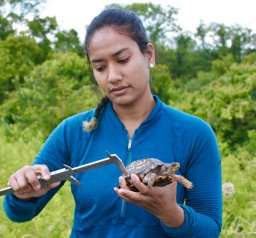 Anne Devan-Song合作论文数Dept Integrat Biol, Oregon State Univ5
 Anthony Lau合作论文数Division of Science, Lingnan University5
 Bradley Cosentino合作论文数5
 Tom A Langen合作论文数Department of Organismic Biology, Ecology and Evolution, University of California5
 James R Vonesh合作论文数Department of Biology;Virginia Commonwealth University;Department of Biology, Virginia Commonwealth University5
 Kenneth Mei Yee Leung (梁美儀)合作论文数Department of Chemistry, City University of Hong Kong;State Key Laboratory of Marine Pollution, City University of Hong Kong4
 Nedra Reynolds合作论文数4
 Joseph J Apodaca合作论文数4Eran S. Kilpatrick合作论文数4
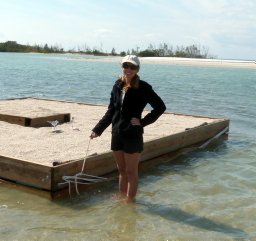 Elizabeth A. Forys合作论文数Department of Environmental Science, Eckerd College4Kristen S. Genet合作论文数4
 Karen H. Beard合作论文数Department of Wildland Resources and the Ecology Center, Utah State University4Shane A. Hill合作论文数3alison j mccarthy合作论文数3Saumya Patel合作论文数3Faisal Iqbal合作论文数3Nicholas Steijn合作论文数3Jessica R. Atutubo合作论文数3Macie Hanneken合作论文数3Jaquelyn General合作论文数3Cherie Southwick合作论文数3Derrick Carper合作论文数3
 J. F. Charbonnier合作论文数Dept Biol, Virginia Commonwealth Univ3
 Nathaniel Stearrett合作论文数Dept Pediat, Boston Childrens Hosp3Joseph T. Neale合作论文数3
 Paolo Martelli合作论文数3Kara S. Jones合作论文数3
 Healey Ryan合作论文数Department of Pathology and Laboratory Medicine.3
 Edward Tak Chuen Lau合作论文数3
 Mirza Kusrini合作论文数3
 Hartwell H Welsh合作论文数3
 Lisa M. Ollivier合作论文数3David M. Marsh合作论文数Department of Biology;Lee University;Department of Biology, Lee University3
 Garth R. Hodgson合作论文数3KMY Leung合作论文数2Kyle R. Hess合作论文数2
 Felicia Page合作论文数2Kirk Lohman合作论文数2Samantha Fischer合作论文数2Justine M. Fox合作论文数2




