Internet use in Indonesia continues to increase across all age groups, including the elderly. However, limited digital skills make the elderly particularly vulnerable to hoaxes and digital crimes. In Aceh, this issue is especially concerning, as the province was identified among the top three regions with the highest hoax dissemination in 2019. In response, the Indonesian Anti-Slander Society (Mafindo), through its Tular Nalar program, aims to provide digital literacy education to vulnerable groups, including the elderly. This study explores the communication strategy employed by Mafindo Aceh in implementing the Tular Nalar Lansia program in Aceh. Guided by Charles Berger’s Planning Theory and Hafied Cangara’s communication strategy model, the study adopts a qualitative case study approach to offer a contextually relevant analysis. Data were gathered through interviews with the Mafindo Aceh Coordinator, two facilitators, and three elderly participants, along with non-participant observations and document analysis. Findings reveal that although the program was implemented in a structured manner, several weaknesses remain, such as the lack of localized research, inadequate participant selection, and limited evaluation mechanisms. The study underscores the need for communication strategies that are inclusive, culturally sensitive, and tailored to the elderly’s abilities to enhance the impact of digital literacy initiatives.
With its distinctive autonomy in implementing Sharia, Aceh allows public caning as a form of corporal punishment not seen in other parts of Indonesia. This article examines how a prominent local newspaper, Serambi Indonesia, portrayed the implementation of public caning in Aceh over the past decade. This study combined transivity analysis and Gamson and Modigliani’s (1989) four framing devices: metaphors, exemplars, catchphrases, and depictions. The analysis focused on 45 articles related to public caning in Aceh published between January 2012 and December 2020 in Serambi Indonesia. The findings reveal that caning is a key theme in these news stories, signalling its execution for Sharia violators in Aceh. The findings also found an ambivalent representation of public caning. Depictions of paramedics, audiences, and public support, along with the use of exemplars, highlight a positive portrayal of the current practice of public caning in Aceh. The punishment is depicted as a way of educating offenders and a means to deter similar offenses in the future, which overshadows the severity of the punishment. The media also conveys a message that Aceh’s caning punishment differs from practices in the Middle East and suggests a “lighter” interpretation of Sharia. However, the coverage raises concerns about the effectiveness of caning as a deterrent and the fair implementation of the punishment. Therefore, the representations of public caning in Serambi Indonesia reflects ongoing controversy surrounding the event within Acehnese society.
This chapter explores how female Indonesian journalists collaborated with gender activists to address violence against women in Indonesia, a large postcolonial country in Southeast Asia. As part of the Global South, Indonesia is under a relatively new authoritarian regime, which challenges the country’s diverse and robust democratic media ecosystems and freedom of speech. Linked to the long-term effects of economic inequality and a lack of access to other resources, these challenges continue to reshape feminist media responses to violence against women in Indonesia. Before the global #MeToo movement commenced in 2017, Indonesian gender equality activists used online education campaigns such as #MulaiBicara (“start talking”) and #TalkAboutIt to encourage women to speak about sexual assault and harassment. Chapter 2 focuses on the stories of two female Indonesian journalists from online magazines Magdalene.co and Konde.co who collaborated with gender activists before, during, and after the revitalization of #MeToo. In this chapter, the two journalists illuminate what is often a taboo topic of violence against women in the Indonesian media, and they describe how they navigate the line between journalism and activism, often under difficult circumstances, to report on sexual violence in meaningful and ethical ways.
Per-capita, Indonesia has one of the world's largest user bases of social media. However, in terms of online participation, Indonesian women lag behind their male counterparts (Suwana [2017]. "Empowering Indonesian Women Through Building Digital Media Literacy." Kasetsart Journal of Social Sciences 38 (3): 212-217). This article contributes to a greater understanding of how digital media and engagement enables Indonesian women (as digital citizens) to creatively express themselves, contest gendered ideals, and coordinate political and social activism. It builds on literature that seeks to understand what this means for Indonesian women's active participation in and undertaking of digital citizenship. Drawing on interdisciplinary projects conducted by the authors, we discuss how female journalists negotiate digital activism in the Indonesian context. We demonstrate that Indonesian women's digital engagement and their active participation in the production of digital media enables them to creatively express and contest gendered ideals, as well as mobilise activism around political and social causes. In doing so, this article applies a gendered perspective to emerging concepts of digital citizenship, highlighting women's engagement, activism, autonomy, and creative expression.
This article attempts to identify the impact of social media and new messaging processes on the well-being of Malaysian workers (specifically middle managers). It explores Malaysian workplace use of electronic communication methods and how managers view the impact of tablets, social networking apps and similar technologies on their social and emotional well-being, including their capacity to relate to and interact with other employees. In the Malaysian capital Kuala Lumpur, 27 middle managers were interviewed in five focus groups, with the middle managers representing various public and private sector organizations. The findings reveal that social media and e-mail dominate workplace communication among these Kuala Lumpur–based managers; emotional and mental health concerns (like pressure to be constantly available) for themselves and the people they managed motivated some middle managers to preference face-to-face interaction. This was particularly true of certain contexts, like when providing one-on-one feedback on performance. The past decade has seen the widespread and rapid adoption of social media, messaging and other communication technologies in the workplace. It is hoped that this study contributes to an understanding of the impact of this change on employee well-being in Malaysia.
Eve-teasing is a euphemism for street-based sexual harassment, which is a widespread issue across Bangladesh affecting the emotional, mental, and physical wellbeing of Bangladeshi women. The media can play a vital role by covering news and raising awareness of eve-teasing. Historically, the headlines in Bangladesh focused on more overt forms of gender violence-rape, murder, acid attacks-framing eve-teasing as a mere nuisance, a fact of life in the country. How the media portrays eve-teasing in Bangladesh is a subject about which there is currently very little research. This content analysis of the two main national newspapers in Bangladesh assesses how the media reported street-based sexual harassment over the course of a seminal year-2010. It was during this year that the government of Bangladesh enacted the Family Violence Prevention and Protection Act in acknowledgement of the prevalence and seriousness of gender violence in the country. Similar acts had been passed by the governments of nearby countries India and Sri Lanka in 2005, and Nepal in 2008 (Fardosh, 2013). This study looks at how Bangladeshi newspapers covered 'eve-teasing' prominently (as front-page news), in a year when it was acknowledged as a serious issue, through the passing of a law by the Bangladeshi government.
The difference between how multicultural Australia is 'in real life' and 'in broadcasting' can be seen through data from the Census, and from Screen Australia's most recent research into onscreen diversity. In 2016, these sources of data coincided with the Census, which takes place every five years. Conducted by the Australian Bureau of Statistics, this presents a 'snapshot' of Australian life. From the newest Census figures in 2016, it appears that nearly half of the population in Australia (49 percent) had either been born overseas (identifying as first generation Australian) or had one or both parents born overseas (identifying as second generation Australian). Nearly a third, or 32 percent, of Australians identified as having come from non-Anglo Celtic backgrounds, and 2.8 percent of Australians identify as Indigenous (Aboriginal or Torres Strait Islander). Nearly a fifth, or 18 percent, of Australians identify as having a disability. Screen Australia is the government agency that oversees film and TV funding and research. Conducted in 2016, Screen Australia's study looked at 199 television dramas (fiction, excluding animation) that aired between 2011 and 2015. The comparison between these two sources of data reveals that with one exception, there is a marked disparity between diversity as depicted in the lived experiences of Australians and recorded by the Census, and diversity as depicted on screen and recorded by the Screen Australia survey.
To what extent does a local newspaper in the Indonesian province of Aceh construct Acehnese identity as distinct from Indonesian national identity? In this article, the authors examine the representation of Acehnese identity post-civil conflict and in relation to Indonesian national identity by drawing on a content analysis of Aceh’s local newspaper, Serambi Indonesia. There are few studies of representations of local ethnic groups in their local newspapers, let alone the representations of ethnic groups with a history of separatist movements. Therefore, this study sets out to bridge the gap in the literature on how a formerly separatist ethnic group is positioned vis-à-vis its nation-state in its local media. This study examines the representation of Acehnese in the local newspaper in terms of Anderson’s (1983) ‘imagined community’, Billig’s (1995) ‘banal nationalism’, as well as ‘media representation and identity’. In doing so, this study attempts to give a more comprehensive approach to show that the local newspaper continues to be a means for the reproduction of ‘imagined communities’ and the delivery of the narrative of collective identity through the everyday representations of the nation.
How are perceptions of self and ummah (community) reflected in social media use by members of Muslim minorities in two Western countries, Australia and the United States? This paper explores the use of social media by members of minority communities for the purposes of self-representation and community-building, and perceptions of social media use among members of Muslim minority communities, as a means for them to challenge the narrative of Islam found in mainstream media associated with homogeneity, violence and militancy. The paper is based on analysis of responses of a targeted sample of members of representative Muslim student organizations at two tertiary institutions in Australia and the United States. Asian countries of origin are strongly represented in the migrant and international student communities of these two countries. The survey respondents were asked about their use of social media in relation to how they engage in public discourse about Islam, and how it is used in the negotiation of their religious and secular identities.
 Kevin Dunn合作论文数8
 Rosalie Atie合作论文数8
 Andrew Jakubowicz合作论文数8Karen Connelly合作论文数8
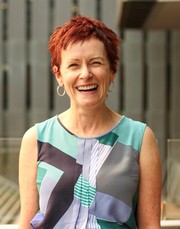 Gail Mason合作论文数Sydney Law School, The University of Sydney8
 Yin Paradies合作论文数Faculty of Arts and Education, Deakin University8
 Andre Oboler合作论文数Computer Internet Engagement Project8
 Ana-Maria Bliuc合作论文数Institute for Teaching and Learning, The University of Sydney7
 Alexandra Wake合作论文数Sch Media & Commun, RMIT Univ4
 Yuka Fujimoto合作论文数Osaka University of Pharmaceutical Sciences3Jan Fermelis合作论文数Deakin University3Gavin Height合作论文数2
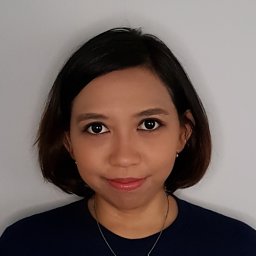 Adriana Rahajeng Mintarsih合作论文数Univ Indonesia2
 Zainurul Rahman合作论文数Usm Penang, Univ Sains Malaysia2
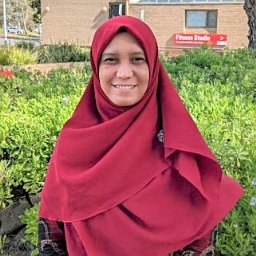 Febri Nurrahmi合作论文数Dept Commun, Univ Syiah Kuala2
 Monika Winarnita合作论文数Honorary Research Fellow;Monash Asia Institute;Monash Asia Institute2
 Charmine Hartel合作论文数Department of Management, Business School, Monash University1




