This review examines the collaboration between the author and Dr. Richard Raspet regarding turbulence contributions to dynamic wall-pressure signals. The narrative interweaves professional analysis with personal reflections, tracing a path from early connections through the author's grandfather, Dr. F. D. Shields, to shared cycling adventures, the author's Ph.D. hooding ceremony, collaborative research work, and ultimately the author's assumption of leadership at the National Center for Physical Acoustics. A poignant moment in 2023, sharing coffee with Dr. Raspet and Dr. Sabatier, provides a fitting culmination to this journey. Throughout a lifetime of scientific pursuit, Dr. Raspet exemplified an unwavering childlike curiosity that led naturally to greatness, rather than pursuing greatness as an end in itself. Henry David Thoreau's words resonate with Dr. Raspet's approach: “I wished to live deliberately, to front only the essential facts of life, and see if I could not learn what it had to teach.” Dr. Raspet's steadfast dedication to the love and pursuit of nature and science created an atmosphere of awe that elevated the humanity of all who knew him.
The University of Mississippi provides a unique opportunity to study physical acoustics in two departments: the Department of Physics and Astronomy and the Department of Mechanical Engineering. It is one of the few universities in the United States where students can pursue PhD and MS degrees in Physics with a focus on physical acoustics research. The National Center of Physical Acoustics (NCPA) is an 85 000 square foot standalone facility that houses many laboratories on the campus of the University of Mississippi solely dedicated to the physics and engineering applications of acoustics over the entire frequency range, from infrasound to ultrasound. Students can study a wide range of topics including the atmosphere, ocean, weather, jet noise, porous media, acoustic metamaterials, ultrasonic properties of materials, nondestructive testing, and fluid dynamics. Our alumni work in academia, national labs, industry, and the medical field among other occupations. The University of Mississippi is a PhD granting institution with an R1 Carnegie designation placing it among schools with the highest level of research activity. It is located in Oxford, MS, a cultural mecca of the southern United States, home to William Faulkner (one of the most celebrated American authors), many artistic festivals and sporting events.
Characterizing the sound-generating mechanisms of open flame combustion plays a fundamental role in understanding the acoustics of fire. Previous literature has utilized the correlation between the chemiluminescence of chemically reacting species and the direct source of combustion noise, the global heat release rate. The present analysis implements a multi-spectral infrared camera to identify spatial correlation regions of bandwidth-specific intermediary and product combustion species (such as hydrocarbons, carbon dioxide, and water) to estimate qualitative spatial regions of global heat release. As infrared imaging is a line-of-sight technique, acquired images are deconvolved into a 2-D projection of an assumed axisymmetric testing volume. A variety of laboratory-scale flames are analyzed, including those produced from diffusion and pre-mixed gas burners as well as aspen wood-wool combustion. The relationship between the chemical reaction components and the observed spectral footprint of each observed combustion regime is discussed. Recommendations are made to improve the coalescence of spectroscopy/thermal imaging and acoustic measurements in future testing. Data gathered was made possible through collaboration with the USDA Forest Products Laboratory.
Passive acoustic measurement techniques have been used throughout many observable phenomena to acquire information with tremendous temporal and spatial resolution. Acoustic signals generated during the combustion of vegetation in wildfires are information rich with strong potential to yield data further illuminating the characteristics of fire behavior. Acoustic measurement devices were deployed during a series of prescribed burns performed by the United States Forest Service at Holly Springs National Forest in Lafayette County, Mississippi. Results of a signal analysis algorithm are combined with observed weather conditions and fuel types to present a complementary technique for fire behavior assessment. The second series of fuel pan burns was performed at the Savannah River Site by the United States Department of Energy in Barnwell County, South Carolina. The burns were recorded in a variety of recording configurations and curated to highlight the ignition, steady burn, and flame out.
This study presents a cross-comparison of traditional linear stochastic estimation (LSE) and support vector machine (SVM) algorithms. The assessment of the capabilities of both estimation techniques is based on reconstructing the unsteady behavior of a laminar separation bubble (LSB) on a NACA 0018 airfoil at a Reynolds number of 100,000. The algorithms are trained based on time-resolved velocity field measurements performed simultaneously with sparse unsteady surface pressure measurements. The flow reconstructions performed based on surface pressure measurements are evaluated based on an independent set of flow field measurements. The results show a comparable performance across multi-point LSE and different SVM methods investigated, which are shown to capture the flow development of dominant coherent structures in the separated shear layer.
Jet noise experiments were conducted in the Anechoic Jet Laboratory at the National Center for Physical Acoustics of the University of Mississippi in July of 2021 using a laboratory-scale supersonic nozzle with afterburner system installed upstream of the nozzle throat. The afterburner consisted of a fuel injection ring and v-gutter style flame holder with hydrogen as the fuel source. Two nozzle contours were studied during afterburner conditions. The first comprised a baseline nozzle made up of a conic-section with sharp-throat and a converging-diverging contour, and with flat facets on the diverging section of the nozzle. The second nozzle, using the same conic section and sharp throat as the baseline, was then examined for noise reduction by incorporating lobe-shaped contoured inserts fashioned after previous jet noise reduction efforts derived from an original concept put forward by J. M. Seiner. Acoustic pressure time series were acquired using a traversing grid of microphones designed to capture a 2-D grid of stationary observer points ranging from 3.5 nozzle diameters from the jet’s shear layer, to more than 60 nozzle diameters from the jet noise source location. This resulted in a total of 391 points covering shallow, sideline and steep angle observer positions. Narrowband spectra computed for both nozzles exhibit sharp peaks attributed to augmenter screech, while spatial contours of filtered sound pressure levels reveal two distinct propagation lobes. A reduction in noise by up to 1.5 dB is observed with the lobe-shaped contour, following the proposed jet noise measurement strategy outlined by Baars et al. (J. Fluid Mech., Vol. 929, A23, 2021, pp. 1-32). The findings are consistent with previous work on non-afterburning supersonic jets, therefore demonstrating the utility of the lobe-shaped contours at reducing jet noise over a broad range of engine operating points, and in particular, conditions that coincide with field-carrier landing practice operations.
A quantitative assessment of the acoustic source field produced by a laboratory-scale heated jet with a gas dynamic Mach number of 1.55 and an acoustic Mach number of 2.41 is performed using arrays of microphones that are traversed across the axial and radial plane of the jet's acoustic field. The nozzle contour comprises a method of characteristics shape so that shock-related noise is minimal and the dominant sound production mechanism is from Mach waves. The spatial topography of the overall sound pressure level is shown to be dominated by a distinct lobe residing on the principal acoustic emission path, which is expected from flows of this kind with supersonic convective acoustic Mach numbers. The sound field is then analysed on a per-frequency basis in order to identify the location, strength, convection velocity and propagation angle of the various axially distributed noise sources. The analysis reveals a collection of unique data-informed polar patterns of the sound intensity for each frequency. It is shown how these polar patterns can be propagated to any point in the far field with extreme accuracy using the inverse square law. Doing so allows one to gauge the kinds of errors that are encountered using a nozzle-centred source to calculate sound pressure spectrum levels and acoustic power. It is proposed that the measurement strategy described here be used for situations where measurements are being used to compare different facilities, for extrapolating measurements to different geometric scales, for model validation or for developing noise control strategies.
A laboratory-scale evaluation of wall compliance on the diverging section of a converging-diverging, supersonic nozzle, and its ability to invoke changes to the exhaust flow, shock structures and near-field acoustics is discussed. Several compliant wall nozzles are tested and are fabricated from elastomeric materials with different shore values that affect the degree of compliance. A stiff aluminum jacket surrounding the nozzle throat and high pressure regions of the supersonic flow allow only the downstream surfaces of the nozzle to couple with the jet exhaust; the compliant regions of the nozzle wall behave like a cantilever beam. Measurements comprise both single-point and spatially-resolved, time-dependent techniques. The study examines a broad range of nozzle pressure ratios covering both overexpanded and underexpanded states of the flow. Sizable displacements at a single point on the nozzle lip are observed at low pressure ratios (around 30% of the design pressure ratio) and when the nozzle is operating at pressure ratios approaching fully expanded conditions. For the lower pressure ratio condition, it is postulated that fluid structure coupling is driven by the entrainment of unsteady flow from the surrounding ambient gas along the low pressure regions of the nozzle wall. A digital image correlation technique is then developed to characterize the response of several points evenly spaced around the nozzle lip. The setup allows characterization of the structural (azimuthal) modes and frequencies that get excited at various nozzle pressure ratios. It is shown how most of the fluctuating energy is confined to the first few structural azimuthal modes, with m=2 being the dominant mode that encompasses nearly 80% of the total fluctuating energy. Coupling between the m=2 and m=6 azimuthal modes, as well as the m=1,3 and 5 modes is also observed wherein they separately share the same characteristic frequencies. Where near-field acoustics are concerned, sound pressure spectrum levels recorded at various points covering the growth, saturation and decay envelop of the jet’s sound source regions reveal how nozzle wall compliance is shown to reinforce screech tones at lower pressure ratios followed by a complete elimination of the tones at higher pressure ratios where they would normally exist. Nozzle wall compliance is also shown to cause broadband shock noise to form at lower nozzle pressure ratios, all the while suppressing it at pressure ratios approaching the design pressure ratio. Lastly, time resolved schlieren images of the jet exhausts are evaluated using wavenumber-frequency analysis methods and demonstrate how the convective speed of the large scale features in the flow (those believed to be responsible for generating noise) are unaffected by wall compliance. This suggests that, while wall compliance impedes shock related noise, it does very little to change turbulence mixing noise mechanisms.
We review a technique that we developed that combines shadowgraph or schlieren imaging with image processing tools to study the sound produced by turbulent shear flows. These flows are challenging acoustically because they are characterized by a distributed cloud of correlated sources that produce sound through multiple mechanisms. In the far field, 100 s of characteristic lengths from the source region, the pressure waves are purely acoustic, the apparent the source location shrinks to a point, and the common assumption is that the propagation behavior is spherical. In the near field, pressure signals from both acoustic and hydrodynamic (or evanescent) signatures are difficult to separate, especially when the convective Mach number of the sound-producing events is supersonic. Single-point measurements such as condenser-type microphones are blind to the direction of the approaching/departing pressure waves unless they are combined in arrays. Non-intrusive optical-based methods offer some benefit in this scenario and can be tailored in new and different ways. Examples include acoustic laser Doppler velocimetry and quantitative schlieren methods. Our technique combines modern digital camera technology (with high-resolution, high-speed capabilities) with tomographical image processing techniques images to yield a “picture” of the sound field that can provide quantitative assessment of the source distribution and source velocities. This optical technique is a strong complement for single-point or array microphone measurements.
The objective of this study is to understand how internal engine corrugated seals affect the aerodynamic performance of a convergent/divergent supersonic nozzle all the while promoting mixing. These corrugated seals are designed to protrude into the flow to alter the design pressure ratio of the nozzle through changes in area ratio. Measurements comprise axial thrust for nozzle pressure ratios ranging continuously from overexpanded to underexpanded nozzle flow states. Optical flow measurements using a z-type schlieren system are also used to qualitatively visualize the affect of protrusion depth on shock strength and boundary layer thickness at the nozzle exit. Findings reveal the effect of the corrugated seals on the double-shock pattern that forms from the imperfect expansion of the gas through this sharp throat nozzle. As much as a 2% increase in thrust coefficient is observed with one of the corrugated seal concepts and over a broad operating envelop corresponding to both overexpanded and underexpanded nozzle states.
This paper outlines a modeling approach of supersonic jet noise exposure for full-scale flight scenarios, based on laboratory data of a supersonic jet. Such a modeling capability allows for quantifying the environmental noise impact of a jet engine nozzle during flight, which is of interest during design-iterations of nozzles. Central to this work are acoustic data of a realistic, laboratory-scale supersonic jet, comprising pressure signals in an (x,r)-plane at locations from 3.5 jet diameters away from the jet's shear layer, to more than 60 jet diameters away from the jet exit. Due to the high convective Mach number of the shock-free jet, the dominant sound producing mechanism is Mach wave radiation. Here we describe the acoustic field on a per-frequency basis following Tam's two-source model of jet noise with source parameters of (1) a superdirective wave packet and (2) a monopole, inferred from spatial distributions of the sound pressure level from experiments. With the source parameters and a user-defined 3D flight path, a time-evolution of the spatio-spectral noise footprint is computed, accounting for atmospheric absorption, ground reflections and Doppler shifts. Two operating scenarios are presented: a carrier takeoff and an airbase takeoff followed by a 180 degree turn in climb. Differences are highlighted between the frequency-dependent source model and a model that relies on a compact, nozzle-centered source. Accounting for the frequency-dependent source is of particular importance when input data is generated in the laboratory, where it is often impossible to acquire all data in the acoustic far-field.
Successful supersonic jet noise reduction requires an approach that simultaneously (1) breaks up coherent structures in the jet shear layer turbulence, (2) reduces convection velocity of the acoustic sources, and (3) weakens the shock structure in the plume. If any one of these is done in isolation the result is typically a shift in frequency content and not an overall reduction in source amplitude. Using a set of contoured inserts placed within the expansion section of the nozzle allows all three of these design goals to be addressed. The contour weakens the shock structure while simultaneously generating strong streamwise vorticity the enhances mixing in the jet shear layer. Assuming that future high-performance aircraft would possess a variable area ratio nozzle with independent exit and throat area controls, multi-objective design optimization has yielded a design that maximizes noise reduction with minimal thrust penalty in a variable area ratio framework. Model-scale acoustic data are presented to demonstrate the efficacy of the design.
The use of helium-air mixtures to simulate the effects of elevated temperatures in aeroacoustics is plagued by the inability to match exactly the density and sound speed ratios between the jet flow and the ambient field, all the while maintaining the same gas dynamic Mach number and jet exit velocity. Real heated jet flows are typically achieved using either propane combustion in air or kerosene combustion in air, which results in the formation of carbon-dioxide and water vapor byproducts. In an effort to level the playing field between the heat simulated helium-air mixture system and the air breathing combustion system, a theoretical model is developed to isolate the effect of combustion byproducts on these aeroacoustic parameters to see if similar discrepancies arise. The motivation is to narrow the gap between laboratory and full-scale jet noise testing. Gas properties from the new combustion model are validated by laboratory measurements of a real propane combustion system as well as outputs from NASA’s Chemical Equilibrium with Applications code. The findings reveal how the additional combustion byproducts from propane combustion in air and kerosene combustion in air have a negligible effect on the parameters relevant to jet noise. Closer inspection of the helium-air mixture system demonstrates how variations in the Mach wave radiational angle at moderate pressure and temperature ratios of the nozzle is accurate to within a couple of degrees, relative to a pure heated air system. Similar accuracies are reported with the far-field intensity.
 Lawrence S. Ukeiley合作论文数Department of Mechanical and Aerospace Engineering, University of Florida21
 Charles E. Tinney合作论文数Mechanicaland Aerospace Engineering, Syracuse University15
 Gregory W. Lyons合作论文数Engineer Res. and Development Ctr., US Army Corps of Engineers11
 Bernard J. Jansen合作论文数College of Information Sciences and Technology, The Pennsylvania State University;Qatar Computing Research Institute, Hamad Bin Khalifa University10
 Praveen Panickar合作论文数Fluid Dynamics Research Center, Illinois Institute of Technology7
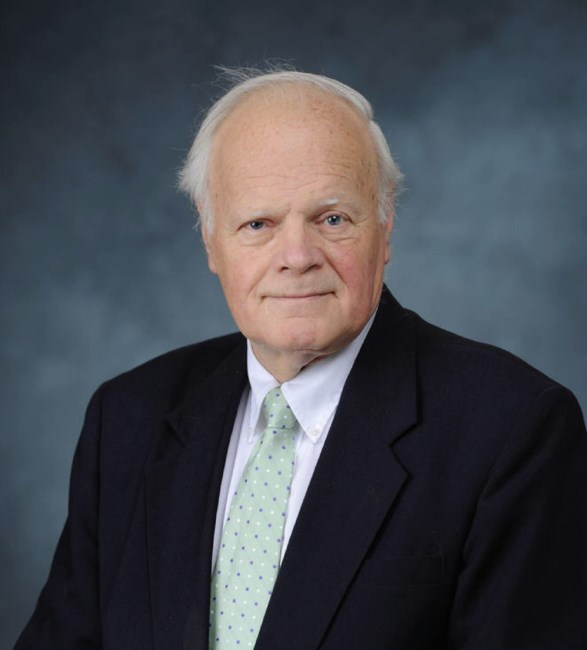 John M.(Jack) Seiner合作论文数Jamie L. Whitten National Center for Physical Acoustics, University of Mississippi7
 Joseph H. Ruf合作论文数NASA, Marshall Space Flight Ctr5
 Woutijn Johannes Baars合作论文数Aerodynamics, Wind Energy, Flight Performance and Propulsion, Faculty of Aerospace Engineering, Delft University of Technology5roger birkbeck合作论文数4
 Andres Canchero合作论文数Ctr Aeromech Res, Univ Texas Austin4matthew joachim合作论文数3
 Jonathan W. Herlan合作论文数University, University of Mississippi3
 Neeraj Sinha合作论文数Office of Principal Scientific Advisor, Government of India3
 Brian S. Thurow合作论文数Department of Aerospace Engineering, Auburn University3
 Lichuan Gui合作论文数3John Valdez合作论文数University of Texas2Richard Raspet合作论文数Department of Physics and Astronomy;University of Mississippi;University2Michael Ying Yang合作论文数2j m seiner合作论文数1shuan sockwell合作论文数1Raymundo Rojo合作论文数1bryan brock合作论文数1chandra kannepalli合作论文数1
 Romain Fiévet合作论文数Niels Bohr Institute1
 Burak A. Tuna合作论文数Mech & Mechatron Engn, Univ Waterloo1Carl R Hart合作论文数US Army, Engineer Res & Dev Ctr, Cold Reg Res & Engn Lab, 72 Lyme Rd, Hanover, NH 03755 USA1
 Zhang Likun (张黎昆)合作论文数Xiamen University1Song Qi合作论文数1
 Louis N. Cattafesta III合作论文数Illinois Institute of Technology1George Shumway合作论文数1
 Joel Mobley合作论文数oak ridge national laboratory1
 Serhiy Yarusevych合作论文数Dept Mech & Mechatron Engn, Univ Waterloo1Chandrasekhar Kannepalli合作论文数1
 Daniel G. Wren合作论文数National Center for Physical Acoustics;University of Mississippi;University;University of Mississippi, University1




