We create laterally large and low disorder quantum well based quantum dots to study single electron additions to two dimensional electron systems (2DES). Electrons tunnel into these dots across an AlGaAs tunnel barrier from a single $n+$ electrode. Using single-electron capacitance spectroscopy in a dilution refrigerator, we identify capacitance peaks for the addition of the first electron to a dot and record subsequent peaks in the addition spectrum up to occupancies of thousands of electrons. Here, we report two remarkable phenomena that occur in the filling factor range $\nu=2$ to $\nu=5$ while selectively probing electron additions to the edge states of the dot: (1) Coulomb blockade peaks arise from the entrance of two electrons rather than one; (2) at and near filling factor 5/2 and at fixed gate voltage, these double-height peaks appear uniformly with a periodicity of $h/2e$. At other filling factors in the range $\nu=2$ to $\nu=5$, the mean periodicity for the twice-height electron peaks remains $h/2e$, but the twice-height peaks are instead further bunched into pairs of double-height peaks, with pairs spaced $h/e$ apart. The unusual two-electron Coulomb blockade peaks suggest a novel pair tunneling effect that involves electron correlations that arise in the quantum dot, with spectra at $\nu=5/2$ identical to those previously only seen in superconducting dots.
It is considered well known since the work of Frohlich in the 1950’s that electrons can have an effective attraction via the exchange of phonons. Here I collect together a number of papers that show that attraction between electrons is possible using Coulomb interaction between electrons alone. Historically the Frohlich interaction played a key role in the BCS theory of superconductivity, but in hindsight that was the result of an inspired sleight of hand by BCS. Recall that the electron-phonon interaction g has its origin in Coulomb interaction between electrons and ions and is ∼ e, and the Frohlich interaction is second order in g. In BCS theory, the first order in e direct Coulomb repulsion was simply ignored. Adding back the Coulomb repulsion will give an interaction that is repulsive at all Matsubara frequencies, (which are the ones that count in BCS or Eliashberg theory, not real frequencies). Only the works by Bogoliubov and Anderson/Morel a few years later justified this step by appealing to the vast difference in energy scale between the phonon and the Fermi energy, leading to a downward renormalization of the Coulomb repulsion relative to the Frohlich attraction. W. Little wrote an influential paper in 1964 suggesting that a nearby polarizable electronic system can play the role of phonons and give rise to possible high temperature superconductivity. Over half a century later, there is scant evidence that this mechanism works in practice. Part of the difficulty is that electronic systems typically do not enjoy the separation of energy scale that was crucial for the phonon induced pairing mechanism. In the
In this work, we created laterally large and low disorder quantum well based quantum dots to study single electron additions to two dimensional electron gas systems(2DEG). Their single electron addition spectra has been studied using a capacitance technique in a dilution refrigerator. As a function of magnetic field and density, we measured the single electron addition energies from a completely empty dot, up to dot occupancies of thousands of electrons. For small dots, at low density and magnetic field, we found the expected non-interacting Fock-Darwin behavior. However, at high density and high magnetic field, we observed deviations from single particle picture which is suggestive of more novel physics. To observe collective behaviour in quantum dots, we created relatively larger quantum dots so that the dot would behave as a small two dimensional(2D) system. However, observing such behavior has been challenging due to the difficulty in the fabrication of sufficiently high quality devices. The quantum dots we are working on differ from those of previous works in that they do not contain any modulation doping nor a Schottky barrier above the dot. This new design eliminates all unscreened dopants. Instead, we populate carriers electrostatically by an external gate. Here, we report the observation in the addition spectra of interaction driven localized states and isolated tunneling to edge states. We see electron additions to the edge states between filling factors v = 1 and v = 2 with single flux quantum (h/e) periodicity in magnetic field. Remarkably, between filling factors V = 2 and V = 5, we observe the pairing of electron additions to states at the edges of the quantum dots with a corresponding 2e charge tunneling. Near filling factor 5/2 and at fixed gate voltage, these twice-height peaks appear uniformly with a periodicity of h/2e. At other filling factors in the range v = 2 5, the mean periodicity for the twice-height electron peaks remains h/2e, but the twice-height peaks are instead further bunched into pairs, with pairs spaced h/e apart. The filling factors for the observed h/2e periodicity coincide with those of a pairing phenomenon seen in conductance oscillations in Fabry-Perot interferometers[] that indicated inter-channel entanglement between edge channels. Moreover, the unusual 2-electron Coulomb blockade peaks suggest a 3 pair tunneling effect that involves electron correlations that arise in the quantum dot. Thesis Supervisor: Raymond C. Ashoori Title: Professor of Physics
We report unexpectedly large noise in the current from nanopatterned PbS quantum dot films. The noise is proportional to the current when the latter is varied by changing the source-drain bias, gate voltage or temperature. The spectral density of the noise is given by a power law in frequency at room temperature, but remarkably, we observe a transition to telegraph noise at lower temperatures. The probability distribution of the off-times follows a power law, reminiscent of fluorescence blinking in colloidal quantum dot systems. Our results are understood simply in terms of conductance fluctuations in a quasi-one dimensional percolation path, and more rigorously in terms of a model in which charge through the film is transmitted in discrete time intervals, with the distribution of intervals completely described by Levy statistics.
Colloidal quantum dot arrays with long organic ligands have better packing order than those with short ligands but are highly resistive, making low-bias conductance measurements impossible with conventional two-probe techniques. We use an integrated charge sensor to study transport in weakly coupled arrays in the low-bias regime, and we nanopattern the arrays to minimize packing disorder. We present the temperature and field dependence of the resistance for nanopatterned oleic-acid and n-butylamine-capped PbS arrays, measuring resistances as high as 10(18) Ω. We find that the conduction mechanism changes from nearest neighbor hopping in oleic-acid-capped PbS dots to Mott's variable range hopping in n-butylamine capped PbS dots. Our results can be understood in terms of a change in the interdot coupling strength or a change in density of trap states and highlight the importance of the capping ligand on charge transport through colloidal quantum dot arrays.
We investigate electron transport through a finite two dimensional mesoscopic periodic potential, consisting of an array of lateral quantum dots with electron density controlled by a global top gate. We observe a transition from an insulating state at low-bias voltages to a conducting state at high-bias voltages. The insulating state shows simply activated temperature dependence, with strongly gate voltage dependent activation energy. At low temperatures the transition between the insulating and conducting states becomes very abrupt and shows strong hysteresis. The high-bias behavior suggests underdamped transport through a periodic washboard potential resulting from collective motion.
We present the preparation and measurements of nanowires of single-crystal NbSe2. These nanowires were prepared on ultrathin (≲10 nm) flakes of NbSe2 mechanically exfoliated from a bulk single crystal using a process combining electron beam lithography and reactive plasma etching. The electrical contacts to the nanowires were prepared using Ti/Au. Our technique, which overcomes several limitations of methods developed previously for fabricating superconducting nanowires, also allows for the preparation of complex superconducting nanostructures with a desired geometry. Current-voltage characteristics of individual superconducting single-crystal nanowires with widths down to 30 nm and cross-sectional areas as low as 270 nm2 were measured.
Superconductors with a chiral p -wave pairing are of great interest because they could support Majorana modes that could enable the development of topological quantum computing technologies that are robust against decoherence. Sr 2 RuO 4 is widely believed to be a chiral p -wave superconductor. Yet, the mechanism by which superconductivity emerges in this, and indeed most other unconventional superconductors, remains unclear. Here we show that the local superconducting transition temperature in the vicinity of lattice dislocations in Sr 2 RuO 4 can be up to twice that of its bulk. This is all the more surprising for the fact that disorder is known to easily quench superconductivity in this material. With the help of a phenomenological theory that takes into account the crystalline symmetry near a dislocation and the pairing symmetry of Sr 2 RuO 4 , we predict that a similar enhancement should emerge as a consequence of symmetry reduction in any superconductor with a two-component order parameter.
An isolated superconductor with its size comparable to or smaller than its zero temperature superconducting coherence length should not host Abrikosov vortices, but may in principle still feature spatial variation in the superconducting order parameter. We report low-temperature electrical transport measurements on simply connected filled Al squares prepared by e-beam lithography featuring a lateral sample size ranging from 126 nm to 616 nm, with their zero-temperature superconducting coherence lengths, ξ(0), ranging from ∼88–111 nm. We found that phase diagrams for these samples in the magnetic field and temperature space exhibit the expected features for vortex admission in large devices, but no vortex admission when the size becomes comparable to ξ(0). In the smallest samples we observe steps in the phase diagram that may be attributable to the effects of the measurement leads.
Odd-parity, spin-triplet superconductor Sr2RuO4 has been found to feature exotic vortex physics including half-flux quanta trapped in a doubly connected sample and the formation of vortex lattices at low fields. The consequences of these vortex states on the low-temperature magnetoresistive behavior of mesoscopic samples of Sr2RuO4 were investigated in this work using ring device fabricated on mechanically exfoliated single crystals of Sr2RuO4 by photolithography and focused ion beam. With the magnetic field applied perpendicular to the in-plane direction, thin-wall rings of Sr2RuO4 were found to exhibit pronounced quantum oscillations with a conventional period of the full-flux quantum even though the unexpectedly large amplitude and the number of oscillations suggest the observation of vortex-flow-dominated magnetoresistance oscillations rather than a conventional Little-Parks effect. For rings with a thick wall, two distinct periods of quantum oscillations were found in high and low field regimes, respectively, which we argue to be associated with the "lock-in" of a vortex lattice in these thick-wall rings. No evidence for half-flux-quantum resistance oscillations were identified in any sample measured so far without the presence of an in-plane field.
 Ying Liu (刘荧)合作论文数Department of Physics, Eberly College of Science, The Pennsylvania State University25
 Conor P. Puls合作论文数10
 David Fobes合作论文数Department of Physics;Tulane University;Department of Physics, Tulane University9
 Zhiqiang Mao合作论文数Department of Materials Science and Engineering, College of Earth and Mineral Sciences, The Pennsylvania State University;Department of Chemistry, Eberly College of Science, The Pennsylvania State University7
 Zhuan Xu (许祝安)合作论文数Institute of Condensed Matter Physics, School of Physics, Zhejiang University7
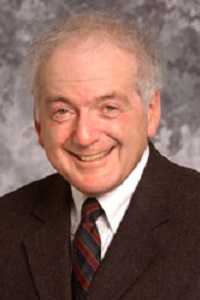 Allen Goldman合作论文数School of Physics and Astronomy, College of Science and Engineering, University of Minnesota6
 Tijiang Liu合作论文数Dept Phys & Engn Phys, Tulane Univ6Yiqun Ying合作论文数5
 Xinxin Cai (蔡昕昕)合作论文数Department of Physics, College of Science, Southern University of Science and Technology5
 Anand Bhattacharya合作论文数Argonne National Laboratory5
 Yan Xin合作论文数The National High Magnetic Field Laboratory, Florida State University5
 Linjun Li (李林军)合作论文数State Key Laboratory of Modern Optical Instrumentation, College of Optical Science and Engineering, Zhejiang University5
 Haohua Wang (王浩华)合作论文数School of Physics, Zhejiang University5
 Joshua A. Robinson合作论文数Department of Materials Science and Engineering, College of Earth and Mineral Sciences, The Pennsylvania State University5Shaun A. Mills合作论文数4Y. A. Ying合作论文数4
 Spencer Tomarken合作论文数Dept Phys, MIT4
 Ahmet Demir合作论文数Phys Dept, Bilkent Univ4
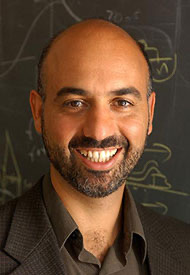 Raymond Ashoori合作论文数Department of Physics, Massachusetts Institute of Technology;Center for Integrated Quantum Materials, Massachusetts Institute of Technology;Center for Quantum Engineering, Massachusetts Institute of Technology4Chen-Yi Shen合作论文数4Nirat Ray合作论文数Theoretical Sciences Unit;Jawaharlal Nehru Centre for Advanced Scientific Research;Theoretical Sciences Unit, Jawaharlal Nehru Centre for Advanced Scientific Research4
 Marc A. Kastner合作论文数Department of Physics, Massachusetts Institute of Technology4Melissa Eblen-Zayas合作论文数3Ben Clouser合作论文数3
 Jacob J. Wisser合作论文数Dept Appl Phys, Stanford Univ3Ken W. West合作论文数3J. Forster合作论文数3A. L. Kobrinskii合作论文数3M.A. Eblen合作论文数3Conor P Puls合作论文数3kelly m mccarthy合作论文数2benjamin clouser合作论文数2Samuel Aronson合作论文数2
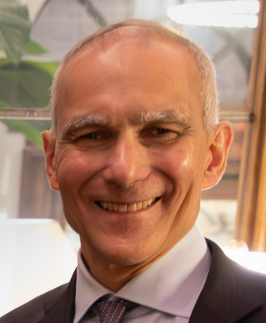 Moungi Bawendi (莫吉·巴旺迪)合作论文数Department of Chemistry, Massachusetts Institute of Technology2Kirk Baldwin合作论文数2Jeong-Sun Moon合作论文数HRL Laboratories2Grinolds Darcy D W合作论文数2Zhongquan Mao (毛忠泉)合作论文数School of Physics and Optoelectronics, South China University of Technology2P.C. Eklund合作论文数2
 Loren N. Pfeiffer合作论文数Pfeiffer Group, Molecular Beam Epitaxy Lab, Department of Electrical and Computer Engineering, Materials Institute, Princeton University2
 D. Kurt Gaskill合作论文数Naval Research Laboratory, Washington, DC 20375, USA2Kong Hauw Sarwa Bakti Tan合作论文数2Joseph P. Stitt合作论文数2Mark A. Fanton合作论文数pennsylvania state university2
 Joseph L. Tedesco合作论文数Department of chemistry, University of Toronto2Paul M. Campbell合作论文数St. Michael's Hospital, University of Toronto2HAO E合作论文数1aaron todd合作论文数1




