This superb book should help set the agenda for philosophical work on causation for years to come. Indeed, its impact deserves to be felt more widely: philosophers who don't give a fig about causation will still profit a great deal by studying this book closely. It is not faultless: in particular, Woodward's treatment in chapter 2 of his favored "interventionist" account of causation and its alternatives may leave the uninitiated reader lost. That said, these defects do nothing to undermine the main philosophical achievement of the book, which is to articulate, defend, and provide detailed illustrations of the power of a certain methodological orientation to the philosophical study of causation that Woodward calls the "functional approach."The word functional signals that the questions that should be of primary concern to the philosophical study of causation are questions, roughly, about the function—point, rationale, goal-serving capacity—of our concept of causation, along with corresponding questions about the kinds of worldly structures this concept answers to. (We'll see shortly that, for reasons Woodward expertly lays out, talk of "our concept" of causation is too limiting. But if you're a philosopher new to Woodward's approach, it's probably the best way to start to orient you.) Chapter 1 lays out the functional approach in the abstract, paying special attention to the ways in which it involves weaving together descriptive and normative inquiry into human causal cognition. Chapter 3 draws out a number of specific and important lessons for how inquiry into causation ought to proceed, given the functional approach; along the way, it patiently constructs devastating challenges to standard ways that philosophers rely on "intuitions" about cases, while at the same defending importantly different ways in which such intuitions can help guide inquiry. Together, these chapters are a methodological tour de force. Summarizing them adequately isn't possible here. What I'll do instead is to approach the main ideas obliquely, by considering a way that philosophical dialectic about causation could, but typically doesn't, proceed.Suppose I advance a simple Mackie-style analysis of causation: event C is a cause of event E iff (1) C and E both occur; (2) C precedes E; and (3) there is some true proposition P about the circumstances in which C and E occur such that the conjunction of P, the proposition that C occurs, and the proposition L that captures the fundamental laws entails the proposition that E occurs, but the conjunction of P and L alone does not. A nonstarter! After all, it's child's play to produce cases where C and E meet these conditions, but where intuition judges C and E to be joint effects of some common cause. In short, this analysis conflates causation with common-cause-induced correlation, and so must be rejected. Maybe we add bells and whistles to fix the analysis; maybe we try something completely different. But either way, the analysis as it stands has been refuted.What I've just described is, I trust, an utterly familiar example of how philosophical back-and-forth proceeds (and not just when the subject is causation). But now consider a kind of thought experiment rarely entertained in these dialectical contexts: Imagine a community of people whose concept of causation was exactly captured by this analysis. So they don't see any distinction between what we call "causation" and what we call "common-cause-induced correlation." What, if anything, would be wrong with them? Put another way, why not adopt their way of thinking about causation? Those are the kinds of question Woodward thinks we should be asking. I think he is dead right.Note that to answer such questions well, we have to set aside the temptation to pound the table and say things like "They wouldn't really be thinking about causation; that's what's wrong!" Woodward gives a thorough and conscientious airing (in chapters 1 and 3) to similar kinds of philosophical moves and, to my mind, decisively shows how unproductive they are. What he offers instead is a program for addressing these questions by integrating different kinds of inquiry, some more empirical and some more philosophical. Adapting his own description (151) somewhat: (1) We need a clear understanding of the structure of human causal cognition, one that highlights its most important and central features and explains how these features subserve such things as decision-making and strategies for learning.(2) We need a clear formulation, at the right level of abstraction and generality, of goals whose achievement is plausibly enabled by the ability to engage in causal cognition with the features described in (1) (for example, the goals of manipulating, predicting, and controlling aspects of the world around us).(3) We need a kind of empirical-cum-normative analysis of how and why different features of causal cognition contribute to achieving the goals described in (2).(4) In pursuit of (3), we need an account—again, at the right level of abstraction and generality—of the kinds of worldly structures (for example, structures of interventionist counterfactual dependence) that human causal cognition is responsive to.(5) We need a clear understanding of why (and to what extent) achieving the goals described in (2) is worthwhile—why, in Woodward's words, achieving them counts as a kind of "success."Returning briefly to our thought experiment, I think we can see, dimly but well enough, that if the goals in (2) at least include those Woodward consistently highlights—prediction, manipulation, and control—then our imaginary humans will do quite badly at using what they recognize as information about the causal structure of the world around them as a basis for manipulating and controlling their world. But the point of the thought experiment is really to get us to think harder and more productively about non-imaginary humans, and the complex interrelationships between the structure of human causal cognition, the structure of the world, and core sources of human value.Woodward's articulation, defense, and illustration of this program is so rich and sophisticated that I can only hope to highlight a couple of key points. First, the kind of inquiry Woodward is urging philosophers of causation to engage in is necessarily interdisciplinary. All of it? Can't the understanding described in (1) be achieved just by empirical psychology? In practice, no: as chapter 4's well-curated review of results from the empirical psychological literature demonstrates, philosophical inquiry has played a crucial role both in generating hypotheses worth testing and in developing conceptual frameworks that permit the formulation of such hypotheses. (We might add that what counts as "important" or "central" can't exactly be settled by experiment.) On the flip side, even inquiries like (5) will require close attention to empirically discoverable limitations on human causal cognition, lest we propose "from the armchair" goals that, however desirable, only angelic causal cognition could achieve.Second, you may have noticed the shift from talk of "our concept" of causation to talk of "human causal cognition." Here I am following Woodward's lead: he argues persuasively that focusing exclusively on what is part of, or involved in, "our concept" of causation will lead us to overlook features of causal cognition of vital importance. Woodward's working example is invariance: roughly, the extent to which a given causal relationship holds across a wide variety of actual and possible circumstances. Chapter 5 provides a detailed philosophical exposition of invariance; chapter 6 insightfully applies this discussion to a range of well-known examples from the philosophical literature, including (my favorite) puzzles about double-prevention; chapter 7 walks the reader through a series of fascinating empirical studies that help bring out the role of invariance in causal cognition. These chapters make a compelling case that, from the perspective of Woodward's functionalist approach, cognitive strategies for tracking and attending to different kinds of invariance are a very important part of human causal cognition. As just one example, chapter 5 ends with a brilliant discussion comparing invariance as a goal of inquiry with "explanatoriness" as such a goal; this passage should be required reading for any philosopher interested in "inference to the best explanation." But as Woodward notes, invariance does not seem to matter to the traditional philosophical task of analyzing our concept of causation, as witness the ease with which we can construct examples in which it is "intuitively clear" that C causes E, but where this causal relationship is highly non-invariant. So much the worse for letting "our concept" delimit the boundaries of inquiry into causation. Chapter 8 closes out the book with some more tentative—in part because largely empirically untested—hypotheses about the importance to causal cognition of the concept of "proportionality" between cause and effect.Chapter 2 surveys philosophical theories of causation, devoting the most space to the "interventionist" approach Woodward favors. This chapter is the one weak spot in the book; readers not already at least somewhat familiar with contemporary philosophical debates about causation may find it more confusing than helpful. The treatment of rival views is oddly selective: for example, regularity theories of causation need not presuppose (as Woodward seems to suggest) a regularity theory of law; and one can pursue a Lewis-style counterfactual account without adopting Lewis's peculiar semantics for counterfactuals. The treatment of interventionism doesn't alert the reader to a range of important critiques in the literature. Finally, the distinction between "type-causal claims" and "token-causal claims" that the chapter begins with—and that is crucial to understanding the target of inquiry for the functional approach—never comes into focus sharply enough. The upshot is that "novice" readers would be well advised to augment chapter 2 with some well-chosen Stanford Encyclopedia of Philosophy articles and perhaps a foray into the literature critical of interventionism.Still, some perspective: while the problems in chapter 2 create a kind of barrier to entry, they in no way undermine the impressive case Woodward makes for his functionalist approach. My own view, to put it bluntly, is that philosophers working on causation should just stop doing the kind of thing Lewis taught us to do, and devote their energies and talents to pursuing the functionalist program instead. More: one thing that makes the functional approach so genuinely thrilling is the prospect of applying it to other topics. Woodward mentions a few in passing: "knowledge," "free choice," "morally responsible" (34–35). (Parroting our earlier thought experiment, we might productively ask what would go wrong for a community of people whose only knowledge-like concept just was the concept of justified true belief.) Like Woodward, I suspect the list could be extended both considerably and profitably, and the reason I hope this book gets read very widely within philosophy is precisely so that the invitation Woodward extends gets taken up: "I see what follows as a sort of testing ground, in connection with one particular set of concepts, of the merits of [the functionalist] approach" (35). In my view, these merits are not just considerable but game-changing.
Abstract In the metaphysics of laws of nature, one fundamental philosophical question is whether we should give a metaphysical or rather an epistemic account of what they are; that is the core issue that divides ‘Humeans’ from ‘anti-Humeans’. In much the same way, a key question we face with essences is whether to give a metaphysical or rather an epistemic account of what they are. (So note well: in choosing to deploy the term ‘essence’ this chapter is not taking sides on the ‘Go metaphysical, or go epistemic?’ question. Just as we can be anti-metaphysical and still freely use the expression ‘law of nature’, so too we can be anti-metaphysical and freely use ‘essence’.) And the advantage of connecting these two topics is that we have made enough progress on the former for the lessons learned to provide valuable guidance for investigating the latter. Despite the author’s agnosticism about which approach is correct, the chapter mostly investigates the prospects for the ‘go epistemic’ option—what it calls ‘Humean reductionism about essence’.
Recent enthusiasm for grounding often begins by observing that inquiry in metaphysics (and other areas) features a distinctive species of noncausal explanation. Having labeled this species "grounding explanation," it's a short step to the conclusion that we need a philosophical theory of grounding itself: an allegedly fundamental relation of metaphysical dependency between facts, such that a "grounding explanation" of some fact succeeds by providing information about what "grounds" that fact. This short step is hasty. For another live option is to accept that grounding explanation is a legitimate form of explanation, but to give it a thoroughly epistemic treatment, one that does not see it as involving any sort of special metaphysical relationship or structure at all. This paper sketches such a treatment, drawing inspiration from reflections on explanatory structure in mathematics.
Philosophers widely if not universally agree that physical and metaphysical modality are to be distinguished. Metaphysical modality is supposed to be strictly broader, as witness what seems to many to be the obvious truth that the laws of nature – and so, the merely physical necessities – could have been otherwise, in an appropriately "metaphysical" sense of "could have been". Different particles frequently exhibit different values for mass. But it's an unbroken regularity that no particle by itself ever exhibits, at the same time, two distinct values for mass. One might think that explanation is important, and even that certain key metaphysical notions are needed to say what explanation is (e.g., the notion of a causal power or capacity), but revolt at the "fundamentalist" claim that all relations of explanatory dependence are grounded in constraints imposed by the most basic ingredients of the SCARF.
Causal language in everyday life and even in policymaking contexts encourages a certain kind of mistake: given some quantifiable outcome (say, the total number of years of life lost in a certain community, over a certain time period), it may be taken for granted that it makes sense to ask, How much of this outcome was due to its various causes? But only in very rare circumstances—when the causal factors in question act additively—is this question well posed. This chapter explains what this additivity requirement amounts to, why it is almost never met, and why an alternative that some have found beguiling—draw on the game-theoretic concept of “Shapley values”—provides no refuge. In discussions of the global burden of disease, the question of what percentage of a given outcome each of its causes “contributed” to that outcome should be rejected as meaningless.
This conclusion presents some closing thoughts on the concepts discussed in the preceeding chapters of the book. The book focuses on the institutional changes in the genetic resources regime complex. It explores the theory that intentionally neglects the domestic sources of foreign policy in order to achieve greater parsimony. The book explains both club cooperation and institutional layering as distinct types of institutional change in regime complexes. It presents case studies regarding pre-existing disclosure regimes in several European Union (EU) member states and Switzerland, which would have limited the legislative and regulatory changes necessary for complying with an international obligation to require disclosure of origin. The EU's bargaining behavior is thus the result of complex, internal coordination processes among member states and the supranational institutions. Situation structure also promises …
I often like to ask my students howmany of them have heard the advice not to confuse correlation with causation. Most raise their hands. I then ask how many of them have taken a class that explained, precisely, what correlation is. Not as many raise their hands–but still, plenty do, and some of them can even go on to articulate, quite lucidly, some of the different ways in which statistical correlation can be precisely defined. Then I ask a mean question. “Have your statistics classes also explained to you, with similar precision, what causation is?” Nope. Never. That is too bad: after all, the advice not to confuse X with Y falls a little flat, if we do not really know what Y is. But it is not just the value of this (excellent) advice that is at stake. As I will try to explain, clarity about what causal structure is–or better, clarity about one thing we can usefully mean by “causal structure”–promises to bring clarity about the very aims of scientific inquiry. The first goal of this essay is to sketch one especially simple, attractive account of causal structure and to advertise its virtues, by connecting it explicitly to the most general aims of inquiry. The account I will lay out is, more or less, a version of a kind of counterfactual or “interventionist” account that has recently gained a good deal of popularity in the literature; see especially Woodward (2005) and Pearl (2009). But I find the contemporary literature on interventionism, structural equations, causal modeling, and so on unnervingly quietist
Chapter 17 Humean Reductionism about Laws of Nature Ned Hall, Ned HallSearch for more papers by this author Ned Hall, Ned HallSearch for more papers by this author Book Editor(s):Barry Loewer, Barry LoewerSearch for more papers by this authorJonathan Schaffer, Jonathan SchafferSearch for more papers by this author First published: 06 March 2015 https://doi.org/10.1002/9781118398593.ch17Citations: 61 AboutPDFPDF ToolsRequest permissionExport citationAdd to favoritesTrack citation ShareShareShare a linkShare onEmailFacebookTwitterLinkedInRedditWechat Summary This chapter investigates the prospects for an important position that falls under the "mere patterns" approach: what, for reasons that will emerge, the author calls"Humean reductionism" about laws of nature, a view championed perhaps most prominently by David Lewis. He reviews some of the most interesting arguments against this position from the literature, and adds some of his own that, he thinks, are more effective. The chapter considers how the best system account (BSA) would apply to the Newtonian particle world. The BSA has been challenged in a wide variety of ways: it violates certain intuitions; It makes a hash out of the connection between laws on the one hand, and counterfactuals, explanation, and induction on the other. The author thinks that the problem he has raised-challenging though he hopes it is, is really an occasion for the Humean reductionist to sharpen his position still further. References Beebee, H. (2000). The non-governing conception of laws of nature. Philosophy and Phenomenological Research, 61, 571–93. 10.2307/2653613 Web of Science®Google Scholar Earman, J. (1984). Laws of nature: the empiricist challenge. In R.J. Bogdan (Ed.), D.M. Armstrong, pp. 191–223. Boston: Reidel. 10.1007/978-94-009-6280-4_8 Google Scholar Hall, N. (2012). Humean reductionism about laws of nature: director's cut. Unpublished manuscript, a much more comprehensive version of the present chapter. Google Scholar Lewis, D. (1983). New work for a theory of universals. Australasian Journal of Philosophy, 61, 343–77. 10.1080/00048408312341131 Web of Science®Google Scholar Lewis, D. (1986). Philosophical papers, Vol. II. Oxford: Oxford University Press. Google Scholar Lewis, D. (1994). Humean supervenience debugged. Mind, 103, 473–90. 10.1093/mind/103.412.473 Web of Science®Google Scholar Maudlin, T. (forthcoming). Philosophy of physics. Princeton, NJ: Princeton University Press. Google Scholar Xia, Z. (1992). The existence of noncollision singularities in Newtonian systems. Annals of Mathematics, 135, 411–68. 10.2307/2946572 Web of Science®Google Scholar Albert, D. (2000). Time and chance. Cambridge, MA: Harvard University Press. 10.4159/9780674020139 Google Scholar Arntzenius, F. & Hall, N. (2003). On what we know about chance. British Journal for the Philosophy of Science, 54, 171–9. 10.1093/bjps/54.2.171 Web of Science®Google Scholar Cartwright, N. (1999). The dappled world. Oxford: Oxford University Press. 10.1017/CBO9781139167093 Google Scholar Chalmers, D. (2002). Does conceivability entail possibility? In T. Gendler & J. Hawthorne (Eds.), Conceivability and possibility, pp. 145–200. Oxford: Oxford University Press. 10.1093/oso/9780198250890.003.0004 Google Scholar Elga, A. (2004). Infinitesimal chances and the laws of nature. Australasian Journal of Philosophy, 82, 67–76. 10.1080/713659804 Web of Science®Google Scholar Hall, N. (2004). Two mistakes about credence and chance. Australasian Journal of Philosophy, 82, 93–111. 10.1080/713659806 Web of Science®Google Scholar Hall, N. (2005). Causation and ceteris paribus laws. Harvard Review of Philosophy, 13, 80–99. 10.5840/harvardreview20051316 Google Scholar Ismael, J. (1996). What chances could not be. British Journal for the Philosophy of Science, 47, 79–91. Web of Science®Google Scholar Lewis, D. (1980). A subjectivist's guide to objective chance. Reprinted in Lewis (1986), pp. 83–113. Google Scholar Loewer, B. (1996). Humean supervenience. Philosophical Topics, 24, 101–27. 10.5840/philtopics199624112 Google Scholar Loewer, B. (2001). Determinism and chance. Studies in History and Philosophy of Modern Physics, 32B, 609–20. 10.1016/S1355-2198(01)00028-4 Web of Science®Google Scholar Maudlin, T. (2007a). The metaphysics within physics. Oxford: Oxford University Press. 10.1093/acprof:oso/9780199218219.001.0001 Google Scholar Schaffer, J. (2003). Principled chances. British Journal for the Philosophy of Science, 54, 27–41. 10.1093/bjps/54.1.27 Web of Science®Google Scholar Shoemaker, S. (1980). Causality and properties. In P. van Inwagen (Ed.), Time and cause, pp. 109–35. Dordrecht: Reidel. 10.1007/978-94-017-3528-5_7 Web of Science®Google Scholar Tooley, M. (1977). The nature of laws. Canadian Journal of Philosophy, 7, 667–98. 10.1080/00455091.1977.10716190 Web of Science®Google Scholar Vranas, P. (2002). Who's afraid of undermining? Why the principal principle might not contradict Humean supervenience. Erkenntnis, 57, 151–74. 10.1023/A:1020986112495 Web of Science®Google Scholar Citing Literature A Companion to David Lewis ReferencesRelatedInformation
Preface 1. The scope and aims of this guide 2. Framework and preliminaries 3. Varieties of redundant causation 4. Causation involving omissions 5. Cases that threaten transitivity 6. Concluding remarks References Index
This chapter focuses on examples that, in one way or another, involve omissions, that is, failures of events to occur. We discuss the metaphysical status of omissions, show how omission involving causation exhibits striking dissimilarities from ordinary causation, and look closely at structures involving causation by omission, prevention, and combinations of prevention and preemption. We then look carefully at the problems these structures create for reductive accounts of causation, including causal modeling accounts, and pay particular attention to some recent and sophisticated attempts to connect the treatment of omission-involving causation with a distinction between default states and deviant states. We conclude that we find ourselves in the position of being unable to dismiss causation involving omissions, unable to assimilate it to garden-variety causation, and unable to give a decently unified or complete account of it using any of the standard approaches to causation that we have canvassed.
Transitivity seems to underlie basic features of our causal reasoning: it is typical to justify a claim that C causes E by pointing out that C causes D, which in turn causes E. Preserving transitivity seems to be a basic desideratum for an adequate analysis of causation, and appealing to it has often seemed essential for handling problem cases like those involving preemption. But recent work on causation has raised serious challenges to the claim that it is invariably transitive. The aim of this chapter is to distinguish these various challenges and to consider several responses to these challenges in detail. To that end, we critically discuss a causal modelling proposal and a contrastive proposal for handling challenging cases that combine transitivity with double prevention. We also discuss the nuances of switching cases, and show how to avoid mismatch of aspects by changing to a more subtle treatment of causes and effects.
Philosophy and Phenomenological ResearchVolume 84, Issue 2 p. 474-482 Comments on Michael Strevens’s Depth NED HALL, NED HALL Harvard UniversitySearch for more papers by this author NED HALL, NED HALL Harvard UniversitySearch for more papers by this author First published: 21 March 2012 https://doi.org/10.1111/j.1933-1592.2011.00575.xCitations: 1Read the full textAboutPDF ToolsRequest permissionExport citationAdd to favoritesTrack citation ShareShare Give accessShare full text accessShare full-text accessPlease review our Terms and Conditions of Use and check box below to share full-text version of article.I have read and accept the Wiley Online Library Terms and Conditions of UseShareable LinkUse the link below to share a full-text version of this article with your friends and colleagues. Learn more.Copy URL Citing Literature Volume84, Issue2March 2012Pages 474-482 RelatedInformation
What is the compositional structure of reality? That question divides naturally into these two: What is the compositional structure of the particulars that populate reality? And what is the structure of the properties and relations that fix what these entities are like? David Lewis‘s work in ontology and mereology provides the materials for an extraordinarily clean answer to the first question. First, among the particulars that populate reality are mereological simples: entities that have no proper parts. (A plausible candidate for these simples: spacetime points.) Second, every collection of such entities has a unique mereological fusion. And third, every particular is either a simple, or a fusion of simples. That‘s it. I propose to take this answer on board. What, then, about our second question? Here it looks as though we can draw on an additional Lewisian thesis:
Two terms used as frameworks for scientific experimentation--the "hypothesis" and the "model"--carry distinct philosophical assumptions, with important consequences for the practicing scientist.
 Laurie Paul合作论文数Faculty of Philosophy, Philosophy of Science and Religious Studies, Ludwig-Maximilians-Universitat Munchen4
 Alan Hájek合作论文数School of Philosophy, Research School of Social Sciences, College of Arts and Social Sciences, The Australian National University2
 Phil Dowe合作论文数School of Philosophy, Research School of Social Sciences, Research School of Social Sciences, College of Arts and Social Sciences, The Australian National University2
 Alex Byrne合作论文数Department of Linguistics and Philosophy, Massachusetts Institute of Technology2Frank Arntzenius合作论文数2h goenner合作论文数1
 M. Daud Rafiqpoor合作论文数1Margaret F. Brennan合作论文数1Thomas Greiber合作论文数1John Earman合作论文数1william h lesser合作论文数1
 Fulya Batur合作论文数1
 Kateryna Wowk合作论文数1Christopher Fuchs合作论文数1Laurie Brown合作论文数1
 Regine Andersen合作论文数1Talal Debs合作论文数1miriam balgos合作论文数1
 Loic G. Carvalho合作论文数1
 Arianna Broggiato合作论文数1
 Craig Callender合作论文数Department of Philosophy, Division of Arts and Humanities, University of California, San Diego1Joachim Hirsch合作论文数1
 Don Howard合作论文数Department of Philosophy, University of Notre Dame1Michael Dickson合作论文数1Jonathan Bain合作论文数1
 Brendan Coolsaet合作论文数Ctr Synth & Anal Biodivers CESAB, French Fdn Res Biodivers FRB1
 Robert Blasiak合作论文数Grad Sch Agr & Life Sci, Univ Tokyo1Andrew Bennett合作论文数Georgetown Univ1
 Arti K. Rai合作论文数School of Law, Duke University1
 Katherine A. Brading合作论文数Department of Philosophy, Trinity College of Arts & Sciences, Duke University1
 Steven E. Sexton合作论文数Department of Economics, Trinity College of Arts & Sciences, Duke University1
 Karen Alter合作论文数Weinberg College of Arts and Sciences, Northwestern University1
 Gordon Belot合作论文数Department of Philosophy, College of Literature, Science, and the Arts, University of Michigan1
 Jeffrey Bub合作论文数Department of Philosophy, University of Maryland1
 Hans Halvorson合作论文数Department of Philosophy, Princeton University1
 Mariana Mazzucato合作论文数Institute for Innovation and Public Purpose, University College London1
 Giles Atkinson合作论文数Environmental Economics and Policy, Department of Geography and Environment, London School of Economics and Political Science1
 Thomas Bernauer合作论文数Department of Humanities, Social and Political , Institute of Science, Technology and Policy, Eidgenössische Technische Hochschule Zürich/Center for Comparative and International, Eidgenössische Technische Hochschule Zürich1
 Scott Barrett合作论文数Lenfest-Earth Institute, School of International and Public Affairs, Columbia University1
 Peter L. Galison合作论文数Department of Art, Film, and Visual Studies, Harvard University/Department of Philosophy, Harvard University/Department of Physics, Harvard University/Department of the History of Science, Harvard University1
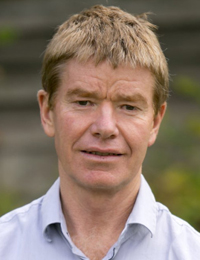 Steven L. Chown合作论文数School of Biological Sciences, Monash University1
 Adrian Kay合作论文数Australian National University1
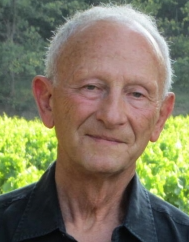 Arthur Fine合作论文数Department of Philosophy, University of Washington1
 Moon Katherine合作论文数1
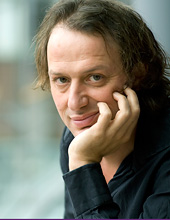 Christian Azar合作论文数Department of Space, Earth and Environment, Chalmers University of Technology1
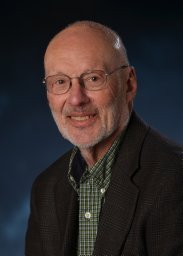 Allan Franklin合作论文数1
 Steven French合作论文数School of Philosophy, University of Leeds1
 Robert O. Keohane合作论文数Princeton University,Woodrow Wilson School of Public and International Affairs1
 Carlos Duarte合作论文数LaSIGE and Informatics Department, University of Lisbon1




