In recent years, the magnetic turbulator, which employs an electromagnetic vibration (EMV) technique, has gained popularity for its effectiveness in enhancing heat transfer within heat exchangers. This study introduces a novel approach by using solid strips instead of traditional flexible strips to construct solid magnetic strip turbulators (SMST) for the first time. Additionally, a helical coiled wire turbulator (HCWT) was combined with the SMST to investigate the synergistic effects of active and passive methods. Tests were conducted on SMST with various strip widths ranging from 5 to 7 mm and at different flow rates ranging 0.5 to 4 l/min, extensively analyzing the thermal-frictional parameters. The results revealed that the oscillating motion of the SMST induced higher turbulence near the tube wall compared to traditional turbulators. Moreover, an increase in strip width led to higher heat transfer coefficient and friction factor levels. When SMST and HCWT were used independently, heat transfer increased by up to 311 % and 201 %, respectively. When used together, heat transfer coefficient and friction factor increased by up to 6.55 and 3.85 times those of a plain tube, respectively. In an optimal scenario, the thermal efficiency factor increased to 4.18.
In this research, the novel approach of the electromagnetic vibration (EMV) method was utilized for the first time to increase heat transfer in a double-tube heat exchanger (DTHEX). In this method, a magnetic turbulator (comprising a magnet and an oscillator) was installed inside a central tube that vibrated using an AC magnetic field. The influences of various parameters such as the geometry of the oscillator, magnet position, employing nanofluids, and fluid flow were assessed on the thermal-frictional behavior. The thermal enhancement factor (TEF) was assessed to select the optimal option. The studied options were economically evaluated based on energy efficiency. According to the results, the maximum heat transfer rate could be achieved when the magnet is positioned at 0.374. L from the tube inlet. The highest value observed for overall heat transfer was related to CuO-water 1% nanofluid, which was 277.5% more than simple heat exchanger. Also, the findings showed that heat transfer can be increased up to 13.3 times the energy used and reached to TEF = 3.92, which is a very significant number. Regarding the high potential of the EMV in reaching high thermal performance, it can be utilized as a game changer to save materials, energy, and compaction of the heat exchangers and solar systems.
This study investigates a novel heat transfer enhancement method named electromagnetic vibration (EMV) method. For the first time a stretched oscillator with geometries of string and strip was placed coaxially inside a heated copper tube and induced to vibrate at the natural frequencies. Longitudinal vibration of the stretched oscillators creates harsh turbulence, radial flow and vortexes inside the heated tube. Tests were conducted for various vibrational frequencies ranging 0 to 1 KHz in different mass flow rates. The experimental results indicated that oscillator with the geometry of strip has the better thermal performance; also the heat transfer coefficient can be increased with increasing vibration frequency from 2.18 to 2.50 folds. For comprehensive analyze at high frequency vibrations, a numerical model was conducted for the vibrating strip geometry to evaluate this new method capability in heat transfer performance enhancement. The numerical study shows that at 1 KHz frequency, heat transfer coefficient and thermal enhancement factor (TEF) can reach up to 32.2 and 14.2 fold compare to the plain tube, respectively. This magnificent increment shows the high potential of the EMV method as a new heat transfer augmentation technique.
This study proposes a novel active method, the electromagnetic vibration method, to augment heat transfer in a heated copper tube. To that end, a stretched wire turbulator with a designed vibrational frequency is installed in the middle of a tube. The water, Al2O3-water, and CuO-water with different volume fraction(phi) ranging 1% to 2% is employed as working fluids. The tests are conducted for various mass flow rates, and the results are compared. The findings revealed that the vibrating wire turbulator could significantly affect the heat transfer rate. The results showed that the oscillator vibration has a double effect on the heat transfer rate of nanofluids. The results showed that at the mass flow rate of 0.47 L/min, in the best case, CuO-water nanofluid alone in-creases the average heat transfer coefficient by 21.1%, while using vibrating wire turbulator, this value can be increased up to 150.7%. Also, the results show the fact that by increasing (phi), and inserting vibrating wire turbulator simultaneously for CuO-water nanofluid, thermal enhancement factor can be increased from 1.09 to 1.91. To this end, it can be said that the vibrating wire turbulator magnified the heat transfer rate in the all studied nanofluids. Finally, the sedimentation time of the nanoparticles for the case with/without the vibrating wire turbulator is compared. Samples observation shows a notable delay in deposition of nanofluids by employing vibrating wire turbulator.
The nano encapsulated phase change materials are of the great energy storage potential in various engineering applications. Since they are new nanomaterials, new models for understanding their thermal behavior and capability are essential. This work aims to investigate the unsteady thermal behavior of Nano-Encapsulated Phase Change Material (NEPCM) suspensions in a cylindrical cavity. The particles contain a Phase Change Material (PCM) core, which can absorb/release a substantial amount of thermal energy upon phase change. The phase change particles are well dispersed in a liquid fluid and freely move along with the fluid. The flow, heat transfer, and the particle phase change were modeled using partial differential equations. A non-dimensional approach was employed to generalize the study. The unsteady charging and discharging behavior of the NEPCM suspension are investigated for the volume fraction of the NEPCM particles, fusion temperature of nanoparticles, Stefan number, and the Rayleigh number. Numerical results show that an increment in the Stefan number, i.e., Ste, can significantly reduce the Nusselt number, i.e., Nua, at the charging mode of the system. However, the dependency of the Nua at the discharging mode on the Ste is negligible. Also, it was found that the effect of the fusion temperature of the particle's core (hf) on heat transfer depends on the working mode of the system. In the charging mode, using a higher value of hf decreases the heat transfer rate. Reversibly, a higher value of hf inhibits the Nua during discharging state. Furthermore, the results show that for Ra = 106, Ste = 0.2, and hf = 0.1, a rise of / from 0 to 0.05 leads in about 1.73 and 1.55 times of improvement in the value of Nua for the cases of the melting and solidification of the core of NEPCM particles. (C) 2020 The Society of Powder Technology Japan. Published by Elsevier B.V. and The Society of Powder Technology Japan. All rights reserved.
Purpose This paper aims to numerically investigate the natural convection heat transfer of a hybrid nanofluid into a porous cavity exposed to a variable magnetic field. Design/methodology/approach The non-linear elliptical governing equations have been solved numerically using control volume based finite element method. The effects of different governing parameters including Rayleigh number ( Ra = 10 3 − 10 6 ), Hartman number ( Ha = 0 − 50), volume fraction of nanoparticles ( φ = 0 − 0.02), curvature of horizontal isolated wall ( a = 0.85 − 1.15), porosity coefficient ( ε = 0.1 − 0.9) and Darcy number ( Da = 10 −5 − 10 −1 ) have been studied. Findings The results indicate that at low Darcy numbers close to 0, the average Nusselt number Nu a enhances as porosity coefficient increases. For a = 1 and a = 1.15 in comparison with a = 0.85, the stretching of the isothermal lines is maintained from the left side to the right side and vice versa, which indicates increased natural convection heat transfer for this configuration of the top and bottom walls. In addition, at higher Rayleigh numbers, by increasing the Hartmann number, a significant decrease is observed in the Nusselt number, which can be attributed to the decreased power of the flow. Originality/value The authors believe that all the results, both numerical and asymptotic, are original and have not been published elsewhere.
The main objective of this numerical study is to investigate the ways to reduce the pressure drop and consequently increase thermal performance enhancement factor (TEF) of a heat exchanger equipped with twisted tapes. For this purpose, axial perforated twisted tapes (PTTs) with various hole diameters are used instead of simple twisted tapes (STTs). Moreover, the variations of the effectiveness with number of transfer units (NTU) for different heat capacity ratios (Cr) were presented. The numerical model was well validated with the available experimental results. The results indicated that the use of perforated twisted tape leads to a reduction in pressure drop and heat transfer rate, subsequently; a significant increase in TEF was seen compared to simple twisted tapes. In addition, some correlations were formulated to present the numerical results.
In the present study, heat transfer and exergy losses in a double-tube heat exchanger with corrugated inner tubes were investigated. The inner tube of the heat exchanger with a diameter of 27 mm was made of copper and outer tube with a diameter of 54 mm was assumed insolated. First, semi-elliptical corrugations were created on the outer surface of inner tube of double tube heat exchanger. In addition, to delay the separation of flow, modified corrugations, consisting of a quarter of elliptic and an inclined line, were used, too. Results show that using corrugated tubes with semi-elliptical corrugations over inner tube of double-tube heat exchanger has significant effects on heat transfer and exergy losses. In addition, modified corrugations delay the separation of flow compared to semi-elliptical corrugations which increase heat transfer further. Also, results indicate that increase in heat transfer increases exergy losses.
No type of turbulator was used for tube-in-tube helically coiled (TTHC) heat exchangers in previous academic investigations or industrial applications. It seems that, the first challenge is related to the manufacture method of TTHC heat exchanger which contains turbulator. Hence, the first step of this paper presents a technique which was used to fabricate a TTHC heat exchanger with and without turbulator for this study. And then, the effects of aforesaid turbulator on thermal and frictional characteristics are experimentally investigated: Hot water was employed for outer tube of heat exchanger for all experiments in this research; and cold air flow or cold water flow were utilized as working fluids of inner tube. Memorable results were obtained in this study. Findings showed that, the use of turbulator only for outer tube (hot water side) increases the air side Nusselt number (inner tube) around 8-32%. The employment of turbulator only for inner tube (air side) enhances the Nusselt number around 52-81%. Utilization of turbulator for air side marginalizes the effect of water side turbulator and it has no longer tangible effect. (C) 2016 Elsevier Ltd. All rights reserved.
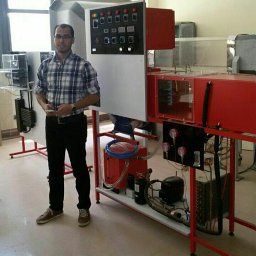 Saman Pourahmad合作论文数Corresponding authors.5
 Seyed Mehdi Pesteei合作论文数Faculty of Engineering, Urmia University4Mohammad Ameri合作论文数2
 Hamed Sadighi Dizaji合作论文数Sch Mech Engn, Univ Adelaide2
 Amin Moosavi合作论文数Lulea University of Technology2
 Ramin Haghighi Khoshkhoo合作论文数Faculty of Mechanical and Energy Engineering, Shahid Beheshti University2S.A.M. Mehryan合作论文数Shahid Beheshti University2
 Ebrahim Tavousi合作论文数1Noel Perera合作论文数School of Engineering and the Built Environment, Birmingham City University1
 Obai Younis Taha合作论文数Dept Mech Engn, Prince Sattam Bin Abdulaziz Univ1
 Ahmad Hajjar合作论文数LabECAM, Univ Lyon1
 Pouyan Talebizadehsardari合作论文数Faculty of Engineering, The University of Nottingham;Power Electronics and Machines Centre, The University of Nottingham;Centre for Sustainable Energy Use in Food Chain, Brunel University London1Amir Keshmiri合作论文数Department of Mechanical, Aerospace and Civil Engineering, School of Engineering, Faculty of Science and Engineering, The University of Manchester1
 Mikhail Sheremet合作论文数Department of Theoretical Mechanics, Tomsk State University;Laboratory on Convective Heat and Mass Transfer, Tomsk State University1
 Ioan M. Pop合作论文数Department of Mathematics, Faculty of Mathematics and Computer Science, Babeş-Bolyai University1
 Mohsen Izadi合作论文数Department of Mechanical Engineering, Lorestan University1
 Mohammad Ghalambaz合作论文数Saveetha Institute of Medical and Technical Sciences;Laboratory on Convective Heat and Mass Transfer, Tomsk State University1
 Ali J. Chamkha合作论文数Faculty of Engineering, Kuwait College of Science and Technology1




