Cultivated protein (also called in vitro, lab-based, cultured protein) startups emerged in the 2010s in response to technological advances in the medical/pharmaceutical sector alongside the global demand for more environmentally sustainable food systems. Offering greenhouse gas reductions of up to 97 %, these technologies could provide a means of rapidly reducing emissions from agriculture. However, heavy subsidisation of the livestock sector in many countries puts them at a considerable disadvantage. In this paper we explore what would happen if we rebalanced the equation through the introduction of a carbon tax on animal protein. Using an agent-based approach (ABM) we develop a detailed model of agricultural systems in Norway and explore a number of cost scenarios based around two main hypothetical events: the introduction of cultivated proteins without a carbon tax and the introduction of cultivated proteins alongside a carbon tax. Simulations reveal that conventional beef, lamb, milk, and egg production are more vulnerable to a steady loss of market share to cultivated protein than pork and chicken production - regardless of whether a carbon tax is in operation. However, the introduction of a carbon tax would result in a rapid and substantial decline in these sectors due to the dramatically increased costs imposed on conventional producers and the triggering of tipping points along value chains. Conventional pork and chicken sectors prove more robust due to their comparatively lower emissions. The overall conclusion is that the introduction of a carbon tax alongside the emergence of a cultivated protein industry could have severe impacts on the livestock sector that make the outcome politically unacceptable. Any global or Europe-wide carbon tax could thus, paradoxically, limit the introduction of revolutionary new low-carbon food technologies unless the introduction is carefully managed.
Despite the increasing use of standards for documenting and testing agent-based models (ABMs) and sharing of open access code, most ABMs are still developed from scratch. This is not only inefficient, but also leads to ad hoc and often inconsistent implementations of the same theories in computational code and delays progress in the exploration of the functioning of complex social-ecological systems (SES). We argue that reusable building blocks (RBBs) known from professional software development can mitigate these issues. An RBB is a submodel that represents a particular mechanism or process that is relevant across many ABMs in an application domain, such as plant competition in vegetation models, or reinforcement learning in a behavioural model. RBBs need to be distinguished from modules, which represent entire subsystems and include more than one mechanism and process. While linking modules faces the same challenges as integrating different models in general, RBBs are “atomic” enough to be more easily re-used in different contexts. We describe and provide examples from different domains for how and why building blocks are used in software development, and the benefits of doing so for the ABM community and to individual modellers. We propose a template to guide the development and publication of RBBs and provide example RBBs that use this template. Most importantly, we propose and initiate a strategy for community-based development, sharing and use of RBBs. Individual modellers can have a much greater impact in their field with an RBB than with a single paper, while the community will benefit from increased coherence, facilitating the development of theory for both the behaviour of agents and the systems they form. We invite peers to upload and share their RBBs via our website - preferably referenced by a DOI (digital object identifier obtained e.g. via Zenodo). After a critical mass of candidate RBBs has accumulated, feedback and discussion can take place and both the template and the scope of the envisioned platform can be improved.
The data requirements of many socio-environmental system (SES) modelling studies have increased substantially in recent years. This has made the already challenging task of data compilation, retrieval, and sharing progressively more difficult. Recognising the current lack of best practice for knowledge management in SES modelling studies, we propose using SES wikis as a means of addressing these challenges. Wikis have attributes that make them well suited to complex knowledge management tasks and their hierarchical, interconnected, algorithmic logic closely fits with the logic needed in SES model design. In this article, we describe how wikis can be used at each stage of the SES modelling cycle, and we discuss our experiences of putting the approach into practice. We conclude that while SES wikis can be time consuming to initially develop, they have the potential to significantly improve the quality, transparency, and efficiency of SES modelling projects.
Agent-based modelling methodologies offer a number of advantages when it comes to socio-ecological systems research. In particular, they enable experiments to be conducted that are not practical or feasible to conduct in real world settings; they can capture heterogeneity in agent circumstances, knowledge, behaviour, and experiences; and they facilitate a multi-scale, causal understanding of system dynamics. However, developing detailed, empirically informed agent-based models is typically a time and resource intensive activity. Here, we describe a detail-rich, ethnographically informed agent-based model of a Nepalese smallholder village that was created for the purpose of studying the impact of multiple stressors on mountain communities. In doing so, we aim to make the model accessible to other researchers interested in simulating such communities and to provide inspiration for other socio-ecological system modellers.•The model is described using the ODD protocol.•The number of replicate runs required for experiments is discussed, and the model validation and sensitivity analysis processes that have been conducted are explained.•Suggestions are made for how the model can practically be used and for how model outputs can be analysed.
Occasionally, events occur that disrupt ongoing fieldwork, forcing researchers to deal with, and adapt to, new realities. In this paper, we discuss how the 2015 Nepal earthquake – which occurred while we were conducting fieldwork in one of the affected areas – forced us to reassess our research agenda, profoundly affected our relationship with the community we had been working in, and evoked challenging ethical questions in respect to our obligations to our research participants.
Fieldwork often takes place in dynamic, uncertain environments. This is especially true of fieldwork in developing countries. Occasionally events can occur that have significant repercussions for ongoing research involving human participants. For example, political and social unrest, terror attacks, economic crises, epidemics, and natural disasters all have the potential to derail fieldwork plans and to radically alter the circumstances in which researchers operate. However, literature on how to anticipate and navigate these repercussions is limited. While a number of papers have reflected on the difficulties of conducting post-crisis fieldwork, few have discussed the rather different challenge of dealing with, and adapting to, events that occur during ongoing work. In this paper, we discuss how the 2015 Nepal earthquake – which occurred while we were conducting fieldwork in one of the affected areas – forced us to reassess our research agenda, profoundly affected our relationship with the community we had been working in, and evoked challenging ethical questions in respect to our obligations to our research participants. Based on our reflections, we suggest eight issues that researchers who are engaged in fieldwork in high-risk or post disaster locations should give consideration to. The issues include matters relating to research design, fieldwork risk and ethics assessment, interaction with research participants, and researcher support.
Mountain communities in developing and transitioning countries are experiencing a period of rapid social, economic, and environmental change. While change has long been a feature of mountain life, the rate, magnitude, nature, and number of the transformations now taking place is unprecedented, with profound implications for the sustainability and welfare of mountain communities in the coming years. It is therefore vital that their potential impacts be understood. Considering stressors in isolation can give a false picture as each stressor alters the context within which the other stressors are operating. Holistic approaches are needed. In this paper, a variety of stressors are concurrently simulated within an empirically informed agent-based model of a rural Nepalese mountain community so that their combined impact can be studied. The potential effect of changing fertility rates, increasing crop yield variability, and earthquakes on household finances is considered for the period 2015-2030. Results show that higher fertility rates, increased crop yield variability, and earthquakes all have negative long-term effects on household finances, and that each of these stressors compounds the effect of the other stressors in an additive fashion. Results further highlight heterogeneity in the capacity of households to cope with stressors and demonstrate the important role that happenstance can play in exacerbating the effect of stressors. Our findings suggest that development practitioners should explicitly take multiple stressors into account when considering interventions. They should also contemplate improved microtargeting of households to increase aid effectiveness over the longer term, while recognising that household vulnerability is often dynamic.
When extreme weather events occur, people often turn to social media platforms to share information, opinions and experiences. One of the topics commonly discussed is the role climate change may or may not have played in influencing an event. Here, we examine Twitter posts that mentioned climate change in the context of three high-magnitude extreme weather events - Hurricane Irene, Hurricane Sandy and Snowstorm Jonas - in order to assess how the framing of the topic and the attention paid to it can vary between events. We also examine the role that contextual factors can play in shaping climate change coverage on the platform. We find that criticism of climate change denial dominated during Irene, while political and ideological struggle frames dominated during Sandy. Discourse during Jonas was, in contrast, more divided between posts about the scientific links between climate change and the events, and posts contesting climate science in general. The focus on political and ideological struggle frames during Sandy reflects the event's occurrence at a time when the Occupy movement was active and the 2012 US Presidential Election was nearing. These factors, we suggest, could also contribute to climate change being a more prominent discussion point during Sandy than during Irene or Jonas. The Jonas frames, meanwhile, hint at lesser public understanding of how climate change may influence cold weather events when compared with tropical storms. Overall, our findings demonstrate how event characteristics and short-term socio-political context can play a critical role in determining the lenses through which climate change is viewed.
Rural mountain communities in developing and transitioning countries are experiencing a period of rapid social, economic, and environmental change. While change has long been a feature of mountain life, the rate, magnitude, nature, and number of the transformations now taking place is unprecedented. These processes will have profound implications for the sustainability and welfare of mountain communities in the coming years. It is therefore important that their potential effects be understood. Considering stressors in isolation can give a false picture as each stressor alters the context within which the other stressors are operating. Holistic approaches are therefore needed. In this thesis, a method for doing this in a systematic, quantitative fashion is developed. The approach combines ethnographic fieldwork with agent-based modelling and is applied to a specific case study – a rural Nepalese mountain village that is experiencing stressors typical of many other mountain communities. The model that is developed incorporates the main social and ecological systems that were found at the fieldsite and it is populated with virtual villagers that are designed to behave in ways that closely mimic how real villagers behave. Stressor scenarios relating to changing fertility rates, increasing crop yield variability, and the occurrence of natural hazards are concurrently simulated within the model and their impact on household finances and village demographics is observed over a period of fifteen years. The results show that higher fertility rates, increased crop yield variability, and earthquakes all have negative long-term effects on household finances, and that each of these stressors compounds the effect of the other stressors. The results also highlight heterogeneity in the capacity of households to cope with stressors and demonstrate the important role that happenstance can play in exacerbating the effect of stressors and shocks. Substantial seasonal variation in the financial vulnerability of households is also revealed.
Under the commitments of the UN Sustainable Development targets, there is increasing pressure on water utility providers in developing countries to improve their levels of service to consumers, especially for the rapidly growing numbers of people with lower incomes who reside in urban informal settlements. However, pressure on water resources in many regions is simultaneously increasing owing to factors such as pollution, agricultural needs, and climate change. It is therefore important to assess the impacts of improving water services on city-wide water resources. This study examines consumption data from the East African city of Nairobi, collected from households of a variety of residential neighbourhoods. The study suggests that average per capita water consumption is closely related to water source choice (i.e. tap in the dwelling, yard tap, or water vendor kiosks). Within categories of water source type, variables such as household wealth, cost of water, and education do not have significant effects on per capita consumption. It is noted that increased accessibility of water causes the upper bound of consumption to rise, but not the lower. It may therefore be theorized that having a tap in a dwelling is necessary but not sufficient to increase per capita consumption. Within the sample examined, there is no statistically significant difference in per capita consumption between water source types other than a tap in a dwelling, and it is therefore suggested that providing a yard tap to those currently without any form of water connection may have negligible impact on city-wide water consumption.
 Lindsay Stringer合作论文数Department of Environment and Geography, University of York4
 Andrew J. Evans合作论文数3Tim G. Williams合作论文数2
 Raj K. G C合作论文数2
 Heather Roxburgh合作论文数Biol & Environm Sci, Univ Stirling2
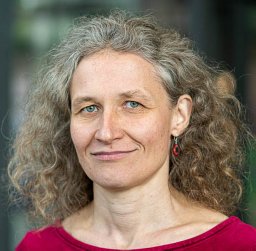 Birgit Muller合作论文数Department of Ecological Modelling, UFZ - Helmholtz-Centre for Environmental Research2
 Nick Malleson合作论文数School of Geography;University of Leeds;School of Geography, University of Leeds2
 Alison J. Heppenstall合作论文数School of Geography, University of Leeds2Andrew Sleigh合作论文数1
 Michael Barton合作论文数School of Complex Adaptive Systems, Arizona State University;School of Human Evolution and Social Change, Arizona State University;Center for Social Dynamics and Complexity, Arizona State University1
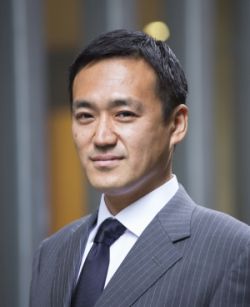 Shunsuke Managi (馬奈木俊介)合作论文数Departments of Urban and Environmental Engineering, School of Engineering, Kyushu University;Urban Institute, Kyushu University1Heather Purshouse合作论文数1
 Marie-Christin Wimmler合作论文数1Kong Joo Shin合作论文数Kyushu Univ, Dept Urban & Environm Engn, Sch Engn, Fukuoka 812, Japan1
 Christian Troost合作论文数1
 William Rand合作论文数Univ Maryland, Robert H Smith Sch Business, College Pk, MD 20742 USA1
 Jing Meng (孟靖)合作论文数The Bartlett School of Sustainable Construction, University College London;Cambridge Centre for Environment, Energy and Natural Resource Governance1
 Dabo Guan (关大博)合作论文数Department of Earth System Science, Tsinghua University;The Bartlett School of Sustainable Construction, University College London1
 Emile Chappin合作论文数Faculty Technology, Policy and Management, Delft University of Technology;TPM Energy Transition Lab, Delft University of Technology1
 Gunnar Dressler合作论文数Department of Biology, University of Maryland1
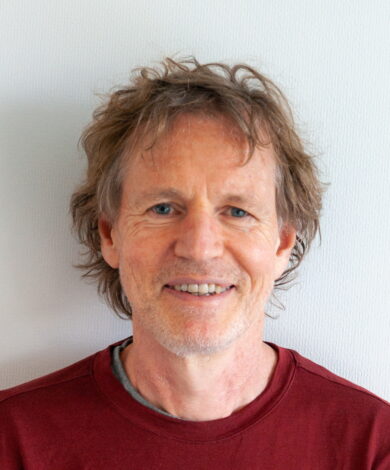 Rob Burton合作论文数Institute for Rural and Regional Research1Matthias Meyer合作论文数1
 Allen Lee合作论文数1
 Cyril Piou合作论文数Zentrum für Marine Tropenökologie, Fahrenheitstr. 6, 28359 Bremen, Germany1
 Robin Lovelace合作论文数University of Leeds1
 Volker Grimm合作论文数Department of Ecological Modelling, Helmholtz Centre for Environmental Research - UFZ1
 Iris Lorscheid合作论文数Institute of Management Control and Accounting, Hamburg University of Technology1
 Uta Berger合作论文数Centre of Marine Tropical Ecology, Fahrenheitstr. 1, D-28359 Bremen, Germany (formerly Jena)1
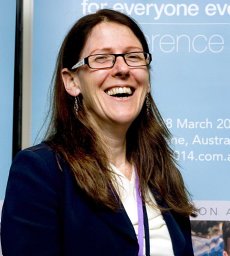 Barbara Evans合作论文数1
 Nanda Wijermans合作论文数University of Groningen1
 Viktoriia Radchuk合作论文数Earth and Life Institute, Université catholique de Louvain1
 T. (Tatiana) Filatova合作论文数Delft University of Technology1J. Gareth Polhill合作论文数1
 E.E. (Emiel) van Loon合作论文数Institute for Biodiversity and Ecosystem Dynamics, Faculty of Science, University of Amsterdam1




