Relatively little is known about the amount of time that lapses between the photosynthetic fixation of carbon by vascular land plants and its incorporation into the marine sedimentary record, yet the dynamics of terrestrial carbon sequestration have important implications for the carbon cycle. Vascular plant carbon may encounter multiple potential intermediate storage pools and transport trajectories, and the age of vascular plant carbon accumulating in marine sediments will reflect these different pre-depositional histories. Here, we examine down-core C-14 profiles of higher plant leaf wax-derived fatty acids isolated from high fidelity sedimentary sequences spanning the so-called "bomb-spike", and encompassing a ca. 60-degree latitudinal gradient from tropical (Cariaco Basin), temperate (Saanich Inlet), and polar (Mackenzie Delta) watersheds to constrain integrated vascular plant carbon storage/transport times ("residence times"). Using a modeling framework, we find that, in addition to a "young" (conditionally defined as < 50 y) carbon pool, an old pool of compounds comprises 49 to 78 % of the fractional contribution of organic carbon (OC) and exhibits variable ages reflective of the environmental setting. For the Mackenzie Delta sediments, we find a mean age of the old pool of 28 ky (+/- 9.4, standard deviation), indicating extensive pre-aging in permafrost soils, whereas the old pools in Saanich Inlet and Cariaco Basin sediments are younger, 7.9 (+/- 5.0) and 2.4 (+/- 0.50) to 3.2 (+/- 0.54) ky, respectively, indicating less protracted storage in terrestrial reservoirs. The "young" pool showed clear annual contributions for Saanich Inlet and Mackenzie Delta sediments (comprising 24% and 16% of this pool, respectively), likely reflecting episodic transport of OC from steep hillside slopes surrounding Saanich Inlet and annual spring flood deposition in the Mackenzie Delta, respectively. Contributions of 5-10 year old OC to the Cariaco Basin show a short delay of OC inflow, potentially related to transport time to the offshore basin. Modeling results also indicate that the Mackenzie Delta has an influx of young but decadal material (20-30 years of age), pointing to the presence of an intermediate reservoir. Overall, these results show that a significant fraction of vascular plant C undergoes pre-aging in terrestrial reservoirs prior to accumulation in deltaic and marine sediments. The age distribution, reflecting both storage and transport times, likely depends on landscape-specific factors such as local topography, hydrographic characteristics, and mean annual temperature of the catchment, all of which affect the degree of soil buildup and preservation. We show that catchment-specific carbon residence times across landscapes can vary by an order of magnitude, with important implications both for carbon cycle studies and for the interpretation of molecular terrestrial paleoclimate records preserved in sedimentary sequences. (C) 2018 Elsevier Ltd. All rights reserved.
The uptick in hydrocarbon production from shale in the United States has generated interest in metrics of unconventional reservoir quality, like permeability. We use conventional gas sorption to characterize shale microstructure, which provides insight on the features that govern mass transport. The gas sorption data are analyzed to determine the surface area, A(S) (m(2)/g), and pore volume, V-P (cm(3)/g) of 30 samples from basins across North America. With this information, we quantify the effect of composition and thermal maturity on shale microstructure. In particular, we find that the specific surface area of the organic component evolves from similar to 50 m(2)/g total organic carbon (TOC) in immature shale to similar to 500 m(2)/g TOC for regions that produce dry gas. The increase in A(S) is accompanied by an increase in V-P and concomitant decline in average pore size (e.g., r(H) = 4V(P)/A(S)). We contend that the latter is due to the development of nanometer-sized pores in kerogen as it is converted to mobile hydrocarbon which is ultimately expelled. This hypothesis is supported by similar measurements on companion samples after bitumen extraction or combustion, which underscore the intimate spatial association of petroleum and kerogen. Coupled with information on accessibility to the porosity garnered by varying the particle size, these results establish a clear link between organic matter, thermal maturity, and reservoir quality in unconventional shale systems.
The Keck Carbon Cycle AMS facility at the University of California, Irvine (KCCAMS/UCI) has developed protocols for analyzing radiocarbon in samples as small as ∼0.001 mg of carbon (C). Mass-balance background corrections for modern and 14C-dead carbon contamination (MC and DC, respectively) can be assessed by measuring 14C-free and modern standards, respectively, using the same sample processing techniques that are applied to unknown samples. This approach can be validated by measuring secondary standards of similar size and 14C composition to the unknown samples. Ordinary sample processing (such as ABA or leaching pretreatment, combustion/graphitization, and handling) introduces MC contamination of ∼0.6 ± 0.3 μg C, while DC is ∼0.3 ± 0.15 μg C. Today, the laboratory routinely analyzes graphite samples as small as 0.015 mg C for external submissions and ≅0.001 mg C for internal research activities with a precision of ∼1% for ∼0.010 mg C. However, when analyzing ultra-small samples isolated by a series of complex chemical and chromatographic methods (such as individual compounds), integrated procedural blanks may be far larger and more variable than those associated with combustion/graphitization alone. In some instances, the mass ratio of these blanks to the compounds of interest may be so high that the reported 14C results are meaningless. Thus, the abundance and variability of both MC and DC contamination encountered during ultra-small sample analysis must be carefully and thoroughly evaluated. Four case studies are presented to illustrate how extraction chemistry blanks are determined.
A high-resolution multi-proxy study including the elemental and isotopic composition of bulk organic matter, land plant-derived biomarkers, and alkenone-based sea-surface temperature (SST) from a marine sedimentary record obtained from the Jacaf Fjord in northern Chilean Patagonia (similar to 44 degrees 20'S) provided a detailed reconstruction of continental runoff, precipitation, and summer SST spanning the last 1750 yr We observed two different regimes of climate variability in our record a relatively dry/warm period before 900 cal yr BP (lower runoff and average SST 1 degrees C warmer than present day) and a wet/cold period after 750 cal yr BP (higher runoff and average SST 1 degrees C colder than present clay). Relatively colder SSTs were found during 750-600 and 450-250 cal yr BP, where the latter period roughly corresponds to the interval defined for the Little Ice Age (LIA) Similar climatic swings have been observed previously in continental and marine archives of the last two millennia from central and southern Chile, suggesting a strong latitudinal sensitivity to changes in the Southern Westerly Winds, the main Source Of precipitation in southern Chile, and validating the regional nature of the LIA Our results reveal the importance of the Chilean fjord system for recording climate changes of regional and global significance (C) 2009 University of Washington Published by Elsevier Inc All rights reserved.
Recent studies suggest that as much as half of the organic carbon (OC) undergoing burial in the sediments of tectonically active continental margins may be the product of fossil shale weathering. These estimates rely on the assumption that vascular plant detritus spends little time sequestered in intermediate reservoirs such as soils, freshwater sediments, and river deltas, and thus only minimally contributes to the extraneously old C-14 ages of total organic matter often observed on adjacent shelves. Here we test this paradigm by measuring the C-14 and delta C-13 values of individual higher plant wax fatty acids as well as the d13C values of extractable alkanes isolated from the Eel River margin (California). The isotopic signatures of the long chain fatty acids indicate that vascular plant material has been sequestered for several thousand years before deposition. A coupled molecular isotope mass balance used to reassess the sedimentary carbon budget indicates that the fossil component is less abundant than previously estimated, with pre-aged terrestrial material instead composing a considerable proportion of all organic matter. If these findings are characteristic of other continental margins proximal to small mountainous rivers, then the importance of petrogenic OC burial in marine sediments may need to be reevaluated.
Pptn. changes in the western tropical Atlantic over the past 180,000 years are reconstructed using the stable carbon and deuterium isotopic compns. of higher plant leaf waxes preserved in Cariaco Basin sediments. Results indicate that less (more) pptn. fell over northern South America during stadial (interstadial) periods relative to today. Moreover, this trend is highly modulated by precessionally driven oscillations in Nov. insolation, such that dry events concurrent with periods of increased solar heating were less arid than those occurring when that heating was diminished (and visa versa). Together, these findings suggest that the duration of the seasonal displacement of the Intertropical Convergence Zone (ITCZ) was modified in response to changes in both the high latitude North Atlantic (presumably due to variations in the rate of meridional overturning circulation) and tropical insolation during the last glacial cycle, thus establishing an important link between seasonality and abrupt climate change.
This thesis employs compound-specific stable carbon and radiocarbon isotopic analysis of organic biomarkers to (a) resolve petrogenic from pre-aged vascular plant organic carbon (OC) in continental margin sediments, (b) investigate the underlying mechanisms controlling the anomalously old ages that are often observed for the terrestrial component of sedimentary OC, and (c) address the associated consequences for biomarker-based climate reconstructions.In Chapters 2 and 3, coupled molecular isotope mass balances demonstrate that the amount of petrogenic OC residing on the Beaufort Shelf (Arctic Ocean) and the Eel River Margin (coastal California) has been previously overestimated due to the presence of significantly 'pre-aged' terrestrial OC.However, even though the contribution of organic matter emanating from sedimentary rocks may be smaller, these results reinforce the emerging notion that it is not completely oxidized during weathering and subsequent seaward transport.In Chapter 4, comparison of the down-core radiocarbon profiles for certain vascular plant biomarkers extracted from Cariaco Basin (Caribbean Sea) and Saanich Inlet (coastal British Columbia) sediments with the radiocarbon evolution of atmospheric carbon dioxide reveals that the vast majority of the terrestrial OC experiences multi-millennial residence times on land prior to entering the sea.Most of the remaining inventory is deposited in sediments within one or two decades, providing direct evidence that very little terrestrial organic matter is rapidly transferred to the marine environment.With this in mind, the striking modulation in the signal amplitude of a biomarker-based tropical paleoaridity record presented in Chapter 5 was instead used to evaluate the role of low versus high latitude forcing in abrupt paleoclimate oscillations during the last full glacial cycle.Seasonal variations in the position of the Intertropical Convergence Zone were interpreted to be a response to both high latitude adjustments in meridional overturning circulation and precessionallydriven modifications in local insolation.Finally, Chapter 6 addresses the broader implications of multi-millennial terrestrial residence times for paleoclimate records based on vascular plant biomarkers.advisors guide me through the experience.Konrad Hughen was a veritable fountain of energy and scientific curiosity; Tim Eglinton supplied interminable patience, muchappreciated humor, and (along with his wife Lorraine) the best Indian fare in town.Both allowed me to pursue my rather diverse interests, and somehow managed to provide an endless stream of money to fund the (seemingly) equally endless succession of analyses/conferences/cruises that went along with it.Many thanks also go to Ed Boyle, the oracle of all things Earth science.
Recent analytical advances now make it feasible to determine multiple isotopic characteristics of individual organic compounds within complex mixtures. In particular, hydrogen isotopic compositions and radiocarbon contents can now be readily determined to complement information derived from stable carbon isotopic analysis. When used in concert, these lines of geochemical information can yield important new insights into the origins and histories of the biomarker compounds, and lead to new and refined interpretation of molecular proxy records of paleoenvironmental variability. We present multi-isotopic data on n-alkyl lipids isolated from a range of recent aquatic sediments in order to demonstrate both the complexity of geochemical signals preserved in environmental matices, and the utility of multi-isotopic information in constraining inputs. In particular, we focus on long-chain lipids derived from terrestrial and marine precursors. Marked radiocarbon age and stable isotopic variability is apparent, even within closely related homologous series of compounds recovered from the same sample. Based on multi-isotope characteristics, we interpret these variations in terms of differences in source versus reactivity of individual organic compounds, and discuss implications for interpretation of the sedimentary record.
 Timothy I. Eglinton合作论文数Geological Instituteh, Department of Earth Sciences, ETH Zuric16
 Konrad A. Hughen合作论文数Woods Hole Oceanographic Institution;Department of Marine Chemistry & Geochemistry;Department of Marine Chemistry & Geochemistry, Woods Hole Oceanographic Institution16
 John R. Southon合作论文数School of Physical Sciences, University of California, Irvine11Daniel B. Montlucon合作论文数10
 Ellen R. M. Druffel合作论文数Department of Earth System Science, School of Physical Sciences, University of California Irvine9
 Guaciara M. Santos合作论文数Earth System Science Department, University of California Irvine7
 Enno Schefuß合作论文数Center for Marine Environmental Sciences, University of Bremen5Angela F. Dickens合作论文数4daniel b montlucon合作论文数3
 Rachel H. R. Stanley合作论文数Center for Polymer Studies and Physics Dept;Boston University;Center for Polymer Studies and Physics Dept, Boston University3
 Liviu Giosan合作论文数Department of Geology & Geophysics, Woods Hole Oceanographic Institution3
 Jorien Vonk合作论文数Department of Applied Environmental Science and Bert Bolin Centre for Climate Research, Stockholm University3
 Alex Sessions合作论文数Division of Geological and Planetary Sciences, California Institute of Technology3
 Timothy M Shanahan合作论文数Department of Geological Sciences, Jackson School of Geosciences, University of Texas at Austin2
 Martin Sköld合作论文数Dept Environm Res & Monitoring, Swedish Museum Nat Hist2
 Jonathan T. Overpeck合作论文数School for Environment and Sustainability, University of Michigan;Department of Geosciences, University of Arizona2Cameron Mcintyre合作论文数2John A. Peck合作论文数2
 Sean Sylva合作论文数2
 John Valenza合作论文数Civil and Env. Eng./PRISM, Princeton University2
 Christopher A. Scholz合作论文数Department of Earth and Environmental Sciences, College of Arts & Sciences, Syracuse University2tania leon合作论文数1gustafsson o合作论文数1Britta Voss合作论文数Washington State Department of Ecology1
 Camilo Ponton合作论文数Geol & Geophys, Woods Hole Oceanog Inst1
 Hendrik Grotheer合作论文数Helmholtz Ctr Polar & Marine Res, Alfred Wegener Inst1
 Xiaojuan Feng (冯晓娟)合作论文数State Key Laboratory of Vegetation and Environmental Change, Institute of Botany, The Chinese Academy of Sciences;College of Resources and Environment, University of Chinese Academy of Sciences1
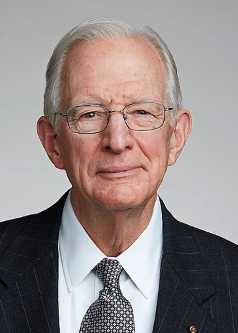 John M. Hayes合作论文数Woods Hole Oceanographic Institution1
 Christopher M. Reddy合作论文数Department of Marine Chemistry & Geochemistry, Woods Hole Oceanographic Institution1
 Xiaomei Xu合作论文数Department of Earth System Sciences, School of Physical Sciences, University of California, Irvine1Dachun Zhang合作论文数1
 Gesine Mollenhauer合作论文数Alfred Wegener Institute for Polar and Marine Research1Linnea J. Heraty合作论文数1
 Silvio Pantoja合作论文数1Linda Ampel合作论文数1Mark B. Yunker合作论文数1Jeffrey S. Pigati合作论文数Desert Laboratory, University of Arizona1
 Julio Sepulveda合作论文数Research Center Ocean Margins (RCOM),, University of Bremen1
 Sebastien Bertrand合作论文数Department of Geology, University of Liege1Dante Figueroa合作论文数1
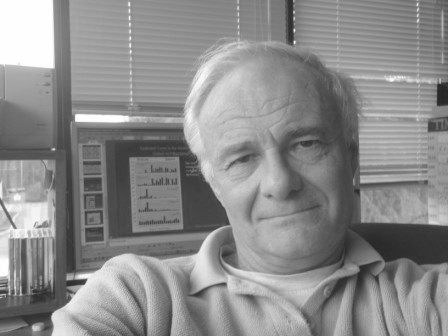 Robie Macdonald合作论文数Institute of Ocean Sciences,Department of Fisheries and Oceans1
 Lori A. Ziolkowski合作论文数Department of Oceanography, Dalhousie University1Marianne C. Nyman合作论文数Department of Civil and Environmental Engineering, Rensselaer Polytechnic Institute1Nicholas L. Clesceri合作论文数1Julie A. Stenken合作论文数1
 August Andersson合作论文数Department of Environmental Science, Faculty of Science, Stockholm University1Marley Bice合作论文数1
 Carina Lange合作论文数Centro FONDAP-COPAS, Universidad de Concepción1
 Maria Mastalerz合作论文数Indiana Geological & Water Survey, Indiana University;Department of Earth & Atmospheric Sciences, Indiana University1




