Motivated by the applications of secure multiparty computation as a privacy-protecting data analysis tool, and identifying oblivious transfer as one of its main practical enablers, we propose a practical realization of randomized quantum oblivious transfer. By using only symmetric cryptography primitives to implement commitments, we construct computationally-secure randomized oblivious transfer without the need for public-key cryptography or assumptions imposing limitations on the adversarial devices. We show that the protocol is secure under an indistinguishability-based notion of security and demonstrate an experimental implementation to test its real-world performance. Its security and performance are then compared to both quantum and classical alternatives, showing potential advantages over existing solutions based on the noisy storage model and public-key cryptography.
Quantum computing has brought a paradigm change in computer science, where non-classical technologies have promised to outperform their classical counterpart. Such an advantage was only demonstrated for tasks without practical applications, still out of reach for the state-of-art quantum technologies. In this context, a promising strategy to find practical use of quantum computers is to exploit hybrid quantum-classical models, where a quantum device estimates a hard-to-compute quantity, while a classical optimizer trains the parameters of the model. In this work, we demonstrate that single photons and linear optical networks are sufficient for implementing Variational Quantum Algorithms, when the problem specification, or ansatz, is tailored to this specific platform. We show this by a proof-of-principle demonstration of a variational approach to tackle an instance of a factorization task, whose solution is encoded in the ground state of a suitable Hamiltonian. This work which combines Variational Quantum Algorithms with hardware efficient ansatzes for linear-optics networks showcases a promising pathway towards practical applications for photonic quantum platforms.
In the macroscopic world, time is intrinsically asymmetric, flowing in a specific direction, from past to future. However, the same is not necessarily true for quantum systems, as some quantum processes produce valid quantum evolutions under time reversal. Supposing that such processes can be probed in both time directions, we can also consider quantum processes probed in a coherent superposition of forward and backward time directions. This yields a broader class of quantum processes than the ones considered so far in the literature, including those with indefinite causal order. In this work, we demonstrate an operation belonging to this class: the quantum time flip. Using a photonic realisation of this operation, we apply it to a game formulated as a discrimination task between two sets of operators. This game not only serves as a witness of an indefinite time direction, but also allows for a computational advantage over strategies using a fixed time direction, and even those with an indefinite causal order.
Single-mode optical fibers exhibit a small but non-negligible birefringence that induces random polarization rotations during light propagation. In classical interferometry these rotations give rise to polarization-induced fading of the interferometric visibility, and in fiber-based polarimetric sensors as well as quantum optics experiments, they scramble the information encoded in the polarization state. Correcting these undesired rotations is consequently an important part of many experiments and applications employing optical fibers. In this Lab Note we review an efficient method for fully compensating fiber polarization rotations for general input states. This method was not originally devised by us, but does, to the best of our knowledge, not appear in the literature, and our interactions with the community have indicated that it is not well known.
Digital payments have replaced physical banknotes in many aspects of our daily lives. Similarly to banknotes, they should be easy to use, unique, tamper-resistant and untraceable, but additionally withstand digital attackers and data breaches. Current technology substitutes customers’ sensitive data by randomized tokens, and secures the payment’s uniqueness with a cryptographic function, called a cryptogram. However, computationally powerful attacks violate the security of these functions. Quantum technology comes with the potential to protect even against infinite computational power. Here, we show how quantum light can secure daily digital payments by generating inherently unforgeable quantum cryptograms. We implement the scheme over an urban optical fiber link, and show its robustness to noise and loss-dependent attacks. Unlike previously proposed protocols, our solution does not depend on long-term quantum storage or trusted agents and authenticated channels. It is practical with near-term technology and may herald an era of quantum-enabled security.
Single-mode optical fibres exhibit a small but non-negligible birefringence that induces random polarisation rotations during light propagation. In classical interferometry these rotations give rise to polarisation-induced fading of the interferometric visibility, and in fibre-based polarimetric sensors as well as quantum optics experiments they scramble the information encoded in the polarisation state. Correcting these undesired rotations is consequently an important part of many experiments and applications employing optical fibres. In this Lab Note we review an efficient method for fully compensating fibre polarisation rotations for general input states. This method was not originally devised by us, but does to the best of our knowledge not appear in the literature, and our interactions with the community have indicated that it is not well known.
The quantum switch is an example of a process with an indefinite causal structure, and has attracted attention for its ability to outperform causally ordered computations within the quantum circuit model. To date, realizations of the quantum switch have made a trade-off between relying on optical interferometers susceptible to minute path length fluctuations and limitations on the range and fidelity of the implementable channels, thereby complicating their design, limiting their performance, and posing an obstacle to extending the quantum switch to multiple parties. In this Letter, we overcome these limitations by demonstrating an intrinsically stable quantum switch utilizing a common-path geometry facilitated by a novel reciprocal and universal SU(2) polarization gadget. We certify our design by successfully performing a channel discrimination task with near unity success probability.
Although the laws of classical physics are deterministic, thermodynamics gives rise to an arrow of time through irreversible processes. In quantum mechanics the unitary nature of the time evolution makes it intrinsically reversible, however the question of how to revert an unknown time evolution nevertheless remains. Remarkably, there have been several recent demonstrations of protocols for reverting unknown unitaries in scenarios where even the interactions with the target system are unknown. The practical use of these universal rewinding protocols is limited by their probabilistic nature, raising the fundamental question of whether time-reversal could be performed deterministically. Here we show that quantum physics indeed allows for deterministic universal time-reversal by exploiting the non-commuting nature of quantum operators, and demonstrate a recursive protocol for two-level quantum systems with an arbitrarily high probability of success. Using a photonic platform we demonstrate our protocol, reverting the discrete time evolution of a polarization state with an average state fidelity of over 95%. Our protocol, requiring no knowledge of the quantum process to be rewound, is optimal in its running time, and brings quantum rewinding into a regime of practical relevance.
6 th sentence, which incorrectly read 'Remarkably, we can amend our protocol such that the number of purchases is not bounded by the MAC function: the Client simply encrypts a new random key R with C, and forwards the result along with the cryptogram to the TTP.'The correct version is 'We can amend our protocol such that the number of purchases is not bounded by the MAC function, by growing C during the payment process: when the Client receives a new quantum token |P〉, we append additional quantum states for QKD, and use the cryptogram κ for authentication.
In the macroscopic world, time is intrinsically asymmetric, flowing in a specific direction, from past to future. However, the same is not necessarily true for quantum systems, as some quantum processes produce valid quantum evolutions under time reversal. Supposing that such processes can be probed in both time directions, we can also consider quantum processes probed in a coherent superposition of forwards and backwards time directions. This yields a broader class of quantum processes than the ones considered so far in the literature, including those with indefinite causal order. In this work, we demonstrate for the first time an operation belonging to this new class: the quantum time flip. Using a photonic realisation of this operation, we apply it to a game formulated as a discrimination task between two sets of operators. This game not only serves as a witness of an indefinite time direction, but also allows for a computational advantage over strategies using a fixed time direction, and even those with an indefinite causal order.
As the field of artificial intelligence is pushed forward, the question arises of how fast autonomous machines can learn. Within artificial intelligence, an important paradigm is reinforcement learning, where agents - learning entities capable of decision making - interact with the world they are placed in, called an environment. Thanks to these interactions, agents receive feedback from the environment and thus progressively adjust their behaviour to accomplish a given goal. An important question in reinforcement learning is how fast agents can learn to fulfill their tasks. To answer this question we consider a novel reinforcement learning framework where quantum mechanics is used. In particular, we quantize the agent and the environment and grant them the possibility to also interact quantum-mechanically, that is, by using a quantum channel for their communication. We demonstrate that this feature enables a speed-up in the agent's learning process, and we further show that combining this scenario with classical communication enables the evaluation of such an improvement. This learning protocol is implemented on an integrated re-programmable photonic platform interfaced with photons at telecommunication wavelengths. Thanks to the full tunability of the device, this platform proves the best candidate for the implementation of learning protocols, where a continuous update of the learning process is required.
As the field of artificial intelligence advances, the demand for algorithms that can learn quickly and efficiently increases. An important paradigm within artificial intelligence is reinforcement learning 1 , where decision-making entities called agents interact with environments and learn by updating their behaviour on the basis of the obtained feedback. The crucial question for practical applications is how fast agents learn 2 . Although various studies have made use of quantum mechanics to speed up the agent’s decision-making process 3 , 4 , a reduction in learning time has not yet been demonstrated. Here we present a reinforcement learning experiment in which the learning process of an agent is sped up by using a quantum communication channel with the environment. We further show that combining this scenario with classical communication enables the evaluation of this improvement and allows optimal control of the learning progress. We implement this learning protocol on a compact and fully tunable integrated nanophotonic processor. The device interfaces with telecommunication-wavelength photons and features a fast active-feedback mechanism, demonstrating the agent’s systematic quantum advantage in a setup that could readily be integrated within future large-scale quantum communication networks.
In reinforcement learning, a key question for applications is how fast agents can learn. By introducing an agent capable of interacting classically as well as quantum-mechanically with its environment, we experimentally prove that a speed-up in the agent’s learning time is possible.
Both photonic quantum computation and the establishment of a quantum internet require fiber-based measurement and feed-forward in order to be compatible with existing infrastructure. Here we present a fiber-compatible scheme for measurement and feed-forward, whose performance is benchmarked by carrying out remote preparation of single-photon polarization states at telecom-wavelengths. The result of a projective measurement on one photon deterministically controls the path a second photon takes with ultrafast optical switches. By placing well-calibrated bulk passive polarization optics in the paths, we achieve a measurement and feed-forward fidelity of (99.0 ± 1)%, after correcting for other experimental errors. Our methods are useful for photonic quantum experiments including computing, communication, and teleportation.
Both photonic quantum computation and the establishment of a quantum internet require fiber-based measurement and feed-forward in order to be compatible with existing infrastructure. Here we present an all-fiber scheme for measurement and feed-forward, whose performance is benchmarked by carrying out remote preparation of single-photon polarization states at telecom-wavelengths. The result of a projective measurement on one photon deterministically controls the path a second photon takes with ultrafast optical switches. By placing well-calibrated passive polarization optics in the paths, we achieve a measurement and feed-forward fidelity of (99.0$\pm$ 0.5)%. Our methods are useful for photonic quantum experiments including computing, communication, and teleportation.
Multi-photon state generation is of great interest for near-future quantum simulation and quantum computation experiments. To-date spontaneous parametric down-conversion is still the most promising process, even though two major impediments still exist: accidental photon noise (caused by the probabilistic non-linear process) and imperfect single-photon purity (arising from spectral entanglement between the photon pairs). In this work, we overcome both of these difficulties by (1) exploiting a passive temporal multiplexing scheme and (2) carefully optimizing the spectral properties of the down-converted photons using periodically-poled KTP crystals. We construct two down-conversion sources in the telecom wavelength regime, finding spectral purities of > 91%, while maintaining high four-photon count rates. We use single-photon grating spectrometers together with superconducting nanowire single-photon detectors to perform a detailed characterization of our multi-photon source. Our methods provide practical solutions to produce high-quality multi-photon states, which are in demand for many quantum photonics applications.
We have implemented open boundary conditions into the ANTARES code to increase the realism of our simulations of stellar surface convection. Even though we greatly benefit from the high accuracy of our fifth order numerical scheme (WENDS) the broader stencils needed for the numerical scheme complicate the implementation of boundary conditions. We show that the effective temperature of a numerical simulation cannot be changed by corrections at the lower boundary since the thermal stratification does only change on the Kelvin-Helmholtz time scale. Except for very shallow models this time scale cannot be covered by multidimensional simulations due to the enormous computational requirements. We demonstrate to what extent numerical simulations of stellar surface convection are sensitive to the initial conditions and the boundary conditions. An ill-conceived choice of parameters for the boundary conditions can have a severe impact. Numerical simulations of stellar surface convection will only be (physically) meaningful and realistic if the initial model, the extent and position of the simulation box and the parameters from the boundary conditions are chosen adequately. (C) 2013 Elsevier B.V. All rights reserved.
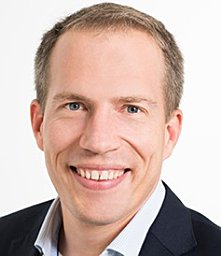 Philip Walther合作论文数Institut fur Experimentalphysik;Universitat Wien;Institut fur Experimentalphysik, Universitat Wien16
 Teodor Strömberg合作论文数8
 Lee a Rozema合作论文数Dept. of Phys., Univ. of Toronto;c;Dept. of Phys., Univ. of Toronto5
 Valeria Saggio合作论文数Univ Vienna, Fac Phys, Vienna Ctr Quantum Sci & Technol VCQ, Vienna, Austria4Beate Asenbeck合作论文数Fac Phys, Univ Vienna3
 Mathieu Bozzio合作论文数Vienna Ctr Quantum Sci & Technol VCQ, Univ Vienna3
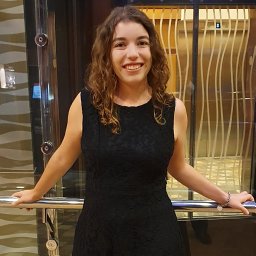 Iris Agresti合作论文数Dipartimento di Fisica-Sapienza, Università di Roma3
 I. Alonso Calafell合作论文数Vienna Ctr Quantum Sci VCQ, Univ Vienna3
 Nicholas Harris合作论文数Lightmatter3
 Hans J. Briegel合作论文数Institut für Theoretische Physik, Universität Innsbruck3
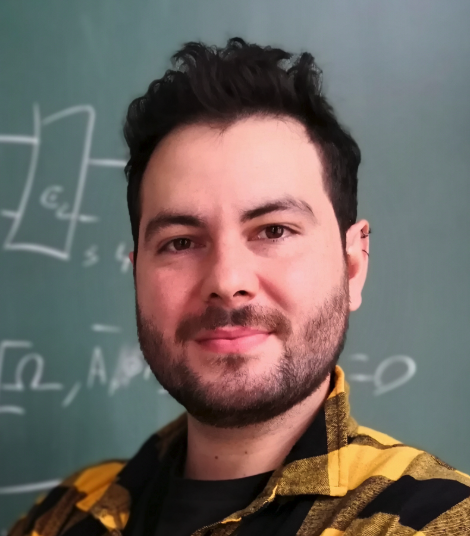 Marco Túlio Quintino合作论文数Sorbonne University3
 Dirk Englund合作论文数Department of Electrical Engineering and Computer Science, Schwarzman College of Computing, Massachusetts Institute of Technology;LightMatter Computing Inc;Dust Identity Inc3Sabine Wölk合作论文数3
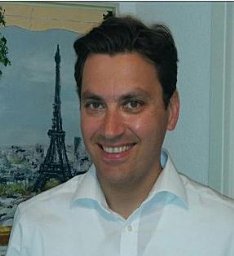 Arne Hamann合作论文数Technical University of Braunschweig3
 Vedran Dunjko合作论文数Leiden Institute of Advanced Computer Science, Faculty of Science, Leiden University3
 Michael Hochberg合作论文数Elenion Technologies, LLC3
 Nicolai Friis合作论文数School of Mathematical Sciences;University of Nottingham;University Park;University of Nottingham, University Park3
 Maxime J Jacquet合作论文数2Michele Spagnolo合作论文数Vienna Ctr Quantum Sci VCQ, Univ Vienna2
 Michael Antesberger合作论文数Vienna Ctr Quantum Sci & Technol VCQ, Univ Vienna2Marie-Christine Roehsner合作论文数QuTech, Delft Univ Technol2
 Alessandro Trenti合作论文数Center for Digital Safety and Security, Austrian Institute of Technology2Tobias Guggemos合作论文数Ludwig Maximilians Univ Munchen, MNM Team, Munich, Germany2
 Caslav Brukner合作论文数Faculty of Physics, Quantum Optics, Quantum Nanophysics and Quantum Information, University of Vienna;Institute for Quantum Optics and Quantum Information Vienna, Austrian Academy of Sciences2Chiara Greganti合作论文数1Mariano Lemus合作论文数1Yue Ban合作论文数1
 Miguel Navascues合作论文数1
 Guilherme Luiz Zanin合作论文数Departamento de Física, Universidade#N#Federal de Santa Catarina1
 Ciro Pentangelo合作论文数Dept Phys, Politecn Milan1David Trillo合作论文数Inst Quantum Opt & Quantum Informat IQOQI Vienna, Austrian Acad Sci1
 Simone Piacentini合作论文数Dipartimento Fis, Politecn Milan1
 Francesco Ceccarelli合作论文数Ist Foton & Nanotecnol, IFN CNR1
 Koushik Paul合作论文数Int Ctr Quantum Artificial Intelligence Sci & Tec, Shanghai Univ1Benjamin Dive合作论文数1
 Roberto Osellame合作论文数Institute for Photonics and Nanotechnologies, National Research Council1Robert W. Peterson合作论文数1
 Xi Chen (陈玺)合作论文数Qianweichang College, Shanghai University;College of Sciences, Shanghai University1
 David Elkouss合作论文数Networked Quantum Devices Unit, Okinawa Institute of Science and Technology;QuTech1Eva Mundprecht合作论文数1
 Lorenzo M. Procopio合作论文数1Friedrich Kupka合作论文数1
 Hannes Grimm-Strele合作论文数1
 Florian Zaussinger合作论文数Max-Planck-Institute for Astrophysics, Karl-Schwarzschild Str. 1, D-85748 Garching bei München, Germany1
 Paulo Mateus合作论文数Departamento de Matemática, Instituto Superior Técnico, Universidade de Lisboa1Nikola Paunkovic合作论文数Instituto de Telecomunicacoes;Department of Physics;Technical University of Lisbon;Instituto de Telecomunicacoes, Technical University of Lisbon1
 Andrea Crespi合作论文数CNR1




