We address the problem of checking query containment, a foundational problem in database research. Although extensively studied in theory research, optimization opportunities arising from query containment are not fully leveraged in commercial database systems, due to the high computational complexity and sometimes even undecidability of the underlying decision problem. In this article, we present the first approach to applying quantum computing to the query containment problem for conjunctive queries under set semantics. We propose a novel formulation as an optimization problem that can be solved on gate-based quantum hardware, and in some cases directly maps to quantum annealers. We formally prove this formulation to be correct and present a prototype implementation which we evaluate using simulator software as well as quantum devices. Our experiments successfully demonstrate that our approach is sound and scales within the current limitations of quantum hardware. In doing so, we show that quantum optimization can effectively address this problem. Thereby, we contribute a new computational perspective on the query containment problem.
We introduce a rank measure for first-order logic and prove a "rank-preserving'" version of Gaifman's theorem. Compared to earlier "rank-preserving locality theorems'" (in particular, [Grohe, Kreutzer, Siebertz, JACM 2017]), our theorem is not only much simpler, but also yields formulas in exactly the same normal form as Gaifman's original theorem. As an application of this theorem, we give a simplified proof of the main result of [Grohe, Kreutzer, Siebertz, JACM 2017] that first-order properties of nowhere-dense structures can be decided in almost linear time.
We present an index structure to boost the evaluation of free-connex acyclic conjunctive queries (fc-ACQs) over relational databases. The main ingredient of the index associated with a given database D is an auxiliary database D_col. Our main result states that for any fc-ACQ Q over D, we can count the number of answers of Q or enumerate them with constant delay after a preprocessing phase that takes time linear in the size of D_col. Unlike previous indexing methods based on values or order (e.g., B+ trees), our index is based on structural symmetries among tuples in a database, and the size of D_col is related to the number of colors assigned to D by Scheidt and Schweikardt's "relational color refinement" (2025). In the particular case of graphs, this coincides with the minimal size of an equitable partition of the graph. For example, the size of D_col is logarithmic in the case of binary trees and constant for regular graphs. Even in the worst-case that D has no structural symmetries among tuples at all, the size of D_col is still linear in the size of D. Given that the size of D_col is bounded by the size of D and can be much smaller (even constant for some families of databases), our index is the first foundational result on indexing internal structural symmetries of a database to evaluate all fc-ACQs with performance potentially strictly smaller than the database size.
We introduce clique-guarded first-order logic with counting (cgFOC), a fragment of the first-order logic with counting FOC [Kuske and Schweikardt, LICS 2017], and we study the complexity of this fragment. In particular, we prove computable upper bounds on the Vapnik-Chervonenkis (VC) dimension of cgFOC formulas and on the graph dimension of cgFOC counting terms on nowhere dense classes of relational structures. Furthermore, we show algorithmic metatheorems for cgFOC for query answering, enumeration, and probably approximately correct (PAC) learning for Boolean and multiclass classification problems on classes of locally bounded expansion. On the other hand, we show that a slight extension of cgFOC is already intractable on trees.
Color Refinement, also known as Naive Vertex Classification, is a classical method to distinguish graphs by iteratively computing a coloring of their vertices. While it is traditionally used as an imperfect way to test for isomorphism, the algorithm has permeated many other, seemingly unrelated, areas of computer science. The method is algorithmically simple, and it has a well-understood distinguishing power: it has been logically characterized by Immerman and Lander (1990) and Cai, Furer, Immerman (1992), who showed that it distinguishes precisely those graphs that can be distinguished by a sentence of first-order logic with counting quantifiers and only two variables. A combinatorial characterization was given by Dvorak (2010), who showed that it distinguishes precisely those graphs that differ in the number of homomorphisms from some tree. In this paper, we introduce Relational Color Refinement (RCR, for short), a generalization of the Color Refinement method from graphs to arbitrary relational structures, whose distinguishing power admits the equivalent combinatorial and logical characterizations as Color Refinement has on graphs: we show that RCR distinguishes precisely those structures that differ in the number of homomorphisms from an acyclic connected relational structure. Further, we show that RCR distinguishes precisely those structures that are distinguished by a sentence of the guarded fragment of first-order logic with counting quantifiers. Additionally, we show that for every fixed finite relational signature, RCR can be implemented to run on structures of that signature in time O(N . log N), where N denotes the number of tuples present in the structure.
In the logical framework introduced by Grohe and Turan (TOCS 2004) for Boolean classification problems, the instances to classify are tuples from a logical structure, and Boolean classifiers are described by parametric models based on logical formulas. This is a specific scenario for supervised passive learning, where classifiers should be learned based on labelled examples. Existing results in this scenario focus on Boolean classification. This paper presents learnability results beyond Boolean classification. We focus on multiclass classification problems where the task is to assign input tuples to arbitrary integers. To represent such integer-valued classifiers, we use aggregate queries specified by an extension of first-order logic with counting terms called FOC1. Our main result shows the following: given a database of polylogarithmic degree, within quasi-linear time, we can build an index structure that makes it possible to learn FOC1-definable integer-valued classifiers in time polylogarithmic in the size of the database and polynomial in the number of training examples.
We present a theoretical framework for the extraction and transformation of text documents as a two-phase process: The first phase uses document spanners to extract information from the input document. The second phase transforms the extracted information into a suitable output. To support several reasonable extract-transform scenarios, we propose for the first phase an extension of document spanners from span-tuples to so-called multispan-tuples, where variables are mapped to sets of spans instead of only single spans. We focus on multispanners described by regex formulas, and we prove that these have the same desirable properties as standard regular spanners. To formalize the second phase, we consider transformations that map every pair document-tuple, where each tuple comes from the (multi)span-relation extracted in the first phase, into a new output document. The specification of the two phases is what we call an extract-transform (ET) program, which covers practically relevant extract-transform tasks. In this paper, our main technical goal is to identify a broad class of ET programs that can be evaluated efficiently. We specifically focus on the scenario of regular ET programs: the extraction phase is given by a regex multispanner and the transformation phase is given by a regular string-to-string function. We show that for any regular ET program, given an input document, we can enumerate all final output documents with output-linear delay after linear preprocessing. As a side effect, we characterize the expressive power of regular ET programs and also show that they have desirable properties, like being closed under composition.
FC is a first-order logic that reasons over all factors of a finite word using concatenation, and can define non-regular languages like that of all squares (ww). In this paper, we establish that there are regular languages that are not FC-definable. Moreover, we give a decidable characterization of the FC-definable regular languages in terms of algebra, automata, and regular expressions. The latter of which is natural and concise: Star-free generalized regular expressions extended with the Kleene star of terminal words.
Schema matching refers to the task of identifying corresponding attributes of different database relation schemas to enable the efficient integration of the associated datasets. We model the task of finding suitable 1:N/N:1 global matchings in relational schemas as an optimization problem. We show that this optimization problem is NP-hard. We then translate the optimization problem into the problem of minimizing a particular rational-valued function on binary variables. The latter enables us to utilize modern quantum algorithms for solving the global matching problem, a crucial stage in schema matching. We also report on preliminary experimental results that serve as a proof-of-concept for our approach.
We prove optimal upper bounds on the Vapnik-Chervonenkis density of formulas in the extensions of first-order logic with counting (FOC1) and with weight aggregation (FOWA(1)) on nowhere dense classes of (vertex- and edge-)weighted finite graphs. This lifts a result of Pilipczuk, Siebertz, and Torunczyk [14] from first-order logic on ordinary finite graphs to substantially more expressive logics on weighted finite graphs. Moreover, this proves that every FOC1 formula and every FOWA(1) formula has bounded Vapnik-Chervonenkis dimension on nowhere dense classes of weighted finite graphs; thereby, it lifts a result of Adler and Adler [1] from first-order logic to FOC1 and FOWA(1). Generalising another result of Pilipczuk, Siebertz, and Torunczyk [14], we also provide an explicit upper bound on the ladder index of FOC1 and FOWA(1) formulas on nowhere dense classes. This shows that nowhere dense classes of weighted finite graphs are FOC1-stable and FOWA(1)-stable.
The continuous evaluation of queries over an event stream provides the foundation for reactive applications in various domains. Yet, knowledge of queries that detect distinguished event patterns that are potential causes of the situation of interest is often not directly available. However, given a database of finite, historic (sub-)streams that have been gathered whenever a situation of interest was observed, one may aim at automatic discovery of the respective queries. Existing algorithms for event query discovery incorporate ad-hoc design choices, though, and it is unclear how their suitability for a database shall be assessed. In this paper, we address this gap with DISCES, an algorithmic framework for event query discovery. DISCES outlines a design space for discovery algorithms, thereby making the design choices explicit. We instantiate the framework to derive four specific algorithms, which all yield correct and complete results, but differ in their runtime sensitivity. We therefore also provide guidance on how to select one of the algorithms for a given database based on a few of its essential properties. Our experiments using simulated and real-world data illustrate that our algorithms are indeed tailored to databases showing certain properties and solve the query discovery problem several orders of magnitude faster than existing approaches.
We present an index structure, called the color-index, to boost the evaluation of acyclic conjunctive queries (ACQs) over binary schemas. The color-index is based on the color refinement algorithm, a widely used subroutine for graph isomorphism testing algorithms. Given a database D, we use a suitable version of the color refinement algorithm to produce a stable coloring of D, an assignment from the active domain of D to a set of colors C_D. The main ingredient of the color-index is a particular database D_c whose active domain is C_D and whose size is at most |D|. Using the color-index, we can evaluate any free-connex ACQ Q over D with preprocessing time O(|Q| · |D_c|) and constant delay enumeration. Furthermore, we can also count the number of results of Q over D in time O(|Q| · |D_c|). Given that |D_c| could be much smaller than |D| (even constant-size for some families of databases), the color-index is the first index structure for evaluating free-connex ACQs that allows efficient enumeration and counting with performance that may be strictly smaller than the database size.
The regular spanners (characterised by vset-automata) are closed under the algebraic operations of union, join and projection, and have desirable algorithmic properties. The core spanners (introduced by Fagin, Kimelfeld, Reiss, and Vansummeren (PODS 2013, JACM 2015) as a formalisation of the core functionality of the query language AQL used in IBM's SystemT) additionally need string equality selections and it has been shown by Freydenberger and Holldack (ICDT 2016, Theory of Computing Systems 2018) that this leads to high complexity and even undecidability of the typical problems in static analysis and query evaluation. We propose an alternative approach to core spanners: by incorporating the string-equality selections directly into the regular language that represents the underlying regular spanner (instead of treating it as an algebraic operation on the table extracted by the regular spanner), we obtain a fragment of core spanners that, while having slightly weaker expressive power than the full class of core spanners, arguably still covers the intuitive applications of string equality selections for information extraction and has much better upper complexity bounds of the typical problems in static analysis and query evaluation.
We introduce the 2-sorted counting logic $GC^k$ that expresses properties of hypergraphs. This logic has available k variables to address hyperedges, an unbounded number of variables to address vertices, and atomic formulas E(e,v) to express that a vertex v is contained in a hyperedge e. We show that two hypergraphs H, H' satisfy the same sentences of the logic $GC^k$ if, and only if, they are homomorphism indistinguishable over the class of hypergraphs of generalised hypertree width at most k. Here, H, H' are called homomorphism indistinguishable over a class C if for every hypergraph G in C the number of homomorphisms from G to H equals the number of homomorphisms from G to H'. This result can be viewed as a generalisation (from graphs to hypergraphs) of a result by Dvorak (2010) stating that any two (undirected, simple, finite) graphs H, H' are indistinguishable by the (k+1)-variable counting logic $C^{k+1}$ if, and only if, they are homomorphism indistinguishable on the class of graphs of tree width at most k.
We introduce subsequence-queries with wildcards and gap-size constraints (swg-queries, for short) as a tool for querying event traces. An swg-query q is given by a string s over an alphabet of variables and types, a global window size w , and a tuple c = (( c − 1 , c +1 ) , ( c − 2 , c +2 ) , . . . , ( c −| s |− 1 , c + | s |− 1 )) of local gap-size constraints over N × ( N ∪ {∞} ). The query q matches in a trace t (i. e., a sequence of types) if the variables can uniformly be substituted by types such that the resulting string occurs in t as a subsequence that spans an area of length at most w , and the i th gap of the subsequence (i. e., the distance between the i th and ( i +1) th position of the subsequence) has length at least c − i and at most c + i . We formalise and investigate the task of discovering an swg-query that describes best the traces from a given sample S of traces, and we present an algorithm solving this task. As a central component, our algorithm repeatedly solves the matching problem (i. e., deciding whether a given query q matches in a given trace t ), which is an NP-complete problem (in combined complexity). Hence, the matching problem is of special interest in the context of query discovery, and we therefore subject it to a detailed (parameterised) complexity analysis to identify tractable subclasses, which lead to tractable subclasses of the discovery problem as well. We complement this by a reduction proving Proof sketch. A natural brute-force approach is as follows: Upon input of an swg-query q = ( s, w, c ) and a trace t , we enumerate all mappings π : repvars ( q ) → types ( t ), and for each such mapping, we construct a regular expression R π that describes all traces t ′ for which there exists a substitution µ : vars ( q ) ∪ Γ → Γ such that µ is an extension of π and µ ( s ) ≼ e t ′ for some embedding e that satisfies w and c . Then, we only have to check for each of these mappings π , if the regular expression R π matches in t . Another approach is to enumerate all embeddings e : [ | s | ] → [ | t | ] that satisfy w and c and check for each such embedding e whether µ ( s ) ≼ e t for some substitution µ (which can be done in time O( | s | ), since µ must satisfy µ ( s ) = t [ e (1)] t [ e (2)] . . . t [ e ( | s | )]). From these two algorithms and the obvious dependencies between the parameters, we can directly conclude the statements of the theorem.
A class of relational databases has low degree if for all $\delta>0$, all but finitely many databases in the class have degree at most $n^{\delta}$, where $n$ is the size of the database. Typical examples are databases of bounded degree or of degree bounded by $\log n$. It is known that over a class of databases having low degree, first-order boolean queries can be checked in pseudo-linear time, i.e.\ for all $\epsilon>0$ in time bounded by $n^{1+\epsilon}$. We generalize this result by considering query evaluation. We show that counting the number of answers to a query can be done in pseudo-linear time and that after a pseudo-linear time preprocessing we can test in constant time whether a given tuple is a solution to a query or enumerate the answers to a query with constant delay.
It is known that the query result of a regular spanner over a single document D can be enumerated after O(|D|) preprocessing and with constant delay in data complexity (Florenzano et al., ACM TODS 2020, Amarilli et al., ACM TODS 2021). It has been shown (Schmid and Schweikardt, PODS'21) that if the document is represented by a straight-line program (SLP) S, then enumeration is possible with a delay of O(log |D|), but with preprocessing that is linear in |S| (which, in the best case, is logarithmic in |D|). Hence, this compressed setting allows for spanner evaluation in sub-linear time, i.e., with logarithmic upper bounds for preprocessing and delay, if the document is highly-compressible. In this work, we extend these results to the dynamic setting. We consider a document database DDB = D1, D2, ..., Dm that is represented by an SLP SDDB, and that supports regular spanners M1, M2, ..., Mk (meaning that we have data structures at our disposal that allow O(log |Di|)-delay enumeration of the result of spanner Mj on document Di). Then we can perform an update by manipulating the existing documents of DDB by a sequence of text-editing operations commonly found in text-editors (like copy and paste, deleting, or copying factors, concatenating documents etc.), and add the thus constructed document to the database. Such an operation is called complex document editing and is given by an expression φ in a suitable algebra. Moreover, after this operation, the document database still supports all the regular spanners M1, ..., Mk. The total time required for such an update is O(k |φ| log d), where d is the maximum length of any intermediate document constructed in the complex document editing described by φ. We stress the fact that the size |SDDB| of the SLP (which upper bounds the preprocessing in the static case) is potentially logarithmic in the data, but generally depends on the compressibility of the documents (in the worst case, it is even linear in the data). In contrast to that, we can guarantee that the dependency on the data of our updates is logarithmic regardless of the actual compression achieved by the SLP. In particular, any such update performed by complex document editing adds documents whose length may be exponentially larger than the time needed for performing such an update. Our approach hinges on balancing properties of SLPs, and for our updates it is vital to manipulate the SLP that represents the database in such a way that these balancing properties are maintained.
We consider the evaluation of first-order queries over classes of databases that are nowhere dense . The notion of nowhere dense classes was introduced by Nešetřil and Ossona de Mendez as a formalization of classes of “sparse” graphs and generalizes many well-known classes of graphs, such as classes of bounded degree, bounded tree-width, or bounded expansion. It has recently been shown by Grohe, Kreutzer, and Siebertz that over nowhere dense classes of databases, first-order sentences can be evaluated in pseudo-linear time (pseudo-linear time means that for all \( \epsilon \) there exists an algorithm working in time \( O(n^{1+\epsilon }) \) , where \( n \) is the size of the database). For first-order queries of higher arities, we show that over any nowhere dense class of databases, the set of their solutions can be enumerated with constant delay after a pseudo-linear time preprocessing. In the same context, we also show that after a pseudo-linear time preprocessing we can, on input of a tuple, test in constant time whether it is a solution to the query.
 Ippokratis Pandis合作论文数Amazon Web Services20
 Nikos Hardavellas合作论文数Department of Electrical and Computer Engineering, McCormick School of Engineering and Applied Science, Northwestern University;Department of Computer Science, McCormick School of Engineering and Applied Science, Northwestern University20
 Marc Shapiro合作论文数Inria;Computer Science Laboratory, Sorbonne Université19
 Bettina Kemme合作论文数School of Computer Science, McGill University19
 Martin Grohe合作论文数Lehrstuhl für Informatik 7, RWTH Aachen University14
 Leonid Libkin合作论文数Laboratory for Foundations of Computer Science, School of Informatics, University of Edinburgh12
 Philippe Cudré-Mauroux合作论文数11Peter P. Chen合作论文数11Greg Flurry合作论文数11Ethan Zhang合作论文数11R. A. Amsler合作论文数11Constantine Stephanidis合作论文数11Jari Veijalainen合作论文数11Janette Wong合作论文数11Hans Hinterberger合作论文数11Lawrence Gerstley合作论文数11Amnon Shabo (Shvo)合作论文数11Yi Zhang合作论文数11Mor Peleg合作论文数11Michael Weiner合作论文数11Donghui Zhang合作论文数11
 Robert B. Allen合作论文数Landcare Research11
 Alkis Simitsis合作论文数Athena Research and Innovation Center11
 Vassilis J. Tsotras合作论文数Department of Computer Science and Engineering, Bourns College of Engineering, University of California, Riverside;Data Science Center, University of California, Riverside11
 Mikael Berndtsson合作论文数University of Skövde11
 Richard Thomas Snodgrass合作论文数Department of Computer Science, College of Science, University of Arizona11
 Ophir Frieder合作论文数Department of Computer Science, Georgetown University;Aurora Forge;Invaryant, Inc.11
 Krithi Ramamritham合作论文数Sai University11
 Panos Vassiliadis合作论文数Department of Computer Science and Engineering, University of Ioannina11
 Christian S. Jensen合作论文数Department of Computer Science, Aalborg University11
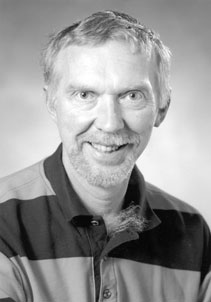 Alan J. Demers合作论文数Department of Computer Science, Cornell University11
 Zhi-Hua Zhou (周志华)合作论文数School of Artificial Intelligence, Nanjing University11
 Il-Yeol Song合作论文数College of Computing & Informatics, Drexel University11
 Segev Wasserkrug合作论文数Faculty of Data and Decision Sciences, Technion, Israel Institute of Technology;IBM Research11
 Mirek Riedewald合作论文数Khoury College of Computer Sciences, Northeastern University11Steven M. Beitzel合作论文数Telcordia Technologies11Annmarie Ericsson合作论文数11Guy Sharon合作论文数11
 Jovan Pehcevski合作论文数Dell Technologies11
 Jonas Mellin合作论文数Humanities and Informatics;University of Skovde;Humanities and Informatics, University of Skovde11
 Yannis Theodoridis合作论文数Department of Informatics, School of Information and Communication Technologies, University of Piraeus11
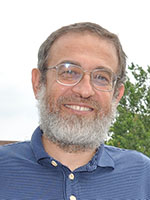 Walid G. Aref合作论文数Department of Computer Science, Purdue University11
 Yannis Manolopoulos合作论文数Faculty of Pure & Applied Sciences, Open University of Cyprus;Department of Informatics, Aristotle University of Thessaloniki11R. Ammon合作论文数10Benjamin Piwowarski合作论文数10Bernhard Thalheim合作论文数10
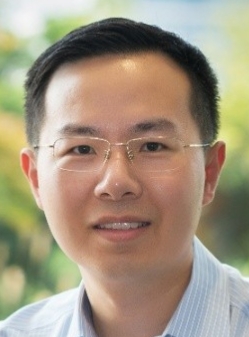 Jingren Zhou合作论文数Alibaba Group10
 Kanianthra M. (Mani) Chandy合作论文数Computing and Mathematical Sciences, Department, Division of Engineering and Applied Science, California Institute of Technology10
 Frank Wm. Tompa合作论文数Cheriton School of Computer Science, University of Waterloo10




