作物蒸散量测量与估算在农业方面有着重要作用,而当前对于作物蒸散量的估算主要以试验的方式进行,有一定局限性,且测量面积小,与实际应用还有一定距离.针对以上问题,该文在已有24座小型称重式蒸渗仪基础上,集成RGB成像传感器、多光谱成像传感器和二维激光扫描仪于一体,配合龙门架进行移动控制,构建称重式蒸渗仪植物表型监测系统,实现18 m2植物生长过程中的RGB、红(668 nm)、绿(560 nm)、蓝(475 nm)、红边(717 nm)、近红外(840 nm)图像信息和植株高度信息的自动监测.最后通过试验,在已设定好的常用速度下,系统单趟运行用时142 s,可采集28组RGB、多光谱图像及所有植株高度信息,速度相对误差在1.8%~6.0%之间.通过对获取的夏玉米多光谱图像和激光扫描仪数据信息分析,系统能够可靠获取归一化差异植被指数等作物指数及植株高度信息.并结合气象站数据,对冬小麦主要耗水期的RGB图像进行分析,对其蒸散量进行了估计,与蒸渗仪获取的实际蒸散量对比,其平均相对误差为16.62%.该系统为大面积作物蒸散量的实时监测和精确诊断以及作物生长状况研究提供有效技术与装备支撑.
针对目前氮素浓度检测技术中电极标定过程与离子检测过程分离,难以实现在线检测的问题,设计了一套基于双传感器冗余控制的水培营养液硝态氮浓度在线标测系统.系统的标定过程为利用丝杠滑块线性导轨完成电极清洗和标准液电压获取,并采用最小二乘法,辨识所采集电压与离子浓度对数之间标准曲线的参数.系统的检测过程为基于最大误差原理,采用双传感器冗余控制方法进行数据融合和标定决策,最终实现硝态氮浓度的连续在线检测.验证试验结果表明:双传感器冗余控制方法可靠,在线检测值与离子色谱法获得的实验室检测值平均相对误差仅为5.64%,平均绝对误差只有1.172 x10⁻⁵,二者呈现极显著线性相关关系(P<0.01).综合分析得出,该系统能够实现营养液连续消耗情况下硝态氮浓度的在线检测,其结果与实验室检测值具有较好的一致性,解决了人工标定电极费时、费工的问题,提高了检测效率,为营养液的精细化管理提供了新的技术手段.
针对中国设施农业发展水平参差不齐,栽培模式多样复杂的情况,着眼于系统的实用性和稳定性,建立了一种单体日光温室水肥一体化控制系统.从系统硬件接口设计、系统控制逻辑实现方法及系统充分结合生产和实际管理需求开发的其他功能3个方面详细介绍了系统的构建与实现,并指出该系统具有高产高效、节本省工的优势,适宜进一步地优化及推广.
为提高我国循环式岩棉栽培水肥管理水平,自主研发设计了循环式岩棉栽培水肥一体化智能装备及控制系统.系统根据植株的生长发育状态、需水需肥规律以及环境条件,通过智能控制系统全自动地进行营养液的检测、配比和灌溉决策,并结合营养液回收消毒技术,实现营养液的重复利用.系统提供便于操作的硬件设备以及全自动智能运行的控制系统,可对岩棉栽培水肥实现全自动智能精准管理,节水节肥20%以上,实现农业生产的零排放.经过在不同园区的试验和应用,验证该系统运行稳定,适用性强.在宁夏园艺产业园番茄生产应用可达到45.4 kg/m2的高产.
设计了一种有机栽培水肥一体化系统,该系统集有机液肥制备、肥料配比和自动灌溉于一体,在各子程序控制下分别进行有机物料的有氧发酵、原液过滤、配比与稀释、决策灌溉与执行,实现了有机栽培的营养液制备与管理一体化,水肥管理的高效化和精细化.为验证有机水肥一体化系统的可靠性与适用性,以椰糠为有机基质,在日光温室内开展了有机无土黄瓜栽培试验.结果表明,有机栽培水肥一体化系统运行稳定,较好地实现了有机液肥制备、黄瓜生产液肥配置及灌溉的机械化、自动化,大幅降低了劳动成本,提高了生产效率;发酵系统中循环系统和搅拌系统的周期性自动运行创造了良好的发酵条件,制备的3种有机液肥经过逐级过滤后达到了120目滴灌要求,适用于微灌灌溉;所含必需营养元素浓度较高,稀释几倍到数十倍后仍能满足黄瓜的养分需求;配肥系统中水泵和吸肥电磁阀在程序控制下执行开闭命令,参照设定的混液桶液位和灌溉液肥电导率上下限值完成每次灌溉液肥配制;灌溉系统完全执行了灌溉决策命令,即整点打开田间电磁阀进行灌溉,当流量计反馈的本次灌溉量达到设定值时,关闭对应电磁阀,结束本次灌溉;系统的稳定运行为有机黄瓜生产提供了所需水分和养分,确保了黄瓜的产量和品质,产量达48 165 kg/hm2,其品质指标可溶性总糖为2.7%,还原型维生素C为99.2 mg/kg,可滴定酸度为0.08%.
For the Container-type Plant Factory,an automatic control system ,which contains the cycle of nutrient solu-tion,the artificial light and the tempreture inside , was established .This system aims at the feature of small volume and easy control of container .Simultaneously ,sues three low cost and better effect factors as controlled object ,according to op-timal control theory .System is developed ,based on the Programmable Logic Controller ( PLC) and a touch screen is used as the master computer .Programs make use of swich signal control principle to manage the nutrient solution and LED .At the same time ,adjust temperature inside container on the basis of closed-loop PID control .The screen will monitoring the whole process of the real-time changes about the environment inside and the nutrient solution .Meanwhile,control policy is determined automatically through various parameters invocation and computer programs are executed by mans of human-machine coordination .The experiment verified that the system could implement the layered cycle of the nutrient solution and regularly supply according to the control parameters manually set .And it could implement the conversion of different photoperiod by turning the LED on and off automatically , referring the time managers given .In addition , the tempreture could be controlled in a range which is suitable for the growth of plants by adjusting the temperature regulates organiza -tion.Thus,this low-cost and reliable control system could meet the demands crops need in Container-type Plant Facto-ry.
For serious shortage of CO 2 fertilizer in greenhouses in autumn and winter , a CO2 fertilizer generator was de-signed.CO2 was produced by crop straws aerobic fermentation .Meanwhile the suitable temperature and moisture for bio-mass fermentation were maintained by using reasonable automatic control strategy .The optimum conditions for CO 2 pro-duced were studied , and the feasibility of the application in greenhouses was verified .The results showed that , the opti-mum conditions for the CO 2 production by aerobic fermentation of crop straws and other agricultural wastes ( crop straws +aerobic fermentation bacteria ) were as follows:temperature of 45℃, 70%of water content , 40:1 of initial carbon nitro-gen ratio .The carbon nitrogen ratio was the most important factor , following by temperature , and crop straws water con-tent.For a 200m2 greenhouse, CO2 concentration could be maintained at 1200ppm during 12 days, which was meet the demand of greenhouse .
唐徕渠灌区位于宁夏青铜峡灌区腹地,东西宽5~30 km,南北长约160 km,灌区可控制面积约300万亩(15亩=1 hm2,下同),其中灌溉面积120万亩.可覆盖青铜峡市,银川市的永宁县、兴庆区、金风区、西夏区、贺兰县,石嘴山市的平罗县、大武口区、惠农县等9个县区,西湖农场、南梁农场、暖泉农场等6大农场.灌区农作物种植以小麦、水稻、玉米等为主,是全国重要的商品粮基地之一,素有“塞上乳管”之称.唐徕渠最大引水流量127 m3/s,由于唐徕渠灌区属典型的大陆性季风气候,多年平均年降水量205.2 mm,年蒸发量1 626mm,干旱少雨,地下水水位高,盐碱化严重,可以说无灌溉就无农业.
The invention relates to the technical field of greenhouse planting, and discloses a greenhouse air temperature adjusting system. The greenhouse air temperature adjusting system comprises a compressor, a four-way reversing valve, a fin type heat exchanger, an expansion valve, a double-pipe heat exchanger, a surface air cooler, a circulating pump and a liquid storage pond. The compressor is sequentially connected with the double-pipe heat exchanger, the expansion valve and the fin type heat exchanger through the four-way reversing valve to form a heat pump circulating unit, a centrifugal fan is arranged at one end of the fin type heat exchanger, the other end of the fin type heat exchanger is connected with the surface air cooler, one end of the double-pipe heat exchanger and one end of the surface air cooler are communicated with the circulating pump, the other end of the double-pipe heat exchanger and the other end of the surface air cooler are communicated with the liquid storage pond, and the circulating pump is communicated with the liquid storage pond. In the greenhouse air temperature adjusting system, the heat pump circulating unit is utilized for collecting heat, the surface air cooler and the heat pump circulating unit are used for heat radiation, heat collecting efficiency can be improved, heat collecting time can be prolonged, the utilization rate of surplus air heat energy in a solar greenhouse can be greatly improved, and running is stable and reliable.
The invention provides an aeration cultivation device and a cultivation system. The aeration cultivation device comprises a cell body used for containing a culture substrate; the bottom surface of the cell body is an arch and the arch crown faces upwards; the bottom surface of the cell body is provided with an air hole; an air pipe connected with the air hole is arranged in the culture substrate, and is provided with air vents. According to the aeration cultivation device and the cultivation system, the internal environment of the enclosed culture substrate is communicated with the external environment, the aeration condition of a root system of a crop in the culture substrate is improved, and rhizosphere infectious disease is reduced.
 Wenzhong Guo (郭文忠)合作论文数lnformation Technology Research Center, Bejing Academy of Agriculture and Forestry Sciences;School of Agricultural Engineering, Jiangsu University8
 Qian Zhao (赵倩)合作论文数6DongDong Jia (贾冬冬)合作论文数4Wang Kunqi合作论文数3Li Yinkun (李银坤)合作论文数3
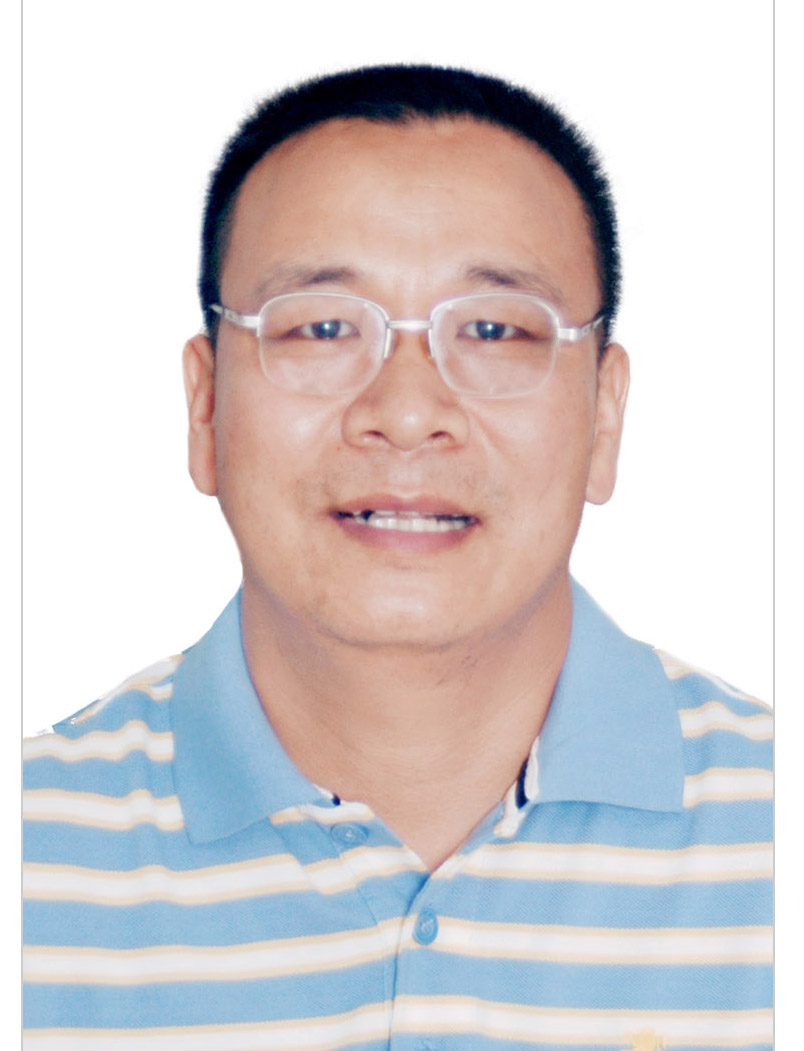 Xuzhang Xue (薛绪掌)合作论文数Information Technology Research Center, Beijing Academy of Agriculture and Forestry Sciences3Xiao-li CHEN (陈晓丽)合作论文数2YouLi Li (李友丽)合作论文数2LiChun Wang (王利春)合作论文数2
 Weituo Sun合作论文数1Jiangli Wen合作论文数1Ruilong Gao (高瑞龙)合作论文数1DUAN Dandan (段丹丹)合作论文数1Fan XU (徐凡)合作论文数1CUI Kewang (崔可旺)合作论文数1YanPing Liu (刘艳萍)合作论文数1
 Xin Zhang (张馨)合作论文数Beijing Academy of Agriculture and Forestry Sciences1
 Ye Tian (田野)合作论文数College of Extended Learning, Beijing University of Chemical Technology1
 Zhi Yang (杨志)合作论文数School of Economics, Renmin University of China1
 Nan Liu (刘南)合作论文数School of Management, Zhejiang University1
 Wengang Zheng (郑文刚)合作论文数Information Technology Research Center, Beijing Academy of Agriculture and Forestry Sciences1




