Heart disease is a major cause of death, and the use of phonocardiograms to non-invasively analyze heart sounds is a potential method for detection, particularly with the incorporation of IoT devices that enable remote patient observation. This paper outlines the research work of 20212025, which utilized PCG and IoT for heart disease detection. The paper explores feature extraction approaches, including MFCCs and wavelet transform, and machine learning, CNNs, transformer, and hybrid or ensemble approaches like stacked classifier along with Grad-CAM tools for interpretability. It is very visible that hybrid approaches or stacked classifier methods were successful with high accuracy of 90 % or above, but interpretability is substantially poor. Various gaps are highlighted in research work concerning explainability of decisions taken by models and limitations of assessment only on a selected set of population. We also pointed out the challenges of algorithm deployment on IoT/edge devices with noisy and low signal-to-noise ratio environments. This review article finally outlines key findings, future research directions, and a table outlining effective contributions of different research works.
Worldwide, coronary artery disease (CAD) ranks high among the main killers and disablers. It is critical to identify high-risk patients for coronary artery disease (CAD) early and administer preventative treatments to enhance patient outcomes. Algorithms for machine learning (ML) have demonstrated potential in CAD risk prediction but their performance can vary depending on the input features and modeling approach used. In this study, we aimed to identify the key predictors of CAD using a combination of statistical methods and novel ML algorithms, and compare the predictive accuracy of different modeling approaches. We analyzed data from 1000 patients, including 500 with confirmed CAD and 500 controls. Predictor variables encompassed demographic, clinical, imaging, and genetic factors. After identifying the most important predictors by univariate and multivariate logistic regression, we chose the best feature subset using recursive feature elimination. Next, we used stratified tenfold cross-validation to train and assess a number of machine learning models, such as deep neural networks, logistic regression, random forest, and gradient boosting. Age, sex, diabetes, hypertension, dyslipidemia, smoking, family history, C-reactive protein, and polygenic risk score were the most significant predictors of CAD (all p < 0.001). With an area under the receiver operating characteristic curve (AUC) of 0.89 (95
Coronary artery disease (CAD) is a common health issue today that can lead to financial loss, disability, and even death for those with heart problems. In addition to increasing the chances of curing patients, early diagnosis could lead to a reduction in their impermanence as well. Machine learning algorithms are now often employed in medicine and have proven to be reliable, saving both time and lives. In order to enhance precision, Machine Learning models are trained using diverse datasets to attain more accurate results. In this research, our goal is to improve the accuracy of predicting heart disease by training different machine learning models with the aid of these datasets. Rather than having costly medical examinations, we want to cut down on time and money spent. In this way, patients will not have to wait long for multiple tests of this type. This paper demonstrates how advanced machine learning algorithms can help predict CVD using simple medical tests.
Software engineering phases and approaches have always targeted to deliver high-performance software designed to fulfill a certain task while optimizing criteria such as length and price. In this particular study, while focusing on ML (machine learning) methodologies, the examination on the SDP (software defect prediction) strategies is performed. The purpose of study is to assess the interoperability of machine learning methods in the prediction of defects. Many experimental data have been provided by academicians that promise improved accuracy in software fault prediction. In the recent past, researchers have adopted Machine learning based techniques for software defect detection. We surveyed a list of notable research publications that have used machine learning approaches to anticipate software flaws. The most prevalent methods are NB (Nave Bayes), RF (Random Forest), and SVM (Support Vector Machine). Out of these it has been found that Naive Bayes performs better followed by Random Forest.
Cardiovascular or Heart diseases encompass a range of medical condition that impact the heart and blood vessels. The prediction of heart disease pose considerable complexity and present a formidable challenge within the medical field. According to the World Health Organization (WHO), cardiovascular diseases are the leading cause of death worldwide, claiming approximately 17.9 million lives each year, accounting for around 31% of all global deaths. In the United States, cardiovascular disease is responsible for an estimated 655,000 deaths annually, making it the leading cause of death, accounting for approximately 1 in every 4 deaths. To address the need for accurate prediction of heart disease, extensive research has employed advanced machine learning models. This study conducted a comprehensive evaluation of seven distinct classification models, combining various physiological factors with well-known machine learning algorithms. The model employed in this study includes Naïve Bayes, Logistic Regression, Decision Trees, Random Forest, XGBoost, CatBoost, and Voting Classifiers. Through the utilization of these models, a robust heart disease prediction system is designed, facilitating precise evaluation of an individual’s risk. The observation shows that through meticulous evaluation and comparison, the Random Forest algorithm, which is a bagging technique, outperforms the existing state-of-the-art methods. It exhibited remarkable accuracy, yielding prediction results of approximately 90.16%. This exceptional accuracy establishes the random forest algorithm as the pre-eminent model for precise and reliable heart disease prediction within the scope of this study.
Protein is an essential part of human diet. As per the National Academy of Medicine, 7 g of protein is required every day for every 20 lbs of body weight. Millions of people around the world consume inadequate amounts of protein, particularly young children. Protein deficiency has a variety of serious consequences, including stunted growth, loss of muscle mass, weakened immune systems, heart and respiratory system weakness, and even death. Pulses are found to be a reasonable and decent source of protein which contain a number of bioactive proteins including lectin, histone H1 and actin. The main focus of this study is to analyse the content of essential amino acids among the selected pulses so that a person could have a proper intake of a protein diet which can be helpful in abating dietary diseases. Essential amino acids are the ones that the human body cannot synthesise and must be obtained from daily diet. This work mainly focuses on essential amino acids content in lectin protein and an effort has been made to analyse lectin protein of different pulses viz. Cajanus cajan (Pigeon pea), Vigna mungo (Black gram), Lathyrus sativus (Indian pea), and Vigna aconitifolia (Moth bean) to understand which supplies more essential amino acids or a good source of protein. Lectin protein of Vigna aconitifolia provides a good amount of essential amino acids (53.8
Distributed denial-of-service or DDoS is one of the most popular attacks and is one of the most widely used attacks which is capable of shutting down a service like web application or even a system completely by supplying it will maliciously file via botnets which makes it harder to trace to the real source and protect against it. DDoS attacks have existed for a long amount of time and made vast improvement. In this paper, the study of various attacks including their Taxonomy has been studied in order to give a brief review about their capabilities and know about their shortcomings. This paper is also focused on the detection, protection and mitigation of attacks and how it can be done in order to keep the system safe. The latter part of the paper gives an analysis on the popular tools that are being used in order to perform these attacks and how their features can make it more effective and what shortcomings come up while using a certain tool for the attack. In conclusion, a summary analysis of the paper has been presented which gives a detailed view of what has been observed which conducting this analysis.
In today's world, people increasingly rely on mobile apps to do their day-today activities, like checking their Instagram feed and online shopping from websites like Amazon and Flipkart. People are depending on WhatsApp and Instagram stories to communicate with local businesses and to leverage the said platforms for online advertising. Using Google Maps to find their way when they travel and finding out the immediate road and traffic conditions with digital banners around the road, has obviously led to a boom in advertising and marketing. Recently, internet users have increasingly desired to immerse themselves in a Metaverse-like platform where they can interact and socialize. Meta's Metaverse is a tightly connected network of 3D digital spaces that allow users to escape into a virtual world. It is designed to change the way you socialize, work, shop, and connect with the real and virtual world around you. These platforms are not fully submerged in the real world; they are inclined toward virtual spaces only, making it obvious to fill this gap. Thus, the proposed framework in this chapter would be a new kind of system that may develop a socio-meta platform, powered by augmented reality and other technologies like photogrammetry and LiDAR. Augmented reality provides an interactive way of experiencing the real world, where the objects of the natural world are enhanced by computer-generated perceptual vision. One of the significant problems with augmented reality is the process of building virtual 3D objects that can be augmented into real spaces, which could be solved with photogrammetry and LiDAR. Photogrammetry is the technique of producing 3D objects using 2D images of a physical object taken from different angles and orientations. LiDAR, on the other hand, is another 3D reconstruction technology used widely by Apple's eco-system. The functioning of LIDAR is very similar to sonar and radar, and the detection and ranging part are where it stands out from the others. The idea behind this platform is to open tons of virtual dimensions in the real world using the principles of mixed reality and geographic mapping tools such as Google Maps, MapBox, and GeoJSON; it would consequently transition the way people spend their time on social media by opening a portal for generating 3D objects that can be augmented to the real-world location using photogrammetry and cloud anchors by just a few 2D digital photographs taken from their camera.
The propagation of hateful speech on social media has increased in past few years, creating an urgent need for strong counter-measures. Governments, corporations, and scholars have all made considerable investments in these measurements. Hate speech on social media platforms can lead to cyber-conflict that can impact social life at the individual and national levels. It can make people feel isolated, anxious and fearful. It can also lead to hate crimes. However, social media platforms are not able to monitor all content posted by users. This is why there is a need for automated identification of hate speech. The English text is notorious for its difficulty, complexity and lack of resources. When examining each class individually, it should be noticed that a many hateful tweets have been misclassified. As a result, it is advised to further examine the forecasts and mistakes to obtain additional understanding on the misclassification. To automatically detect hate speech in social media data, we propose a NLP model that blends convolutional and recurrent layers. Using the proposed model, we were able to identify occurrences of hate on the test dataset. According to our research, doing so could considerably raise test scores. Proposed model uses a deep learning technique based on the Bi-GRU-LSTM-CNN classifier with an accuracy of 77.16%.
Agriculture is quite significant to the consideration of the economy. Potatoes are among the most important crops together with rice and wheat, but their production is affected because of numerous diseases, which in turn impact the economy. In terms of reducing such diseases, early detection has become essential. A lot of human expertise is required in potato leaf grading and detection as it involves very complex issues. The manual identification of potato diseases involves numerous problems, particularly time consumption, ineffectiveness, and uncertainty. Further, for designing a method for disease detection, certain factors such as reliability, robustness and scalability factors need to be considered. The creation of potential solutions in a variety of industries, including agriculture, has been facilitated by innovation in machine learning and computer vision. In this study, an automated diagnostic system for detecting potato illness in the agriculture sector is developed using machine learning innovation. The experimental results show that the recommended model is successful even under conditions like rotated or flipped photos, zoomed images, or clipped images. Furthermore, we compared the performance of our CNN-based model with an ANN-based model for classifying and identifying various potato diseases. According to the findings, the CNN model performed better than the ANN model in terms of accuracy and robustness. The CNN had a 95% accuracy rate, whereas the ANN had an 81% accuracy rate. The methodology highlights the superiority of CNNs in image-based classification tasks, particularly in the context of potato disease detection.
The popularity of credit card fraud is rising as the number of cashless transactions increases. Online transactions are expanding as more people use credit cards and mobile wallets. The growth of internet commerce has also accelerated the spread of credit card fraud. Examining the cardholder's spending patterns can help identify credit card theft. Any odd behavior is grounds for the transaction to be deemed fraudulent. There are many difficulties in detection, such as frequent profile changes between fraudulent and normal transactions. Researchers use numerous techniques to detect credit card fraud, among them are hidden markov model, naives bayes classifier, decision tree, k-nearest neighbour classifier, logistic regression. The aim of this research paper is to examine divergent approaches of credit card fraud detection.
This paper presents a multi-sensor wireless senor node along with a graphical user interface (GUI), development specifically for greenhouse application. The node has been developed for the measurement of three atmospheric parameters, namely, temperature, humidity and luminosity, and two soil parameters, namely, soil temperature and soil moisture. For the measurement of temperature and humidity, a sensor node of Eigen Solutions SNHTP, which has a dual digital cum humidity/temperature sensor, HIH6030, has been used as a base module. However, for the measurement of luminosity, a module of Eigen Solutions SNTL, having a luminosity sensor, namely, ISL29023, has been used. A soil sensing unit, consisting of both soil temperature and soil moisture sensors, has been designed and developed keeping in view the need of simultaneously measuring these parameters. For interfacing the soil sensing unit to the base unit, an extender module of Eigen Solutions, has been used. Variable resistance type moisture sensor and a negative temperature coefficient thermistor have been used for the measurement of soil moisture and soil temperature, respectively. The GUI displays the data obtained from all the sensors at predefined time intervals. It displays “All-Time Data” as well as the “Latest Data” as per requirement of the user and offers the options of adding and deleting fields in the data display.
Rise of music streaming platforms have attracted large number of users. This increase in the userbase has given birth to competitive market and competition to pull more number of users by providing quality service. Quality of service on these streaming platforms can be achieved by sensing the user needs and customizing the dashboards or playlist as per their need. This responsibility of customized recommendation lies on the recommendor system, an integral part of streaming platforms. In the absence of an effective recommender system, users have to waste lot of time in finding what they want, sometimes this is very frustrating and may lead to loss in revenue. It is found that “Emotion” play an important role in user music preferences, yet there is very little work done in this sector. In this paper, we have discussed taxonomy of a recommender system, critically analyzed the prominent existing models and have proposed a new hybrid model. The proposed model is an amalgamation of emotion detected from face, lyrical recommendation system and users history.
The growing customer base from all over the interconnected world, it has become vital for a company’s marketing team to know and thus understand their target customer base in order to build an effective and appropriate customer-company relation. A practical implementation of analysis of customer data to extract valuable conclusion for companies is customer segmentation clustering techniques. Unsupervised machine learning algorithms plays a vital role in segmenting customers from all around the world. Due to various clustering techniques available today, businesses need the most effective and accessible clustering techniques for their application. This research paper tackles the comparison and evaluative problem, where an automobile company’s unlabeled data is clustered into 3 predominant groups. It covenants with the questions that are previously conferred by the scholars and it spotlights the definition, methodology of market dissection and discerns which clustering technique between K-means and Hierarchical clustering is better with different number of cluster and different data size.
Phishing is a kind of social engineering attack with the intention to lure the victim to give up their personal data such as financial information to the attackers through malicious websites which appear as a legitimate source. Attackers are coming up with new techniques hence detection of such links has become a crucial concern. Since most of the internet users are not able to differentiate between a legitimate website and a malicious one. There are several ways to identify a phishing website but they are extremely time consuming. Machine learning can be used to detect phishing web links. Thus, to mitigate phishing threats, researchers are working on improving the accuracy of phishing detection through a variety of list-based and machine learning-based methods that leverage host information, handcrafted capabilities of URLs and website contents. This work is a survey of latest trends in Phishing URL detection, with a special focus on Machine Learning based approaches.
During the 2(nd) phase of COVID-19 pandemic, pharmaceutical plant industry is facing lot of production pressure and machine availability plays vital role in maximizing the manufacturing pharmacy product output. In this paper, Artificial Neural Networks (ANNs) based information processing algorithm has been used to provide a solution to this problem and it has been found suitable to predict machines availability as a prediction function. The considered pharmaceutical plants are dealing with production of medicines related common symptoms in case of COVID-19 (fever, coughing, and breathing problems). The pharmaceutical plant data corresponding to different values of repair and failure rates of different subsystems is collected from plant and analyzed with the help of validated neural network value of availability. This configuration of ANNs approach developed in this research allowed simplifying computational complexities of conventional approaches to solve a large plant machines availability problem. The ANNs methodology in the paper permitted making no assumption, no explicit coding of the problem, no complete knowledge of system configuration, only raw input and clean data found to be sufficient to determine the value of machine availability function for different value of failure and repair rates considered in the paper. The results obtained in the paper are useful for the plant leadership, as the value of failure and repair rates of various subsystems can be fine-tuned at a require clear-cut level to achieve higher availability, and avoid considerably loss of production, loss of man power, and by-pass complete breakdown of concerned system.
The basic premise of an IoT device is to deliver a new class of applications wherein smart sensors collaborate directly amongst each other without any human intervention. In the coming years, IoT would play a major role in facilitating intelligent decision-making by connecting multiple physical objects together. However, the bridging of diverse technologies to enable new applications would consist of devices that are energy constrained. Thus, meeting the energy requirements of such applications is a challenge, one that threatens the future growth of IoT if left unacknowledged. This paper starts by providing an insight into IoT's layered architecture with a clear indication of the various power-hungry components within each layer. Then, we present an overview of some of the key energy management schemes along with the advantages and limitations of each. The paper throws light upon a hierarchical, energy-efficient framework based upon cluster head selection in IoT devices, one of the most promising methods till date as per our research. Our objective is to provide a thorough summary of the fundamentals of energy conservation in an IoT environment, such that researchers and developers could get up to date quickly on the vast literature available on the subject.
KNN is one of the simplest algorithm used for classification of new data point. In this paper, another strategy of classification method is proposed by combining Class Confidence Weighted (CCW) KNN and Weighted KNN (WKNN) for enhancing the performance of KNN. Inspired from the classic KNN, the main idea being classifying test sample using the most frequent neighbors tag. The optimized KNN uses weights to classify test sample. The new technique is tested on four standard datasets. Results show the significant increment in accuracy in comparison with conventional KNN strategy.
According to a reports of WHO, one in 10 Indians is going to grow a lifetime of cancer and another in 15 will die from it because survival rates in India are low due to late detection. Indian Medical Council of research recently reported that total number of new cases is approximately expected to be 17.3 lakhs in 2020. It is predicted by experts that there will be a 500
 Pravin Chandra合作论文数GGS Indraprastha University7
 Saurav Yadav合作论文数4
 Shashank Tomer合作论文数4Aviral Apurva合作论文数4
 Pranshu Ranakoti合作论文数School of Engineering, GD Goenka University4
 Sumit Kumar合作论文数Gujarat Technol Univ, Dept Mech Engn, GPERI, Ahmadabad, Gujarat, India4twinkle tiwari合作论文数3
 Surbhi Vijh合作论文数KIET Grp Inst, Ghaziabad, Uttar Pradesh, India3
 Ashish Khanna合作论文数2Leesha Aneja合作论文数GD Goenka Univ2Kalpna Sagar合作论文数2
 Usha Batra合作论文数Department of CSE&IT, Institute of Technology and Management2H. K. Verma合作论文数1
 D. K. Das合作论文数1Ratima Raj Singh合作论文数1Phoebe Chen合作论文数1Tanya Srivastava合作论文数1
 Shailendra Singh合作论文数1
 Sachin Upadhyay合作论文数1Pranav Suri合作论文数1Krishna M. Sivalingam合作论文数1Uttkarsha Jindal合作论文数1Shubhang Shubhang合作论文数1Akash Bhasney合作论文数1Xiaokang Yang合作论文数1Xiaoyong Du合作论文数1Suman Lata合作论文数1G Aditi合作论文数1Orhun Kara合作论文数1Alfredo Cuzzocrea合作论文数1Takashi Washio合作论文数1Simone Diniz Junqueira Barbosa合作论文数1Junsong Yuan合作论文数1
 Sudeep Tanwar合作论文数Department of Computer Science and Engineering, Institute of Technology, Nirma University;Sudeep Tanwar's Research Group Lab1
 Neetu Gupta合作论文数Dept Stat & Operat Res, Aligarh Muslim Univ1D. Mazumdar合作论文数1
 Deepika Garg合作论文数GD Goenka University1Kanika Joshi合作论文数1
 Shankar Lalitha K合作论文数Dept Comp Applicat, Alagappa Univ1
 Lakshmanaprabu, S.K.合作论文数1
 Joel Rodrigues合作论文数Instituto de Telecomunicações1
 Raquel Oliveira Prates合作论文数Universidade Federal de Minas Gerais1
 Shivam Singh合作论文数University of Western Ontario1
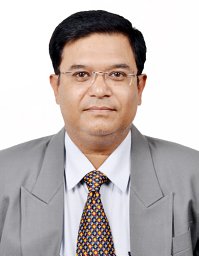 Bhupendra Verma合作论文数computer science and engineering, T.I.T Bhopal1Mitali Mandal合作论文数1Anil Kumar Sagar合作论文数1
 Dominik Ślęzak合作论文数DeepSeas;Institute of Informatics, Faculty of Mathematics, Computer Science and Mechanics, University of Warsaw;QED Software1




