Gunter Blobel was a scientific colossus who dedicated his career to understanding the mechanisms for protein sorting to membrane organelles. His monumental contributions established research paradigms for major arenas of molecular cell biology. For this work, he received many accolades, including the Nobel Prize in Medicine or Physiology in 1999. He was a scientist of extreme passion and a nurturing mentor for generations of researchers, imbuing them with his deep love of cell biology and galvanizing them to continue his scientific legacy. Gunter passed away on February 18, 2018, at the age of 81.
Significance After export from the nucleus, distinct mRNAs are further transported to specific locales in the cytoplasm. In yeast, a subset of mRNAs targeted to the daughter cells carry zipcodes, which are recognized by two distinct binding proteins, one of which also binds to myosin. The assembled myosin motor walks with its mRNA cargo, like a ropewalker, on an actin filament. To avoid futile movement, motor assembly is strictly controlled. We show that a striking hook-like structure of one zipcode-binding protein connects to a pocket of the other zipcode-binding protein. Hooking is proposed to align the zipcode-binding sites of the two proteins to create a composite site for high-affinity zipcode binding.
Significance To navigate large cargo through the viscous cytoplasm, cells use a variety of energy-consuming machines that, akin to ropewalkers, move on intracellular “tracks” in a stepwise “bipedal” fashion. To prevent waste of energy by futile walking, several control mechanisms have evolved. In the case described here for one group of yeast myosins, crystallographic and biophysical analyses revealed that a single myosin molecule associates with an intertwined middle region of two “adaptor” molecules. The adaptor also contains distinct binding sites for cargo. Only when cargo is attached to the myosin-bound adaptor are two of the myosin–adaptor complexes joined into a pair, akin to converting a uniped (unable to walk) into a biped (able to walk).
Pyrogenic organic matter (PyOM) plays an important role as a stable carbon (C) sink in the soils of terrestrial ecosystems. However, uncertainties remain about in situ turnover rates of fire-derived PyOM in soil, the main processes leading to PyOM-C and nitrogen (N) losses from the soil, and the role of N availability on PyOM cycling in soils. We measured PyOM and native soil organic carbon losses from the soil as carbon dioxide and dissolved organic carbon (DOC) using additions of highly 13C-labelled PyOM (2.03 atom %) and its precursor pinewood during 1 year in a temperate forest soil. The field experiment was carried out under ambient and increased mineral N deposition (+60 kg N-NH4NO3 ha−1 year−1). The results showed that after 1 year: (1) 0.5% of PyOM-C and 22% of wood-C were mineralized as CO2, leading to an estimated turnover time of 191 and 4 years, respectively; (2) the quantity of PyOM and wood lost as dissolved organic carbon was negligible (0.0004 ± 0.0003% and 0.022 ± 0.007% of applied-C, respectively); and (3) N additions decreased cumulative PyOM mineralization by 43%, but did not affect cumulative wood mineralization and did not affect the loss of DOC from PyOM or wood. We conclude that mineralization to CO2 was the main process leading to PyOM losses during the first year of mineralization in a forest soil, and that N addition can decrease PyOM-C cycling, while added N showed no effect on wood C cycling.
Pyrogenic organic matter (PyOM) decomposes on centennial timescale in soils, but the processes regulating its decay are poorly understood. We conducted one of the first studies of PyOM and wood decomposition in a temperate forest using isotopically labeled organic substrate, and quantified microbial incorporation and physico-chemical transformations of PyOM in situ. Stable-isotope (¹³C and ¹⁵N) enriched PyOM and its precursor wood were added to the soil at 2 cm depth at ambient (N0) and increased (N+) levels of nitrogen fertilization. The carbon (C) and nitrogen (N) of added PyOM or wood were tracked through soil to 15 cm depth, in physically separated soil density fractions and in benzene polycarboxylic acids (BPCA) molecular markers. After 10 months in situ, more PyOM-derived C (>99% of initial 13C-PyOM) and N (90% of initial ¹⁵N-PyOM) was recovered than wood derived C (48% of 13C-wood) and N(89% under N0 and 48% under N+). PyOM-C and wood-C migrated at the rate of 126 mm yr ⁻¹ with 3-4% of PyOMC and 4-8% of wood-C recovered below the application depth. Most PyOM C was recovered in the free light fraction(fLF) (74%), with 20% in aggregate-occluded and 6% in mineral associated fractions – fractions that typically have much slower turnover times. In contrast, wood C was recovered mainly in occluded (33%) or dense fraction (27%).PyOM addition induced loss of native C from soil (priming effect), particularly in fLF (13%). The total BPCA-C content did not change but after 10 months the degree of aromatic condensation of PyOM decreased, as determined by relative contribution of benzene hexa-carboxylic acid (B6CA) to the total BPCA C. Soil microbial biomass assimilated 6-10% of C from the wood, while PyOM contributions was negligible (0.14–0.18%). The addition of N had no effect on the dynamics of PyOM while limited effect on wood.
Pyrogenic carbon (PyC), the residue of an incomplete combustion of biomass, is considered as a carbon (C) sink due to its assumed stability in soil. PyC turnover time estimated using two modelling approaches, based on data from 16 published studies (n = 54) on PyC degradation, ranged from a decadal to centennial time scale, varying with initial biomass type, pyrolysis temperature, and incubation or field study. The average turnover time using a one-pool approach was 88 y, and the best estimate using a two-pool approach was 3 y for a fast-cycling pool and 870 y for a slow-cycling pool. Based on this meta-analysis, PyC cannot be assumed to persist in soils for thousands of years, and its use as a strategy for offsetting carbon emissions requires prudence and further research.
Pyrogenic carbon (PyC), incomplete combustion product of biomass and fossil fuel, is ubiquitous in the environment and widely assumed to remain stable in soil (1). The stability of PyC has been challenged by a series of recent laboratory and field experiments (2-4), which show that it is mineralized slowly to CO2 in soil. We are carrying out a long-term PyC degradation study within an experimental field setup located at Laegeren forest (Wettingen, Switzerland). We have installed cylindrical mesocosms (20 cm long and 10 cm diameter) in a randomized block design with 3 plots, 3 treatments (wood, PyC, and control) and 2 levels of nitrogen (N) input (+N = +60 kg ha-1 y-1 and -N = ambient N deposition). Wood (Pinus ponderosa) and PyC were highly labelled (13C 800h and 15N 4.2 atom%) and were added at a rate of 1.5 g-C kg-1 soil and 2.8 g-C kg-1 soil, respectively. We observed that PyC decomposed at a rate of 0.64 % year-1.
Since last decade there is an increased interest in pyrogenic C (PyC), a chemically heterogeneous class of compounds produced by the incomplete combustion of biomass. It is considered as C sink with potential for partly offsetting carbon emissions as it the most stable C form identified in soil. However, there are evidences that charcoal is susceptible to degradation, especially over longer time scales. We intend to integrate information on what is known about degradability of PyC and investigate from published evidence how the inherent chemistry of initial PyC is responsible for its fate and role in the biogeochemical cycles. We summarized recent progress in understanding pyrogenic carbon degradation and losses, and provide a first estimate of the potential degradation rate (literature meta-analysis). We observed maximum scatter in data for field-based study due to high spatial and temporal variation. For short-term studies, pyrolysis temperature is important variable in deciding the rate of PyC, however, initial substrate had little effect in the variation of the degradation rates. This communication also aims to report the plausible mechanisms and possible actors for the degradation of PyC in the soil. To assess and understand degradation mechanism with time, we separate different causative agents involved (oxidation, microbial co-metabolism, physical breakdown among others) and changes in the quality of PyC itself with time (surface and core chemistry). Various literatures reported oxidative degradation pathway (abiotic and/or biotic) leading to surface and core chemistry changes in PyC. These changes in PyC may exert a key influence on the future trajectory of its further decomposition. Therefore, we finally address the question of whether the changes and/or ageing of PyC change the decomposition dynamics and/or loss of PyC as soluble fraction. The outcome of this work would facilitate in better understanding of soil PyC dynamics in soil and the gaps in knowledge that need to be addressed for future research.
Pyrogenic organic matter (PyOM), the incomplete combustion product of organic materials, is considered stable in soils and represents a potentially important terrestrial sink for atmospheric carbon dioxide. One well-established method of measuring PyOM in the environment is as benzene polycarboxylic acids (BPCAs), a compound-specific method, which allows both qualitative and quantitative estimation of PyOM. Until now, stable isotope measurement of PyOM carbon involved measurement of the trimethylsilyl (TMS) or methyl (Me) polycarboxylic acid derivatives by gas chromatography-combustion-isotope ratio mass spectrometry (GC-C-IRMS). However, BPCA derivatives can contain as much as 150% derivative carbon, necessitating post-analysis correction for the accurate measurement of δ¹³C values, leading to increased measurement error. Here, we describe a method for δ¹³C isotope ratio measurement and quantification of BPCAs from soil-derived PyOM, based on ion-exchange chromatography (IEC-IRMS). The reproducibility of the δ¹³C measurement of individual BPCAs by IEC-IRMS was better than 0.35‰ (1σ). The δ¹³C-BPCA analysis of PyOM in soils, including at natural and artificially enriched ¹³C-abundance, produced accurate and precise δ¹³C measurements. Analysis of samples that differed in δ¹³C by as much as 900‰ revealed carryover of <1‰ between samples. The weighted sum of individual δ¹³C-BPCA measurements was correlated with previous isotopic measurements of whole PyOM, providing complementary information for bulk isotopic measurements. We discuss potential applications of δ¹³C-BPCA measurements, including the study of turnover rates of PyOM in soils and the partitioning of PyOM sources based on photosynthetic pathways.
Recent studies show that pyrogenic matter is one of the most stable compounds in the soil but less inert than previously expected. One potential pathway yielding losses from soil is solubilisation of pyrogenic compounds. In batch experiments, we estimated the proportion and molecular composition of soluble (<0.45 mu m) and colloidal fractions (0.45-5 mu m) extractable from a freshly pyrolysed charcoal and a 10 year old wildfire charcoal. These fractions represented a very small fraction (<2.7 g kg(-1)) of chars. The benzene polycarboxylic acids (BPCA) pattern indicated that 40-55 times more condensed structures were released from the aged char than from the fresh char. This study shows that the soluble fraction of the char is small, and tends to increase with the residence time in the soil. (C) 2011 Elsevier Ltd. All rights reserved.
An economical and efficient one step synthesis of a series of 8-(arylidene)-4-(aryl)-5,6,7,8-tetrahydro-quinazolin-2-ylamines and 9-(arylidene)-4-(aryl)-6,7,8,9-tetrahydro-5H-cycloheptapyrimidin-2-ylamines by the reaction of bis-benzylidene cycloalkanones and guanidine hydrochloride in presence of NaH has been developed. All the synthesized compounds were evaluated against Mycobacterium tuberculosis H(37)Rv strain and the α-glucosidase and glycogen phosphorylase enzymes. Few of the compounds have shown interesting in vitro activity with MIC up to 3.12 μg/mL against M. tuberculosis and very good inhibition of α-glucosidase and glycogen phosphorylase enzymes. The most potent non toxic compound 40 exhibited about 58% ex vivo activity at MIC of 3.12 μg/mL. The present study opens a new gate to synthesize antitubercular agents for diabetic TB patients. In silico docking studies indicate that mycobacterial dihydrofolate reductase is the possible target of these compounds.
Future climatic changes might result in an increased potential for wildfires, whereby incorporation of charred biomass into soil would increase. The incomplete combustion of biomass results in the production of a chemically heterogeneous class of highly condensed compounds known as pyrogenic C (PyC), which is generally considered resistant to microbial degradation. Recently, studies based on short-term laboratory incubations with soil have indicated that PyC can also eventually degrade (Baldock and Smernik, 2002; Hamer et al., 2004) and it is now widely accepted that a significant quantity of these resistant fraction of soil must have undergone degradation in terrestrial environments. Charcoal has been shown to decompose faster in the initial stages (first 2-3 months) and stabilize later (Kuzyakov et al., 2009). However, studies describing charcoal transformation processes remain scarce. The different potential degradation mechanisms have not yet been studied in combination, and therefore the relative importance for PyC degradation has not been evaluated. We are conducting an incubation experiment to study the biological, chemical and physical degradation/stabilization processes of PyC in soil under controlled conditions. We use Pinus ponderosa 13C/15N labeled (13C: 800 per mil, 15N: 4.2 atom %) wood and charcoal (pyrolysed at 450 °C under N2 atmosphere). We incubate soil from Lageren forest (Wettingen, Switzerland) with three kind of organic inputs, labeled wood, char and no littler control. The decomposition rates would be estimated based on 13C of CO2 entrapped in NaOH. Time course destructive sampling would be done during the study. Lyophilized soil subsamples will be used for analysis of the amount of 13C incorporation in the microbial biomass using fumigation extraction method and phospholipids fatty acid analysis (PLFA). The remaining PyC in the soil would be characterized for the changes in its chemistry at the molecular level using Benzenepolycarboxlic acid (BPCA) molecular marker method and 13C 15N NMR. This communication aims to report the first four months results of this study at a higher time resolution. The outcome of this study would facilitate in elucidating the potential decomposition rate of charcoal and consequent changes in its physical, chemical and biological properties in the soil during the initial stages of decomposition. In addition, application of highly labeled 13C PyC would enable us in this study to trace the transformation products.
[3+2] Cycloaddition of 5-azido-5-deoxy-1,2-O-isopropylidene-α-d-xylofuranose with 1,3-diphenyl-prop-3-enones, followed by oxidation of the intermediate triazolines in a tandem manner, led to the regioselective formation of 4-benzoyl-1-(5-deoxy-1,2-O-isopropylidene-α-d-xylofuranos-5-yl)-5-phenyl-1H-1,2,3-triazoles in moderate to good yields.
Leaching of Cu and Zn from a composite of spent antifouling paint particles, containing about 300 mg g(-1) and 110 mg g(-1) of the respective metals, was studied in batch experiments. For a given set of simulated environmental conditions, release of Cu was independent of paint particle concentration due to attainment of pseudo-saturation, but Zn was less constrained by solubility effects and release increased with increasing particle concentration. Leaching of Cu increased but Zn decreased with increasing salinity, consistent with mechanisms governing the dissolution of Cu2O in the presence of chloride and Zn acrylates in the presence of seawater cations. Because of complex reaction kinetics and the presence of calcium carbonate in the paint matrix, metal leaching appeared to be greater at 4 degrees C than 19 degrees C under many conditions. These findings have important environmental and biological implications regarding the deliberate or inadvertent disposal of antifouling paint residues.
Fragments of antifouling paint and environmental geosolids have been sampled from the island of Malta and analysed for total and bioaccessible metals. Total concentrations of Ba, Cd, Cu, Pb, Sn and Zn were two to three orders of magnitude higher in spent antifouling composites relative to respective values in background soils and road dusts. Paint fragments were visible in geosolids taken from the immediate vicinity of boat maintenance facilities and mass balance calculations, based on Ba as a paint tracer, suggested that the most contaminated soils, road dusts and boatyard dusts contained about 1%, 7% and 9%, respectively, of antifouling particles. Human bioaccessibilities of metals were evaluated in selected samples using a physiologically based extraction technique. Accessibilities of Cd, Cu, Pb and Zn in the most contaminated solids were sufficient to be cause for concern for individuals working in the boat repair industry and to the wider, local community.
An economical and facile synthesis of α,α′-(EE)-bis(benzylidene)-cycloalkanones was achieved by the reaction of cycloalkanones with different aromatic aldehydes using ethanolic KOH in good yields. Few of the selected compounds were reduced with NaBH4 to the respective α,α′-(EE)-bis(benzylidene)-cycloalkanols. All these compounds and our earlier synthesized cyclohexyl phenyl methanols were evaluated for their antitubercular, antifungal and antibacterial activities. Several compounds displayed moderate antitubercular activity with MIC=12.5–1.56μg/mL. However, none of the compounds displayed any significant antifungal activity.
 Samuel Abiven合作论文数Department of Geography, University of Zurich11
 Margaret Torn合作论文数Earth Sciences Division, Lawrence Berkeley National Laboratory8
 Michael W. I. Schmidt合作论文数Department of Geography, University of Zurich7
 Jeffrey A. Bird合作论文数School of Earth and Environmental Sciences, Queens College5
 Rama Pati Tripathi合作论文数Medicinal and Process Chemistry Division, Central Drug Research Institute5
 Bernardo Maestrini合作论文数Wageningen Univ & Res4
 Andrew Turner合作论文数School of Geography, Earth and Environmental Sciences, Faculty of Science and Engineering, University of Plymouth4
 Rajendra P. Tripathi合作论文数NMR Research Centre, Institute of Nuclear Medicine and Allied Sciences3
 Jyoti Pandey合作论文数Medicinal and Process Chemistry Division, Central Drug Research Institute3
 Arvind Kumar Srivastava合作论文数2
 Hang Shi (史航)合作论文数2
 Fernanda Santos合作论文数2
 Sudhir Sinha合作论文数Drug Target Discovery and Development Division, Central Drug Research Institute2
 Namrata Dwivedi合作论文数Medicinal and Process Chemistry Division, Central Drug Research Institute2
 Mridul Mishra合作论文数Medicinal and Process Chemistry Division, Central Drug Research Institute2
 Vinita Chaturvedi合作论文数Drug Target Discovery and Development Division, Central Drug Research Institute2
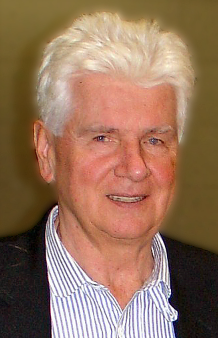 Günter Blobel合作论文数Rockefeller University2Daniel Schmidt合作论文数1Michèle Roa合作论文数1Shalini Bhatnagar合作论文数1N Chaudhary合作论文数1Erik Debler合作论文数1kimihisa yoshida合作论文数1
 Praveen Shukla合作论文数1Sandy Simon合作论文数1Hualin Zhong合作论文数1Jianfeng Sun合作论文数1
 Alok Sharma合作论文数1Doris Berman合作论文数1Doris Kraemer合作论文数1Susan Smith合作论文数1
 Linas Urnavicius合作论文数Lab Chem & Cell Biol, Rockefeller Univ1Jonathan Richards合作论文数1Jie Fan合作论文数1Amit Kumar Yadav合作论文数1Junseock Koh合作论文数1Yi Ren合作论文数1Kuo-Chiang Hsia合作论文数Acad Sinica, Inst Mol Biol, Taipei, Taiwan1Matthias Müller合作论文数1
 André Hoelz合作论文数Division of Chemistry and Chemical Engineering, California Institute of Technology1
 Cordula Enenkel合作论文数Department of Biochemistry, University of Toronto1
 Nabeel R Yaseen合作论文数Department of Pathology, Feinberg School of Medicine, Northwestern University1
 Xiaolan Zhao合作论文数Molecular Biology, Weill Cornell Graduate School of Medical Sciences, Cornell University1
 Michael Hurwitz合作论文数Medical Oncology, Internal Medicine, Yale School of Medicine, Yale University1Megan C. King合作论文数Biochemistry, Quantitative Biology, Biophysics, and Structural Biology, Biological & Biomedical Sciences, Yale University1
 C. Patrick Lusk合作论文数Biochemistry, Quantitative Biology, Biophysics, and Structural Biology, Biological & Biomedical Sciences, Yale University1
 Susan R. Wente合作论文数Department of Biology and Biochemistry, Wake Forest University1
 Jacques T YaDeau合作论文数Weill Medical College, Cornell University1
 Reid Gilmore合作论文数Department of Biochemistry and Molecular Pharmacology, University of Massachusetts Medical School1




