Systems of fermions with multiple internal states, such as quarks in quantum chromodynamics and nucleons in nuclear matter, are at the heart of some of the most complex quantum many-body problems. The stability of such many-body multi-component systems is crucial to understanding, for instance, baryon formation and the structure of nuclei, but these fermionic problems are typically very challenging to tackle theoretically. Versatile experimental platforms on which to study analogous problems are thus sought after. Here, we report the creation of a uniform gas of three-component fermions. We characterize the decay of this system across a range of interaction strengths and observe nontrivial competition between two- and three-body loss processes. We observe anomalous decay of the polarized (i.e. spin-population imbalanced) gas, in which the loss rates of each component unexpectedly differ. We introduce a generalized three-body rate equation which captures the decay dynamics, but the underlying microscopic mechanism is unknown.
We find the dispersion relations of two elusive families of core-bound excitations of the Gross-Pitaevskii (GP) vortex, varicose (axisymmetric) and fluting (quadrupole) waves. For wavelengths of order the healing length, these two families -- and the well-known Kelvin wave -- possess an infinite sequence of core-bound, vortex-specific branches whose energies lie below the Bogoliubov dispersion relation. In the short-wavelength limit, these excitations can be interpreted as particles radially bound to the vortex, which acts as a waveguide. In the long-wavelength limit, the fluting waves unbind from the core, the varicose waves reduce to phonons propagating along the vortex, and the fundamental Kelvin wave is the only core-bound vortex-specific excitation. Finally, we propose a realistic spectroscopic protocol for creating and detecting the varicose wave, which we test by direct numerical simulations of the GP equation.
Emergent macroscopic descriptions of matter, such as hydrodynamics, are central to our description of complex physical systems across a wide spectrum of energy scales. The conventional understanding of these many-body phenomena has recently been shaken by a number of experimental findings. Collective behavior of matter has been observed in mesoscopic systems, such as high-energy hadron–hadron collisions, or ultracold gases with only a few strongly interacting fermions. In such systems, the separation of scales between macroscopic and microscopic dynamics (at the heart of any effective theory) is inapplicable. To address the conceptual challenges that arise from these observations and explore the universality of emergent descriptions of matter, the EMMI Rapid Reaction Task Force was assembled. This document summarizes the RRTF discussions on recent theoretical and experimental advances in this rapidly developing field. Leveraging technological breakthroughs in the control of quantum systems, we can now quantitatively explore what it means for a system to exhibit behavior beyond the sum of its individual parts. In particular, the report highlights how the (in)applicability of hydrodynamics and other effective theories can be probed across three principal frontiers: the size frontier, the equilibrium frontier, and the interaction frontier.
Quantum thermalization describes how interacting quantum systems relax toward thermal equilibrium, a central problem in modern physics. Yet most experimental information on many-body systems comes from short-time transition spectroscopy, typically interpreted within Kubo's linear-response framework. These perspectives - long-time equilibration versus short-time response - seem fundamentally disconnected. Here we establish an exact link between them: the Kubo-Thermalization correspondence, which connects long-time thermalized magnetization under weak driving to short-time linear-response spectra for a spin coupled to a thermal bath. The correspondence holds even when the steady state differs substantially from the initial state and when each regime is individually difficult to describe theoretically. We experimentally confirm the correspondence using effective spin-1/2 impurities realized with ultracold fermions in two internal states coupled to a Fermi sea. Our results provide a rare exact statement about quantum thermalization and offer a novel route to infer thermalization dynamics from equilibrium response measurements in strongly interacting quantum systems, independent of microscopic details of the system-bath coupling.
We report the numerical observation of a far-from-equilibrium equation of state (EOS) in the Gross-Pitaevskii (GP) model. We first show that the momentum distribution of the turbulent cascade is well described by wave-turbulent kinetic theory in the appropriate limits. Calculating the energy and particle fluxes Π_{ϵ}(k) and Π_{N}(k), we show that the turbulent state possesses the hallmarks of a direct energy cascade. Building on this, we show that the GP model encodes a universal EOS in the form of a relationship between the turbulent cascade's momentum distribution amplitude n_{0} and the energy flux ε in the steady state. We find that in our regime of "mixed" turbulence-where both vortices and waves play a significant role-n_{0}∝ε^{0.67(2)}, a result that is not captured by any existing theory of turbulence but that agrees with a recent experimental measurement for large energy fluxes. Finally, we find that the concept of quasi-static thermodynamic processes between equilibrium states extends to far-from-equilibrium steady states.
Fermi's golden rule links certain measurable observables-such as transition rates-to fundamental microscopic properties such as the density of states or spectral functions. Understanding the regime of validity of Fermi's golden rule is critical for the proper interpretation of spectroscopic experiments. Although its assumptions are straightforward in simple models, assessing their validity in quantum many-body systems remains difficult. Here we demonstrate the emergence and breakdown of Fermi's golden rule in a strongly interacting homogeneous spin-1/2 Fermi gas coupled to a radio-frequency field. By measuring the transition probability into an outcoupled internal state, we map the system's dynamical response diagram as a function of pulse duration t and probe coupling strength. For weak drives, we identify an early time regime where the transition probability takes off as t 2, an intermediate-time regime consistent with Fermi's golden rule regime and a long-time non-perturbative regime. Beyond a threshold coupling strength, Rabi oscillations appear. Our results provide a blueprint for the applicability of linear response theory to the spectroscopy of quantum many-body systems.
Fermi's Golden Rule (FGR) is one of the most impactful formulas in quantum mechanics, providing a link between easy-to-measure observables - such as transition rates - and fundamental microscopic properties - such as density of states or spectral functions. Its validity relies on three key assumptions: the existence of a continuum, an appropriate time window, and a weak coupling. Understanding the regime of validity of FGR is critical for the proper interpretation of most spectroscopic experiments. While the assumptions underlying FGR are straightforward to analyze in simple models, their applicability is significantly more complex in quantum many-body systems. Here, we observe the emergence and breakdown of FGR, using a strongly interacting homogeneous spin-1/2 Fermi gas coupled to a radio-frequency (rf) field. Measuring the transition probability into an outcoupled internal state, we map the system's dynamical response diagram versus the rf-pulse duration t and Rabi frequency Ω_0. For weak drives, we identify three regimes: an early-time regime where the transition probability takes off as t^2, an intermediate-time FGR regime, and a long-time non-perturbative regime. Beyond a threshold Rabi frequency, Rabi oscillations appear. Our results provide a blueprint for the applicability of linear response theory to the spectroscopy of quantum many-body systems.
Quasiparticles are emergent excitations of matter that underlie much of our understanding of quantum many-body systems. Therefore, the prospect of manipulating their properties with external fields -- or even destroying them -- has both fundamental and practical implications. However, in solid-state materials it is often challenging to understand how quasiparticles are modified by external fields owing to their complex interplay with other collective excitations, such as phonons. Here, we take advantage of the clean setting of homogeneous quantum gases and fast radio-frequency control to manipulate Fermi polarons -- quasiparticles formed by impurities interacting with a non-interacting Fermi gas -- from weak to ultrastrong drives. Exploiting two internal states of the impurity species, we develop a steady-state spectroscopy, from which we extract the energy of the driven polaron. We measure the decay rate and the quasiparticle residue of the driven polaron from the Rabi oscillations between the two internal states. At large drive strengths, the so-extracted quasiparticle residue exceeds unity, raising intriguing questions on the relationship between the Rabi oscillations and the impurity's spectral functions. Our experiment establishes the driven Fermi polaron as a promising platform for studying controllable quasiparticles in strongly driven quantum matter.
At low temperature, a normal gas of unpaired spin-1/2 fermions is one of the cleanest realizations of a Fermi liquid. It is described by Landau's theory, where no phenomenological parameters are needed as the quasiparticle interaction function can be computed perturbatively in powers of the scattering length , the sole parameter of the short-range interparticle interactions. Obtaining an accurate solution of the transport equation nevertheless requires a careful treatment of the collision kernel, as the uncontrolled error made by the relaxation time approximations increases when the temperature drops below the Fermi temperature. Here, sound waves in the hydrodynamic regime are studied up to second order in the Chapman-Enskog's expansion. It is found that the frequency of the sound wave is shifted above its linear departure as where and are the speed and wavenumber of the sound wave and the typical collision time scales as . Besides the shear viscosity, the coefficient is described by a single second-order collision time, which is computed exactly from an analytical solution of the transport equation, resulting in a positive dispersion . The results suggest that ultracold atomic Fermi gases are an ideal experimental system for quantitative tests of second-order hydrodynamics.
Landau’s Fermi-liquid (FL) theory has been successful at the phenomenological description of the normal phase of many different Fermi systems. Using a dilute atomic Fermi fluid with tunable interactions, we investigate the microscopic basis of Landau’s theory with a system describable from first principles. We study transport properties of an interacting Fermi gas by measuring its density response to a periodic external perturbation. In an ideal Fermi gas, we measure for the first time the celebrated Lindhard function. As the system is brought from the collisionless to the hydrodynamic regime, we observe the emergence of sound and find that the experimental observations are quantitatively understood with a first-principle transport equation for the FL. When the system is more strongly interacting, we find deviations from such predictions. Finally, we measure the momentum-space shape of the quasiparticle excitations and see how it evolves from the collisionless to the collisional regime. Our study establishes this system as a clean platform for studying Landau’s theory of the FL and paves the way for extending the theory to more exotic conditions, such as nonlinear dynamics and FLs with strong correlations in versatile settings.
We propose an interferometric method to probe pair correlations in a gas of spin-1/2 fermions. The method consists of a Ramsey sequence where both spin states of the Fermi gas are set in a superposition of a state at rest and a state with a large recoil velocity. The two-body density matrix is extracted via the fluctuations of the transferred fraction to the recoiled state. In the pair-condensed phase, the off-diagonal long-range order is directly reflected in the asymptotic behavior of the interferometric signal for long interrogation times. The method also allows to probe the spatial structure of the condensed pairs: the interferometric signal is an oscillating function of the interrogation time in the Bardeen-Cooper-Schrieffer regime; it becomes an overdamped function in the molecular Bose-Einstein condensate regime.
We report the observation of the quantum Joule-Thomson (JT) effect in ideal and unitary Fermi gases. We study the temperature dynamics of these systems while they undergo an energy-per-particle conserving rarefaction. For scale-invariant systems, whose equations of state satisfy the relation $U\propto PV$, this rarefaction conserves the specific enthalpy, which makes it thermodynamically equivalent to a JT throttling process. We observe JT heating in an ideal Fermi gas, stronger at higher quantum degeneracy, a result of the repulsive quantum-statistical `force' arising from Pauli blocking. In a unitary Fermi gas, we observe that the JT heating is marginal in the temperature range $0.2 \lesssim T/T_{\mathrm{F}} \lesssim 0.8 $ as the repulsive quantum-statistical effect is lessened by the attractive interparticle interaction.
We report the creation and the study of the stability of a repulsive quasihomogeneous spin-1/2 Fermi gas with contact interactions. For the range of scattering lengths a explored, the dominant mechanism of decay is a universal three-body recombination toward a Feshbach bound state. We observe that the recombination coefficient K_{3}∝ε_{kin}a^{6}, where the first factor, the average kinetic energy per particle ε_{kin}, arises from a three-body threshold law, and the second one from the universality of recombination. Both scaling laws are consequences of Pauli blocking effects in three-body collisions involving two identical fermions. As a result of the interplay between Fermi statistics and the momentum dependence of the recombination process, the system exhibits nontrivial temperature dynamics during recombination, alternatively heating or cooling depending on its initial quantum degeneracy. The measurement of K_{3} provides an upper bound for the interaction strength achievable in equilibrium for a uniform repulsive Fermi gas.
The restoration of symmetries is one of the most fascinating properties of turbulence. We report a study of the emergence of isotropy in the Gross-Pitaevskii model with anisotropic forcing. Inspired by recent experiments, we study the dynamics of a Bose-Einstein condensate in a cylindrical box driven along the symmetry axis of the trap by a spatially uniform force. We introduce a measure of anisotropy A(k,t) defined on the momentum distributions n(k,t), and study the evolution of A(k,t) and n(k,t) as turbulence proceeds. As the system reaches a steady state, the anisotropy, large at low momenta because of the large-scale forcing, is greatly reduced at high momenta. While n(k,t) exhibits a self-similar cascade front propagation, A(k,t) decreases without such self-similar dynamics. Finally, our numerical calculations show that the isotropy of the steady state is robust with respect to the amplitude of the drive.
Quantum atomic and molecular gases are flexible systems for studies of fundamental many-body physics. They have traditionally been produced in harmonic electromagnetic traps and thus had inhomogeneous densities, but recent advances in light shaping for optical trapping of neutral particles have led to the development of flat-bottomed optical box traps, allowing the creation of homogeneous samples. Box trapping simplifies the interpretation of experimental results, provides more direct connections with theory and, in some cases, allows qualitatively new, hitherto impossible experiments. It has now been achieved for both Bose and Fermi atomic gases in various dimensionalities, and also for gases of heteronuclear molecules. Here we review these developments and the consequent breakthroughs in the study of both equilibrium and non-equilibrium phenomena such as superfluidity, turbulence and the dynamics of phase transitions. Optical box traps create a potential landscape for quantum gases that is close to the homogeneous theoretical ideal. This Review of box trapping methods highlights the breakthroughs in experimental many-body physics that have followed their development.
We experimentally and theoretically investigate the lowest-lying axial excitation of an atomic Bose-Einstein condensate in a cylindrical box trap. By tuning the atomic density, we observe how the nature of the mode changes from a single-particle excitation (in the low-density limit) to a sound wave (in the high-density limit). Throughout this crossover the measured mode frequency agrees with Bogoliubov theory. Using approximate low-energy models we show that the evolution of the mode frequency is directly related to the interaction-induced shape changes of the condensate and the excitation. Finally, if we create a large-amplitude excitation, and then let the system evolve freely, we observe that the mode amplitude decays nonexponentially in time; this nonlinear behavior is indicative of interactions between the elementary excitations, but remains to be quantitatively understood.
Received 15 July 2021DOI:https://doi.org/10.1103/PhysRevA.104.049903©2021 American Physical SocietyPhysics Subject Headings (PhySH)Research AreasBose gasesBose-Einstein condensatesBosonsInterparticle interactionsNonlinear acousticsPhononsSuperfluid densitySuperfluidityTransport phenomenaUltracold collisionsAtomic, Molecular & OpticalFluid DynamicsStatistical PhysicsGeneral PhysicsCondensed Matter, Materials & Applied PhysicsNonlinear Dynamics
 Zoran Hadzibabic合作论文数The Cavendish Laboratory, Department of Physics, University of Cambridge37
 Raphael Lopes合作论文数Cavendish Lab, Univ Cambridge20
 Christoph Eigen合作论文数Univ Cambridge, Cavendish Lab, JJ Thomson Ave, Cambridge CB3 0HE, England18
 Frédéric Chevy合作论文数École Normale Supérieure16
 Christophe Salomon合作论文数Laboratoire Kastler Brossel, Département de Physique, Ecole Normale Supérieure16
 Robert Smith合作论文数Department of Physics, University of Oxford16Alexander L Gaunt合作论文数DeepMind14Gabriel Assumpção合作论文数13Yunpeng Ji合作论文数13Grant Schumacher合作论文数12Jianyi Chen合作论文数11
 Sylvain Nascimbene合作论文数Laboratoire Kastler Brossel, Collège de France11
 Franklin Vivanco合作论文数Department of Physics, Yale University10Jinyi Zhang合作论文数9Jay Man合作论文数7Fletcher Richard J合作论文数Cavendish Lab, Univ Cambridge7
 Roee Ozeri合作论文数Department of Physics;Weizmann Institute of Science;Department of Physics, Weizmann Institute of Science7Nitzan Akerman合作论文数Physics of Complex Systems;Weizmann Institute of Science;Physics of Complex Systems, Weizmann Institute of Science7
 Shlomi Kotler合作论文数Physics of Complex Systems;Weizmann Institute of Science;Physics of Complex Systems, Weizmann Institute of Science7Yinnon Glickman合作论文数7Songtao Huang合作论文数6M. Robert-de-Saint-Vincent合作论文数6Igor Gotlibovych合作论文数5
 J. T. Mäkinen合作论文数Aalto Univ, Dept Appl Phys, POB 15100, FI-00076 Aalto, Finland5Tobias F Schmidutz合作论文数4Patrik Turzák合作论文数4
 Samuel J. Garratt合作论文数Clarendon Lab, Univ Oxford4
 Alexander Schuckert合作论文数Dept Phys, Tech Univ Munich4Jake Glidden合作论文数Cavendish Laboratory, University of Cambridge4
 Benno Rem合作论文数Spectrum Instrumentation4
 Lev Khaykovich合作论文数The Quantum Entanglement Science&Technology Impact Center, Department of Physics, Faculty of Exact Sciences, Bar-Ilan University4
 Konrad Viebahn合作论文数Inst Quantum Elect, Swiss Fed Inst Technol3
 Hadrien Kurkjian合作论文数Lab Phys Theor, Univ Toulouse3
 Antoine Georges合作论文数University of Geneva;Centre de Physique Théorique, Ecole Polytechnique;Collège de France3
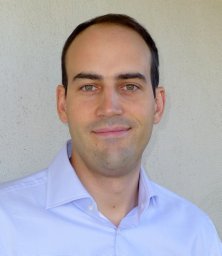 Jason Mckeever合作论文数Laboratory of Physics;California Institute of Technology;Laboratory of Physics, California Institute of Technology3
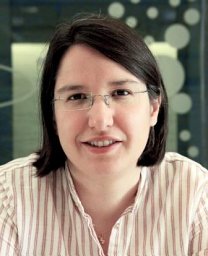 Leticia Tarruell合作论文数LKB - Lhomond3Ido Almog合作论文数3
 Stefano Giorgini合作论文数Department of Physics, University of Trento3
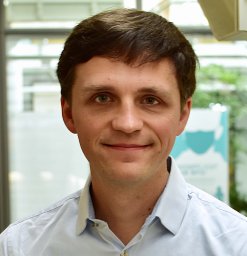 Timon Alexander Hilker合作论文数Max Planck Inst Quantum Opt, D-85748 Garching, Germany2
 Michael Knap合作论文数School of Natural Sciences, Technische Universitat Munchen2Piatecki Swann合作论文数2
 Ulrich Eismann合作论文数2
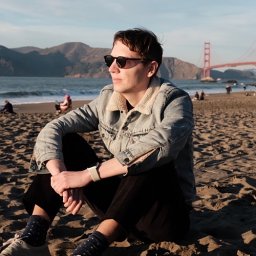 Adam Barker合作论文数University of St Andrews2
 Werner Krauth合作论文数Laboratoire de Physique, École normale supérieure2
 David Clément合作论文数Laboratoire Charles Fabry, Institut d'Optique Graduate School2
 Makoto Tsubota (坪田誠)合作论文数Department of Physics, Graduate School of Science, Osaka Metropolitan University2
 Jing Zhang (张靖)合作论文数State Key Laboratory of Quantum Optics and Quantum Optics Devices, Institute of Opto-Electronics, Shanxi University2Felix Werner合作论文数2




