Photonic crystal waveguides (PCWs) allow for the engineering of photonic modes and band structures to control the flow of light and light-matter interactions within the waveguide. They have shown potential for enhancing optical nonlinearities, quantum dot single photon emissions, as well as optical buffers due to their ability to confine fields on-chip and produce slow-light modes. While these features are promising for applications in nanophotonics, PCWs are prone to high scattering losses due to disorder-induced backscattering, which has remained a significant problem for decades, across various waveguide designs. By combining a fast mode solving approach with physics-based scattering formulas and inverse design, we show how backscattering losses can be significantly reduced, even when working at the same group index. We demonstrate substantial improvements for both W1-like waveguide modes as well topological waveguide modes. Our general methodology is fully three dimensional and can be used to introduce new PCWs for a variety of design metrics.
Chiral light-matter interactions lie at the heart of emerging technologies such as quantum network protocols and quantum logic gates. In the few photon regime, it has been shown that chiral interactions between photons and a waveguide-embedded two-level quantum emitter can break reciprocity and impart a directional π phase shift while the transmission remains intact. In this work, we present a model for multicolor, chiral nonlinear interactions in waveguides using a Green's Tensor formalism. We challenge previously held notions and demonstrate the complex photon dynamics hidden in multicolor light-matter interactions in the few photon regime. By modulating a stronger control beam, we can manipulate a weaker signal beam that contains much less than a single photon per emitter lifetime, on average. We develop equations for the transmission of the signal photons and removing the control photons to uncover the true strength of these nonlinearities, which we show is stronger than what is possible in symmetric geometries. The model predicts tunable unity extinction and up to 30
Chiral quantum nonlinearities that arise when light interacts with quantum emitters are known to modulate only the phase but not the amplitude of scattered photons, enabling the creation of non-reciprocal photonic elements, quantum logic gates, and quantum network protocols. In this work, we show that the addition of a second photon beam drastically changes this picture, enabling both phase and amplitude modulation. Surprisingly, coherent photon transfer between the different beams enables a stronger amplitude modulation than standard symmetric interactions. This is most obvious in the coherent, three-photon amplification, which we predict peaks with a 30
Combinatorial optimization problems are central to many challenges in logistics, finance, engineering, and the life sciences, yet they remain among the most computationally demanding. Many of these problems can be mapped onto the Ising model, in which binary spins interact through a network of couplings, and solutions correspond to low-energy, ideally ground-state, spin configurations. Photonic Ising machines have the potential to be fast and energy-efficient heuristic solvers of optimization problems by leveraging the low latency, high bandwidth, and inherent parallelism of optics. However, current photonic implementations remain limited in scalability, connectivity, reconfigurability, and time-to-solution, preventing their use in many practical applications. In this perspective, we examine the current landscape of photonic Ising machines, discuss the challenges and limitations of existing platforms, and identify the scientific and technological advances needed to realize large-scale systems. These developments could establish photonic Ising machines as useful hardware platforms for practical optimization.
Highly coherent quantum emitters operating in the telecommunication C-band (1530-1565 nm), where ultralow-loss fibers and photonic circuits are available, are crucial to the development of scalable quantum technologies. In this work, we report on a modified Stranski-Krastanov growth scheme using chemical beam epitaxy to enable the generation of high-quality InAs/InP quantum dots, characterized by near-transform-limited line widths (Gamma(TL)). We demonstrate the growth of highly symmetric quantum dots with aspect ratios >0.8 and densities ranging from 2 to 22 mu m(-2). Optical characterization of these sources reveal fine-structure splittings down to 25 +/- 4 mu eV and a single-photon purity of g((2))(0) = 0.012 +/- 0.007, confirming the quality of these dots. Further, using an etalon to measure the line width, in combination with rigorous modeling, we find an upper-bound to the mean, low-power line widths of only 12.2 +/- 6.7 Gamma(TL) and, in the best case, 2.8 +/- 1.9 Gamma(TL). These results represent a significant step in the development of telecom-wavelength quantum light sources, which are essential for complex quantum networks and devices.
We introduce the architecture and timing algorithm to realize a time-bin-encoded quantum photonic neural network (QPNN): a reconfigurable nonlinear photonic circuit inspired by the brain and trained to process quantum information. Unlike the typical spatially-encoded QPNN, time-encoded networks require the same number of photonic elements (e.g. phase shifters or switches) regardless of their size or depth. Here, we present a model of such a network and show how to include imperfections such as losses, routing errors and most notably distinguishable photons. As an example, we train the QPNN to realize a controlled-NOT gate, based on a hypothetical ideal Kerr nonlinearity. We then extend our model to a realistic two-photon nonlinearity due to scattering from a single, semiconductor quantum dot coupled to a photonic waveguide. We show that, using this realistic nonlinearity, the QPNN can be trained to act as a Bell-state analyzer which operates with a fidelity of 0.96 and at a rate only limited by losses. We further show that time gating can raise this fidelity to over 0.99, while still maintaining an efficiency exceeding 0.9. Overall, this work lays a framework for the first QPNN encoded in time, and provides a clear path to the scaling of these networks.
Photonic crystal waveguides (PCWs) are a powerful platform for optical technologies because they can spatially confine light on sub-wavelength scales and manipulate the group velocity of propagation modes, both of which enhance light-matter interactions. Many applications in photonics require a large bandwidth of low-loss and constant-velocity slow light, a significant challenge for previous dispersion and Bloch mode engineering techniques. By combining inverse design with an efficient mode solver and physics based formulas, we reduce the computational time of PCW designs by more than 100 times, allowing for the realization of PCWs with up to an order of magnitude increase in bandwidth and up to 4 times decrease in loss. We then explore the trade-offs between bandwidth, disorder-induce loss, group index, and dispersion. As examples, we apply this approach to two active and practical areas of research for PCWs design: broadband, position-tolerant Purcell enhancement, and compact phase shifters for optical communications. Our results significantly improve state-of-the-art PCW designs and provide a general method to optimize PCWs integrated technologies.
Chiral quantum light-matter interfaces, where the internal spin state of a quantum emitter determines the direction in which it emits, are essential building blocks of non-reciprocal quantum devices, deterministic quantum logical gates and entanglement generation protocols. Yet, a chiral quantum interface that operates at telecom wavelengths, and is compatible with telecommunication infrastructure and silicon photonics, does not yet exist. Here, we report on an integrated chiral quantum interface in the original telecom band (1260-1360 nm), created by interfacing InAs quantum dots with a waveguide-coupled InP microdisk. We tune the quantum dot transitions through the photonic cavity using a strong magnetic field, observing a peak cavity enhancement of 3.3 and an emission directionality of 0.985, demonstrating the near-ideal chiral quantum coupling required for quantum information processing on integrated photonic devices.
This roadmap consolidates recent advances while exploring emerging applications, reflecting the remarkable diversity of hardware platforms, neuromorphic concepts, and implementation philosophies reported in the field. It emphasizes the critical role of cross-disciplinary collaboration in this rapidly evolving field.
Neuromorphic (brain-inspired) photonics accelerates AI1 with high-speed, energy-efficient solutions for RF communication2, image processing3,4, and fast matrix multiplication5,6. However, integrated neuromorphic photonic hardware faces size constraints that limit network complexity. Recent advances in photonic quantum hardware7 and performant trainable quantum circuits8 offer a path to more scalable photonic neural networks. Here, we show that a combination of classical network layers with trainable continuous variable quantum circuits yields hybrid networks with improved trainability and accuracy. On a classification task, these hybrid networks match the performance of classical networks nearly twice their size. These performance benefits remain even when evaluated at state-of-the-art bit precisions for classical and quantum hardware. Finally, we outline available hardware and a roadmap to hybrid architectures. These hybrid quantum-classical networks demonstrate a unique route to enhance the computational capacity of integrated photonic neural networks without increasing the network size.
Large, multi-dimensional clusters of entangled photons are among the most powerful resources for emerging quantum technologies, as they are predicted to enable global quantum networks or universal quantum computation. Here, we propose an entirely new architecture and protocol for their generation based on recurrent quantum photonic neural networks (QPNNs) and focusing on tree-type cluster states. Unlike other approaches, QPNN-based generators are not limited by the the coherence of quantum emitters or by probabilistic multi-photon operations, enabling arbitrary scaling only limited by loss (which, unavoidably, also affects all other methods). We show that a single QPNN can learn to perform all of the many different operations needed to create a cluster state, from photon routing to entanglement generation, all with near-perfect fidelity and at loss-limited rates, even when it is created from imperfect photonic components. Although these losses ultimately place a limit on the size of the cluster states, we show that state-of-the-art photonics should already allow for clusters of 60 photons, which can grow into the 100s with modest improvements to losses. Finally, we present an analysis of a one-way quantum repeater based on these states, determining the requisite platform quality for a global quantum network and highlighting the potential of the QPNN to play a vital role in high-impact quantum technologies.
Realizing a sensitive photon-number-dependent phase shift on a light beam is required both in classical and quantum photonics. It may lead to new applications for classical and quantum photonics machine learning or pave the way for realizing photon-photon gate operations. Non-linear phase-shifts require efficient light-matter interaction, and recently quantum dots coupled to nanophotonic devices have enabled near-deterministic single-photon coupling. We experimentally realize an optical phase shift of $0.19 \pi \pm 0.03$ radians ($\approx 34$ degrees) using a weak coherent state interacting with a single quantum dot in a planar nanophotonic waveguide. The phase shift is probed by interferometric measurements of the light scattered from the quantum dot in the waveguide. The nonlinear process is sensitive at the single-photon level and can be made compatible with scalable photonic integrated circuitry. The work may open new prospects for realizing high-efficiency optical switching or be applied for proof-of-concept quantum machine learning or quantum simulation demonstrations.
The development of photonic-based quantum information technologies depends on the availability of devices that consistently, and with high efficiency, deterministically emit identical single photons. Furthermore, a key requirement for the implementation of fiber-based quantum secured communication protocols demands that these sources be compatible with optical fiber networks operating in the low-loss telecom C-band (λ ~ 1550 nm). Semiconductor quantum dot emitters offer on-demand operation at high rates and can be incorporated into photonic structures that allow for high efficiency collection. Through composition engineering of InAs_(x)P_(1-x) dot-in-a-rod (DROD) nanowire quantum dot structures we have previously demonstrated single photon emission from wavelengths of up to the telecom O-band. Here we show how the DROD structure can be modified to shift emission wavelength to the telecom C-band with single-photon purities of g(2)(0) = 0.062. Through further optimization of these structures, we aim to dramatically increase source brightness with the long-term goal of developing scalable and efficient C-band emitting site-selected single-photon sources.
Semiconductor quantum dots (QDs) are a type of solid-state quantum emitter that can act as a near-ideal quantum light-matter interface when integrated with high-quality nanophotonic systems. Though QDs have typically been used to create state-of-the-art, on-demand single photon sources, here we widen the perspective on QDs, showing how to design quantum photonic integrated circuits based on both linear and nonlinear QD phase shifters. Specifically, we find that linear QD phase shifters can be used to realize cryogenically-compatible, fast, low-loss, and high-fidelity reconfigurable linear circuits. When paired with QDs that mediate interactions between photonic qubits, generating nonlinear phase shifts, deterministic quantum photonic logic gates can be achieved. Thus, our work paves the way for the realization of on-chip, cryogenically-compatible linear and nonlinear quantum photonic circuits, including quantum photonic neural networks, which can form the foundation for scalable and efficient quantum photonic technologies.
Quantum photonic integrated circuits, composed of linear-optical elements, offer an efficient way for encoding and processing quantum information on-chip. At their core, these circuits rely on reconfigurable phase shifters, typically constructed from classical components such as thermo- or electro-optical materials, while quantum solid-state emitters such as quantum dots are limited to acting as single-photon sources. Here, we demonstrate the potential of quantum dots as reconfigurable phase shifters. We use numerical models based on established literature parameters to show that circuits utilizing these emitters enable high-fidelity operation and are scalable. Despite the inherent imperfections associated with quantum dots, such as imperfect coupling, dephasing, or spectral diffusion, we show that circuits based on these emitters may be optimized such that these do not significantly impact the unitary infidelity. Specifically, they do not increase the infidelity by more than 0.001 in circuits with up to 10 modes, compared to those affected only by standard nanophotonic losses and routing errors. For example, we achieve fidelities of 0.9998 in quantum-dot-based circuits enacting controlled-phase and - not gates without any redundancies. These findings demonstrate the feasibility of quantum emitter-driven quantum information processing and pave the way for cryogenically-compatible, fast, and low-loss reconfigurable quantum photonic circuits.
The study of waveguide-QED systems, where a continuum of quantum field modes is coupled to qubits or two-level systems, has improved our ability to manipulate quantum light-matter interactions on chip. In the typical theoretical approaches to waveguide QED, there are a few necessary approximations, e.g., considering the system in the weak excitation regime, or treating the waveguide as a bath. However, these inherent approximations can break down with short pulse excitation. Here, we investigate the few-photon quantum nonlinear response of chiral qubits, when excited with one and two-photon Fock states. Our theory uses a numerically exact approach, based on Matrix Product States, avoiding the limitations of the usual waveguide-QED approximations. Using a chiral-emitter waveguide system, we show explicitly the breakdown of the weak excitation approximation, and study the single and two-photon nonlinear responses. We demonstrate the impact on the qubit population, and discuss how the phase change can be examined from the photon quantum correlation functions, seeing a radical departure from scattering theory solutions.
Single photon sources operating on-demand at telecom wavelengths are required in fiber-based quantum secure communication technologies. In this work, we demonstrate single photon emission from position-controlled nanowire quantum dots emitting at λ>1530 nm. Emission in the C-band is achieved by composition engineering of an InAsxP1−x dot-in-a-rod structure. Using above-band pulsed excitation, we obtain single photon purities of g(2)(0)=0.062. These results represent an important step toward the scalable manufacture of high efficiency, high rate single photon emitters in the telecom C-band.
 L. Kobus Kuipers合作论文数Department of Quantum Nanoscience, Faculty of Applied Sciences, Delft University of Technology32
 Peter Lodahl合作论文数Niels Bohr Institute, University of Copenhagen15
 le Feber, B.合作论文数13
 Henry M. van Driel合作论文数Department of Physics, Faculty of Arts & Science, University of Toronto13
 Daryl M. Beggs合作论文数School of;Physics and Astronomy;University of St Andrews12
 Andreas Dirk Wieck合作论文数Ruhr University Bochum10
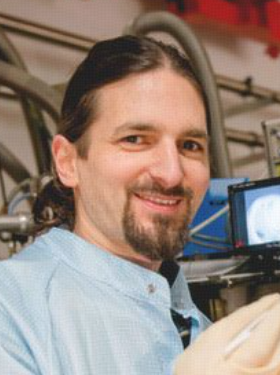 Arne Ludwig合作论文数Institut für Experimentalphysik VI, Ruhr-Universität Bochum9
 Le Jeannic H合作论文数ENS-PSL Research University, UPMC-Sorbonne Universités9
 Thomas F Krauss合作论文数School of Physics, Engineering and Technology, University of York8
 Leonardo Midolo合作论文数Niels Bohr Institute, Exercise and Sports, Faculty of Science, University of Copenhagen7
 Xiao-Liu Chu合作论文数Niels Bohr Inst, Univ Copenhagen7
 de Hoogh Anouk合作论文数Center for Nanophotonics, FOM Institute for Atomic and Molecular Physics (AMOLF), Amsterdam, The Netherlands.7
 Matthias Wulf合作论文数Center for Nanophotonics, FOM Institute AMOLF7
 Rüdiger Schott合作论文数Vat Group7
 Stephen Hughes合作论文数Department of Physics, Engineering Physics & Astronomy, Queen's University7isabella h rey合作论文数6
 Bhavin J. Shastri合作论文数Centre for Nanophotonics Arts & Science, The Department of Physics, Engineering Physics & Astronomy, Queen's University6
 Tommaso Pregnolato合作论文数Niels Bohr Inst, Univ Copenhagen6Markus Betz合作论文数Department of Physics, TU Dortmund University6Dan Dalacu合作论文数Natl Res Council Canada5
 Türschmann Pierre合作论文数Max Planck Institute for the Science of Light (MPL), D-91058 Erlangen, Germany.5
 Vahid Sandoghdar合作论文数Department Physik, Friedrich-Alexander-Universität Erlangen-Nürnberg5Stephan Gotzinger合作论文数5
 Tomas B. Ramos合作论文数4
 Jan Niklas Caspers合作论文数4
 J.E. Sipe合作论文数Department of Physics, University of Toronto4Robin L. Williams合作论文数4
 Juan Jose Garcia-Ripoll合作论文数Inspiration-Q4aron opheij合作论文数3Jacob Ewaniuk合作论文数3
 Sven Scholz合作论文数Lehrstuhl für Angewandte Festkörperphysik, Ruhr-Universität Bochum3
 Theodorus L Krijger合作论文数Stratingh Inst Chem, Univ Groningen3
 Jacques Carolan合作论文数UCL, Wolfson Inst Biomed Res3
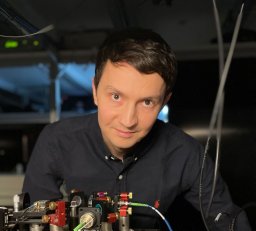 Alexey Tiranov合作论文数3
 Alan D Bristow合作论文数Dept Phys & Astron, W Virginia Univ3Harald R. Haakh合作论文数Institut für Physik und Astronomie, Universität Potsdam3Jan Renger合作论文数Max Planck Inst Sci Light3
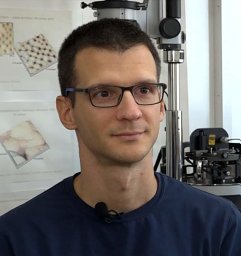 Marko Spasenovic合作论文数Center for Nanophotonics;FOM Institute for Atomic and Molecular Physics ( AMOLF );Center for Nanophotonics|FOM Institute for Atomic and Molecular Physics ( AMOLF )3
 Tobias Utikal合作论文数3
 García De Abajo, Francisco Javier合作论文数Catalan Institution for Research and Advanced Studies, Institut de Ciencies Fotoniques3
 Philip Poole合作论文数National Research Council of Canada3
 Tobias Kampfrath合作论文数Department of Physical Chemistry, Fritz Haber Institute, Freie Universität Berlin3Ying Wang合作论文数2
 Olga Lohse合作论文数2Simonsen Signe F.合作论文数2S. Hoefling合作论文数2R. E. C. van der Wel合作论文数2Doğa Dokuz合作论文数2
 Zhe Liu合作论文数Niels Bohr Institute, Exercise and Sports, Faculty of Science, University of Copenhagen2




