Kalman filters (KFs) are widely used for tracking dynamic systems, providing minimum mean-squared error estimates when the underlying model is linear and Gaussian. However, in practical scenarios with nonlinearities, non-Gaussian noise, or model mismatch, their Gaussian-based confidence intervals often become unreliable. In this work, we propose the conformalized quantile KF (CQKF), a general framework that augments Kalman-type algorithms with distribution-free confidence intervals derived from calibration data. CQKF leverages conformal prediction principles while requiring only the estimated first- and second-order state moments, and can be seamlessly applied to a broad range of filter variants without architectural changes. We provide theoretical guarantees for both sample-wise and trajectory-wise confidence, and demonstrate through experiments with the extended KF (EKF) that CQKF yields tight and well-calibrated confidence intervals for linear and nonlinear dynamical systems.
Future wireless systems are envisioned to utilize the large spectra available at THz bands for wireless communications. Extremely massive multiple-input multiple-output (MIMO) antennas can be costly and power inefficient for wideband THz communications. An alternative antenna technology, which can achieve low-cost and power-efficient THz signaling, is based on leaky wave antennas (LWAs). In this paper, we explore the usage of the LWAs for wideband downlink multi-user THz communications. We propose a model for LWA-aided communication systems that faithfully captures the antenna operations. We show that LWAs yield frequency-dependent beams, where the equivalent wideband channel induces a dependence between angle, frequency, and spectral lobe width. We identify the LWA's inherent frequency-selective beamsteering capabilities as motivating multi-band THz communications, in which subbands are allocated among users based on their relative angles. Then, we propose an alternating optimization algorithm for jointly optimizing the LWA configuration along with the spectral division and power allocation to maximize the achievable sum-rate performance. Our numerical results show that a single LWA can generate diverse beampatterns, exhibiting performance comparable to costly MIMO architectures in wideband THz multi-user systems.
Integrated sensing and communications (ISAC) has emerged as a promising paradigm to unify wireless communications and radar sensing, enabling efficient spectrum and hardware utilization. A core challenge with realizing the gains of ISAC stems from the unique challenges of dual purpose beamforming design due to the highly non-convex nature of key performance metrics such as sum rate for communications and the Cramer-Rao lower bound (CRLB) for sensing. In this paper, we propose a low-complexity structured approach to ISAC beamforming optimization to simultaneously enhance spectral efficiency and estimation accuracy. Specifically, we develop a successive convex approximation (SCA) based algorithm which transforms the original non-convex problem into a sequence of convex subproblems ensuring convergence to a locally optimal solution. Furthermore, leveraging the proposed SCA framework and the Lagrange duality, we derive the optimal beamforming structure for CRLB optimization in ISAC systems. Our findings characterize the reduction in radar streams one can employ without affecting performance. This enables a dimensionality reduction that enhances computational efficiency. Numerical simulations validate that our approach achieves comparable or superior performance to the considered benchmarks while requiring much lower computational costs.
Adaptive network coding schemes provide a promising approach to bridging the gap between high data rates and low delay in real-time streaming applications. However, their effectiveness often relies on accurate channel prediction, which is typically based on delayed feedback and is especially challenging when the underlying channel model is unknown. To address this, we introduce a novel integration of network coding with a channel-agnostic, Deep Learning-Based Noise Prediction algorithm (DeepNP). Unlike traditional estimators, DeepNP predicts statistical noise rates rather than instantaneous noise realizations, significantly simplifying the prediction task while enhancing coding performance. DeepNP is designed to operate with both binary (e.g., acknowledgments) and continuous-valued (e.g., Signal-to-Noise Ratio, SNR) feedback. We incorporate DeepNP into the Adaptive and Causal Random Linear Network Coding (AC-RLNC) framework to jointly optimize throughput and in-order delivery delay. Two variants are proposed: (i) Erasure-Rate DeepNP (ER-DeepNP), which serves as a transport-layer noise predictor and achieves in a numerical study up to a 2× reduction in mean and maximum delay with less than a 0.1 loss in throughput compared to statistic-based estimators, under Round-Trip Time (RTT) up to 40 time slots and erasure rates up to 60%; and (ii) Cross-Layer DeepNP (CL-DeepNP), which dynamically adjusts the SNR threshold to maintain high physical layer code rates while achieving low transport-layer erasure rates. This yields, in the presented numerical study, a 25% throughput gain over fixed-threshold approaches. Our results demonstrate that DeepNP enables robust, model-free noise prediction, making adaptive network coding more viable in practical, feedback-limited communication scenarios.
Deep neural network (DNN)-based receivers offer a powerful alternative to classical model-based designs for wireless communication, especially in complex and nonlinear propagation environments. However, their adoption is challenged by the rapid variability of wireless channels, which makes pre-trained static DNN-based receivers ineffective, and by the latency and computational burden of online stochastic gradient descent (SGD)-based learning. In this work, we propose an online learning framework that enables rapid low-complexity adaptation of DNN-based receivers. Our approach is based on two main tenets. First, we cast online learning as Bayesian tracking in parameter space, enabling a single-step adaptation, which deviates from multi-epoch SGD . Second, we focus on modular DNN architectures that enable parallel, online, and localized variational Bayesian updates. Simulations with practical communication channels demonstrate that our proposed online learning framework can maintain a low error rate with markedly reduced update latency and increased robustness to channel dynamics as compared to traditional gradient descent based method.
The increasing demand for mobile ad hoc networks (MANETs) calls for decentralized mechanisms that can allocate transmit power across nodes and channels under stringent resource constraints. Existing optimization-based approaches, however, do not account for expected settings where each link includes multiple channels (e.g., multi-band signaling). Motivated by recent advances in machine learning for distributed optimization, we propose MANET-GNN, a graph neural network (GNN)-based algorithm for decentralized power allocation in multi-channel MANETs. MANET-GNN explicitly exploits the network topology, scales efficiently with the number of nodes and frequency bands, generalizes across topologies and channel conditions, and enables near-instantaneous inference suitable for real-time deployment. Our design builds on a constrained optimization formulation and employs a dedicated GNN architecture inspired by message passing, trained via an unsupervised procedure that is robust to noisy channel state information. Numerical evaluations demonstrate that MANET-GNN achieves high-throughput multi-channel communication across diverse MANET scenarios.
This paper presents a model-based deep learning approach to distributed optimization via Unfolded D-ADMM. We address a key limitation of prior unfolding-based approaches: graph-specificity. To overcome this, we use a hypernetwork to dynamically generate algorithm parameters based on the structure of the underlying communication graph. This hypernetwork is conditioned on graph embeddings extracted by a Graph Neural Network encoder. The result is a generalizable Unfolded D-ADMM model that adapts to varying graph topologies without retraining. We demonstrate this approach on the distributed LASSO task and validate its performance on both seen and unseen topologies.
Machine unlearning considers the removal of the contribution of a set of data points from a trained model, and is often associated with realizing “the right to be forgotten”. In distributed settings, where a server orchestrates training using data available at a set of remote users, unlearning is essential to cope with malicious or corrupted clients. If these are revealed after training is concluded, and the collaborating users are no longer available, unlearning has to be completed solely by the server. Consequently, server-side unlearning conventionally requires the server to store all model updates observed in training, leading to immense storage overhead for preserving the ability to unlearn. In this work we study lossy compression schemes for facilitating distributed server-side unlearning with limited memory footprint. We propose memory-efficient distributed unlearning (MEDU), a hierarchical lossy compression scheme tailored for server-side unlearning, that integrates user sparsification, differential thresholding, and random lattice coding, to substantially reduce memory footprint. We rigorously analyze MEDU, deriving an upper bound on the difference between the desired model that is trained from scratch and the model unlearned from lossy compressed stored updates. Our bound outperforms the state-of-the-art known bounds for non-compressed decentralized server-side unlearning, even when lossy compression is incorporated. We further provide a numerical study, which shows that suited lossy compression can enable distributed unlearning with notably reduced memory footprint at the server while maintaining the utility of the unlearned model.
Knowledge Distillation (KD) is a central paradigm for transferring knowledge from a large teacher network to a typically smaller student model, often by leveraging soft probabilistic outputs. While KD has shown strong empirical success in numerous applications, its theoretical underpinnings remain only partially understood. In this work, we adopt a Bayesian perspective on KD to rigorously analyze the convergence behavior of students trained with Stochastic Gradient Descent (SGD). We study two regimes: $(i)$ when the teacher provides the exact Bayes Class Probabilities (BCPs); and $(ii)$ supervision with noisy approximations of the BCPs. Our analysis shows that learning from BCPs yields variance reduction and removes neighborhood terms in the convergence bounds compared to one-hot supervision. We further characterize how the level of noise affects generalization and accuracy. Motivated by these insights, we advocate the use of Bayesian deep learning models, which typically provide improved estimates of the BCPs, as teachers in KD. Consistent with our analysis, we experimentally demonstrate that students distilled from Bayesian teachers not only achieve higher accuracies (up to +4.27\%), but also exhibit more stable convergence (up to 30\% less noise), compared to students distilled from deterministic teachers.
In systems operating with extremely large antenna arrays and high-frequency signaling, multiple users often reside in the radiative near-field, and accurate localization becomes essential. Unlike conventional far-field systems that rely solely on direction of arrival (DoA) estimation, near-field localization exploits spherical wavefront propagation to recover both DoA and range information. While subspace-based methods, such as MUltiple SIgnal Classification (MUSIC) and its extensions, offer high resolution and interpretability for near-field localization, their performance is significantly impacted by model assumptions, including non-coherent sources, well-calibrated arrays, and a sufficient number of snapshots. To address these limitations, this work proposes artificial intelligence (AI)-aided subspace methods for near-field localization that enhance robustness to real-world challenges. Specifically, we introduce NF-SubspaceNet, a deep learning-augmented 2D MUSIC algorithm that learns a surrogate covariance matrix to improve localization under challenging conditions, and DCD-MUSIC, a cascaded AI-aided approach that decouples angle and range estimation to reduce computational complexity. We further develop a novel model-order-aware training method to accurately estimate the number of sources, that is combined with casting of near-field subspace methods as AI models for learning. Extensive simulations demonstrate that the proposed methods outperform classical and existing deep-learning-based localization techniques, providing robust near-field localization even under coherent sources, miscalibrations, and few snapshots.
Sparse arrays allow resolving multiple direction of arrivals (DoAs), by recovering a virtual covariance matrix from incomplete physical measurements. This is typically tackled via iterative optimizers, which are often sensitive to hyperparameters, require many iterations, and do not naturally account for array imperfections. In this work, we propose Deep UNfolded Covariance completion for Sparse arrays (DUNCS), which unfolds an ADMM optimizer based on the Structured Nyquist Correlation Reconstruction (SNCR) into a fixed-depth architecture. DUNCS augments each iteration with learnable parameters and is trained based on a downstream DoA estimator. This design enables rapid inference, scalability to large virtual arrays, robustness to mild array miscalibrations, and preserves the interpretability of subspace methods. We numerically show that DUNCS provides rapid and accurate DoA recovery from various sparse array configurations.
Infrastructure-mounted sensors can capture rich environmental information to enhance communications and facilitate beamforming in millimeter-wave systems. This work presents an efficient sensing-assisted long-term beam tracking framework that selects optimal beams from a codebook for current and multiple future time slots. We first design a large attention-enhanced neural network (NN) to fully exploit past visual observations for beam tracking. A convolutional NN extracts compact image features, while gated recurrent units with attention capture the temporal dependencies within sequences. The large NN then acts as the teacher to guide the training of a lightweight student NN via knowledge distillation. The student requires shorter input sequences yet preserves long-term beam prediction ability. Numerical results demonstrate that the teacher achieves Top-5 accuracies exceeding 93
State estimation in partially known state space (SS) models is challenging when the dynamics or observation model varies across short data blocks. Classical model-based approaches, such as the expectation-maximization (EM) Kalman filter, jointly recover the latent states and the unknown model parameters, but rely on linear-Gaussian assumptions that should accurately describe the system and require numerous forward-backward passes. Consequently, their performance and computational efficiency may deteriorate under complex and non-stationary real-world conditions. On the other hand, learned Kalman smoothers are robust to model mismatch yet cannot adapt at inference to unseen model variations without labeled data. In this work, we propose EM-KalmanNet, an AI-aided tracking algorithm for adaptive smoothing in blockwise time-varying SS models. The method unfolds a fixed, small number of EM-like iterations into a trainable architecture: a parameter-aware RTSNet implements a learned E-step conditioned on the current model-parameter estimate, while a lightweight M-Net implements a learned M-step that updates the state-transition or the observation matrix using empirical moments, residuals, and gradient-related statistics. The two modules are shared across the unfolded iterations and are trained offline via a dedicated three-stage procedure. During deployment, the per-block parameter estimate is propagated between consecutive blocks, enabling observation-driven adaptation without labeled online data or knowledge of the noise statistics. Experiments involving linear and nonlinear models, Gaussian and non-Gaussian noise, Lorenz attractor tracking, and acoustic source localization demonstrate that EM-KalmanNet consistently outperforms model-based and data-driven benchmarks while substantially reducing inference latency relative to the EM-KF.
Spatial audio enhances user immersion by reproducing 3D sound fields, with Ambisonics being a widely adopted representation. While Ambisonics is theoretically independent of the recording setup, practical microphone arrays introduce hardware-dependent encoding artifacts. Moreover, existing data-driven solutions lack flexibility, as they are typically restricted to fixed array geometries. To overcome these limitations, we propose ADEPS, a generative framework that explicitly embeds the physical acquisition model into the inference process. By leveraging this formulation, ADEPS effectively compensates for array-specific distortions while enabling zero-shot encoding across arbitrary array topologies. We train the underlying generative prior in an unsupervised manner solely on target Ambisonic representations. Extensive evaluations across diverse simulated and real microphone arrays demonstrate that ADEPS consistently outperforms both traditional linear and parametric baselines in spatial fidelity and spectral quality.
Distributed Kalman filters (KFs) implement efficient decentralized tracking by combining local filtering with message passing among neighboring agents. However, their performance degrades when the dynamics are only partially known and when noise statistics are unknown or mismatched. In this work, we introduce Distributed KalmanNet, which augments the distributed KF with a carefully designed graph neural network to operate reliably under such imperfect modeling conditions. This augmentation enables each agent to learn, from data, how to compute the equivalent of the local filter and aggregate neighbor information without requiring knowledge of the underlying noise distributions, while leveraging the available (possibly approximate) system dynamics. We numerically show that Distributed KalmanNet achieves notable performance gains over conventional distributed KFs in nonlinear and mismatched dynamical environments.
The growing demands for higher throughput and cost-efficient wireless communications drive the need for receivers that are both simple to deploy and robust to hardware impairments and nonlinear environments. While classical model-based receivers and recently proposed deep neural network ( DNN) architectures provide complementary benefits, they either rely on simplified linear Gaussian assumptions, require considerable computational resources, or are tailored for a given setting and modulation. In this work, we propose a compact and modular DNN augmentation that universally refines the soft outputs of existing receivers (model-based or data-driven), addressing two distinct operating regimes: structurally incomplete soft information arising from reduced-complexity detectors, and degraded soft outputs caused by hardware impairments and synchronization errors. A key property of the proposed framework is its task-agnostic nature: operating without any knowledge of the specific source of unreliability, it produces well-calibrated log-likelihood ratios (LLRs) suitable for channel decoding. Our design leverages an element-wise scaled convolutional neural network tailored to perform learned interference cancellation across users and neighboring subcarriers, combined with a training algorithm that encourages accurate LLR s for soft channel decoding. Numerical results demonstrate that the proposed augmentation consistently improves diverse receiver algorithms in challenging channel conditions while incurring minimal overhead.
The rise of sixth generation (6G) wireless networks promises to deliver ultra-reliable, low-latency, and energy-efficient communications, sensing, and computing. However, traditional centralized artificial intelligence (AI) paradigms are ill-suited to the decentralized, resource-constrained, and dynamic nature of 6G ecosystems. This article explores knowledge distillation (KD) and collaborative learning as promising techniques that enable the efficient and scalable deployment of lightweight AI models across distributed communications and sensing (C&S) nodes. We begin by providing an overview of KD and highlight the key strengths that make it particularly effective in distributed scenarios characterized by device heterogeneity, task diversity, and constrained resources. We then examine its role in fostering collective intelligence through collaborative learning between the central and distributed nodes via various knowledge distilling and deployment strategies. Finally, we present a systematic numerical study demonstrating that KD-empowered collaborative learning can effectively support lightweight AI models for multi-modal sensing-assisted beam tracking applications with substantial performance gains and complexity reduction.
In recent years, deep learning has facilitated the creation of wireless receivers capable of functioning effectively in conditions that challenge traditional model-based designs. Leveraging programmable hardware architectures, deep learning-based receivers offer the potential to dynamically adapt to varying channel environments. However, current adaptation strategies, including joint training, hypernetwork-based methods, and meta-learning, either demonstrate limited flexibility or necessitate explicit optimization through gradient descent. This paper presents gradient-free adaptation techniques rooted in the emerging paradigm of in-context learning (ICL). We review architectural frameworks for ICL based on Transformer models and structured state-space models (SSMs), alongside theoretical insights into how sequence models effectively learn adaptation from contextual information. Further, we explore the application of ICL to cell-free massive MIMO networks, providing both theoretical analyses and empirical evidence. Our findings indicate that ICL represents a principled and efficient approach to real-time receiver adaptation using pilot signals and auxiliary contextual information-without requiring online retraining.
Beam training and prediction in millimeter-wave communications are highly challenging due to fast time-varying channels and sensitivity to blockages and mobility. In this context, infrastructure-mounted cameras can capture rich environmental information that can facilitate beam tracking design. In this work, we develop an efficient attention-enhanced machine learning model for long-term beam tracking built upon convolutional neural networks and gated recurrent units to predict both current and future beams from past observed images. The integrated temporal attention mechanism substantially improves its predictive performance. Numerical results demonstrate that the proposed design achieves Top-5 beam prediction accuracies exceeding 90% across both current and six future time slots, significantly reducing overhead arising from sensing and processing for beam training. It further attains 97% of state-of-the-art performance with only 3% of the computational complexity.
Reliable state estimation in dynamical systems is often challenged by model mismatches, unknown noise statistics, and temporal variations. While AI-aided Kalman filters such as KalmanNet leverage deep learning to enhance classical estimation, they remain vulnerable to distribution shifts and lack mechanisms for autonomous adaptation. This work introduces Change-Aware Self-Adaptive KalmanNet (CASA-KalmanNet), an online adaptation framework that integrates a dedicated neural module, termed CPDNet, to monitor the interpretable internal features of KalmanNet and provide soft indicators of reliability degradation. These indicators dynamically regulate an online learning process, enabling data-efficient and timely adaptation to both abrupt and gradual changes in the system without requiring additional state labels from the changed regime. Numerical experiments on linear and nonlinear state-space models show that CASA-KalmanNet consistently outperforms existing learning-based filters under model mismatch, while approaching the accuracy of optimal classical methods with full domain knowledge.
 Yonina Eldar合作论文数Signal Acquisition Modeling Processing and Learning Lab, Department of Computer Science and Applied Mathematics, Faculty of Mathematics and Computer Science, Weizmann Nstitute of Science118
 Guy Revach合作论文数25
 Ruud Van Sloun合作论文数Signal Processing Systems Group, Electrical Engineering Department, Eindhoven University of Technology;Eindhoven MedTech Innovation Center19
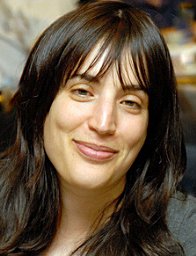 Tirza Routtenberg合作论文数Department of Electrical and Computer Engineering;Ben-Gurion University;Department of Electrical and Computer Engineering, Ben-Gurion University17
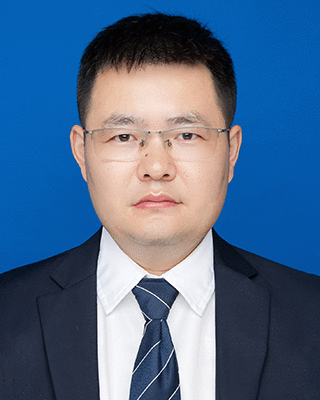 Haiyang Zhang合作论文数Nanjing University of Post and TeleCommunications, Nanjing University of Posts and Telecommunications16
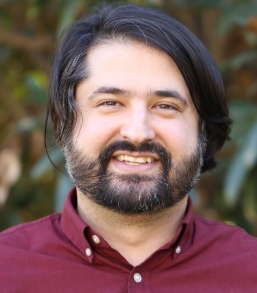 Mohammadreza Imani合作论文数Applied Electromagnetics Lab, School of Electrical, Energy, and Computer Engineering, Ira A. Fulton Schools of Engineering, Arizona State University16
 Ron Dabora合作论文数Department of Electrical and Computer Engineering, Ben-Gurion University16
 George C. Alexandropoulos合作论文数Department of Informatics and Telecommunications, School of Sciences, National and Kapodistrian University of Athens;Communications and Signal Processing Division, National and Kapodistrian University of Athens;"Athena" Research and Innovation Center;Department of Electrical and Computer Engineering, College of Engineering, University of Illinois Chicago16
 Markku Juntti合作论文数Centre for Wireless Communications, Faculty of Information Technology and Electrical Engineering, University of Oulu14
 Nhan Thanh Nguyen合作论文数Centre for Wireless Communications, University of Oulu13
 Tomer Raviv合作论文数School of ECE, Ben-Gurion University of the Negev13
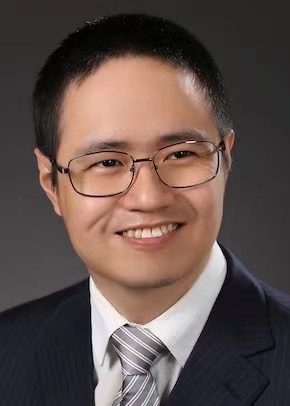 Tianyao Huang (黄天耀)合作论文数School of Computer & Communication Engineering, University of Science and Technology Beijing13
 Yimin Liu (刘一民)合作论文数13
 Nariman Farsad合作论文数Meta11
 Francesco Guidi合作论文数10Dingyou Ma (马丁友)合作论文数10
 Davide Dardari合作论文数Department of Electrical, Electronic, and Information Engineering, University of Bologna10
 Mengyuan Ma合作论文数9
 Osvaldo Simeone合作论文数Centre for Telecommunications Research, Department of Engineering, King's College London8
 A. Lee Swindlehurst合作论文数Department of Electrical Engineering and Computer Science, Samueli School of Engineering, University of California, Irvine8
 Harold Vincent Poor (文森特·珀尔)合作论文数Department of Electrical and Computer Engineering, School of Engineering and Applied Science, Princeton University;Center for Statistics and Machine Learning, Princeton University;High Meadows Environmental Institute, Princeton University7
 Alejandro Cohen合作论文数Biochemistry Department, Memorial University of Newfoundland7
 Kobi Cohen合作论文数School of Engineering, Bar-Ilan university7
 Andrea Goldsmith合作论文数Department of Electrical and Computer Engineering, School of Engineering and Aplied Science, Princeton University;Stanford University7
 Baoyun Wang (王保云)合作论文数School of Communications and Information Engineering, Nanjing University of Posts and Telecommunications;College of Overseas Education, Nanjing University of Posts and Telecommunications6
 David R. Smith合作论文数Center for Metamaterials and Integrated Plasmonics, Duke University;Department of Electrical and Computer Engineering, Duke University;Department of Physics, Imperial College London;Department of Physics, University of California, San Diego;SensorMetriX Corporation6
 Koby Todros合作论文数Ben Gurion University of the Negev6
 Natalie Lang合作论文数5
 Xiaoyong Ni合作论文数5
 Philipp Del Hougne合作论文数Univ Rennes, CNRS, IETR UMR 6164, F-35000 Rennes, France5
 Shuguang Cui (崔曙光)合作论文数School of Science and Engineering, The Chinese University of Hong Kong (Shenzhen)5
 Mingzhe Chen合作论文数Department of Electrical and Computer Engineering, University of Miami5
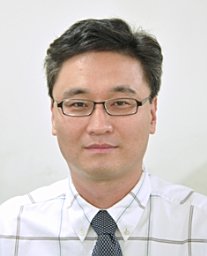 Sangwoo Park合作论文数National Security Research Institute5
 Muriel Medard合作论文数Electrical Engineering and Computer Science, Massachusetts Institute of Technology5
 Anna Guerra合作论文数Dipartimento di Endocrinologia;Oncologia Molecolare e Clinica;Università Federico II;Oncologia Molecolare e Clinica, Università Federico II5
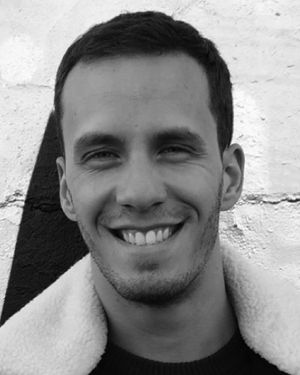 Luc Le Magoarou合作论文数4
 Itay Buchnik合作论文数4
 Emeka Abakasanga合作论文数4Ortal Lavi合作论文数4
 Insang Yoo合作论文数Department of Electrical and Computer Engineering, Duke University4
 Salman Salamatian合作论文数MIT4Eyal Fishel Ben-Knaan合作论文数3Yoav Noah合作论文数3Dor H. Shmuel合作论文数3May Malka合作论文数3Xingyu Xu合作论文数Department of Electrical and Computer Engineering, College of Engineering, Carnegie Mellon University3
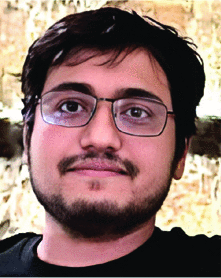 Idban Alamzadeh合作论文数Sch Elect Comp & Energy Engn, Arizona State Univ3
 Julian P. Merkofer合作论文数3
 Bahareh Salafian合作论文数School of Biomedical Engineering, University of Western Ontario, London3




