Leaders play a pivotal role in establishing ethical norms and behaviors within organizations. Across seven studies (three in the Supplementary Information), we explore how subordinates infer their leader’s moral character outside the domain of ethical conduct and document this process’s downstream consequences. Specifically, we focus on the dual-strategies theory, which posits that leaders exert influence and obtain deference via two broad orientations of behaviors and cognitions: dominance and prestige. In a field setting of employees and their managers, we find that leader dominance orientation positively relates to subordinate self-reported unethical behavior, whereas leader prestige is negatively related to the same. In a second sample of working adults, we use a time-lagged study design to show that leader dominance (prestige) positively (negatively) relates to subordinate-reported unethical behavior at work partly because of a belief that the leaders engage in more (less) unethical behaviors, which contributes to a belief that norm-violating behaviors are more (less) acceptable within teams under dominance- (prestige-) oriented leaders. Finally, across four experimental studies, we observe that participants assigned to a dominance-oriented (versus prestige-oriented) leader perceived their leader as having lower moral character and expressed a greater likelihood of engaging in unethical behavior. We also document actual unethical behavior for monetary gain. This effect was mediated by the belief that unethical behavior was normative within the team. Our results highlight the importance of moral (mis)perception by demonstrating the consequences of a leader’s hierarchical orientation on subordinate ethical perceptions and behaviors at work. Supplemental Material: The online appendix is available at https://doi.org/10.1287/orsc.2021.15640 .
Moral hazard involves a context where decision-makers engage in behaviors that prioritize selfinterest while allowing the associated risk to be primarily borne by others.Such decision-making can lead to catastrophic consequences, as seen in the 2008 global financial crisis after hedge fund managers indiscriminately invested their clients' money in subprime mortgages.This research examines which decision-makers are most likely to engage in moral hazard decision-making and the psychological mechanism driving this behavior.Drawing on the dual model of social influence, we posit that individuals associated with dominance, but not prestige, will engage in greater moral hazard behaviors.We further contend that these behaviors are driven by dominant decision-makers' enhanced focus on end goals (outcomes) rather than the means (process) that they use to pursue such goals.We find support for our hypotheses across 13 studies (NObservations = 26,880; of which eight were pre-registered and six studies are reported in the Supplementary Information (SI)), using both correlational and experimental designs.Additionally, we vary the moral hazard context (e.g., a financial setting, a health and safety issue, etc.) and capture both behavioral intentions and actual behaviors, while also ruling out several alternative explanations.These findings demonstrate that dominant decision-makers engage in moral hazard behaviors because of their tendency to prioritize outcomes over processes.
Employee voice, the proactive communication of ideas, suggestions, concerns, or opinions with the intent to improve organizational functioning, has the power to significantly improve both team and organizational performance. Despite the well-documented benefits of encouraging employee voice in organizations, there is relatively little research about how to empower employees to speak up in organizations, or the contextual cues and employee behaviors that can create an organizational context conducive to voice expression, a key antecedent of voice. This symposium is designed to advance organizational research by building a deeper understanding of how contextual cues – manager and employee behaviors and perceptions –shape the voice context. Specifically, we examine how such cues influence the decision to voice or not, as well as reactions to the decision to voice (including voice recognition and endorsement), and related employee outcomes. Microaggressions Suppress Workplace Voice, but Accountability Can Help Presenter: Alexandra Noel Figueroa; U. of Utah, David Eccles School of Business Presenter: Amelia Stillwell; U. of Utah Presenter: Tamara Calzado Real; U. of Utah Presenter: Elizabeth R. Tenney; U. of Utah, David Eccles School of Business Presenter: Barbara Blair; U. of Utah, David Eccles School of Business How the Changing Nature of Social Hierarchy Impacts Voice Presenter: Patricia Satterstrom; New York U. The Role of Leader Dominance-Orientation in Predicting Voice Endorsement Presenter: Garrett L. Brady; London Business School Presenter: Niro Sivanathan; London Business School Recognizing Silence is Golden: The Role of Managerial Power in Silence Detection Presenter: Yasha Spriha; Robert H. Smith School of Business, U. of Maryland Presenter: Niranjan Srinivasan Janardhanan; London School of Economics Presenter: Taeya Howell; Brigham Young U. Psychological Safety, Workforce Diversity, and Citizenship Behaviors Presenter: Daniel M Cable; London Business School Presenter: Zannie Giraud Voss; Southern Methodist U. Presenter: Glenn Voss; Southern Methodist U.
Reciprocity is a fundamental mechanism for sustained social relationships. Escalation-based theories suggest that reciprocity intensifies over time. In contrast, equity-based theories propose that people reciprocate behaviors in kind. We reconcile these conflicting perspectives by examining social exchanges across different cultural contexts. Using three complementary experiments, we investigate when, how, and why individuals in East Asian settings and those in North American settings differentially reciprocate positive versus negative behaviors over time. Study 1 demonstrated that in positively framed exchanges (i.e., giving) Americans escalated their reciprocity, but Singaporeans reciprocated in kind. However, in negatively framed exchanges (i.e., taking), Singaporeans escalated their reciprocity, but Americans reciprocated in kind. Study 2 replicated the results using Hong Kongers and showed that cultural differences in regulatory focus were associated with specific emotions (i.e., anxiety and happiness), which then escalated reciprocity. To establish causality, Study 3 manipulated regulatory focus within one culture and replicated the pattern of results.
Leaders strive to encourage helping behaviors among employees, as it positively affects both organizational and team effectiveness. However, the manner in which a leader influences others can unintentionally limit this desired behavior. Drawing on social learning theory, we contend that a leader's tendency to influence others via dominance could decrease employees' interpersonal helping. Dominant leaders, who influence others by being assertive and competitive, shape their subordinates' cognitive schema of success based on zero-sum thinking. Employees with a zero-sum mindset are more likely to believe that they can only make progress at the expense of others. We further propose that this zero-sum mindset results in less interpersonal helping among subordinates. We test our hypotheses by employing different operationalizations of our key variables in eight studies of which four are reported in the manuscript and another four in Supplemental Information across a combined sample of 147,780 observations. These studies include a large archival study, experiments with both laboratory and online samples, and a time-lagged field study with employees from 50 different teams. Overall, this research highlights the unintended consequences that dominant leaders have on their followers' helping behavior by increasing their zero-sum mindset. (PsycInfo Database Record (c) 2022 APA, all rights reserved).
Voice is critical to organizational success as it helps in the development of new ideas and the solving of problems. Due to its purported benefits, much research over the past two decades has focused on the different ways in which voice can be expressed and what leads employees to speak up or not. However, much less is known about the proximal consequences of voice, such as affect, sense making about the voicer, or responses from team members. Understanding these proximal consequences is critical to move the field of voice research from phenomenon-focused to theory-driven. To advance this goal, this symposium brings together papers that examine the proximal outcomes of voice across multiple levels of analysis from the intrapersonal to the hierarchical and the team-level. The Dynamic Affective and Behavioral Consequences of Employee Voice Presenter: Ryan Outlaw; Indiana U. - Kelley School of Business Presenter: Daniel Newton; U. of Iowa Presenter: Michael Baer; Arizona State U. Gender Effects on Prohibitive Voice Behaviors and Evaluations Presenter: Yurianna S. Kimmons; Oklahoma State U. Applying the Dual-Strategies Theory of Status to Voice Endorsement Presenter: Garrett L. Brady; London Business School Presenter: Michael Parke; London Business School Presenter: Niro Sivanathan; London Business School Absence of Voice and Its Impacts on Managerial Perceptions and Behaviors Presenter: Yasha Spriha; London School of Economics and Political Science Presenter: Taeya Howell; Brigham Young U. Saying Something, But Not Too Much: The Emergence of Mental Models as a Result of Voice within Teams Presenter: Melissa Chamberlin; Iowa State U. Presenter: Maartje E. Schouten; Iowa State U.
When actors transgress social norms, their social status colors the severity with which they are punished. While some argue that high-status transgressors attract severe punishment when accused of ambiguous transgressions, others contend the opposite. In this paper, we attempt to reconcile this theoretical inconsistency. We propose that the capacity for social status to color third-party judgments of transgressions may depend on the status type of high-status actors. Drawing on the evolutionary theory of dominance and prestige as two alternate forms of status within social hierarchies, we suggest that actors associated with dominance-based status will be penalized more harshly than actors whose status is based on prestige. Across multiple studies employing archival field data, controlled lab experiments, and different instantiations of dominance, prestige, and misconduct, we consistently demonstrate that high-status dominant actors are punished more harshly than their prestigious counterparts. Further, we find that attributions of intentionality and lack of moral credentials explain the harsher punishments meted out to dominant (vs. prestigious) high-status actors. In this way, we provide both a parsimonious reconciliation of the inconsistency in the extant literature and a theoretical explanation of how status type of high-status actors differentially impacts the judgment, decisions, and behaviors of third parties.
In this symposium, we present some of the latest research findings in regard to economic inequality and the ways in which it is shaping beliefs and behaviors, both at the societal and the organizational levels. These findings are timely and relevant, as the consequences of economic inequality are heightened by current trends, and the effects for society and organizations are of great consequence, as demonstrated by the work presented in this symposium. In the first presentation, Ongis and Davidai discuss the antecedents of a destructive thinking pattern known as zero-sum thinking, i.e., the belief that in order for one group to win another one has to lose. More specifically, they explore the belief that wealth is zero-sum, such that one’s economic gains must also come at the expense of another’s loss. Their work reveals a surprising factor that leads to zero-sum thinking: the experience of personal relative deprivation. In the second presentation, Waldfogel, Kteily, Sheehy-Skeffington, Ho, and Hauser explore the ways in which social dominance orientation (SDO), an inequality-relevant ideology, predicts the extent to which people notice the presence of economic inequality. Their work shows that social egalitarians pay more attention to inequality relative to anti-egalitarians, noticing it to a greater extent. In the third presentation, Kakkar et al. contend that the relationship between social class and unethical behavior depends on the immediate economic environment an individual resides in. While for high SES individual’s the propensity to behave unethically reduces with the worsening of their economic environment, for low SES individuals the tendency to behave unethically increases as the economic environment worsens. Their work shows that this is driven by comparing similar others as points of reference to gauge one’s own social standing. In the fourth and final presentation, Goya-Tocchetto, Kay, and Payne discuss the effects of economic inequality on perceptions of the fairness of organizational processes and outcomes. They show that, when it comes to economic inequality, it is impossible to disentangle the fairness evaluation of processes versus outcomes. More specifically, their work reveals that inequality aversion exists not only when unequal outcomes are the result of unfair processes, but also when people realize that unequal outcomes are inter-temporally undermining the landscape of opportunities for income generation. The Influence of Personal Relative Deprivation on the Belief that Wealth is Zero-Sum Presenter: Martino Ongis; The New School for Social Research Presenter: Shai Davidai; Columbia Business School (Anti-)Egalitarianism Predicts Attention to Inequality Presenter: Hannah Benner Waldfogel; Northwestern Kellogg School of Management Presenter: Nour Kteily; Northwestern Kellogg School of Management Presenter: Jennifer Sheehy-Skeffington; London School of Economics and Political Science Presenter: Arnold Ho; U. of Michigan Presenter: Oliver Hauser; U. of Exeter Business School The Critical Role of the Economic Environment in Influencing Unethical Behavior Presenter: Hemant Kakkar; Fuqua School of Business, Duke U. Presenter: Niro Sivanathan; London Business School Presenter: Jon Michael Jachimowicz; Harvard Business School Presenter: Xiaoran Hu; London Business School The Role of Economic Inequality in Perceptions of Process and Outcome Fairness in the Workplace Presenter: Daniela Goya-Tocchetto; Fuqua School of Business, Duke U. Presenter: Aaron Kay; Duke U. Presenter: Keith Payne; U. of North Carolina, Chapel Hill
Aferrarse a una estrategia que tuvo exito en el pasado sin tener en cuenta que, a lo mejor, no es lo mas ade-cuado para el momento presente o para el futuro –lo que se conoce como espiral de compromiso– es uno de los errores mas frecuentes de un lider. Para evitarlo, el primer paso es detectar lo que esta sucediendo, aten-diendo a las senales de peli-gro, y entender que es lo que motiva a alguien para tirar adelante con un pro-yecto que esta fracasando.
This article demonstrates the power of the “argument dilution effect” as observed in US pharmaceutical firms' television advertisements for prescription medicines.
Jockeying and competing for higher status is an inherent feature of rank-ordered hierarchies. Despite theoretically acknowledging rank changes within hierarchies, the extant literature has ignored the role of competitors' dynamic movements on a focal actor's resulting behavior. By using a dynamic lens to examine these movement in competitive situations, we examine how positive change in a competitor's rank-that is, positive status momentum-affects a focal actor's psychology and resulting performance. We consider the real-world contexts of 5.2 million observations of chess tournaments and 117,762 observations of professional tennis players and find that a focal actor's performance in both cognitive and physical competitions is negatively impacted when facing a competitor with positive momentum. Additionally, 4 experimental studies reveal that a competitor's positive momentum results in the focal actor's positive projection of the competitor's future rank, which, in turn, increases the psychological threat for the actor. Collectively, our findings advance the social hierarchy literature by helping to elucidate the manner in which rank-ordered hierarchies are negotiated and disrupted over time.
Jockeying and competing for higher status is an inherent feature of rank-ordered hierarchies. Despite theoretically acknowledging rank changes within hierarchies, the extant literature has ignored the role of competitors’ dynamic movements on a focal actor’s resulting behavior. By using a dynamic lens to examine these movement in competitive situations, we examine how positive change in a competitor’s rank—that is, positive status momentum—affects a focal actor’s psychology and resulting performance. We consider the real-world contexts of chess tournaments (5.2 million observations) and professional tennis (117,749 matches) and find that a focal actor’s performance in both cognitive and physical competitions is negatively impacted when facing a competitor with positive momentum. Additionally, four experimental studies reveal that a competitor’s positive momentum results in the focal actor’s positive projection of the competitor’s future rank, which in turn increases the psychological threat for the actor. Collectively, our findings advance the social hierarchy literature by helping to elucidate the manner in which rank-ordered hierarchies are negotiated and disrupted over time.
Interest in the role of hierarchy in groups and organizations is on the rise. A number of influential theoretical and empirical papers have been published in recent years investigating how, when, and why hierarchy can affect group outcomes. However, key questions remain, particularly with regards to the dynamics of hierarchy in groups. In this symposium, five papers will be presented that explore the dynamics of hierarchy in groups and organization. The papers examine hierarchical dynamics from multiple perspectives, including antecedents to hierarchical changes and the consequences of these changes for individual employees and group performance. Rank Extrapolation: Forecasting Future Rank after Rank Change Presenter: Nathan Pettit; New York U. Presenter: Sarah Doyle; U. of Arizona Presenter: Hee Young Kim; Rider U. Presenter: Anat Hurwitz; New York U. Leaders Dominance Fosters Employees Zero-sum Mindset and Undermines OCB Presenter: Hemant Kakkar; London Business School Presenter: Niro Sivanathan; London Business School Team Hierarchical Agility: How, Why, and When Fluid Hierarchies Can Benefit Team Performance Presenter: Lindred L. Greer; Stanford GSB Presenter: Annebel H.B. De Hoogh; U. of Amsterdam Presenter: Nicole Abi-Esber; Stanford GSB Presenter: Charles Chu; Stanford GSB Status Efficiency Theory: A Dynamic Perspective on Status Striving and the Status Conferral Proces Presenter: Eric Anicich; U. of Southern California Spillover Tendency in Self-Perpetuating Hierarchies Presenter: Joseph Magee; New York U. Presenter: Siyu Yu; New York U.
You may not have heard of the dilution effect – but you will doubtless have made decisions under its influence. By Niro Sivanathan and Hemant Kakkar
Across the globe, we witness the rise of populist authoritarian leaders – overbearing in their narrative, aggressive in behavior and often exhibiting questionable moral character. Drawing on evolutionary theory of leadership emergence – dominance and prestige as dual routes to leadership we provide a situational and psychological account for when and why dominant leaders are preferred over other respected and admired candidates. We test our hypothesis using three studies, encompassing over 140,000 participants, across 69 countries, and spanning the past 2 decades. We find robust support for our hypotheses that under situational threat of economic uncertainty (e.g., poverty rate, housing vacancy rate, unemployment) people escalate their support for dominant leaders. Further, we find that this phenomenon is mediated by participants’ psychological sense of lack of personal control. Together, these results provide the first largescale, globally representative evidence for the structural and psychological antecedents that increase the preference for dominant leaders over their prestigious counterparts.
Safra et al. (1) contend that lack of control is not the mechanism for our findings (2); instead, distrust is a better candidate because of its greater explanatory power. There are several issues with their conjecture. First, study 1 was aimed at demonstrating the main effect of economic uncertainty on leader selection based on dominance (Trump) or prestige (Clinton). Therefore, investigating people’s voting intention between Trump and not voting for Trump or Clinton is an irrelevant analysis as not voting for either may imply voting for a third candidate, who may be high or low on dominance. Hence, to infer psychological mechanism from this analysis is misguided. Second, their … [↵][1]1To whom correspondence should be addressed. Email: hkakkar{at}london.edu. [1]: #xref-corresp-1-1
 Hemant Kakkar合作论文数Management and Organization, Fuqua School of Business, Duke University19
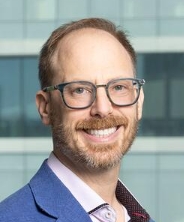 Adam Galinsky合作论文数Management Department, Columbia Business School, Columbia University16
 Nathan C. Pettit合作论文数Johnson Graduate School of Management, Cornell University11
 Julian Barling合作论文数Smith School of Business, Queen's University8
 Garrett L. Brady合作论文数Cherokee Nation Behavioral Health5
 Nick Turner合作论文数Memorial University of Newfoundland5
 J. Keith Murnighan合作论文数Kellogg School of Management, Northwestern University5
 Nathanael J. Fast合作论文数Graduate School of Business, Stanford University5
 Jennifer Jordan合作论文数4Chen-Bo Zhong合作论文数Rotman School of Management, University of Toronto4
 Marr Jennifer Carson合作论文数4Robert B. Lount合作论文数Kellogg School of Management, Northwestern University4
 Eric Gladstone合作论文数3
 E. Kevin Kelloway合作论文数Faculty of Science Psychology, Saint Mary's University3
 Jason Pierce合作论文数Escuela de Negocios, Universidad Adolfo Ibáñez.3Michelle Inness合作论文数Queen’s University3
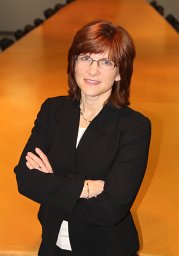 Kara Arnold合作论文数Northwestern University3Manon Mireille LeBlanc合作论文数3
 M. Sandy Hershcovis合作论文数Haskayne School of Business, University of Calgary3
 Joseph Magee合作论文数2Yasha Spriha合作论文数2Taeya Howell合作论文数Brigham Young Univ2
 Nicole Abi-Esber合作论文数Organizational Behavior.2Sarah P. Doyle合作论文数Management & Org, Univ Arizona2
 Siyu Yu合作论文数2
 Nathan Pettit合作论文数Department of Management and Organizations, Leonard N. Stern School of Business, New York University2
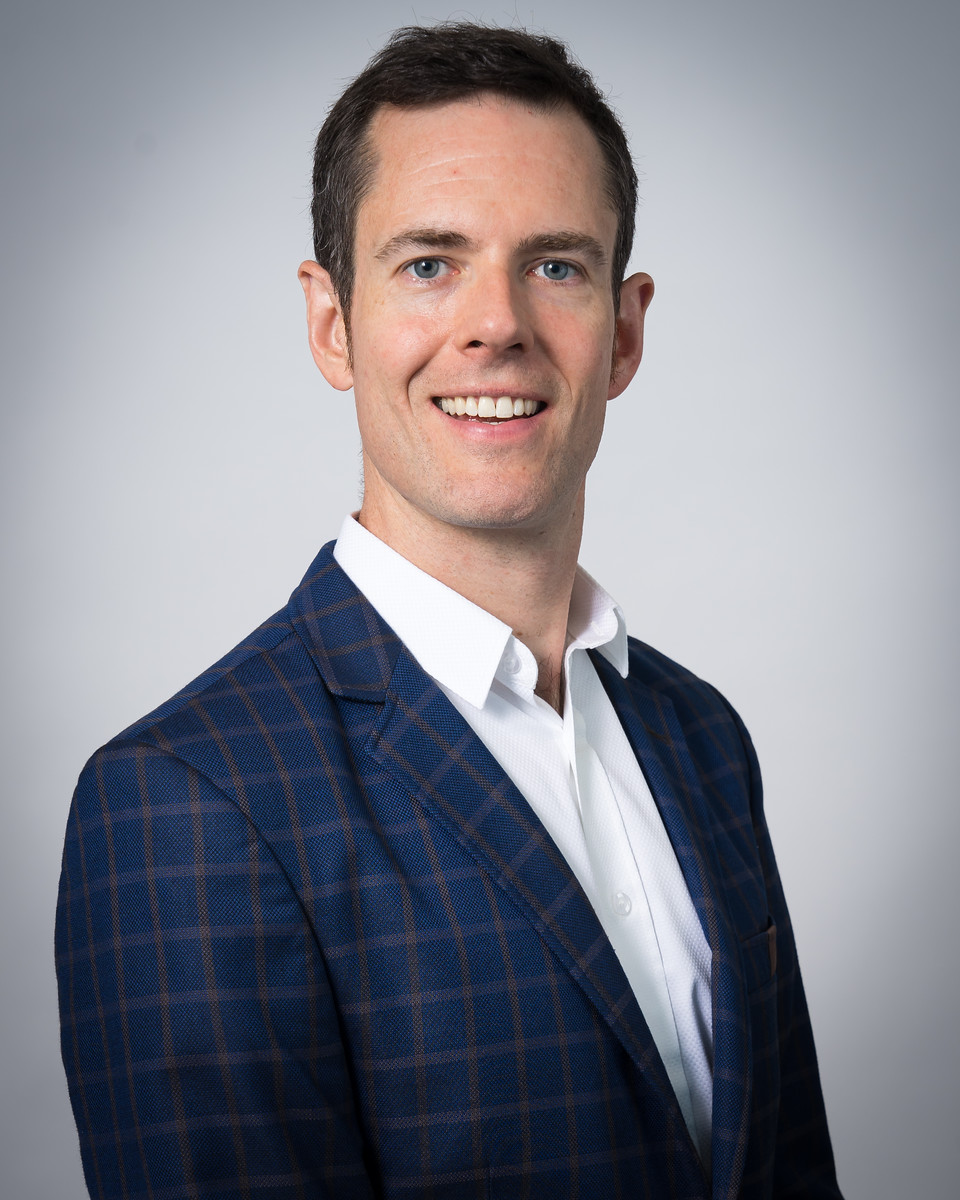 Gavin Kilduff合作论文数Department of Management and Organizations, Leonard N. Stern School of Business, New York University2
 Cynthia Wang合作论文数Management & Organizations, Kellogg School of Management, Northwestern University2
 Daniel Molden合作论文数Department of Psychology, Weinberg College of Arts and Sciences, Northwestern University2
 Brian Gunia合作论文数Carey Business School, Johns Hopkins University2
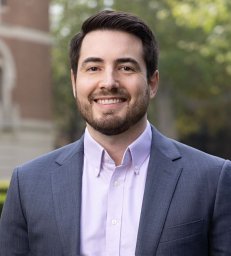 Eric M. Anicich合作论文数Management Department, Columbia Business School2
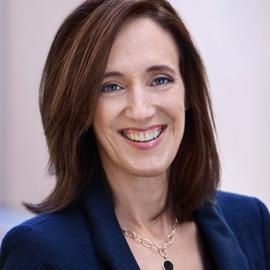 Deborah H. Gruenfeld合作论文数Graduate School of Business, Stanford University2Lori A. Francis合作论文数2Gillian Ku合作论文数2
 Freek Vermeulen合作论文数London Business School2Nate Pettit合作论文数1Christian Leveille合作论文数1
 Sarah G. Moore合作论文数1caitlin pan合作论文数1Mary Van Sell合作论文数1Monika A. Bauer合作论文数1Steven L. Blader合作论文数1Brent J. Lyons合作论文数1Yufei Zhong合作论文数1
 Yin Wu合作论文数1Yurianna Kimmons合作论文数1Grusha Agarwal合作论文数1jennifer deslauriers合作论文数1
 Nicole Ruedy合作论文数1




