The provenance, antiquity, duration of production, animal husbandry and geographical location of materials used to make one of the largest feather art objects ever produced are explored via analysis of four stable isotopes (δ2H, δ18O, δ13C and δ15N) combined with radiocarbon measurements. We document the monotonously fed rearing of thousands of captive macaws in the Amazon region and the acquisition of camelid fibres from the high Andes to produce ninety-six large feather panels. Multiple radiocarbon dates from both feathers and fibres confirm the Wari (600-100 AD) origin of the panels and suggest a short and intensive production schedule. Stable isotopes document the collection of materials that took the artisans over hundreds of kilometres from the Amazon to near the Pacific coast.
ABSTRACT The extinction of Neanderthal populations has been attributed to the onset of cold and dry climatic conditions during Marine Isotope Stage 3 or their competition with anatomically modern humans for large game resources. However, decoupling climate from competition has long proved difficult. Loess sequences and pollen cores provide regional‐scale environmental information but are less well‐suited to providing local‐scale habitat information contemporaneous with hominin habitation of occupation sites. The relationship between climate and resource availability is particularly unknown in the Zagros mountain range where archaeological evidence for both Neanderthals and Homo sapiens occupation is documented. Here, we analyse carbon (δ 13 C) and oxygen (δ 18 O) stable isotopes measured from herbivore tooth enamel carbonates recovered from the Neanderthal and modern human occupation sites of Bawa Yawan Rockshelter and Shanidar Cave to trace local‐scale floral biome dynamics and climate conditions that influence the distribution and availability of large prey targeted by both hominin species. Shared isotopic composition of herbivorous fauna, largely represented by wild goats, from both sites spanning Neanderthal and Homo sapiens occupation indicate both hominin species exploited similar habitats during climatically similar phases.
Cooking is a uniquely human behavior and is rarely considered in dietary interpretations based on the isotopic composition of consumers. Prior to the availability of heat-resistant containers, cooking on open fires would have exposed food to high temperatures. We document progressive increases in the (δ15N) of bovid meat as a function of time and temperatures well within those reached in open-fire regimes. Increased production of heterocyclic amines (HCAs) is also observed with time and temperature, and extracted HCAs had elevated δ15N values relative to the remaining muscle. The pattern of δ15N in meat individual amino acids exposed to a high temperature for a short period of time calls into question the paired use of amino acids such as glutamic acid + glutamine (Glx) and phenylalanine (Phe) to interpret diet and/or trophic levels in consumers who employed direct, on fire cooking.
ABSTRACT Background Given the utility of the doubly labeled water (DLW) method for determination of energy expenditure, additional techniques for isotope analysis of the samples are welcome. Laser-based instruments are one such new analytical tool, but their accuracy and feasibility for DLW studies are grossly understudied. Objectives We assessed the accuracy of laser-based isotope ratio measurements as part of the DLW method for estimation of carbon dioxide production rate (rCO2) and total energy expenditure (TEE), in between-group comparison study designs. Methods Urine samples from a previous study were analyzed with a laser-based instrument [off-axis integrated cavity output spectroscopy (OA-ICOS)]. In that study, participants consumed a high-, moderate-, or low-carbohydrate diet for 20 wk; urine samples were obtained in weeks 18–20 before and after a 2H- and 18O-enriched water dose. Isotope ratios (δ2H and δ18O), rCO2, and TEE calculated by standard methods were compared to results previously obtained with the standard technique of isotope ratio mass spectrometry (IRMS). Bias, SD, and bias ± 1.96SD bands between IRMS and OA-ICOS were computed. Results The between OA-ICOS and IRMS rCO2 and TEE trends were equivalent (within 1.2% and 4.1%, respectively), in spite of the differences in measured δ18O values at high enrichment levels. The OA-ICOS δ18O values displayed an increasing offset from the IRMS results as the 18O enrichment increased (mean ± SD 4.6–5.7‰ ± 2‰ offset at the time point with highest 18O enrichment, ∼135‰), whereas the hydrogen isotope ratio (δ2H) differed only slightly between the methods (mean offset −4.9‰ for all time points). The between-diet differences in TEE from the previous study were recapitulated with a smaller subset of participants and time points. Conclusions OA-ICOS analysis is an accurate and feasible technique for the DLW method. Given the δ18O offset observed at high enrichment, validation of each OA-ICOS instrumental setup against established methods (e.g., IRMS) is recommended.
At marine methane seeps, vast quantities of methane move through the shallow subseafloor, where it is largely consumed by microbial communities. This process plays an important role in global methane dynamics, but we have yet to identify all of the methane sinks in the deep sea. Here, we conducted a continental-scale survey of seven geologically diverse seafloor seeps and found that carbonate rocks from all sites host methane-oxidizing microbial communities with substantial methanotrophic potential. In laboratory-based mesocosm incubations, chimney-like carbonates from the newly described Point Dume seep off the coast of Southern California exhibited the highest rates of anaerobic methane oxidation measured to date. After a thorough analysis of physicochemical, electrical, and biological factors, we attribute this substantial metabolic activity largely to higher cell density, mineral composition, kinetic parameters including an elevated Vmax, and the presence of specific microbial lineages. Our data also suggest that other features, such as electrical conductance, rock particle size, and microbial community alpha diversity, may influence a sample's methanotrophic potential, but these factors did not demonstrate clear patterns with respect to methane oxidation rates. Based on the apparent pervasiveness within seep carbonates of microbial communities capable of performing anaerobic oxidation of methane, as well as the frequent occurrence of carbonates at seeps, we suggest that rock-hosted methanotrophy may be an important contributor to marine methane consumption.
The prehistory of the Mediterranean region has long been a subject of considerable interest, particularly the links between human groups and regions of origin. We utilize the spatial variation in the δ2H and δ18O values of precipitation (isoscapes) to develop proxies for geographic locations of fauna and humans. Bone collagen hydrogen isotope ratios (δ2H) in cattle (and to a lesser extent, ovicaprids) across the Mediterranean reflect the isotopic differences observed in rainfall (but δ18O values do not). We conclude that δ2H in herbivore bone collagen can be used as a geolocation tracer and for palaeoenvironmental studies such as tracing past isotopic variations in the global hydrological cycle. In contrast, human bone δ2H values are relatively tightly grouped and highly distinct from precipitation δ2H values, likely due to human-specific food practices and environmental modifications. Given the inter-species variability in δ2H, care should be taken in the species selected for study.
The island of Sardinia has been of particular interest to geneticists for decades. The current model for Sardinia’s genetic history describes the island as harboring a founder population that was established largely from the Neolithic peoples of southern Europe and remained isolated from later Bronze Age expansions on the mainland. To evaluate this model, we generate genome-wide ancient DNA data for 70 individuals from 21 Sardinian archaeological sites spanning the Middle Neolithic through the Medieval period. The earliest individuals show a strong affinity to western Mediterranean Neolithic populations, followed by an extended period of genetic continuity on the island through the Nuragic period (second millennium BCE). Beginning with individuals from Phoenician/Punic sites (first millennium BCE), we observe spatially-varying signals of admixture with sources principally from the eastern and northern Mediterranean. Overall, our analysis sheds light on the genetic history of Sardinia, revealing how relationships to mainland populations shifted over time.
Detailed information about the lives and deaths of children in antiquity is often in short supply. Childhood dietary histories are, however, recorded and maintained in the teeth of both juveniles and adults. Primary tooth dentinal collagen does not turn over, preserving a sequential record of dietary changes. The use of nitrogen (δ15N) and carbon (δ13C) isotope values of incrementally sampled dentin are used in the study of breastfeeding practices but evidence for the addition of weaning foods, both in terms of mode and, particularly, duration, has remained analytically inaccessible to date. Here, we demonstrate how the novel use hydrogen isotope (δ2H) values of sequentially micro-sampled dentin collagen, measured from individuals excavated from a Punic cemetery, in Sardinia, Italy, can serve as a proxy for weaning food type and duration in ancient childhood diet. The weaning rate and age, based on the decline in δ15N and δ13C values of permanent first molars and the concomitant increase in δ2H, appears to be broadly similar among six individuals. Hydrogen isotopes vary systematically from a low value soon after birth, rising through early childhood. The early post-birth values can be explained by the influence of 2H-depleted lipids from mother’s breastmilk and the later δ2H rise is consistent with, among other things, a substantial portion of boiled foodstuffs, such as the higher δ2H values observed in porridge. Overall δ2H in dentin shows great promise to elucidate infant and childhood feeding practices, and especially the introduction of supplementary foods during the weaning process.
RATIONALEDifferent thermal conversion reactor packings result in distinct δ2 H values in nitrogen-containing materials, such as bone collagen. An older 'traditional' glassy carbon packing method causes incomplete conversion of N-containing samples into H2 gas, resulting in altered δ2 H values compared with the complete conversion of hydrogen obtained with a chromium-packed reactor. Given that δ2 H values from collagen are gaining importance in palaeoecological and archaeological studies, a determination of the relationship between δ2 H values produced with a glassy-carbon-packed and a chromium-packed reactor is needed.METHODSWe obtained δ2 H values (normalized on the VSMOW-SLAP scale) from both glassy-carbon-packed (GP) and chromium-packed (Cr) reactor configurations from bone collagen (n = 231) from a variety of archaeological sites, using a High-Temperature Conversion Elemental Analyzer (TC/EA) coupled to a Delta Plus XP isotope ratio mass spectrometer.RESULTSδ2 H values from both methods are linearly correlated (r2 = 0.934) and yield the following interconversion equation, δ2 H(Cr) = 1.054 δ2 H(GP) + 11.6‰ (95% conf. slope 1.020-1.090, intercept 10.6-12.6), and a mean difference of δ2 H(Cr) - δ2 H(GP) = 10.1‰ (1 sd 5.2, 1 se 0.3, n = 231).CONCLUSIONSWe recommend adopting this interconversion between δ2 H values produced with a glassy-carbon-packed and chromium-packed reactor for bone collagen only, with appropriate propagation of uncertainty.
Ecologists, archaeologists and paleontologists have generously used the natural abundance of stable nitrogen isotopes (δ 15 N) to assess trophic relationships among consumers from both past and present ecosystems. The basis for trophic δ 15 N studies dates to the 1980's and the empirical observations of Minagawa and Wada documenting a stepwise increase in 15 N, primarily in aquatic environments. Moving to terrestrial environments, numerous difficulties have been reported in using δ 15 N values of consumers to determine food web relationships for a variety of reasons: complexity of the food sources (including the differential bioavailability of nitrogen); the unknown isotopic composition of primary producers; impact of aridity on plant nitrogen isotopes; and the offset in δ 15 N between the consumer and the consumed.
Indigenous populations of the Americas experienced high mortality rates during the early contact period as a result of infectious diseases, many of which were introduced by Europeans. Most of the pathogenic agents that caused these outbreaks remain unknown. Through the introduction of a new metagenomic analysis tool called MALT, applied here to search for traces of ancient pathogen DNA, we were able to identify Salmonella enterica in individuals buried in an early contact era epidemic cemetery at Teposcolula-Yucundaa, Oaxaca in southern Mexico. This cemetery is linked, based on historical and archaeological evidence, to the 1545–1550 ce epidemic that affected large parts of Mexico. Locally, this epidemic was known as ‘cocoliztli’, the pathogenic cause of which has been debated for more than a century. Here, we present genome-wide data from ten individuals for Salmonella enterica subsp. enterica serovar Paratyphi C, a bacterial cause of enteric fever. We propose that S. Paratyphi C be considered a strong candidate for the epidemic population decline during the 1545 cocoliztli outbreak at Teposcolula-Yucundaa. Ancient DNA from victims of a sixteenth-century disease in Mexico suggests that Salmonella enterica Paratyphi C (enteric fever) was responsible for a devastating epidemic that closely followed European presence in the region.
Three early medieval Irish communities within a 30-km radius in Co. Meath, Ireland, have been examined using multiple isotopes ( Sr-87/Sr-86, delta O-18, delta C-13, delta(15) N) to elucidate human and domesticated animal subsistence and provenance. Existing( 87)Sr/ Sr-86 data from geochemical mapping of contemporary soils, plants and streamwater were compared to human and animal tooth enamel Sr-87/ Sr-86 to assess potential past human migration, in combination with delta O-18 from bone collagen. Oxygen isotope (delta O-18) values of human bone collagen are notably invariable, 10.0 +/- 0.6%o (n = 36), for the three archaeological sites: Collierstown, Johnstown and Raystown. Fauna (sheep, pigs, cats and a dog) delta O-18(collagen) from Raystown are distinctly grouped between and among certain species, the first instance to our knowledge of such a result. The aggregate faunal data demonstrate that delta(18)O(collagen )values of faunal remains should not be used to infer local delta O-18 ranges for humans. Nitrogen isotope (delta N-15) values for both domesticated animal (9.8 +/- 1.79 , 60) and adult human (12.0 +/- 0.8%o) bone collagen are tightly constrained suggesting a similar source of protein in the diet of humans. A mean carbon isotope (delta C-13) value of - 21.0 +/- 0.4%o for adult humans indicates overwhelming terrestrial sources of foodstuffs. Strontium isotope ratios (Sr- 87/ Sr-86) from human dental enamel range from 0.7085-0.7110 (n = 25). Two individuals (R841 and R854), both from Raystown, are statistical outliers based on their Sr-87/Sr-86 and delta C-13 values and are likely migrants to the locality where they were buried. We note that one of these putative migrants met a particularly violent end.
Harnessing the metabolic potential of uncultured microbial communities is a compelling opportunity for the biotechnology industry, an approach that would vastly expand the portfolio of usable feedstocks. Methane is particularly promising because it is abundant and energy-rich, yet the most efficient methane-activating metabolic pathways involve mixed communities of anaerobic methanotrophic archaea and sulfate reducing bacteria. These communities oxidize methane at high catabolic efficiency and produce chemically reduced by-products at a comparable rate and in near-stoichiometric proportion to methane consumption. These reduced compounds can be used for feedstock and downstream chemical production, and at the production rates observed in situ they are an appealing, cost-effective prospect. Notably, the microbial constituents responsible for this bioconversion are most prominent in select deep-sea sediments, and while they can be kept active at surface pressures, they have not yet been cultured in the lab. In an industrial capacity, deep-sea sediments could be periodically recovered and replenished, but the associated technical challenges and substantial costs make this an untenable approach for full-scale operations. In this study, we present a novel method for incorporating methanotrophic communities into bioindustrial processes through abstraction onto low mass, easily transportable carbon cloth artificial substrates. Using Gulf of Mexico methane seep sediment as inoculum, optimal physicochemical parameters were established for methane-oxidizing, sulfide-generating mesocosm incubations. Metabolic activity required >∼40% seawater salinity, peaking at 100% salinity and 35 °C. Microbial communities were successfully transferred to a carbon cloth substrate, and rates of methane-dependent sulfide production increased more than threefold per unit volume. Phylogenetic analyses indicated that carbon cloth-based communities were substantially streamlined and were dominated by Desulfotomaculum geothermicum. Fluorescence in situ hybridization microscopy with carbon cloth fibers revealed a novel spatial arrangement of anaerobic methanotrophs and sulfate reducing bacteria suggestive of an electronic coupling enabled by the artificial substrate. This system: 1) enables a more targeted manipulation of methane-activating microbial communities using a low-mass and sediment-free substrate; 2) holds promise for the simultaneous consumption of a strong greenhouse gas and the generation of usable downstream products; and 3) furthers the broader adoption of uncultured, mixed microbial communities for biotechnological use.
This chapter examines how ancient DNA (aDNA) analysis has helped reconstruct ancient history. It focuses in particular on cases investigating Roman history. History leaves traces in the human genome as well as those of pathogens and domesticates. While much can be gleaned from the genetic fossils preserved in extant genomes, genomes are palimpsests, with more recent events overwriting previous ones in part. The study of aDNA—DNA preserved in archaeological, paleontological, and museum sources—permits investigations into the genome before and after historic events and observations into how it evolves in real time. The field of aDNA also has a palimpsestic nature in which older results are not only extended and revised, but totally discarded due to rapid technological advances. The chapter briefly describes biochemistry of ancient DNA and the history of its research. Through several key case studies, it shows the potential for aDNA research to clarify the course of ancient history, and also highlights some of its weaknesses and limitations.
 Linda Reynard合作论文数Stable Isotope Laboratory, Department of Geoscience, Boise State University18
 Marilyn Fogel合作论文数University of California, Riverside;Carnegie Institution for Science16
 Christina (Tina) Warinner合作论文数Faculty of Arts and Sciences, Harvard University;Department of Human Evolutionary Biology, Harvard University;Department of Archaeogenetics, Max Planck Institute for;Evolutionary Anthropology;Leibniz Institute for Natural Product Research and Infection Biology Hans Knöll Institute13
 Nelly M Robles García合作论文数11
 Michael G. Campana合作论文数Archaeology, University of Cambridge9
 Richard Evershed合作论文数School of Chemistry, University of Bristol8
 Saskia Ryan合作论文数CNRS, Museum Natl Hist Nat7
 Johannes Krause合作论文数Institute of Zoology and Evolutionary Research, Friedrich Schiller University Jena;Department of Archaeogenetics, Max Planck Institute for Evolutionary Anthropology6
 Steve Weiner合作论文数Department of Chemical and Structural Biology, Faculty of Chemistry, Weizmann Institute of Science;Kimmel Center for Archaeological Sciences, Weizmann Institute of Science6
 Karola Kirsanow合作论文数University of Cambridge6
 Andrew W. Stott合作论文数5
 Kirsten Bos合作论文数Max Planck Inst Sci Human Hist5
 Anna K. Behrensmeyer合作论文数Department of Paleobiology, National Museum of Natural History, Smithsonian Institution5dennis knepper合作论文数4Linda Stathoplos合作论文数4Kolman C J合作论文数4
 Vågene Åshild J合作论文数Department of Archaeological Sciences, University of Tübingen4
 Clive N. Trueman合作论文数School of Ocean and Earth Science, University of Southampton4
 Peter Van Dommelen合作论文数Department of Italian Studies, Brown University/Department of Anthropology, Brown University4
 Alexander Herbig合作论文数Center for Bioinformatics Tübingen, University of Tübingen4
 Larry W. Fisher合作论文数National Institute of Dental and Craniofacial Research, National Institutes of Health4Cheryl A. Makarewicz合作论文数Institute for Pre- and Protohistory, Christian-Albrechts-Universität4
 Elisa Pompianu合作论文数3
 Spyrou Maria A合作论文数Department of Archaeological Sciences, University of Tübingen3
 Valtueña Aida Andrades合作论文数Department of Biological Sciences, The State University of New York3
 Richard Potts合作论文数Department of Anthropology, National Museum of Natural History, Smithsonian Institution3
 Ian Barnes合作论文数Department of Biology;University College London;Department of Biology, University College London3Yoshiko Magoshi合作论文数3P.E. Hare合作论文数3
 Kathryn Puseman合作论文数3
 Damia Ramis合作论文数3
 Aaron Jonas Stutz合作论文数Oxford College of Emory University3
 Michael Petraglia合作论文数Australian Research Centre for Human Evolution, Griffith University3john m rutherford合作论文数2Clizia Murgia合作论文数2JD TERMINE合作论文数2Philip Laporta合作论文数2
 Melinda Zeder合作论文数Department of Anthropology, National Museum of Natural History, Smithsonian Institution2
 Snoeck Christophe合作论文数Research Laboratory for Archaeology and the History of Art, University of Oxford2
 Nicole M. Burt合作论文数Department of Anthropology, University of Alberta2
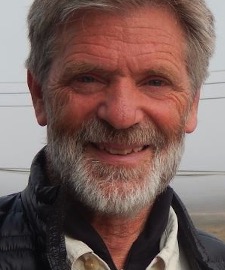 Gifford H. Miller合作论文数Center for the Geochemical Analysis of the Global Environment, Institute of Arctic and Alpine Research, University of Colorado Boulder2
 Daniel Huson合作论文数Algorithms in Bioinformatics lab, Department of Computer Science, Faculty of Science, University of Tubingen2Tetsuya Sakai合作论文数2
 Lia Addadi合作论文数Department of Chemical and Structural Biology, Faculty of Chemistry, Weizmann Institute of Science2
 Pamela Robey合作论文数Skeletal Biology Section, National Institute of Dental and Craniofacial Research, National Institutes of Health2
 Paul L Koch合作论文数Department of Earth & Planetary Sciences, University of California, Santa Cruz;Division of Physical & Biological Sciences, University of California, Santa Cruz2
 Connie J. Mulligan合作论文数Department of Anthropology, Genetics Institute, University of Florida2
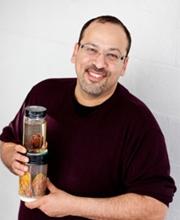 Peter R. Girguis合作论文数Department of Organismic & Evolutionary Biology, Harvard University2
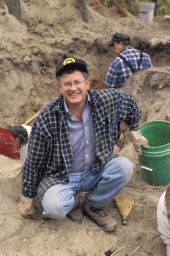 Douglas W. Owsley合作论文数Department of Anthropology;National Museum of Natural History;Smithsonian Institution;Department of Anthropology, Smithsonian Institution2




