The management of heart failure patients presenting in a moribund state remains challenging, despite significant advances in the field of ventricular assist systems. Bridge to decision involves using temporary devices to stabilize the hemodynamic state of such patients while further assessment is performed and a decision can be made regarding patient management. We developed a new temporary left ventricular assist system employing a disposable centrifugal pump with a hydrodynamically levitated bearing. We used three adult goats (body weight, 58–68 kg) to investigate the 30-day performance and hemocompatibility of the newly developed left ventricular assist system, which included the pump, inflow and outflow cannulas, the extracorporeal circuit, and connectors. Hemodynamic, hematologic, and blood chemistry measurements were investigated as well as end-organ effect on necropsy. All goats survived for 30 days in good general condition. The blood pump was operated at a rotational speed of 3000–4500 rpm and a mean pump flow of 3.2 ± 0.6 L min. Excess hemolysis, observed in one goat, was due to the inadequate increase in pump rotational speed in response to drainage insufficiency caused by continuous contact of the inflow cannula tip with the left ventricular septal wall in the early days after surgery. At necropsy, no thrombus was noted in the pump, and no damage caused by mechanical contact was found on the bearing. The newly developed temporary left ventricular assist system using a disposable centrifugal pump with hydrodynamic bearing demonstrated consistent and satisfactory hemodynamic performance and hemocompatibility in the goat model.
Mechanical circulatory support using a ventricular assist device (VAD) has been an essential therapeutic tool for patients with severe heart failure waiting for a heart transplant. To the enhancement of the therapeutic efficacy or safety and prevention of complications, advanced software functionality such as VAD drive control may be equally important as hardware improvements. At clinical sites, however, the automatic VAD control would be difficult because of the difficulties in long-term stable measurement of biological information and modeling of the whole including the VAD and the cardiovascular dynamics. To solve this problem, we have proposed an autonomous VAD control method based on stochastic model. In this study, we sought to investigate whether the control method was useful for the adaptive control of a VAD by even only parameters to be acquired from the device side. To evaluate behaviors based on the implemented algorithm, control testing on a a closed loop for mock circulation. As a result, the behaviors to inflow sucking (unexpected event) were found that the proposed method released the sucking with only a motor current feedback by behaviors to searchingly fluctuate control signal of the speed.
P1-6-5-D 体内埋め込み式人工心臓の解剖学的適合性に関する検討 ○茂木 諒介、本間 章彦、住倉 博仁、大沼 健太郎、巽 英介、福井 康裕 東京電機大学 理工学部 電子・機械工学系、東京電機大学大学院理工学研究科、 国立循環器病研究センター研究所 Evaluation of the anatomical compatibility for an implantable artificial heart ○RYOSUKE MOTEGI1, Akihiko Homma2, Hirohito Sumikura3, Kentaro Ohnuma3, Eisuke Tatsumi3, Yasuhiro Fukui2 1Division of Electrical and Mechanical Engineering, School of Science and Engineering, Tokyo Denki University, 2Graduate School of Science and Engineering, Tokyo Denki University, Ishizaka, Hatoyama, Hikigun, Saitama, 3National Cerebral and Cardiovascular Center Research Institute
This study evaluates a newly designed autologous heart valve-shaped tissue with a stent [stent-biovalve (SBV)] for transcatheter pulmonary valve implantation using the “in-body tissue architecture” technology. In the previously developed SBV with flat-shaped leaflets (FS-SBV), the valve could not close rapidly, because the leaflets were fixed in the open position, which induced regurgitant volume in the closing phase. Therefore, a novel mold to fabricate an SBV with round-shaped leaflets (RS-SBV) was developed, and its hydrodynamic performance with different valve diameters was evaluated in this study. A specially designed, self-expandable, stent-mounted, acrylic mold, which has 3 hemispheres, was placed in dorsal subcutaneous pouches of goats for 2 months. After extraction, the acrylic mold was removed from the implant, and a tubular tissue impregnated with the stent strut was obtained. Half of the tubular tissue with 3 hemispheres was completely folded in half inwards. The acrylic mold was designed, such that the folded half of the tubular tissue became the round-shaped leaflets. The 3 commissure parts were connected to form 3 leaflets, resulting in the preparation of the RS-SBV (internal diameter 25 mm). The RS-SBV closed more rapidly than the FS-SBV in a pulsatile mock circulation circuit under the pulmonary circulation conditions. The regurgitant fraction of the RS-SBV was approximately 6 %, which was lower than that of the FS-SBV. The appropriate pulmonary annulus diameter of the RS-SBV was from 24 to 25 mm based on the pressure difference and effective orifice area.
We have been developing a pneumatic total artificial heart (PTAH) system which was driven by a wearable pneumatic drive unit (WPD). The WPD which have driven one blood pump by one actuator, called as WPD100, had problems such as high power consumption, large size and excessive negative air pressure. To solve these problems, we developed a WPD twin head type (WPD TH) equipped with a mechanism to drive two pumps by one actuator and relief valves to avoid excessive negative pressure. In this study, we evaluated the performance and characteristics of the WPD TH in a mock circulation test and numerical calculation. As a result, the maximum flow rates of the left and right pumps driven by the WPD TH were 7.9 L/min and 9.3 L/min even under the pressure release in diastole. The maximum power consumption and the efficiency were 27.6 W and 6.6% in the case of right and left pumps driven from side to side, and these were improved in comparison with WPD100. The alternate drive method had advantages of suppressing vibration and a mechanical load in the numerical calculation. These results indicated that the WPD TH had a basic performance to realize a wearable PTAH system.
Our research institute has been working on the development of a compact wearable drive unit for an extracorporeal ventricular assist device (VAD) with a pneumatically driven pump. A method for checking the pump blood flow on the side of the drive unit without modifying the existing blood pump and impairing the portability of it will be useful. In this study, to calculate the pump flow rate indirectly from measuring the flow rate of the driving air of the VAD air chamber, we conducted experiments using a mock circuit to investigate the correlation between the air flow rate and the pump flow rate as well as its accuracy and error factors. The pump flow rate was measured using an ultrasonic flow meter at the inflow and outflow tube, and the air flow was measured using a thermal mass flow meter at the driveline. Similarity in the instantaneous waveform was confirmed between the air flow rate in the driveline and the pump flow rate. Some limitations of this technique were indicated by consideration of the error factors. A significant correlation was found between the average pump flow rate in the ejecting direction and the average air flow rate in the ejecting direction (R (2) = 0.704-0.856), and the air flow rate in the filling direction (R (2) = 0.947-0.971). It was demonstrated that the average pump flow rate was estimated exactly in a wide range of drive conditions using the air flow of the filling phase.
Mechanical circulatory support using a ventricular assist device (VAD) has been an essential therapeutic tool for patients with severe heart failure waiting for a heart transplant. To the enhancement of the therapeutic efficacy or safety and prevention of complications, advanced software functionality such as VAD drive control may be equally important as hardware improvements. However, controlling VADs in the realistic situation would be difficult because it is necessary to model the whole including the VAD and the cardiovascular dynamics. To solve this problem, we have proposed an autonomous VAD control method based on stochastic model. In this study, we sought to investigate whether a flow control application of our method can be used to adaptively control a continuous flow VAD. To evaluate behaviors based on the implemented algorithm, control testing on a mock circulation loop simulated a left heart bypass support and inflow sucking (unexpected event). These were compared with the linear flow rate control. As a result, the flow rate of the VAD reached a target value in both methods to changes of the circuit resistance. The behaviors to inflow sucking were found as follows: linear control failed by increasing rotational speed for the sucking. On the other hand, the proposed method reduced frequency of the sucking up to 12% by behaviors to searchingly decrease rotational speed.
A new technique for assisting renal selective blood circulation using an extracorporeal circuit to the kidney in acute cardiorenal syndrome was proposed and this technique have shown sufficient effectiveness for the renal function in a goat model in our previous study. However, this technique requires an invasive surgery to install the extracorporeal circuit. We are developing a catheter-based intravascular rotary blood pump for assisting renal blood circulation (Renal-RBP). The purpose of this study is to evaluate the appropriate pump casing geometry to improve the hydraulic performance in Renal-RBP using the computational fluid dynamics (CFD) analysis. The Renal-RBP consists of an impeller, a pump casing, a brushless DC motor, a motor housing and a catheter. The Renal-RBP is positioned in the abdominal aorta near the renal artery and it perfuses blood to both kidneys. Therefore, the Renal-RBP has two outlet ports against one inlet port. Multiple pump casing geometries were estimated in order to obtain the necessity performance using CFD analysis. The results of CFD analysis, it was showed that the outer diameter of pump casing contributed to the increase in pressure head of Renal-RBP.
Body surface area (BSA) is currently used as a standard to determine the anatomical compatibility of a patient with a ventricular assist device (VAD). However, it is difficult to accurately evaluate that of the patient with the threshold limit value of BSA to implant VAD because BSA is only calculated by the patient's height and weight. The purpose of this study is to establish a new quantitative standard which is more accurate than BSA. The parameters which represent anatomical characteristics of chest and abdomen were measured using CT images of 27 subjects. The 17 subjects with BSA of not less than 1.7 were defined as the control group assuming that the threshold limit value of BSA is 1.4. Mahalanobis distance (MD) between the 10 test subjects with BSA of not over 1.5 and the control group were calculated by means of the parameters. MD of the test subjects with BSA from 1.4 to 1.5 ranged from 2 to 44. It is confirmed that the subjects with large MD have incompatible anatomical characteristics to implant VAD in comparison with the subjects with small MD. Results suggested that MD may be able to become a new quantitative index more accurate than BSA.
We have been developing a wearable pneumatic total artificial heart (PTAH) system for bridge to transplant, and we evaluated its fundamental performance in in vitro and in vivo experiments. The PTAH system consists of left and right diaphragm-type blood pumps and a compact wearable pneumatic drive (WPD-100) unit. The WPD-100 unit can generate a fixed systole ratio by the non-circular gears. The prototype WPD-100 units with fixed systolic ratio of 35, 40 and 44% were developed. 25 mm and 23 mm Bicarbon valves were mounted in the inlet and outlet ports of the left and right blood pumps. As a result of an overflow-type mock circulation test, more than 8.0 l/min of pump output was obtained at 100 bpm for after load of 80, 100 and 120 mm Hg in all WPD-100 units. An acute animal experiment was also performed using WPD-100 units with fixed systolic ratio of 35 and 44% in a calf weighing 98 kg. The cardiac output ranged between 4.3 and 5.2 l/min at the mean aortic pressures of 108-115 mm Hg at beating rates of 60 to 100 bpm. These results indicated that our PTAH system consisting of two blood pumps and WPD-100 units have sufficient performance for total cardiac replacement.
We have been developing a novel centrifugal blood pump with hydrodynamic bearing in a mechanical circulatory support system for bridge to decision. In this study, the endurance test was performed to evaluate the durability of the blood pump using a specially designed pulsatile mock circulation system. The endurance test system mainly consisted of a circulation circuit and a bypass circuit. The circulation circuit, which consisted of a pulsatile pump(ventricle), a closed chamber(aorta), a reservoir(atrium) and an electromagnetic proportional valve(resistance), was simulated the systemic circulation. The bypass circuit consisted of the centrifugal blood pump and inlet and outlet tubing (1m). The inlet and outlet tubing were connected to the ventricle and aorta position in the circulation circuit, respectively. The heart rate and systole ratio of the pulsatile pump were set at 70 bpm and 35%. The rotational speed of the centrifugal blood pump was adjusted to produce a mean flow rate of 5 L/min against mean aortic pressure of 100 mm Hg. The durability of centrifugal blood pump was evaluated under these conditions for 30 days. The endurance test demonstrated that stable, continuous operation for 30 days was possible without device failure. There was no wear on the bearing of the blood pump. The blood pump demonstrated good performance and durability for bridge to decision.
A ventricular assist device (VAD) is a device with mechanical pumps implanted adjacent to the patient's native heart to support the blood flow. Mechanical circulatory support using VADs has been an essential therapeutic tool for patients with severe heart failure waiting for a heart transplant in clinical site. Adaptive control of VADs that automatically adjust the pump output with changes in a patient state is one of the important approaches for enhanced therapeutic efficacy, prevention of complications and quality of life improvement. However adaptively controlling a VAD in the realistic situation would be difficult because it is necessary to model the whole including the VAD and the cardiovascular dynamics. To solve this problem, we propose an application of attractor selection algorithm using stochastic behavior to a VAD control system. In this study, we sought to investigate whether this proposed method can be used to adaptively control of a VAD in the simple case of a continuous flow VAD. The flow rate control algorithm was constructed on the basis of a stochastically searching algorithm as one example of application. The validity of the constructed control algorithm was examined in a mock circuit. As a result, in response to a low-flow state with the different causes, the flow rate of the pump reached a target value with self adaptive behavior without designing the detailed control rule based on the experience or the model of the control target.
We developed a novel endurance test system that can arbitrarily set various circulatory conditions and has durability and stability for long-term continuous evaluation of ventricular assist devices (VADs), and we evaluated its fundamental performance and prolonged durability and stability. The circulation circuit of the present endurance test system consisted of a pulsatile pump with a small closed chamber (SCC), a closed chamber, a reservoir and an electromagnetic proportional valve. Two duckbill valves were mounted in the inlet and outlet of the pulsatile pump. The features of the circulation circuit are as follows: (1) the components of the circulation circuit consist of optimized industrial devices, giving durability; (2) the pulsatile pump can change the heart rate and stroke length (SL), as well as its compliance using the SCC. Therefore, the endurance test system can quantitatively reproduce various circulatory conditions. The range of reproducible circulatory conditions in the endurance test circuit was examined in terms of fundamental performance. Additionally, continuous operation for 6 months was performed in order to evaluate the durability and stability. The circulation circuit was able to set up a wide range of pressure and total flow conditions using the SCC and adjusting the pulsatile pump SL. The long-term continuous operation test demonstrated that stable, continuous operation for 6 months was possible without leakage or industrial device failure. The newly developed endurance test system demonstrated a wide range of reproducible circulatory conditions, durability and stability, and is a promising approach for evaluating the basic characteristics of VADs.
Objective: We have been looking into the potential of heart rate variability (HRV), a well-known prognosis factor of heart disease, as a non-invasive assessment tool of cardiac function for heart f...
We have used in-body tissue architecture technology to develop an autologous valved conduit with intact sinuses of Valsalva (biovalve). In this study, we fabricated three different forms of biovalves and evaluated their function in vitro using a mock circulation model to determine the optimal biovalve form for aortic valve replacement. A cylindrical mold for biovalve organization was placed in a dorsal subcutaneous pouch of a goat, and the implant that was encapsulated with connective tissue was extracted 2 months later. The cylindrical mold was removed to obtain the biovalve (16 mm inside diameter) that consisted of pure connective tissue. The biovalve was connected to a pulsatile mock circulation system in the aortic valve position. The function of the three biovalves (biovalve A: normal leaflets with the sinuses of Valsalva; biovalve B: extended leaflets with the sinuses of Valsalva; biovalve C: extended leaflets without the sinuses of Valsalva) was examined under pulsatile flow conditions using saline. In addition, the mock circuit was operated continuously for 40 days to evaluate the durability of biovalve C. The regurgitation rate (expressed as a percent of the mean aortic flow rate during diastole) was 46% for biovalve A but only 3% for biovalves B and C. The durability test demonstrated that even after biovalve C pulsated more than four million times (heart rate, 70 bpm; mean flow rate, 5.0 L/min; mean aortic pressure, 92 mm Hg), stable continuous operation was possible without excessive reduction of the flow rate or bursting. The developed biovalve demonstrated good function and durability in this initial in vitro study.
We designed a novel method for constructing an autologous heart valve with a stent, called a stent-biovalve. In constructing completely autologous heart valves, named biovalves, which used in-body tissue architecture technology, tissues for leaflets were formed via ingrowths into narrow apertures in the preparation molds, frequently leading to delayed or incomplete biovalve preparation. In this technique, self-expandable nitinol stents after everting were mounted on an acrylic column-shaped part and partially covered with an acrylic cylinder-shaped part with three slits. This assembled mold was placed into subcutaneous abdominal pouches in beagles or goats for 4 weeks. Upon removing the acrylic parts after harvesting and trimming of capsulated tissues, a tubular hollow structure with three pocket-flaps of membranous tissue rigidly fixed to the stent's outer surface was obtained. Then, the stent was turned inside out to the original form, thus moving the pocket-flaps from outside to the inside. Stent-biovalves with a sufficient coaptation area were thus obtained with little tissue damage in all cases. The valve opened smoothly, and high aperture ratio was noted. This novel technique was thus highly effective in constructing a robust, completely autologous stent-biovalve with adequate valve function.
Purpose: An autologous aortic valve with a metallic stent (Biovalve Stent) was developed, using simple, safe and economical in-body tissue engineering. In this study, the potential of the Biovalve Stent for transcatheter aortic valve implantation (TAVI) was investigated in a goat model. Methods: Biovalve Stents were prepared by 2-month embedding of the molds, assembled using plastic rods and a metallic stent, in the subcutaneous spaces of goats. After extracting the molds and removing the plastic rods only, Biovalve Stents with tri-leaflets similar to those of the native aortic valves were constituted from completely autologous connective tissues. Four out of eight Biovalve Stents were implanted in the apico-aortic bypass of goats for 1 month to evaluate the valvular function under the systemic circulation and other four Biovalve Stents were implanted in the in situ aorta with TAVI apical approach. Results: In the apico-aortic bypass cases, postoperative echocardiography and angiography showed smooth move...
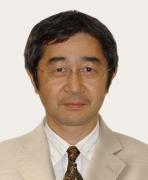 Eisuke Tatsumi (巽英介)合作论文数Opem Innovation Center, National Cerebral and Cardiovascular Center;Research Institute, National Cerebral and Cardiovascular Center;Division of Health Sciences, Graduate School of Medicine, Osaka University;Faculty of Science and Technology, Tokyo University of Science22
 Sumikura Hirohito合作论文数21
 Yoshiaki Takewa合作论文数17Akihiko Homma合作论文数13Tomonori Tsukiya合作论文数11
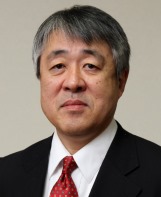 Yoshiyuki Taenaka合作论文数National Cerebral & Cardiovascular Center (NCVC)9Toshihide Mizuno合作论文数8
 Yasuhiro Fukui合作论文数6Hiroshi Mukaibayashi合作论文数6Katano Kazuo合作论文数5
 Yasuhide Nakayama合作论文数Biotube Co., Ltd.5Koichi Kojima合作论文数4Kishimoto Yuichiro合作论文数4
 Mamoru Arakawa合作论文数3
 Motonobu Nishimura合作论文数3Akio Funakubo合作论文数2Umeki Akihide合作论文数2Date Kazuma合作论文数2Kishimoto Satoru合作论文数2
 Yutaka Fujii合作论文数2Tomohiro Nishinaka合作论文数2
 Ken Masamune (正宗賢)合作论文数Institute of Advanced Biomedical Engineering and Science, Tokyo Women's Medical University;Division of Biomedical Engineering and Science, Graduate School of Medicine, Tokyo Women's Medical University2Teruyoshi Sadahiro合作论文数2
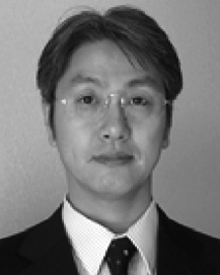 Fujio Miyawaki合作论文数2Yasuharu Ohgoe合作论文数Department of Electronic and Computer Engineering, Tokyo Denki University2
 Masashi Yamanami合作论文数Advanced Biomedical Engineering Center, National Cardiovascular Center Research Institute2Nobumasa Katagiri合作论文数2Ken MASAMUNE合作论文数1Shuhei TAKANOHASHI合作论文数1chihiro tatebayashi合作论文数1
 Mizuno Takeshi合作论文数1Konomi Togo合作论文数1Miura Hidekazu合作论文数1Hanada Shigeru合作论文数1Ugawa Junichi合作论文数1Watanabe Fumikazu合作论文数1Sasagawa Mitsuo合作论文数1Nakamura Yoshinobu合作论文数1Naito Noritsugu合作论文数1Moriwaki Takeshi合作论文数1
 Yasuyuki Shiraishi合作论文数1Yuichi Matsui合作论文数1
 Koichi Toda合作论文数Department of Cardiovascular Surgery, Dokkyo University Saitama Medical Center1Akira Tanaka合作论文数1
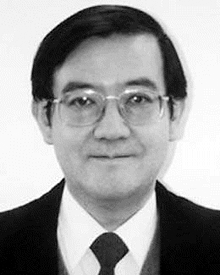 Makoto Yoshizawa合作论文数Cyberscience Center, Tohoku University;Osaka City University;National Cerebral and Cardiovascular Center;Nagoya University;Dartmouth College1Tomonori Oie合作论文数1Tomoyuki Yambe合作论文数Tohoku University, Sendai, Japan1Yukihide Kakuta合作论文数1
 Masami Uechi合作论文数1




