Training a family of large language models (LLMs), either from scratch or via iterative compression, is prohibitively expensive and inefficient, requiring separate training runs for each model in the family. In this paper, we introduce Star Elastic, a novel LLM post-training method that adds N nested submodels to a given parent reasoning model using the compute of one run (Nx savings) via a single post-training job. Beyond reducing training costs, Star Elastic also addresses a fundamental limitation in efficient reasoning: the rigidity of static architectures, which forces the allocation of constant resources regardless of token difficulty. By unlocking elastic budget control, Star Elastic enables a novel approach that uses different submodels for each reasoning phase (thinking and answering). Star Elastic supports (1) nesting along the SSM, embedding channel, MoE and FFN axes, (2) learning nested submodels via an end-to-end trainable router, and (3) curriculum-based knowledge distillation. We apply Star Elastic to the NVIDIA Nemotron Nano models; in particular, we demonstrate its effectiveness on hybrid MoE architectures with Nemotron Nano v3 (30B/3.6A), generating 23B (2.8A) and 12B (2.0A) variants with 160B training tokens. For Nemotron Nano v2 (12B), we produce 9B and 6B nested models using only 110B training tokens, achieving a 360x reduction versus training from scratch and a 7x reduction over state-of-the-art compression methods. All nested models match or outperform independently trained baselines of comparable size. Crucially, elastic budget control advances the accuracy--latency Pareto frontier, achieving up to 16% higher accuracy and 1.9x lower latency via dynamic per-phase model selection.
Training a family of large language models (LLMs), either from scratch or via iterative compression, is prohibitively expensive and inefficient, requiring separate training runs for each model in the family. In this paper, we introduce Star Elastic, a novel LLM post-training method that adds N nested submodels to a given parent reasoning model using the compute of one run (N-fold savings) via a single post-training job. Beyond reducing training costs, Star Elastic also addresses a fundamental limitation of efficient reasoning: the rigidity of static architectures, which forces the allocation of constant resources regardless of token difficulty. By unlocking elastic budget control, Star Elastic enables a novel inference scheme that uses different submodels for each reasoning phase (thinking and answering). Star Elastic supports (1) nesting along the SSM, embedding channel, MoE, and FFN axes, (2) learning nested submodels via an end-to-end trainable router, and (3) curriculum-based knowledge distillation. Building on the Nemotron Elastic framework, we apply Star Elastic to the NVIDIA Nemotron Nano models, with a particular focus on hybrid Mixture-of-Experts (MoE) architectures: from Nemotron Nano v3 (30B/3.6A), we generate 23B (2.8A) and 12B (2.0A) variants with 160B training tokens. All nested models match or outperform independently trained baselines of comparable size and achieve a 360x reduction versus pretraining from scratch and a 7x reduction over state-of-the-art compression. Crucially, elastic budget control advances the accuracy-latency Pareto frontier, achieving up to 16
We introduce Nemotron 3 Ultra, a 550 billion total and 55 billion active parameter Mixture-of-Experts Hybrid Mamba-Attention language model. We pre-trained Nemotron 3 Ultra on 20 trillion text tokens, then extended the context length to 1M tokens, and post-trained using Supervised Fine Tuning (SFT), Reinforcement Learning (RL), and Multi-teacher On-Policy Distillation (MOPD). Nemotron 3 Ultra is our most capable model yet, employing multiple key technologies - LatentMoE, Multi Token Prediction (MTP), NVFP4 pre-training, multi-environment RLVR, MOPD, and reasoning budget control. Nemotron 3 Ultra achieves up to ~6x higher inference throughput as compared to state-of-the-art publicly available LLMs while attaining on-par accuracy. The state-of-the-art accuracy, high inference throughput, and 1M token context length make Nemotron 3 Ultra ideal for long-running autonomous agentic tasks. We open-source the base, post-trained, and quantized checkpoints, along with the training data and recipe on HuggingFace.
We describe the pre-training, post-training, and quantization of Nemotron 3 Super, a 120 billion (active 12 billion) parameter hybrid Mamba-Attention Mixture-of-Experts model. Nemotron 3 Super is the first model in the Nemotron 3 family to 1) be pre-trained in NVFP4, 2) leverage LatentMoE, a new Mixture-of-Experts architecture that optimizes for both accuracy per FLOP and accuracy per parameter, and 3) include MTP layers for inference acceleration through native speculative decoding. We pre-trained Nemotron 3 Super on 25 trillion tokens followed by post-training using supervised fine tuning (SFT) and reinforcement learning (RL). The final model supports up to 1M context length and achieves comparable accuracy on common benchmarks, while also achieving up to 2.2x and 7.5x higher inference throughput compared to GPT-OSS-120B and Qwen3.5-122B, respectively. Nemotron 3 Super datasets, along with the base, post-trained, and quantized checkpoints, are open-sourced on HuggingFace.
Advancing machine intelligence requires developing the ability to perceive across multiple modalities, much as humans sense the world. We introduce OmniVinci, an initiative to build a strong, open-source, omni-modal LLM. We carefully study the design choices across model architecture and data curation. For model architecture, we present three key innovations: (i) OmniAlignNet for strengthening alignment between vision and audio embeddings in a shared omni-modal latent space; (ii) Temporal Embedding Grouping for capturing relative temporal alignment between vision and audio signals; and (iii) Constrained Rotary Time Embedding for encoding absolute temporal information in omni-modal embeddings. We introduce a curation and synthesis pipeline that generates 24M single-modal and omni-modal conversations. We find that modalities reinforce one another in both perception and reasoning. Our model, OmniVinci, improves over Qwen2.5-Omni with +19.05 on DailyOmni (cross-modal understanding), +1.7 on MMAR (audio), and +3.9 on Video-MME (vision), while using just 0.2T training tokens — a 6× reduction compared to Qwen2.5-Omni’s 1.2T. We finally demonstrate omni-modal advantages in downstream applications spanning robotics, medical AI, and smart factory.
We introduce Nemotron 3 Nano Omni, the latest model in the Nemotron multimodal series and the first to natively support audio inputs alongside text, images, and video. Nemotron 3 Nano Omni delivers consistent accuracy improvements over its predecessor, Nemotron Nano V2 VL, across all modalities, enabled by advances in architecture, training data and recipes. In particular, Nemotron 3 delivers leading results in real-world document understanding, long audio-video comprehension, and agentic computer use. Built on the highly efficient Nemotron 3 Nano 30B-A3B backbone, Nemotron 3 Nano Omni further incorporates innovative multimodal token-reduction techniques to deliver substantially lower inference latency and higher throughput than other models of similar size. We are releasing model checkpoints in BF16, FP8, and FP4 formats, along with portions of the training data and codebase to facilitate further research and development.
Training a family of large language models targeting multiple scales and deployment objectives is prohibitively expensive, requiring separate training runs for each different size. Recent work on model compression through pruning and knowledge distillation has reduced this cost; however, this process still incurs hundreds of billions of tokens worth of training cost per compressed model. In this paper, we present Nemotron Elastic, a framework for building reasoning-oriented LLMs, including hybrid Mamba-Attention architectures, that embed multiple nested submodels within a single parent model, each optimized for different deployment configurations and budgets. Each of these submodels shares weights with the parent model and can be extracted zero-shot during deployment without additional training or fine-tuning. We enable this functionality through an end-to-end trained router, tightly coupled to a two-stage training curriculum designed specifically for reasoning models. We additionally introduce group-aware SSM elastification that preserves Mamba's structural constraints, heterogeneous MLP elastification, normalized MSE-based layer importance for improved depth selection, and knowledge distillation enabling simultaneous multi-budget optimization. We apply Nemotron Elastic to the Nemotron Nano V2 12B model, simultaneously producing a 9B and a 6B model using only 110B training tokens; this results in over 360x cost reduction compared to training model families from scratch, and around 7x compared to SoTA compression techniques. Each of the nested models performs on par or better than the SoTA in accuracy. Moreover, unlike other compression methods, the nested capability of our approach allows having a many-in-one reasoning model that has constant deployment memory against the number of models in the family.
We introduce Nemotron Nano V2 VL, the latest model of the Nemotron vision-language series designed for strong real-world document understanding, long video comprehension, and reasoning tasks. Nemotron Nano V2 VL delivers significant improvements over our previous model, Llama-3.1-Nemotron-Nano-VL-8B, across all vision and text domains through major enhancements in model architecture, datasets, and training recipes. Nemotron Nano V2 VL builds on Nemotron Nano V2, a hybrid Mamba-Transformer LLM, and innovative token reduction techniques to achieve higher inference throughput in long document and video scenarios. We are releasing model checkpoints in BF16, FP8, and FP4 formats and sharing large parts of our datasets, recipes and training code.
Hybrid LLM architectures that combine Attention and State Space Models (SSMs) achieve state-of-the-art accuracy and runtime performance. Recent work has demonstrated that applying compression and distillation to Attention-only models yields smaller, more accurate models at a fraction of the training cost. In this work, we explore the effectiveness of compressing Hybrid architectures. We introduce a novel group-aware pruning strategy that preserves the structural integrity of SSM blocks and their sequence modeling capabilities. Furthermore, we demonstrate the necessity of such SSM pruning to achieve improved accuracy and inference speed compared to traditional approaches. Our compression recipe combines SSM, FFN, embedding dimension, and layer pruning, followed by knowledge distillation-based retraining, similar to the MINITRON technique. Using this approach, we compress the Nemotron-H 8B Hybrid model down to 4B parameters with up to 40x fewer training tokens. The resulting model surpasses the accuracy of similarly-sized models while achieving 2x faster inference, significantly advancing the Pareto frontier.
Hybrid language models that combine Attention and State Space Models (SSMs) have been shown to achieve state-of-the-art accuracy and runtime performance. Recent work has also demonstrated that applying pruning and distillation to Attention-only models yields smaller, more accurate models at a fraction of the training cost. In this work, we explore the effectiveness of compressing Hybrid architectures. To this end, we introduce a novel group-aware pruning method for Mamba layers that preserves the structural integrity of SSM blocks and their sequence modeling capabilities. We combine this method with FFN, embedding dimension, and layer pruning, along with knowledge distillation-based retraining to obtain a unified compression recipe for hybrid models. Using this recipe, we compress the Nemotron-H 8B Hybrid model down to 4B parameters with up to $40\times$ fewer training tokens compared to similarly-sized models. The resulting model surpasses the accuracy of similarly-sized models while achieving $\sim2\times$ faster inference throughput, significantly advancing the Pareto frontier.
We present Nemotron 3 Nano 30B-A3B, a Mixture-of-Experts hybrid Mamba-Transformer language model. Nemotron 3 Nano was pretrained on 25 trillion text tokens, including more than 3 trillion new unique tokens over Nemotron 2, followed by supervised fine tuning and large-scale RL on diverse environments. Nemotron 3 Nano achieves better accuracy than our previous generation Nemotron 2 Nano while activating less than half of the parameters per forward pass. It achieves up to 3.3x higher inference throughput than similarly-sized open models like GPT-OSS-20B and Qwen3-30B-A3B-Thinking-2507, while also being more accurate on popular benchmarks. Nemotron 3 Nano demonstrates enhanced agentic, reasoning, and chat abilities and supports context lengths up to 1M tokens. We release both our pretrained Nemotron 3 Nano 30B-A3B Base and post-trained Nemotron 3 Nano 30B-A3B checkpoints on Hugging Face.
We introduce the Nemotron 3 family of models - Nano, Super, and Ultra. These models deliver strong agentic, reasoning, and conversational capabilities. The Nemotron 3 family uses a Mixture-of-Experts hybrid Mamba-Transformer architecture to provide best-in-class throughput and context lengths of up to 1M tokens. Super and Ultra models are trained with NVFP4 and incorporate LatentMoE, a novel approach that improves model quality. The two larger models also include MTP layers for faster text generation. All Nemotron 3 models are post-trained using multi-environment reinforcement learning enabling reasoning, multi-step tool use, and support granular reasoning budget control. Nano, the smallest model, outperforms comparable models in accuracy while remaining extremely cost-efficient for inference. Super is optimized for collaborative agents and high-volume workloads such as IT ticket automation. Ultra, the largest model, provides state-of-the-art accuracy and reasoning performance. Nano is released together with its technical report and this white paper, while Super and Ultra will follow in the coming months. We will openly release the model weights, pre- and post-training software, recipes, and all data for which we hold redistribution rights.
We introduce the Llama-Nemotron series of models, an open family of heterogeneous reasoning models that deliver exceptional reasoning capabilities, inference efficiency, and an open license for enterprise use. The family comes in three sizes – Nano (8B), Super (49B), and Ultra (253B) – and performs competitively with state-of-the-art reasoning models such as DeepSeek-R1 while offering superior inference throughput and memory efficiency. In this report, we discuss the training procedure for these models, which entails using neural architecture search from Llama 3 models for accelerated inference, knowledge distillation, and continued pretraining, followed by a reasoning-focused post-training stage consisting of two main parts: supervised fine-tuning and large scale reinforcement learning. Llama-Nemotron models are the first open-source models to support a dynamic reasoning toggle, allowing users to switch between standard chat and reasoning modes during inference. To further support open research and facilitate model development, we provide the following resources: 1. We release the Llama-Nemotron reasoning models – LN-Nano, LN-Super, and LN-Ultra – under the commercially permissive NVIDIA Open Model License Agreement. 2. We release the complete post-training dataset: Llama-Nemotron-Post-Training-Dataset. 3. We also release our training codebases: NeMo, NeMo-Aligner, and Megatron-LM.
We introduce Nemotron-Nano-9B-v2, a hybrid Mamba-Transformer language model designed to increase throughput for reasoning workloads while achieving state-of-the-art accuracy compared to similarly-sized models. Nemotron-Nano-9B-v2 builds on the Nemotron-H architecture, in which the majority of the self-attention layers in the common Transformer architecture are replaced with Mamba-2 layers, to achieve improved inference speed when generating the long thinking traces needed for reasoning. We create Nemotron-Nano-9B-v2 by first pre-training a 12-billion-parameter model (Nemotron-Nano-12B-v2-Base) on 20 trillion tokens using an FP8 training recipe. After aligning Nemotron-Nano-12B-v2-Base, we employ the Minitron strategy to compress and distill the model with the goal of enabling inference on up to 128k tokens on a single NVIDIA A10G GPU (22GiB of memory, bfloat16 precision). Compared to existing similarly-sized models (e.g., Qwen3-8B), we show that Nemotron-Nano-9B-v2 achieves on-par or better accuracy on reasoning benchmarks while achieving up to 6x higher inference throughput in reasoning settings like 8k input and 16k output tokens. We are releasing Nemotron-Nano-9B-v2, Nemotron-Nano12B-v2-Base, and Nemotron-Nano-9B-v2-Base checkpoints along with the majority of our pre- and post-training datasets on Hugging Face.
We present a comprehensive report on compressing the Llama 3.1 8B and Mistral NeMo 12B models to 4B and 8B parameters, respectively, using pruning and distillation. We explore two distinct pruning strategies: (1) depth pruning and (2) joint hidden/attention/MLP (width) pruning, and evaluate the results on common benchmarks from the LM Evaluation Harness. The models are then aligned with NeMo Aligner and tested in instruct-tuned versions. This approach produces a compelling 4B model from Llama 3.1 8B and a state-of-the-art Mistral-NeMo-Minitron-8B (MN-Minitron-8B for brevity) model from Mistral NeMo 12B. We found that with no access to the original data, it is beneficial to slightly fine-tune teacher models on the distillation dataset. We open-source our base model weights on Hugging Face with a permissive license.
 Pavlo Molchanov合作论文数NVIDIA Research14
 Ameya Sunil Mahabaleshwarkar合作论文数13
 Bryan Catanzaro合作论文数NVIDIA13
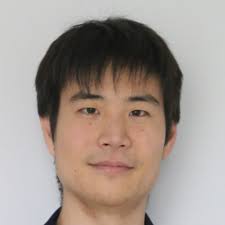 Yoshihiko Suhara合作论文数Megagon Labs , MIT Media Lab13
 Mostofa Patwary合作论文数NVIDIA12
 Mohammad Shoeybi合作论文数NVIDIA11Bilal Kartal合作论文数10Ashwath Aithal合作论文数10Daniel Korzekwa合作论文数10Sharath Turuvekere Sreenivas合作论文数10
 Jan Kautz合作论文数Department of Computer Science, University College London10
 Nima Tajbakhsh合作论文数School of Electrical and Computer Engineering, University of Tehran10Nave Assaf合作论文数9Ran Zilberstein合作论文数9Soumye Singhal合作论文数9Roger Waleffe合作论文数9Katherine Luna合作论文数9David Mosallanezhad合作论文数9Zijia Chen合作论文数9Jane Polak Scowcroft合作论文数9
 Ali Taghibakhshi合作论文数NVIDIA9
 Saurav Muralidharan合作论文数NVIDIA9
 Oleksii Kuchaiev合作论文数NVIDIA9Tomer Asida合作论文数8Peter Jin合作论文数8Katherine Cheung合作论文数8Daniel Afrimi合作论文数8Charles Wang合作论文数8Adi Renduchintala合作论文数8Luis Vega合作论文数8Duncan Riach合作论文数8Pritam Gundecha合作论文数8Kari Briski合作论文数8Joey Conway合作论文数8Krzysztof Pawelec合作论文数8
 Marcin Chochowski合作论文数8
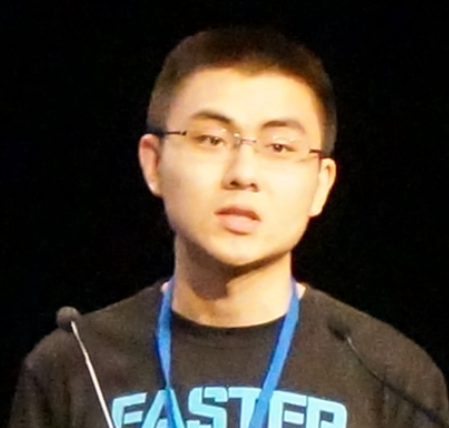 Jian Zhang合作论文数NVIDIA8Udi Karpas合作论文数7Meredith Price合作论文数7Yashaswi Karnati合作论文数7Terry Kong合作论文数7Erick Galinkin合作论文数7Akhiad Bercovich合作论文数7Leon Derczynski合作论文数7Yian Zhang合作论文数7Jiaqi Zeng合作论文数7Gerald Shen合作论文数7
 Alex Bukharin合作论文数NVIDIA7
 Jonathan H. Chen合作论文数Department of Medicine, Division of Hospital Medicine, Stanford University;Clinical Excellence Research Center, Stanford University;Stanford Center for Biomedical Informatics Research, Stanford University;Reaction Explorer LLC7




