Long-context capabilities are essential for a wide range of applications, including document and video understanding, in-context learning, and inference-time scaling, all of which require models to process and reason over long sequences of text and multimodal data. In this work, we introduce a efficient training recipe for building ultra-long context LLMs from aligned instruct model, pushing the boundaries of context lengths from 128K to 1M, 2M, and 4M tokens. Our approach leverages efficient continued pretraining strategies to extend the context window and employs effective instruction tuning to maintain the instruction-following and reasoning abilities. Our UltraLong-8B, built on Llama3.1-Instruct with our recipe, achieves state-of-the-art performance across a diverse set of long-context benchmarks. Importantly, models trained with our approach maintain competitive performance on standard benchmarks, demonstrating balanced improvements for both long and short context tasks. We further provide an in-depth analysis of key design choices, highlighting the impacts of scaling strategies and data composition. Our findings establish a robust framework for efficiently scaling context lengths while preserving general model capabilities. We release all model weights at: this https URL
We introduce Nemotron-Cascade 2, an open 30B MoE model with 3B activated parameters that delivers best-in-class reasoning and strong agentic capabilities. Despite its compact size, its mathematical and coding reasoning performance approaches that of frontier open models. It is the second open-weight LLM, after DeepSeekV3.2-Speciale-671B-A37B, to achieve Gold Medal-level performance in the 2025 International Mathematical Olympiad (IMO), the International Olympiad in Informatics (IOI), and the ICPC World Finals, demonstrating remarkably high intelligence density with 20x fewer parameters. In contrast to Nemotron-Cascade 1, the key technical advancements are as follows. After SFT on a meticulously curated dataset, we substantially expand Cascade RL to cover a much broader spectrum of reasoning and agentic domains. Furthermore, we introduce multi-domain on-policy distillation from the strongest intermediate teacher models for each domain throughout the Cascade RL process, allowing us to efficiently recover benchmark regressions and sustain strong performance gains along the way. We release the collection of model checkpoint and training data.
We introduce Music Flamingo, a novel large audio–language model, designed to advance music (including song) understanding in foundational audio models. While audio–language research has progressed rapidly, music remains challenging due to its dynamic, layered, and information-dense nature. Progress has been further limited by the difficulty of scaling open audio understanding models, primarily because of the scarcity of high-quality music data and annotations. As a result, prior models are restricted to producing short, high-level captions, answering only surface-level questions, and showing limited generalization across diverse musical cultures. To address these challenges, we curate MF-Skills, a large-scale dataset labeled through a multi-stage pipeline that yields rich captions and question–answer pairs covering harmony, structure, timbre, lyrics, and cultural context. We fine-tune an enhanced Audio Flamingo 3 backbone on MF-Skills and further strengthen multiple skills relevant to music understanding. To improve the model's reasoning abilities, we introduce a post-training recipe: we first cold-start with MF-Think, a novel chain-of-thought dataset grounded in music theory, followed by GRPO-based reinforcement learning with custom rewards. Music Flamingo achieves state-of-the-art results across 10+ benchmarks for music understanding and reasoning, establishing itself as a generalist and musically intelligent audio–language model. Beyond strong empirical results, Music Flamingo sets a new standard for advanced music understanding by demonstrating how models can move from surface-level recognition toward layered, human-like perception of songs. We believe this work provides both a benchmark and a foundation for the community to build the next generation of models that engage with music as richly and meaningfully as humans do. Demo: https://musicflamingo.github.io
We present Audio Flamingo Next (AF-Next), the next-generation and most capable large audio-language model in the Audio Flamingo series, designed to advance understanding and reasoning over speech, environmental sounds and music. Compared to Audio Flamingo 3, AF-Next introduces: (i) a stronger foundational audio-language model that significantly improves accuracy across diverse audio understanding tasks; (ii) scalable strategies for constructing large-scale audio understanding and reasoning data beyond existing academic benchmarks; (iii) support for long and complex audio inputs up to 30 minutes; and (iv) Temporal Audio Chain-of-Thought, a new reasoning paradigm that explicitly grounds intermediate reasoning steps to timestamps in long audio, enabling fine-grained temporal alignment and improved interpretability. To enable these capabilities, we first conduct a systematic analysis of Audio Flamingo 3 to identify key gaps in audio understanding and reasoning. We then curate and scale new large-scale datasets totaling over 1 million hours to address these limitations and expand the existing AudioSkills-XL, LongAudio-XL, AF-Think and AF-Chat datasets. AF-Next is trained using a curriculum-based strategy spanning pre-training, mid-training and post-training stages. Extensive experiments across 20 audio understanding and reasoning benchmarks, including challenging long-audio tasks, show that AF-Next outperforms similarly sized open models by large margins and remains highly competitive with and sometimes surpasses, much larger open-weight and closed models. Beyond benchmark performance, AF-Next exhibits strong real-world utility and transfers well to unseen tasks, highlighting its robustness and generalization ability. In addition to all data, code and methods, we open-source 3 variants of AF-Next, including AF-Next-Instruct, AF-Next-Think and AF-Next-Captioner.
Audio intelligence involves understanding, reasoning about, and generating both audio and speech. In this work, we introduce Nemotron-Labs-Audex-30B-A3B (Audex), a unified audio-text LLM built on Nemotron-Cascade-2-30B-A3B, a strong text-only MoE LLM. Audex adopts a simple unified design with a single Transformer decoder: audio inputs are encoded and projected into the text embedding space, while text tokens and quantized audio output tokens are treated uniformly during generation. This architecture enables strong audio-text fusion, seamless multimodal generation, and compatibility with standard LLM training and inference infrastructure. For training, we meticulously curate audio-text datasets comprising 157.4B audio tokens and 320.5B text tokens. We apply multi-stage supervised training on these datasets, followed by text-only Cascade RL and multi-domain on-policy distillation. Audex delivers state-of-the-art audio understanding, speech recognition and translation, text-to-speech, audio generation, and speech-to-speech generation, while preserving very compelling reasoning, alignment, knowledge, long-context, and agentic capabilities of its text-only LLM backbone with marginal or no regression. We release the model checkpoints to facilitate open research.
Enabling large language models with external tools has become a pivotal strategy for extending their functionality beyond text space. To enhance LLMs' tool-calling abilities, previous approaches primarily rely on supervised fine-tuning (SFT) with trajectories distilled from stronger models, often resulting in imitative reasoning that limits generalization. In this work, we explore rule-based reinforcement learning to enhance tool-calling in LLMs, resulting in Nemotron-Research-Tool-N1, a series of tool-calling reasoning models. Rather than enforcing supervision over intermediate distilled reasoning traces, Tool-N1 is trained with a binary RL reward that assesses only the format validity and functional correctness of tool invocations. This lightweight supervision allows the model to develop reasoning strategies independently, without relying on annotated trajectories. Experiments on several major benchmarks show that Tool-N1-7B/14B clearly outperform GPT-4o. We conduct a systematic study on the design of rule-based reinforcement learning strategies for training tool-calling models. Using 5,518 distilled reasoning trajectories, we compare SFT, RL, and the SFT-then-RL pipeline, finding that the widely adopted SFT-then-RL paradigm does not necessarily outperform pure RL.
Multimodal Large Language Models (MLLMs) have shown strong performance in visual and audio understanding when evaluated in isolation. However, their ability to jointly reason over omni-modal (visual, audio, and textual) signals in long and complex videos remains largely unexplored. We introduce MMOU, a new benchmark designed to systematically evaluate multimodal understanding and reasoning under these challenging, real-world conditions. MMOU consists of 15,000 carefully curated questions paired with 9038 web-collected videos of varying length, spanning diverse domains and exhibiting rich, tightly coupled audio-visual content. The benchmark covers 13 fundamental skill categories, all of which require integrating evidence across modalities and time. All questions are manually annotated across multiple turns by professional annotators, ensuring high quality and reasoning fidelity. We evaluate 20+ state-of-the-art open-source and proprietary multimodal models on MMOU. The results expose substantial performance gaps: the best closed-source model achieves only 64.2
By leveraging multi-teacher distillation, agglomerative vision backbones provide a unified student model that retains and improves the distinct capabilities of multiple teachers. In this tech report, we describe the most recent release of the C-RADIO family of models, C-RADIOv4, which builds upon AM-RADIO/RADIOv2.5 in design, offering strong improvements on key downstream tasks at the same computational complexity. We release -SO400M (412M params), and -H (631M) model variants, both trained with an updated set of teachers: SigLIP2, DINOv3, and SAM3. In addition to improvements on core metrics and new capabilities from imitating SAM3, the C-RADIOv4 model family further improves any-resolution support, brings back the ViTDet option for drastically enhanced efficiency at high-resolution, and comes with a permissive license.
We introduce TangoFlux, an efficient Text-to-Audio (TTA) generative model with 515M parameters, capable of generating up to 30 seconds of 44.1kHz audio in 3.7 seconds on a A40 GPU. A key challenge in aligning TTA models lies in creating preference pairs, as TTA lacks structured mechanisms like verifiable rewards or gold-standard answers available for Large Language Models (LLMs). To address this, we propose CLAP-Ranked Preference Optimization (CRPO), a novel framework that iteratively generates and optimizes preference data to enhance TTA alignment. We show that the audio preference dataset generated using CRPO outperforms the static alternatives. With this framework, TangoFlux achieves state-of-the-art performance across both objective and subjective benchmarks. https://tangoflux56.github.io/TangoFlux/ holds the model-generated audio samples for comparison.
We introduce Nemotron 3 Ultra, a 550 billion total and 55 billion active parameter Mixture-of-Experts Hybrid Mamba-Attention language model. We pre-trained Nemotron 3 Ultra on 20 trillion text tokens, then extended the context length to 1M tokens, and post-trained using Supervised Fine Tuning (SFT), Reinforcement Learning (RL), and Multi-teacher On-Policy Distillation (MOPD). Nemotron 3 Ultra is our most capable model yet, employing multiple key technologies - LatentMoE, Multi Token Prediction (MTP), NVFP4 pre-training, multi-environment RLVR, MOPD, and reasoning budget control. Nemotron 3 Ultra achieves up to ~6x higher inference throughput as compared to state-of-the-art publicly available LLMs while attaining on-par accuracy. The state-of-the-art accuracy, high inference throughput, and 1M token context length make Nemotron 3 Ultra ideal for long-running autonomous agentic tasks. We open-source the base, post-trained, and quantized checkpoints, along with the training data and recipe on HuggingFace.
Large Language Models (LLMs) have shown strong reasoning capabilities, particularly when enhanced through Reinforcement Learning (RL). While prior work has successfully applied RL to mathematical reasoning – where rules and correctness are well-defined – generalizing these methods to broader reasoning domains remains challenging due to limited data, the lack of verifiable reward structures, and diverse task requirements. In this work, we propose NEMOTRON-CROSSTHINK, a framework that systematically incorporates multi-domain corpora, including both synthetic and real-world question-answer pairs, into RL training to improve generalization across diverse reasoning tasks. NEMOTRON-CROSSTHINK addresses key challenges by (1) incorporating data from varied sources spanning STEM, humanities, social sciences, etc.; (2) applying structured templates (e.g., multiple-choice and open-ended) to control answer-space complexity; (3) filtering for verifiable answers; and (4) optimizing data blending strategies that utilizes data from multiple sources effectively. Our approach enables scalable and verifiable reward modeling beyond mathematics and demonstrates improved accuracies on both math (MATH-500: +30.1
In this work, we investigate the synergy between supervised fine-tuning (SFT) and reinforcement learning (RL) in developing strong reasoning models. We begin by curating the SFT training data through two scaling strategies: increasing the number of collected prompts and the number of generated responses per prompt. Both approaches yield notable improvements in reasoning performance, with scaling the number of prompts resulting in more substantial gains. We then explore the following questions regarding the synergy between SFT and RL: (i) Does a stronger SFT model consistently lead to better final performance after large-scale RL training? (ii) How can we determine an appropriate sampling temperature during RL training to effectively balance exploration and exploitation for a given SFT initialization? Our findings suggest that (i) holds true, provided effective RL training is conducted, particularly when the sampling temperature is carefully chosen to maintain the temperature-adjusted entropy around 0.3, a setting that strikes a good balance between exploration and exploitation. Notably, the performance gap between initial SFT models narrows significantly throughout the RL process. Built on a strong SFT foundation and SFT–RL synergy, our AceReason-Nemotron-1.1 7B model significantly outperforms AceReason-Nemotron-1.0 and achieves new state-of-the-art performance among Qwen2.5-7B-based reasoning models on challenging math and code benchmarks, thereby demonstrating the effectiveness of our post-training recipe.
Diffusion language models offer a promising alternative to autoregressive models due to their potential for parallel and iterative generation. However, existing approaches use a single network for both context representation and iterative denoising, forcing one model to serve both roles and limiting its capacity for either role. We propose TwoTower, a block-wise autoregressive diffusion model that decouples these roles into two towers: a frozen AR context tower that causally processes clean tokens, and a trainable diffusion denoiser tower with bidirectional block attention that refines noisy blocks via cross-attention to the context. Built on Nemotron-3-Nano-30B-A3B, an open-weight 30B hybrid Mamba-Transformer MoE model, and trained on approximately 2.1T tokens, Nemotron-Labs-TwoTower retains 98.7
Despite rapid recent progress in the terminal capabilities of large language models, the training data strategies behind state-of-the-art terminal agents remain largely undisclosed. We address this gap through a systematic study of data engineering practices for terminal agents, making two key contributions: (1) Terminal-Task-Gen, a lightweight synthetic task generation pipeline that supports seed-based and skill-based task construction, and (2) a comprehensive analysis of data and training strategies, including filtering, curriculum learning, long context training, and scaling behavior. Our pipeline yields Terminal-Corpus, a large-scale open-source dataset for terminal tasks. Using this dataset, we train Nemotron-Terminal, a family of models initialized from Qwen3(8B, 14B, 32B) that achieve substantial gains on Terminal-Bench 2.0: Nemotron-Terminal-8B improves from 2.5% to 13.0% Nemotron-Terminal-14B improves from 4.0% to 20.2%, and Nemotron-Terminal-32B improves from 3.4% to 27.4%, matching the performance of significantly larger models. To accelerate research in this domain, we open-source our model checkpoints and most of our synthetic datasets at https://huggingface.co/collections/nvidia/nemotron-terminal.
We describe the pre-training, post-training, and quantization of Nemotron 3 Super, a 120 billion (active 12 billion) parameter hybrid Mamba-Attention Mixture-of-Experts model. Nemotron 3 Super is the first model in the Nemotron 3 family to 1) be pre-trained in NVFP4, 2) leverage LatentMoE, a new Mixture-of-Experts architecture that optimizes for both accuracy per FLOP and accuracy per parameter, and 3) include MTP layers for inference acceleration through native speculative decoding. We pre-trained Nemotron 3 Super on 25 trillion tokens followed by post-training using supervised fine tuning (SFT) and reinforcement learning (RL). The final model supports up to 1M context length and achieves comparable accuracy on common benchmarks, while also achieving up to 2.2x and 7.5x higher inference throughput compared to GPT-OSS-120B and Qwen3.5-122B, respectively. Nemotron 3 Super datasets, along with the base, post-trained, and quantized checkpoints, are open-sourced on HuggingFace.
This technical report presents quantization-aware distillation (QAD) and our best practices for recovering accuracy of NVFP4-quantized large language models (LLMs) and vision-language models (VLMs). QAD distills a full-precision teacher model into a quantized student model using a KL divergence loss. While applying distillation to quantized models is not a new idea, we observe key advantages of QAD for today's LLMs: 1. It shows remarkable effectiveness and stability for models trained through multi-stage post-training pipelines, including supervised fine-tuning (SFT), reinforcement learning (RL), and model merging, where traditional quantization-aware training (QAT) suffers from engineering complexity and training instability; 2. It is robust to data quality and coverage, enabling accuracy recovery without full training data. We evaluate QAD across multiple post-trained models including AceReason Nemotron, Nemotron 3 Nano, Nemotron Nano V2, Nemotron Nano V2 VL (VLM), and Llama Nemotron Super v1, showing consistent recovery to near-BF16 accuracy.
Recent advances in duplex speech models have enabled natural, low-latency speech-to-speech interactions. However, existing models are restricted to a fixed role and voice, limiting their ability to support structured, role-driven real-world applications and personalized interactions. In this work, we introduce PersonaPlex, a duplex conversational speech model that incorporates hybrid system prompts, combining role conditioning with text prompts and voice cloning with speech samples. PersonaPlex is trained on a large-scale synthetic dataset of paired prompts and user-agent conversations, generated with open-source large language models (LLM) and text-to-speech (TTS) models. To evaluate role conditioning in real-world settings, we extend the Full-Duplex-Bench benchmark beyond a single assistant role to multi-role customer service scenarios. Experiments show that PersonaPlex achieves strong role-conditioned behavior, voice-conditioned speech, and natural conversational responsiveness, surpassing state-of-the-art duplex speech models and hybrid large language model-based speech systems in role adherence, speaker similarity, latency, and naturalness.
Advancing machine intelligence requires developing the ability to perceive across multiple modalities, much as humans sense the world. We introduce OmniVinci, an initiative to build a strong, open-source, omni-modal LLM. We carefully study the design choices across model architecture and data curation. For model architecture, we present three key innovations: (i) OmniAlignNet for strengthening alignment between vision and audio embeddings in a shared omni-modal latent space; (ii) Temporal Embedding Grouping for capturing relative temporal alignment between vision and audio signals; and (iii) Constrained Rotary Time Embedding for encoding absolute temporal information in omni-modal embeddings. We introduce a curation and synthesis pipeline that generates 24M single-modal and omni-modal conversations. We find that modalities reinforce one another in both perception and reasoning. Our model, OmniVinci, improves over Qwen2.5-Omni with +19.05 on DailyOmni (cross-modal understanding), +1.7 on MMAR (audio), and +3.9 on Video-MME (vision), while using just 0.2T training tokens — a 6× reduction compared to Qwen2.5-Omni’s 1.2T. We finally demonstrate omni-modal advantages in downstream applications spanning robotics, medical AI, and smart factory.
Pretraining large language models (LLMs) on high-quality, structured data such as mathematics and code substantially enhances reasoning capabilities. However, existing math-focused datasets built from Common Crawl suffer from degraded quality due to brittle extraction heuristics, lossy HTML-to-text conversion, and the failure to reliably preserve mathematical structure. In this work, we intro- duce Nemotron-CC-Math, a large-scale, high-quality mathematical corpus constructed from Common Crawl using a novel, domain-agnostic pipeline specifically designed for robust scientific text extraction. Unlike previous efforts, our pipeline recovers math across various formats (e.g., MathJax, KaTeX, MathML) by leveraging layout-aware rendering with lynx and a targeted LLM-based cleaning stage. This approach preserves the structural integrity of equations and code blocks while removing boilerplate, standardizing notation into L A T EX representation, and correcting inconsistencies. We collected a large, high-quality math corpus, namely Nemotron-CC-Math-3+(133B tokens) and Nemotron-CC-Math-4+ (52B tokens). Notably, Nemotron-CC-Math-4+ not only surpasses all prior open math datasets-including Mega-Math, FineMath, and OpenWebMath-but also contains 5.5× more tokens than FineMath-4+, which was previously the highest-quality math pretraining dataset. When used to pretrain a Nemotron-T 8B model, our corpus yields +4.8 to +12.6. gains on MATH and +4.6 to +14.3 gains on MBPP+ over strong baselines, while also improving general-domain performance on MMLU and MMLU-Stem. We present the first pipeline to reliably extract scientific content—including math—from noisy web-scale data, yielding measurable gains in math, code, and general reasoning, and setting a new state of the art among open math pretraining corpora. To support open-source efforts, we release our code1 and datasets 2 .
The prevailing paradigm for enhancing the reasoning abilities of Large Language Models (LLMs) revolves around post-training on high-quality, reasoning-intensive data. While emerging literature suggests that reasoning data is increasingly incorporated also during the mid-training stage---a practice that is relatively more proprietary and less openly characterized---the role of such data in pretraining remains unclear. In particular, due to the opaqueness of pretraining corpora in most frontier models, the effect of reasoning data introduced at different phases of pre- and/or post-training is relatively less reported in the scientific literature. This raises several important but unsettled questions: Is adding reasoning data earlier during pre-training any better than introducing it during post-training, when the token counts are controlled? Could earlier inclusion risk overfitting and harm generalization, or instead establish durable foundations that later fine-tuning cannot recover? To address these questions, we conduct the first systematic study of how reasoning data—varying in scale, diversity, and quality—affects LLM performance when introduced at different stages of training. Our findings reveal that front-loading reasoning data into pretraining is critical (19% average gain), establishing foundational capabilities that cannot be fully replicated by later-stage SFT, even with more data. We uncover an asymmetric principle for optimal data allocation: pretraining benefits most from broad diversity in reasoning patterns (11% average gain), while SFT is more sensitive to data quality (15% average gain with high quality data). Furthermore, we show that high-quality pretraining data has latent effects, activated only after SFT, and that naively scaling SFT data can be detrimental, washing away the benefits of early reasoning injection. Collectively, our results challenge the conventional separation of language modeling and reasoning, providing a principled guide for strategically allocating data across the entire training pipeline to build more capable models.
 Mohammad Shoeybi合作论文数NVIDIA80
 Ping Wei (平伟)合作论文数NVIDIA50
 Andrew Tao合作论文数NVIDIA49
 Mostofa Patwary合作论文数NVIDIA46
 Rafael Valle合作论文数Meta Superintelligence Labs32
 Shrimai Prabhumoye合作论文数NVIDIA;Department of Computer Science, College of Arts & Sciences, Boston University26
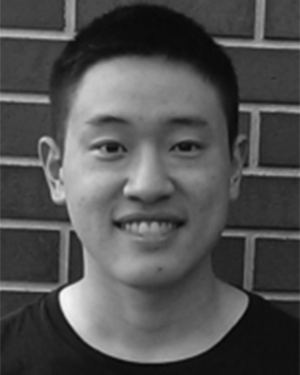 Kevin J. Shih合作论文数NVIDIA24
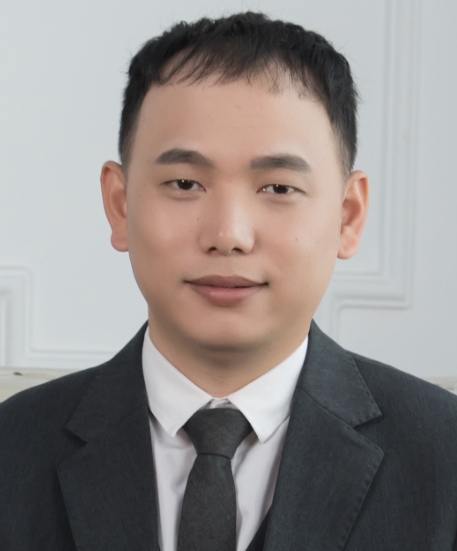 Guilin Liu合作论文数NVIDIA22
 Zihan Liu (刘子涵)合作论文数NVIDIA22
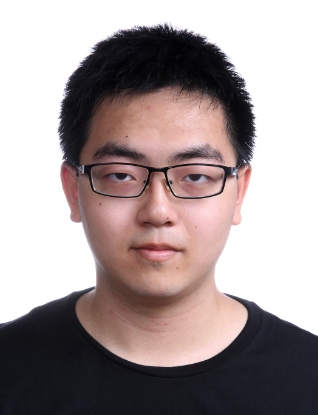 Zhifeng Kong合作论文数NVIDIA21
 Jan Kautz合作论文数Department of Computer Science, University College London21
 Pavlo Molchanov合作论文数NVIDIA Research20
 Jared Casper合作论文数NVIDIA18
 Arushi Goel合作论文数VICO Group, School of Informatics, University of Edinburgh16
 Sanjeev Satheesh合作论文数NVIDIA16
 Kurt Keutzer合作论文数Department of Electrical Engineering and Computer Sciences, University of California, Berkeley;Graduate School, University of California, Berkeley15Ameya Sunil Mahabaleshwarkar合作论文数14
 Peng Xu合作论文数NVIDIA14Ashwath Aithal合作论文数13Oluwatobi Olabiyi合作论文数13
 Sang-Gil Lee合作论文数NVIDIA13
 Deepak Narayanan合作论文数NVIDIA13
 Karan Sapra合作论文数Applied Research Deep Learnign Team, NVIDIA13
 Oleksii Kuchaiev合作论文数NVIDIA13Roger Waleffe合作论文数12Joseph Jennings合作论文数12Sharath Turuvekere Sreenivas合作论文数12
 Sreyan Ghosh合作论文数University of Maryland;NVIDIA12John Kamalu合作论文数12Jupinder Parmar合作论文数12
 Rajarshi Roy合作论文数, Nvidia, Santa Clara, CA, USA12
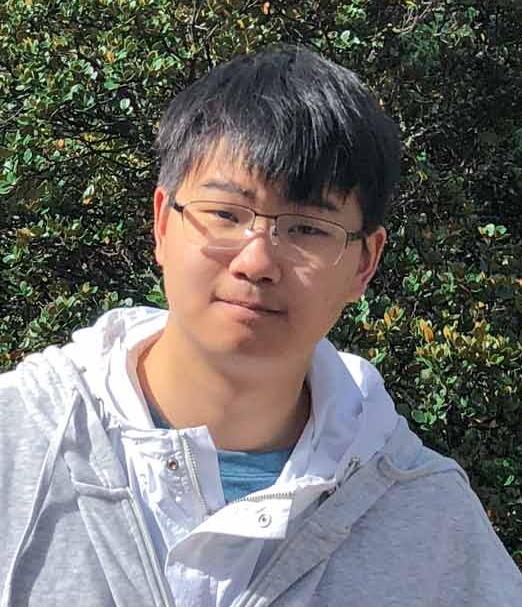 Boxin Wang (汪博欣)合作论文数NVIDIA12
 Yejin Choi合作论文数Department of Computer Science, Stanford University;Stanford Institute for Human-Centered Artificial Intelligence;NVIDIA12
 Boris Ginsburg合作论文数NVIDIA12
 Aysegul Dundar合作论文数Generative Deep Learning Research Lab, Bilkent University;NVIDIA12
 Nima Tajbakhsh合作论文数School of Electrical and Computer Engineering, University of Tehran12
 Saurav Muralidharan合作论文数NVIDIA12
 Vijay Anand Korthikanti合作论文数Nvidia12Jane Polak Scowcroft合作论文数11Dan Su合作论文数11
 Brandon Norick合作论文数NVIDIA11Evelina Bakhturina合作论文数11
 Syeda Nahida Akter合作论文数Language Technologies Institute, Carnegie Mellon University11
 Rohan Badlani合作论文数Department of Computer Science BITS Pilani India11
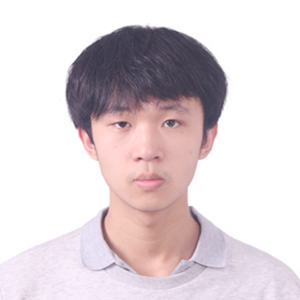 Zhuolin Yang合作论文数University of Illinois at Urbana-Champaign;NVIDIA11
 Yoshihiko Suhara合作论文数Megagon Labs , MIT Media Lab11
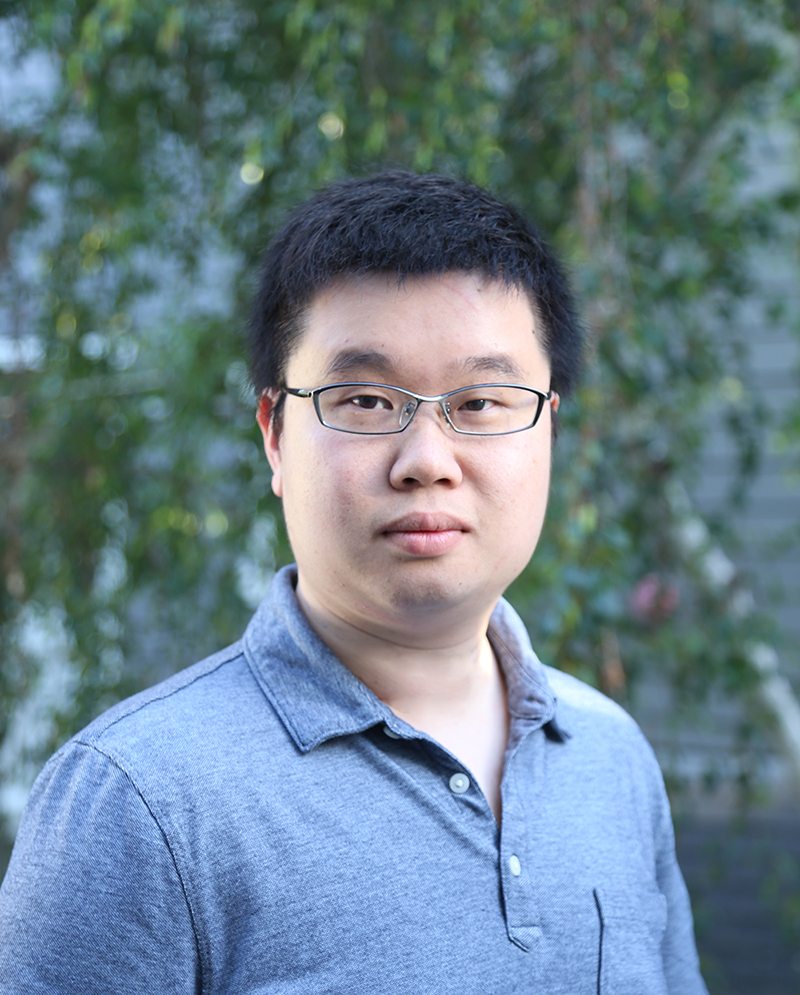 Zhiding Yu (禹之鼎)合作论文数NVIDIA Research11Duncan Riach合作论文数10Katherine Luna合作论文数10