Natural language processing and vision tasks have seen large improvements recently through the rise of Transformer architectures. The high performing large language models (LLMs) benefit from large textual datasets that are numerously available online. However, action and bidirectional action-language tasks are less developed, as these require more specific and labelled data. Therefore, we aim at enabling these robotic action capabilities for a pretrained LLM, while maintaining high efficiency with regards to the required training time and data size. To achieve this, we split up a Transformer-based LLM and insert a multimodal architecture into it. Specifically, we split a pretrained T5 LLM between its encoder and decoder parts, to insert a crossmodal Transformer component of a Paired Transformed Autoencoders (PTAE) bidirectional action-language model. The experiments are conducted on a new dataset, consisting of unimodal language translation and crossmodal bidirectional action-language translation. The natural language capabilities of the original T5 are reestablished efficiently by training the crossmodal Transformer, which requires only one 5.7 millionth of the T5 model’s original training data. Furthermore, the new model, called CrossT5, achieves high accuracy for the vision and language guided robotic action tasks. By design, the CrossT5 agent acts robustly when tested with language commands not included in the dataset. The results demonstrate that this novel approach is successful in combining the advanced linguistic capabilities of LLMs with the low-level robotic control skills of vision-action models. The code is available at this URL: https://github.com/samsoneko/CrossT5.
Human infant learning happens during exploration of the environment, by interaction with objects, and by listening to and repeating utterances casually, which is analogous to unsupervised learning. Only occasionally, a learning infant would receive a matching verbal description of an action it is committing, which is similar to supervised learning. Such a learning mechanism can be mimicked with deep learning. We model this weakly supervised learning paradigm using our Paired Gated Autoencoders (PGAE) model, which combines an action and a language autoencoder. After observing a performance drop when reducing the proportion of supervised training, we introduce the Paired Transformed Autoencoders (PTAE) model, using Transformer-based crossmodal attention. PTAE achieves significantly higher accuracy in language-to-action and action-to-language translations, particularly in realistic but difficult cases when only few supervised training samples are available. We also test whether the trained model behaves realistically with conflicting multimodal input. In accordance with the concept of incongruence in psychology, conflict deteriorates the model output. Conflicting action input has a more severe impact than conflicting language input, and more conflicting features lead to larger interference. PTAE can be trained on mostly unlabelled data where labeled data is scarce, and it behaves plausibly when tested with incongruent input.
Human infants learn language while interacting with their environment in which their caregivers may describe the objects and actions they perform. Similar to human infants, artificial agents can learn language while interacting with their environment. In this work, first, we present a neural model that bidirectionally binds robot actions and their language descriptions in a simple object manipulation scenario. Building on our previous Paired Variational Autoencoders (PVAE) model, we demonstrate the superiority of the variational autoencoder over standard autoencoders by experimenting with cubes of different colours, and by enabling the production of alternative vocabularies. Additional experiments show that the model's channel-separated visual feature extraction module can cope with objects of different shapes. Next, we introduce PVAE-BERT, which equips the model with a pretrained large-scale language model, i.e., Bidirectional Encoder Representations from Transformers (BERT), enabling the model to go beyond comprehending only the predefined descriptions that the network has been trained on; the recognition of action descriptions generalises to unconstrained natural language as the model becomes capable of understanding unlimited variations of the same descriptions. Our experiments suggest that using a pretrained language model as the language encoder allows our approach to scale up for real-world scenarios with instructions from human users.
A cognitive agent performing in the real world needs to learn relevant concepts about its environment (e.g., objects, color, and shapes) and react accordingly. In addition to learning the concepts, it needs to learn relations between the concepts, in particular spatial relations between objects. In this paper, we propose three approaches that allow a cognitive agent to learn spatial relations. First, using an embodied model, the agent learns to reach toward an object based on simple instructions involving left-right relations. Since the level of realism and its complexity does not permit large-scale and diverse experiences in this approach, we devise as a second approach a simple visual dataset for geometric feature learning and show that recent reasoning models can learn directional relations in different frames of reference. Yet, embodied and simple simulation approaches together still do not provide sufficient experiences. To close this gap, we thirdly propose utilizing knowledge bases for disembodied spatial relation reasoning. Since the three approaches (i.e., embodied learning, learning from simple visual data, and use of knowledge bases) are complementary, we conceptualize a cognitive architecture that combines these approaches in the context of spatial relation learning.
Handling various robot action-language translation tasks flexibly is an essential requirement for natural interaction between a robot and a human. Previous approaches require change in the configuration of the model architecture per task during inference, which undermines the premise of multi-task learning. In this work, we propose the paired gated autoencoders (PGAE) for flexible translation between robot actions and language descriptions in a tabletop object manipulation scenario. We train our model in an end-to-end fashion by pairing each action with appropriate descriptions that contain a signal informing about the translation direction. During inference, our model can flexibly translate from action to language and vice versa according to the given language signal. Moreover, with the option to use a pretrained language model as the language encoder, our model has the potential to recognise unseen natural language input. Another capability of our model is that it can recognise and imitate actions of another agent by utilising robot demonstrations. The experiment results highlight the flexible bidirectional translation capabilities of our approach alongside with the ability to generalise to the actions of the opposite-sitting agent.
Language acquisition is an integral part of developmental robotics, which aims at understanding the key components in human development and learning to utilise them in artificial agents. Similar to human infants, robots can learn language while interacting with objects in their environments and receiving linguistic input. This process, also coined as embodied language learning, can enhance language acquisition in robots via multiple modalities including visual and sensorimotor input. In this work, we explore ways to translate a simple action in a tabletop environment into various linguistic commands based on an existing approach which exploits the idea of multiple autoencoders. While the existing approach focuses on strict one-to-one mappings between actions and descriptions by implicitly binding two standard autoencoders in the latent space, we propose a variational autoencoder model to facilitate one-to-many mapping between actions and descriptions. Additionally, for extracting visual features, we employ channel-separated convolutional autoencoders to better handle complex visual input. The results show that our model outperforms the existing approach in associating multiple commands with the corresponding action.
Human language is inherently embodied and grounded in sensorimotor representations of the self and the world around it. This suggests that the body schema and ideomotor action-effect associations play an important role in language understanding, language generation, and verbal/physical interaction with others. There are computational models that focus purely on non-verbal interaction between humans and robots, and there are computational models for dialog systems that focus only on verbal interaction. However, there is a lack of research that integrates these approaches. We hypothesize that the development of computational models of the self is very appropriate for considering joint verbal and physical interaction. Therefore, they provide the substantial potential to foster the psychological and cognitive understanding of language grounding, and they have significant potential to improve human-robot interaction methods and applications. This review is a first step toward developing models of the self that integrate verbal and non-verbal communication. To this end, we first analyze the relevant findings and mechanisms for language grounding in the psychological and cognitive literature on ideomotor theory. Second, we identify the existing computational methods that implement physical decision-making and verbal interaction. As a result, we outline how the current computational methods can be used to create advanced computational interaction models that integrate language grounding with body schemas and self-representations.
In recent years, there has been an increased interest in the role of social agents as language teachers. Our experiment was designed to investigate whether a physical agent in form of a social robot provides a better language-learning experience than a virtual agent. We evaluated the interactions regarding enjoyment, immersion, and vocabulary retention. The 55 participants who took part in our study learned 5 phrases of the fictional language High Valyrian from the TV show Game of Thrones. For the evaluation, questions from the Almere model, the Godspeed questionnaire and the User Engagement Scale were used as well as a number of custom questions. Our findings include statistically significant results regarding enjoyment (p = 0.008) and immersion (p = 0.023) for participants with little or no prior experience with social robots. In addition, we found that the participants were able to retain the High Valyrian phrases equally well for both conditions.
 Stefan Wermter合作论文数Knowledge Technology Research Group, Department of Informatics, Universitat Hamburg10
 Cornelius Weber合作论文数Department of Informatics, University of Hamburg8
 Matthias Kerzel合作论文数4
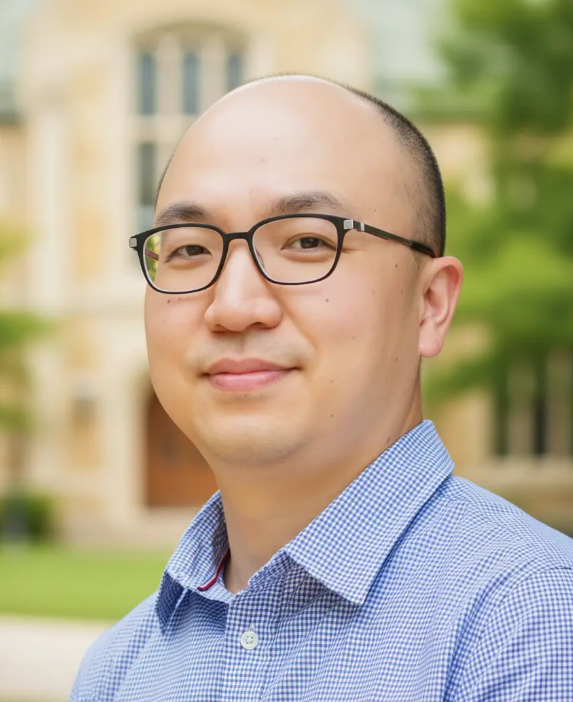 Jae Hee Lee合作论文数Department of Informatics, Faculty of Mathematics, Informatics and Natural Sciences, University of Hamburg2
 Connor Gade合作论文数1Ilay Köksal合作论文数1Shreyans Bhansali合作论文数1Julian Tobergte合作论文数1Ann-Katrin Thebille合作论文数1
 Mengdi Li (李梦迪)合作论文数Knowledge Technology Research Group, Department of Informatics, Faculty of Mathematics, Informatics and Natural Sciences, University of Hamburg1
 Theresa Pekarek Rosin合作论文数1Hassan Ali合作论文数1Mariela Sanchez合作论文数1
 Frank Röder合作论文数Dept Neurol, Univ Med Ctr Hamburg Eppendorf1Aleksej Logacjov合作论文数1
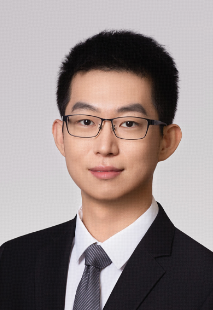 Yuan Yao (姚远)合作论文数College of AI, Tsinghua University1
 Tayfun Alpay合作论文数University of Hamburg1Bruns Patrick合作论文数Biological Psychology and Neuropsychology, University of Hamburg1
 Stefan Heinrich合作论文数University of Hamburg1
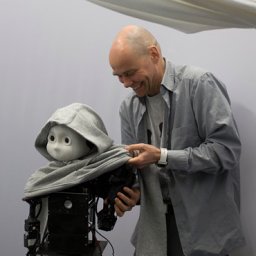 Erik Strahl合作论文数Knowledge Technology University of Hamburg1
 Muhammad Burhan Hafez合作论文数1
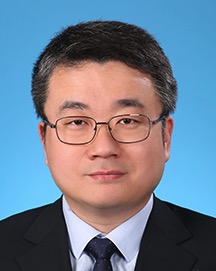 Zhiyuan Liu (刘知远)合作论文数Department of Computer Science and Technology, Tsinghua University1
 Manfred Eppe合作论文数International Computer Science Institute, Berkeley1Matthias Moller合作论文数Institute of Applied Mathematics|Dortmund University of Technology1
 Sascha Sebastian Griffiths合作论文数Technische Universität München1
 Phuong D. H. Nguyen合作论文数Department of Obstetrics and Gynecology, Santa Clara Valley Medical Center1




