Our study presents an animal model which allows evaluation of RI treatment strategies. In this pilot trial, the C-MIC device was safely and successfully implanted. Our data suggest a potential benefit of C-MIC treatment for RI and further studies are needed to test this promising therapy.
Purpose The burden of systolic heart failure (HF) is ever increasing, and the need for novel HF treatment strategies is huge. Direct application of electrical microcurrent to the heart triggers reverse remodeling and reduces myocardial inflammation. The aim of the present study was to test the efficacy of chronic application of microcurrent by a dedicated implantable generator for the first time in a sheep model of chronic heart failure. Methods Twelve sheep were subjected to implantation of the microcurrent system, which consists of (a) an extremely thin patch electrode on the epicardium of the left ventricle (LV), (b) a transvenous counter electrode in the right ventricle and (c) a subcutaneous microcurrent generator connected to both electrodes. Whereas in five sheep the surgical procedure and the electrode design were optimized, in the remaining seven sheep HF was induced by injection of 90 µm microspheres directly into the left coronary artery. Microembolization was repeated until a sustained reduction of LV ejection fraction (LVEF) was achieved, which was defined as a stable mean reduction by 25% as confirmed by echocardiography. Thereafter the device was activated to continuously apply transmyocardial microcurrent to the failing LV. LVEF was repeatedly measured after microcurrent treatment by echocardiography until 12 weeks after start of therapy. Results LVEF strongly decreased after microembolization (baseline, 70.9 ± 5.0%; after embolization, 44.2 ±13.4%, P<0.001). Within 12 weeks, chronic microcurrent therapy was associated with a resume of the LVEF back to 62.4 ±7.3% (P=0.206 as compared to baseline), consistent with a mean relative improvement of 68%. Adverse events (defined as intraoperative mortality, bleeding or re-thoracotomy) did not occur throughout the whole study period. Conclusion Continuous microcurrent therapy applied over several weeks is associated with a strong improvement of LVEF in a sheep model of chronic systolic HF. As demonstrated earlier, a mitigated inflammatory response to ischemia may be one of the underlying reasons. Future trials are warranted to further test this promising novel therapy, with the intention to induce and sustain intrinsic myocardial recovery and to ultimatively establish a novel treatment strategy for systolic HF.
The application of rotary blood pumps in patients with end-stage heart failure reveals a significantly reduced infectious complication rate as compared to the rate observed with pulsatile devices. The remaining adverse event rate relates mainly to thromboembolic complication with neurological consequences. We investigated the dependence of the neurological adverse event rate on the length of the inflow cannula.
An axial-flow pump as an assist device with magnetic bearings was developed with the following characteristics: Power consumption at 8,600 rpm and S L/min flow at 100 mmHg pressure is 8.5 W. Flow may be increased up to 7 L/min against 150 mmHg. Weight is 200 g and diameter 30 mm. For the levitation of the impeller the pump is equipped with radially passive and axially active magnetic bearings. Magnetic and additional pressure forces act on the rotor in an axial direction. A sensor and a controlling unit are required to keep the rotor in optimal position with minimal energy input. Therefore, the magnetic bearings are used to measure the pressure difference across the pump. This difference, together with the rotor speed and the known flow characteristics of the pump, can be used to calculate the actual pump flow. Pressure head and flow rate measurement can be used to modulate the speed of the rotor synchronously to the heart cylcle, thus minimizing suction and improving pulsatility ot pressure and waveforms. The magnetic bearings give the pump the advantages of both detecting and influencing important flow parameters and generating favorable conditions for low thrombogenicity and virtually unlimited durability. Testing of hydraulic performance and in vitro and in vivo testing for hemolysis confirmed excellent properties in this respect. In in vivo experiments a NIH of 6 mg/100L and MIH of 1 were achieved. In animal experiments in calves no increase of plasma-free hemoglobin was seen. Clinical trials will be started in spring 2002.
The INCOR I ventricular assist device is an axial-flow pump with magnetically levitated hearings and low power consumption. It is capable of pumping 5 liters against 100 mmHg at a rotational speed of 8,600 rpm. The VAD was evaluated in 14 calves to test hemolysis and thrombogenicity in short-and long-term observation. Five died within 12 hours postop. due to persistent ductus Botalli which was not anticipated and therefore overlooked. One died due to slip-off of a cannula which was inadequately connected. Six were euthanized after 40 days (d) due to the requirements of the European approval authorities. One was euthanized after 150 d, one is still on device (> 170 d). Clinically, no signs of thromhoemhbolic events were observed. Mean flow and power consumption were constant over the observation period. PFH was slightly elevated for I week postop., as was LDH. Both parameters normalized thereafter and remained constant. Plasma split products did not show any increase, as were creatinine and urea. At explantation we found no thrombus deposits inside the cannulas or the pump. However, at the inflow site of one pump some fibrin deposits were seen which were related to poor polishing of the surface. Additionally, in one calf's kidneys signs of a thromboembolic event could be seen. No further biological abnormalities at all were detected during the trial. With regard to the pump, no malfunction of the pump was observed. The overall test results of INCOR I are encouraging. They have to be confirmed in a clinical trial to start in February 2002.
 Roland Hetzer合作论文数Heart Institute in Cottbus4
 p nuesser合作论文数3
 Juergen Mueller合作论文数Jet Propulsion Laboratory, California Institute of Technology3J.S. Hanke合作论文数2C. Baum合作论文数2G. Dogan合作论文数2Jan Gummert合作论文数2T. Meyer合作论文数2Napp Lars Christian合作论文数2Johannes Mueller合作论文数2
 Gino Gerosa合作论文数Department of Cardiac Surgery, Padova University Hospital;Department of Cardiac, Thoracic and Vascular Sciences, University of Padova2Yuguo Weng合作论文数2
 Axel Haverich合作论文数Medizinische Hochschule Hannover2Andreas Arndt合作论文数2
 Arman Kilic合作论文数Heart, Lung, and Esophageal Surgery Institute, University of Pittsburgh Medical Center2
 Jan Schmitto合作论文数Department of Cardiothoracic, Transplantation and Vascular Surgery, Hannover Medical School2Rene Tandler合作论文数2Dietrich E. Birnbaum合作论文数2Bart Meyns合作论文数2H. D. Duengen合作论文数1Christoph Schmid合作论文数1A. Merzah合作论文数1G. Feltrin合作论文数1Friedhelm Beyersdorf合作论文数1reiner korfer合作论文数1Hani Najm合作论文数1A Wasler合作论文数1M Jurmann合作论文数1
 Hans Heinrich Scheld合作论文数1Halfmann R合作论文数1
 Mariani Silvia合作论文数Glenfield Hospital, University of Leicester1
 Falk Volkmar合作论文数1
 Marc Hendrikx合作论文数1Juerchott Karsten合作论文数1Schmid F X合作论文数1Dieter Hammel合作论文数1Johann Bauersachs合作论文数1
 Michele Genoni合作论文数Dipartimento di Fisica Nucleare e Teorica dell’, Università Pavia1Christof Schmid合作论文数1
 Michael D. Schneider合作论文数Lawrence Livermore National Laboratory1
 Dirk Vlasselaers合作论文数1Ettore Vitali合作论文数1Dimitar Nikolov合作论文数1
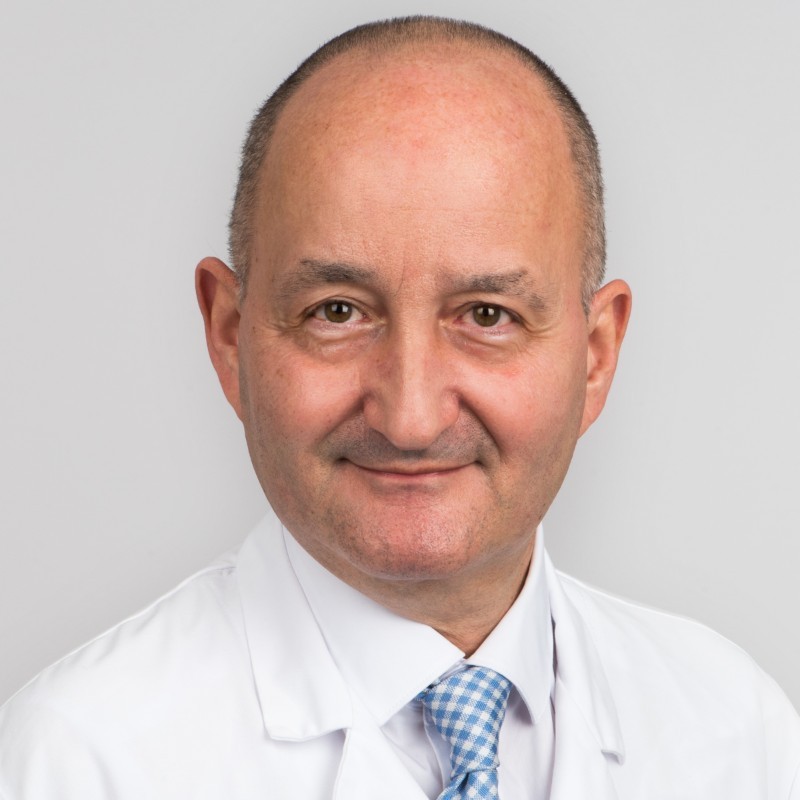 Markus J. Wilhelm合作论文数Universitätsspital Zürich1E. Hennig合作论文数1Annekathrin Haberland合作论文数1Kestutis Rucinskas合作论文数1Tiziano Colombo合作论文数1




