Optimization of the thiol-ene reaction for the preparation of methyl 3-((3,3,3-trifluoropropyl)thio)propanoate (4), a key intermediate in the synthesis of the sap-feeding insecticidal candidate tyclopyrazoflor (1), is described. The major challenge with the radical thiol-ene chemistry was control of the regioselectivity between the linear and branched products. Reducing the radical initiation temperature was found to be the key variable in controlling the selectivity. Because of the high cost and storage challenges associated with the use of the room-temperature diazo initiator 2,2'-azobis(4-methoxy-2,4-dimethylvaleronitrile) (V-70), a two-component initiator system consisting of benzoyl peroxide and N,N-dimethylaniline was developed, allowing for radical initiation at temperatures as low as -15 degrees C. Application of semibatch operation gave 90:1 selectivity favoring the linear product. The overall yield and selectivity of the radical thiol-ene reaction were improved from 78% yield and 11:1 selectivity with azobis(isobutyronitrile) in batch mode to 91% yield and 90:1 selectivity with the two-component system in semibatch mode, further eliminating the need for a fractional distillation purification step.
The judicious use of buffering capacity is important in the development of future continuous pharmaceutical manufacturing processes. The potential benefits are investigated of using optimal-averaging level control for tanks that have buffering capacity for a section of a continuous pharmaceutical pilot plant involving two crystallizers, a combined filtration and washing stage and a buffer tank. A closed-loop dynamic model is utilized to represent the experimental operation, with the relevant model parameters and initial conditions estimated from experimental data that contained a significant disturbance and a change in setpoint of a concentration control loop. The performance of conventional proportional-integral (PI) level controllers is compared with optimal-averaging level controllers. The aim is to reduce the production of off-spec material in a tubular reactor by minimizing the variations in the outlet flow rate of its upstream buffer tank. The results show a distinct difference in behavior, with the optimal-averaging level controllers strongly outperforming the PI controllers. In general, the results stress the importance of dynamic process modeling for the design of future continuous pharmaceutical processes. Processes 2013, 1 331
This chapter discusses the challenges and opportunities when fully integrating a continuous manufacturing (CM) process for pharmaceuticals from end to end. It provides a brief overview of the key unit operations in the process for completeness. The chapter also presents a realistic case study to support the discussion with real-life examples from pilot plant experiments. The chapter discusses the role of system dynamics and the role of process analytical technology (PAT) in the studied pilot plant. In addition, the chapter also briefly discusses the relation between PAT and process models to estimate unknown process variables for monitoring and automated control. Moreover, novel technologies that are currently under development are expected to further enhance CM of pharmaceuticals. The chapter further discusses examples of such future technologies. It ends with a chapter summary and discussion of benefits and challenges of CM of pharmaceuticals.
Continuous manufacturing offers potential opportunities for the improved manufacturing of pharmaceutical products. A key challenge is the development of an appropriate control strategy. The experimental application of an automated control strategy is presented for an end-to-end continuous pharmaceutical pilot plant. The process starts from an advanced intermediate compound and finishes with the tablet formation steps. The focus of the experimental results is on the design and performance of the control loops needed to produce a slurry of an active pharmaceutical ingredient and a solvent with specified material properties. The results demonstrate that automated control can successfully keep critical material attributes close to the desired set points for a sustained period of operation. This work aims to contribute to the development of future continuous pharmaceutical processes by providing a realistic case study of automated control of an integrated, continuous, pharmaceutical pilot plant.
Continuous manufacturing has the potential to provide substantial improvements to the manufacturing of pharmaceutical products compared to traditional batch-wise manufacturing. A key challenge is the development of effective control strategies for this new type of process. This contribution presents the experimental application of an automated plant-wide control strategy for a continuous pharmaceutical pilot plant that produces a pharmaceutical product from start to finish in a continuous fashion. The performance of the automated control loops demonstrate the maintenance of the critical material attributes close to their desired setpoints for a sustained period of operation.
A flow platform for preparing various aromatic scaffolds using a low-temperature fluorine-directed ortho-lithiation reaction has been successfully reconfigured to allow large-scale processing over extended reaction periods. During the course of this work several key factors have resulted in the development of new technology such as stainless steel y-piece fittings capable of hosting a thermocouple at the point of mixing which directly controls the power output of a cryogenic cooling device. These developments have enabled the continuous processing of an industrially relevant product, where adequate mixing, cooling, and exotherm control are important for successful operation. The configuration culminates in a large-scale campaign where the flow platform is utilised to process over 100 g of pure product over 7 h, in a yield of 80% after workup.
A flow-based solid-phase peptide synthesis methodology that enables the incorporation of an amino acid residue every 1.8 min under automatic control or every 3 min under manual control is described. This is accomplished by passing a stream of reagent through a heat exchanger into a low volume, low backpressure reaction vessel, and through a UV detector. These features enable continuous delivery of heated solvents and reagents to the solid support at high flow rate, thereby maintaining maximal concentration of reagents in the reaction vessel, quickly exchanging reagents, and eliminating the need to rapidly heat reagents after they have been added to the vessel. The UV detector enables continuous monitoring of the process. To demonstrate the broad applicability and reliability of this method, it was employed in the total synthesis of a small protein, as well as dozens of peptides. The quality of the material obtained with this method is comparable to that for traditional batch methods, and, in all cases, the desired material was readily purifiable by RP-HPLC. The application of this method to the synthesis of the 113-residue Bacillus amyloliquefaciens RNase and the 130-residue DARPin pE59 is described in the accompanying manuscript.
The development and operation of the synthesis and workup steps of a fully integrated, continuous manufacturing plant for synthesizing aliskiren, a small molecule pharmaceutical, are presented. The plant started with advanced intermediates, two synthetic steps away from the final active pharmaceutical ingredient, and ended with finished tablets. The entire process was run on several occasions, with the data presented herein corresponding to a 240 h run at a nominal throughput of 41 g h(-1) of aliskiren. The first reaction was performed solvent-free in a molten condition at a high temperature, achieving high yields (90%) and avoiding solid handling and a long residence time (due to higher concentrations compared to dilute conditions when run at lower temperatures in a solvent). The resulting stream was worked-up inline using liquid liquid extraction with membrane-based separators that were scaled-up from microfluidic designs. The second reaction involved a Boc deprotection, using aqueous HCl that was rapidly quenched with aqueous NaOH using an inline pH measurement to control NaOH addition. The reaction maintained high yields (90-95%) under closed-loop control despite process disturbances.
Real-time control using process analytical technology (PAT) tools is required for the implementation of continuous crystallization within integrated continuous manufacturing (ICM) of pharmaceuticals. However, appropriate selection of PAT tools is challenging, and the design and operation of automated control loops for continuous crystallization within a continuous pharmaceutical process brings forward important questions. This paper discusses the process design and operation of a continuous reactive crystallization of aliskiren hemifumarate as part of an ICM pilot plant. Several PAT tools were used within automated control loops to satisfy specifications on the critical materials attributes of the crystallization process. The operational performance of the process was maintained for periods of time over 100 h. The purity of the targeted product exceeded 99%, and the process yield reached 91.4%.
We describe the development and application of an improved, membrane-based, liquid–liquid separator. Membrane-based separation relies on the exploitation of surface forces and the use of a membrane wetted by one of the phases; however, successful separation requires accurate control of pressures, making the operation and implementation cumbersome. Here we present an improved separator design that integrates a pressure control element to ensure that adequate operating conditions are always maintained. Additionally, the integrated pressure control decouples the separator from downstream unit operations. A detailed examination of the controlling physical equations shows how to design the device to allow operation across a wide range of conditions. Easy to implement, multistage separations such as solvent swaps and countercurrent extractions are demonstrated. The presented design significantly simplifies applications ranging from multistep synthesis to complex multistage separations.
A series of tubes: The continuous manufacture of a finished drug product starting from chemical intermediates is reported. The continuous pilot-scale plant used a novel route that incorporated many advantages of continuous-flow processes to produce active pharmaceutical ingredients and the drug product in one integrated system.
The judicious use of buffering capacity is important in the development of future continuous pharmaceutical manufacturing processes. The potential benefits are investigated of using optimal-averaging level control for tanks that have buffering capacity for a section of a continuous pharmaceutical pilot plant involving two crystallizers, a combined filtration and washing stage and a buffer tank. A closed-loop dynamic model is utilized to represent the experimental operation, with the relevant model parameters and initial conditions estimated from experimental data that contained a significant disturbance and a change in setpoint of a concentration control loop. The performance of conventional proportional-integral (PI) level controllers is compared with optimal-averaging level controllers. The aim is to reduce the production of off-spec material in a tubular reactor by minimizing the variations in the outlet flow rate of its upstream buffer tank. The results show a distinct difference in behavior, with the optimal-averaging level controllers strongly outperforming the PI controllers. In general, the results stress the importance of dynamic process modeling for the design of future continuous pharmaceutical processes.
We present a general inexpensive method for realizing a Teflon stack microreactor with an integrated piezoelectric actuator for conducting chemical synthesis with solid products. The microreactors are demonstrated with palladium-catalyzed C-N cross-coupling reactions, which are prone to clogging microchannels by forming insoluble salts as by-products. Investigations of the ultrasonic waveform applied by the piezoelectric actuator reveal an optimal value of 50 kHz at a load power of 30 W. Operating the system at these conditions, the newly developed Teflon microreactor handles the insoluble solids formed and no clogging is observed. The investigated reactions reach full conversion in very short reaction times and high isolated yields are obtained (> 95% yield).
Efficient and economic recovery of immunoglobulins (Igs) from complex biological fluids such as serum, cell culture supernatant or fermentation cell lysate or supernatant, represents a substantial challenge in biotechnology. Methods such as protein A affinity chromatography and anion exchange chromatography are limited by cost and selectivity, respectively, while membrane chromatography is limited by low adsorptive area, flow distribution problems and scale‐up difficulties. By combining the traditional salt‐assisted precipitation process for selective removal of Igs from serum followed by constant‐permeate flux membrane microfiltration for low fouling, we demonstrate an exciting new, efficient and economic hybrid method. The high selectivity of an ammonium sulfate‐induced precipitation step was used to precipitate the Igs leaving the major undesirable impurity, the bovine serum albumin (BSA), in solution. Crossflow membrane microfiltration in diafiltration mode was then employed to retain the precipitate, while using axial flow rates to optimize removal of residual soluble BSA to the permeate. The selectivity between immunoglobulin G (IgG) and BSA obtained from the precipitation step was ∼36, with 97% removal of the BSA with diafiltration in 5 diavolumes with resulting purity of the IgG of ∼93% after the membrane microfiltration step. Complete resolubilization of the IgG was obtained without any aggregation at the concentrations of ammonium sulfate employed in this work. Further, membrane pore size and axial Reynolds number (recirculation rate) were shown to be important for minimizing fouling and loss of protein precipitate. Biotechnol. Bioeng. © 2008 Wiley Periodicals, Inc.
 Richard Lakerveld合作论文数School of Engineering, Hong Kong University of Science and Technology8
 Haitao Zhang合作论文数Abramson Research Center, The Children's Hospital of Philadelphia7
 Richard D. Braatz合作论文数Center for Computational Science and Engineering, Massachusetts Institute of Technology;Schwarzman College of Computing, Massachusetts Institute of Technology;Department of Chemical Engineering, Massachusetts Institute of Technology;Clean Energy Smart Manufacturing Innovation Institute, Massachusetts Institute of Technology;Center for Computational Engineering, Massachusetts Institute of Technology;Sociotechnical Systems Research Center, Massachusetts Institute of Technology;Novartis-MIT Center for Continuous Manufacturing, Massachusetts Institute of Technology7
 Klavs F. Jensen合作论文数Department of Chemical Engineering, Massachusetts Institute of Technology7
 Brahim Benyahia合作论文数Dept Chem Engn, Loughborough Univ6
 Paul I. Barton合作论文数Department of Chemical Engineering, Massachusetts Institute of Technology;Process Systems Engineering Laboratory, Massachusetts Institute of Technology6
 james m b evans合作论文数5Salvatore Mascia合作论文数4
 Devaraj Jayachandran合作论文数4Venkiteshwaran Adith合作论文数3
 Steve Ley合作论文数Yusuf Hamied Department of Chemistry, University of Cambridge3
 Allan S. Myerson合作论文数Department of Chemical Engineering, Massachusetts Institute of Technology3
 Georges Belfort合作论文数Department of Chemical and Biological Engineering, School of Engineering, Rensselaer Polytechnic Institute;Center for Biotechnology and Interdisciplinary Studies, Rensselaer Polytechnic Institute;Center for Materials, Devices, and Integrated Systems, Rensselaer Polytechnic Institute3
 Andrea Adamo合作论文数Department of Civil & Environmental Engineering;Massachusetts Institute of Technology;Department of Civil & Environmental Engineering, Massachusetts Institute of Technology3Aaron J. Wolfe合作论文数3
 D. Wayne Blaylock合作论文数Department of Chemical Engineering, Massachusetts Institute of Technology3
 Duncan L. Browne合作论文数Pharma & Bio Chemistry, UCL School of Pharmacy3
 Beth Lorsbach合作论文数Nufarm2George Frycek合作论文数2JA Newby合作论文数2Christopher J. Testa合作论文数2Brian Graham合作论文数2Yu Zhang合作论文数2Devin R. Hersey合作论文数2Sean Ogden合作论文数2
 Bradley L. Pentelute合作论文数MIT Department of Chemistry2Simon Mark D合作论文数2
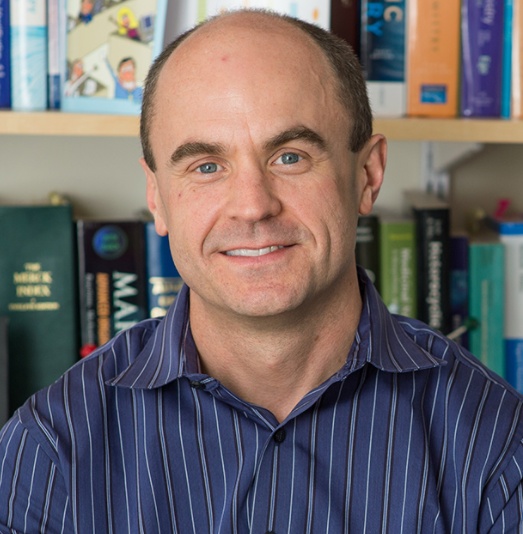 Timothy Jamison合作论文数Department of Chemistry, Massachusetts Institute of Technology;Snapdragon Chemistry, Inc.;Transition State Partners2
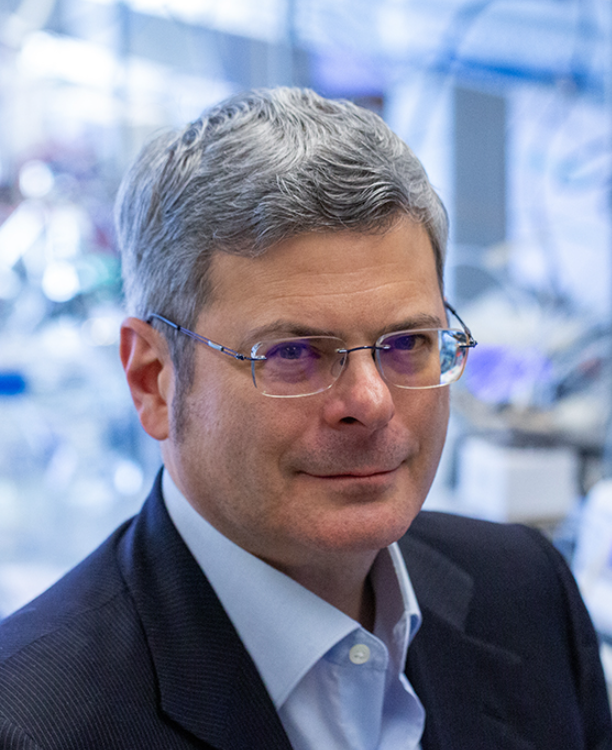 Bernhardt L. Trout合作论文数Department of Chemical Engineering, School of Engineering, Massachusetts Institute of Technology2James A Newby合作论文数1Kaitlyn C. Gray合作论文数1Xiyuan Li合作论文数1Stephen C. Born合作论文数1
 Nopphon Weeranoppanant合作论文数Sch Biomol Sci & Engn BSE, Vidyasirimedhi Inst Sci & Technol VISTEC1Xiaoli Liao合作论文数1
 Alexander M. Spokoyny合作论文数Department of Chemistry & Biochemistry, College of Physical Sciences, University of California, Los Angeles;California NanoSystems Institute, University of California, Los Angeles1Qiang Yang合作论文数1
 Chi Zhang合作论文数Department of Brain and Cognitive Sciences, Massachusetts Institute of Technology;Department of Chemistry, Massachusetts Institute of Technology;MIT McGovern Institute for Brain Research1
 Rocco Policarpo合作论文数Department of Chemistry, Massachusetts Institute of Technology1Berger Tatiana合作论文数1Mong Surin K合作论文数1
 Vinogradov Alexander A合作论文数1
 Min Su (苏敏)合作论文数School of Chemical Engineering and Technology, Hebei University of Technology1
 Charles L. Cooney合作论文数Department of Chemical Engineering, School of Engineering, Massachusetts Institute of Technology;Deshpande Center for Technological Innovation, Massachusetts Institute of Technology1
 Sandro Matosevic合作论文数Department of Industrial and Physical Pharmacy, Purdue University1Are Bogsnes合作论文数1
 Keith D. Jensen合作论文数Department of Pharmaceutics and Pharmaceutical Chemistry, University of Utah1




