While the concept of futility has been used widely in somatic medicine, to date, there has been limited consideration of its relevance to psychiatry. We summarize the findings of an international, multidisciplinary workshop involving clinicians, ethicists, philosophers, patient advocates, and persons with lived experience, which was focused on describing futility in psychiatry and developing ethical guidelines for making futility judgments. We outline three leading concepts of futility as they have been used in somatic medicine: physiological futility, quantitative futility, and qualitative futility. We examine the application of these concepts to the care of persons with mental illness, finding that the notion of qualitative futility is most likely to be fruitful. We consider how the concept of qualitative futility in psychiatry could relate to other ethically salient concepts such as terminal mental illness and recovery. We consider (1) who should have authority to make futility judgments in psychiatry (i.e. patients, providers, others), (2) what the process for introducing and evaluating futility judgments should be, and (3) how futility assessments should respond to patients’ goals and values. We identify potential risks of futility assessments, including psychological harms and premature treatment discontinuation, as well as potential benefits, such as reductions in harmful treatments and helpful reevaluation of the goals of care. Workshop participants regarded the concept of psychiatric futility as potentially useful. They identified how the concept could be applied to psychiatric care, as well as ethical limits on doing so.
Abstract Of the pioneering psychiatric authors of the twentieth century presented here, Emil Kraepelin and Karl Jaspers are still very well known today, while Arthur Kronfeld’s work has been almost completely forgotten. These authors have dealt intensively, albeit from different perspectives and with different results with the question of how the term ‘mental illness’ can be defined and made scientifically accessible. Their approaches are elucidated and examined to determine whether and in what form they can be used to further our understanding of the scientific and clinical identity of psychiatry in the twenty-first century. I conclude that a careful reception of ‘classic’ texts not only informs us about the history of ideas in psychiatry but can also provide fruitful impetus for today’s debate.
We review the ambiguous legacy of Emil Kraepelin. He established an approach that secured psychiatry's place as a medical specialty, and his methodology has dominated the profession and defined its long 20th century, 1899-2026. However, his eugenic views weigh heavily because of the catastrophes in which German psychiatry was implicated and to which it contributed actively during the Nazi era that followed. Furthermore, his project to establish mental illness in the form of discrete natural kinds has failed in the light of scientific progress. Psychiatry must embrace the complexity of mental illness and engage more deeply with the inherently fuzzy realms of language, culture, technological change and political power. This shift should bear more strongly on psychiatry's curriculum, research priorities, continuing professional development, practice, ethics and public engagement.
In recent times, the term psychopathology has been accompanied by a clear ambivalence: positively connoted it stands for a person-centered, method-conscious approach to the mentally ill person. Critical objections, however, identify tendencies towards unreflected medicalization, pathologization and stigmatization in psychopathology. This debate is of particular practical relevance to psychiatric diagnostics as defined by ICD-10/ICD-11 and DSM-5-TR. In the twenty-first century, criticism became more prominent that operationalized diagnostics, which are internationally established but still based on traditional Kraepelinian nosology, could unjustifiably narrow the scientific horizon of psychiatry in view of recent research developments. Against this background, which is as complex as it is relevant to the practice, this paper is intended as a plea for psychopathological traditions of thought to be recognized as valuable foundations of psychiatry, also in a forensic setting. Far removed from mere historicization or uncritical idealization, psychopathology, irrespective of its empirical-descriptive components, also has the potential in the twenty-first century to express a person-centered attitude, indeed, in the sense of the microbiologist and philosopher of science Ludwik Fleck (1896-1961), a "style of thinking" that is particularly appropriate to psychiatry. An open dialogue with current psychiatric research in the sense of "connectivity" is indispensable for this. In addition to theoretical reflection, the practical relevance of the topic is established by relating to a much-discussed recent decision by the Swiss Federal Supreme Court.
Den Begriff Psychopathologie begleitet in jüngerer Zeit eine deutliche Ambivalenz: Positiv konnotiert, steht er für eine personzentrierte, methodenbewusste Zugangsweise zur psychisch erkrankten Person. Kritische Einwände jedoch identifizieren bei der Psychopathologie Tendenzen zu unreflektierter Medikalisierung, Pathologisierung und Stigmatisierung. Besondere praktische Relevanz gewinnt diese Debatte für die psychiatrische Diagnostik im Sinne von ICD-10/ICD-11 und DSM-5-TR. Im 21. Jh. werden Befürchtungen lauter, die zwar international etablierte, jedoch weiterhin an der traditionellen Kraepelin’schen Nosologie orientierte operationalisierte Diagnostik könne mit Blick auf jüngere Forschungsentwicklungen den wissenschaftlichen Horizont der Psychiatrie unvertretbar einengen. Vor diesem ebenso komplexen wie praxisrelevanten Hintergrund versteht sich die vorliegende Arbeit als Plädoyer dafür, psychopathologische Denktraditionen als wertvolle Grundlagen psychiatrischen Handelns anzuerkennen, gerade auch im forensischen Umfeld. Weit entfernt von bloßer Historisierung oder unkritischer Idealisierung, weist die Psychopathologie, unbeschadet ihrer empirisch-deskriptiven Anteile, auch im 21. Jh. das Potenzial auf, einer personzentrierten Haltung, ja – im Sinne des Mikrobiologen und Wissenschaftstheoretikers Ludwik Fleck (1896–1961) – einem der Psychiatrie in besonderer Weise angemessenen „Denkstil“ Ausdruck zu verleihen. Der offene Dialog mit der aktuellen psychiatrischen Forschung im Sinne der „Anschlussfähigkeit“ ist dafür unabdingbar. Ergänzend zur theoretischen Reflexion wird der Praxisbezug mit Blick auf eine viel diskutierte jüngere Entscheidung des Schweizerischen Bundesgerichtes hergestellt.
The work methods of eminent psychiatrist Emil Kraepelin (1856-1926) and of literary and cultural critic Walter Benjamin (1892-1940) are described based on the literature describing their ways of working. Kraepelin's approach of cross-sectional observation of symptoms and the longitudinal study of illness course in distinguishing 'disease entities' as well as his research strategy of investigating causes and correlates using methods of experimental psychology, pathology and neurobiology are described. Critical statements (on Kraepelin's work) highlighting preconceived concepts, ideological positions and a lack of critical reflection are reported. Walter Benjamin's use of citation and 'collage' in literary and cultural criticism, his use of the concepts of allegory, 'figures of thought' and 'dialectical images' is described. His theory of the past impacting on our understanding of present and immediate future is discussed. Benjamin's thinking is centered around the concept of 'experience'. The relevance of both scientists to current challenges is discussed referring to current psychiatric research and peer support, a key concept in discussions on mental health care. The paper argues that Kraepelin and Benjamin could be considered complementary in their approaches to mental health matters taking into account wider cultural contexts. (189 words)
Background and hypothesisThis survey explores Swiss mental health professionals', users', and relatives' opinions on re-naming schizophrenia exploiting Switzerland's specific multilingualism to examine possible effects of linguistic and microcultural differences on the issue.Study designOpinions on ‘schizophrenia’ were collected using a self-rated online questionnaire incl. Freetext answers available in the three main Swiss languages, German, French and Italian. It was distributed to the main professional and self-help organizations in Switzerland between June and October 2021.Study resultsOverall, 449 persons completed the questionnaire, 263 in German, 172 in French and 14 in Italian. Of the total sample, 339 identified as mental health professionals, 81 as relatives and 29 as users. Considering the whole sample, almost half favored a name-change with a significant difference between stakeholder- and between language groups. Also, the name ‘schizophrenia’ was evaluated more critically than the diagnostic concept. Qualitative analysis of freetext answers showed a highly heterogenous argumentation, but no difference between language groups.ConclusionsOur results suggest the attitude towards re-naming might itself be subject to (micro)cultural difference, and they highlight the nature of ‘schizophrenia’ as not only a scientific, but also a linguistic and cultural object. Such local factors ought to be taken into consideration in the global debate.
Since its beginnings psychiatry controversely debated about the appropriate concept of illness, about nosology and the diagnostic terms and procedures based upon it. This paper discusses the approaches introduced by Emil Kraepelin (1856-1926), Karl Jaspers (1883-1969) and Arthur Kronfeld (1886-1941). Whereas Kraepelin postulated the existence of «natural entities» with regard to mental illness, Jaspers acknowledged the heuristic value of the term «disease entity», but declared it a «regulative idea» in a Kantian sense, i.e. an appropriate and useful, albeit never fully achievable aim. Kronfeld, in a way situated «between» Kraepelin and Jaspers, defended the notion of disease entities. However, he spoke clearly against primarily anchoring these entities in neighbouring scientific fields like neurobiology or social sciences. Psychiatry should stay (or become) «autological», in the first place using the psychological perspective. In full respect for neighbouring approaches as scientific fields in their own right, he rejected their premature transfer to mental phenomena as «heterological», i.e. as unduly narrowing down the scope of psychiatry. These issues, up to debate 100 years ago, still are of utmost relevance for psychiatry in the 21st century, a field struggling with its rather fragile scientific identity.
Ein spezielles Werk, das einige Debatten ausgelöst hat und weitere auslösen wird. Wer an der Schnittstelle von Psychiatrie, Psychotherapie und Gesellschaft interessiert ist, findet hier reichlich Stoff zum Nachdenken.
Methodically sound psychiatric diagnoses are necessary quality-assuring elements in forensic psychiatry, but on their own they are not sufficient to answer the questions posed for an expert assessment. This position will be developed here in the context of a historical outline of key ideas in forensic psychiatry, a reflection on nosology and diagnosis in psychiatry, and the argument that psychopathology needs to be accorded greater influence. Regarding psychiatric assessments, the reference back to the experiential history of clinical psychiatry in dealing with all forms and degrees of mental disorder (the "psychopathological reference system") does not represent a backward-looking traditionalism, nor is it adversarial to current neuroscientific or socioscientific research. On the contrary, such an historical anchoring, which specifically and methodically incorporates the internationally established diagnostic manuals ICD-10, DSM-5 and (from 2022) ICD-11, will enhance the quality of diagnosis, therapy and research. Especially, but not only in forensic psychiatric work, the following applies: The hasty replacement of operationally defined diagnoses by possibly plausible but "isolated" individual findings that are not sufficiently embedded in an overall scientific context can lead to an overvaluation of these findings and to the loss of substantial psychopathological knowledge. These risks must be avoided, because psychiatry will continue to depend on psychopathology in each of its fields of activity.
Über Wahn zu sprechen gilt allgemein als schwierig, ist aber wesentlich in der psychiatrisch-psychotherapeutischen Behandlung und für den Recovery-Prozess. Ausgehend von der Annahme, dass trotz aller Schwierigkeiten vielfältige Ressourcen für die kommunikative Darstellung von Wahn bestehen und kompetent genutzt werden, präsentieren wir in diesem Artikel die gesprächsanalytische Untersuchung zweier narrativer Interviews, in denen über Wahnerfahrungen gesprochen wird. Der Fokus unserer Untersuchung liegt dabei auf dem Wie des Erzählens, weiterhin beachten wir insbesondere die kommunikative Interaktion. Wir zeigen, dass die beiden Sprecher:innen durch Pausen, Abbrüche und Reformulierungen, durch Aushandlung des sog. „common ground“ und durch die Verwendung metaphorischer Ausdrücke vielfältige Aspekte des Wahnerlebens vermitteln. Dabei geht das, was sie auf diese Art zum Ausdruck bringen, weit über das, was sie inhaltlich beschreiben, hinaus. Diese beispielhaft herausgearbeiteten kommunikativen Strategien können eine Hilfestellung für andere sein, sich der Herausforderung, über Wahn zu sprechen, leichter zu stellen – nicht im Sinne normativer Empfehlungen, sondern im Sinne von Anregung, Sichtbarmachen von Ressourcen und Ermutigung.
Background: Some psychiatric patients develop severe and persistent mental illness (SPMI), which, for a variety of reasons, can be therapy-refractory. Sometimes, treatment is not considered helpful by the patients themselves and does not improve their subjective quality of life. Furthermore, many SPMI patients experience compulsory interventions such as seclusion, restraint, or treatment against their will, which can cause harm. Methods: In a cross-sectional survey of 1,311 German-speaking psychiatrists in Switzerland, participants were asked about the care of SPMI patients in general, and about their attitudes with regard to compulsory interventions in particular, using three case vignettes of patients with severe and persistent anorexia nervosa, schizophrenia and depression. Results: Out of 1,311 contacted psychiatrists, 457 (34.9%) returned the completed survey. In general, 91.0% found it important or very important to respect SPMI patients' autonomy in decision making. However, based on three different clinical case vignettes, 36.8% of psychiatrists would act against the wishes of the patient with severe and persistent schizophrenia, 34.1% against the wishes of the patient with severe and persistent depression, and 21.1% against the wishes of the patient with severe and persistent anorexia nervosa, although all patients were stated to have preserved decision-making capacity. With regard to the case vignettes, 41.1% considered compulsory interventions leading to a temporary reduction of quality of life acceptable in the patient with severe and persistent schizophrenia, 39.4% in the patient with severe and persistent depression, and 25.6% in the patient with severe and persistent anorexia nervosa, although it was stated in all three case vignettes that two independent experts ascribed the patients decision-making capacity regarding their illness and further treatment. Conclusions: Many psychiatrists in our sample found themselves in an ethical dilemma between autonomy and the provision of medical care. While most respondents respect the autonomy of SPMI patients, many saw the need to perform compulsory interventions even though it was clearly and prominently stated that two independent psychiatrists had ascribed the patients in the case vignettes decision-making capacity. Further examination of these conflicting views is warranted, perhaps along with the development of guidelines for such situations.
 Anastasia Theodoridou合作论文数Psychiatric University Hospital Zürich18
 Matthias Jaeger合作论文数Psychiatric University Hospital, University of Zürich17
 Wolfram Kawohl合作论文数14Henning Sass合作论文数12Ronald Bottlender合作论文数Department of Psychiatry, Ludwig-Maximilians-University11Erich Seifritz合作论文数11
 Anke Maatz合作论文数10Florian Hotzy合作论文数9Ulrich Meincke合作论文数9
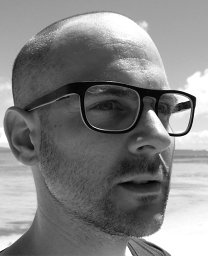 Manuel Trachsel合作论文数9Hanns Hippius合作论文数8
 Florian Riese合作论文数Zurich University Psychiatric Hospital8
 Scott A Irwin合作论文数Beckman Institute, University of Illinois8
 Christine Norra合作论文数8Hj Freyberger合作论文数7H-J Möller合作论文数7Nikola Biller-Andorno合作论文数7
 Wulf Rossler合作论文数6C Prüter合作论文数6Sadler J Z合作论文数5Hanns Jürgen Kunert合作论文数4H Mecklenburg合作论文数4C Burgmann合作论文数4R. Boerner合作论文数4HJ Grabe合作论文数4
 Martina Andrea Hodel合作论文数4M Jänner合作论文数4A Ruth合作论文数4
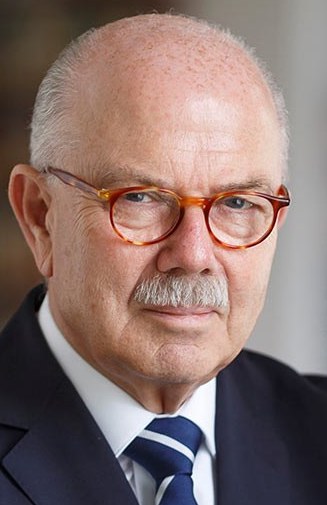 Wolfgang Gaebel合作论文数Department of Psychiatry and Psychotherapy, LVR-Klinikum, Heinrich-Heine-University4
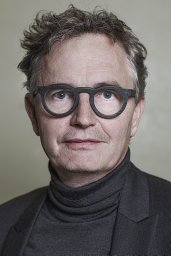 Elmar Habermeyer合作论文数Klinik und Poliklinik für Psychiatrie und Psychotherapie, Am Zentrum für Nervenheilkunde der Universität Rostock4Birgit Janssen合作论文数4H. J. Kunert合作论文数4Norbert Kathmann合作论文数Humboldt-Universität zu Berlin4Frank Schneider合作论文数3H. Kapfhammer合作论文数3
 Yvonne Ilg合作论文数3
 Sonja Motteli合作论文数3A Strauss合作论文数3A Thiel合作论文数3
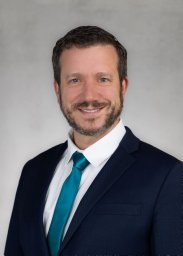 Schneeberger Andres R合作论文数a Psychiatric Outpatient Department, Psychiatric Services Grisons3Helena Hermann合作论文数3Horst Dilling合作论文数3
 Andreas Erfurth合作论文数Medical University of Vienna3N NEDOPIL合作论文数2K Einhäupl合作论文数2R. B. Banati合作论文数2A. Buchberger合作论文数2K Bise合作论文数2K Podoll合作论文数2




