Abstract. Specular meteor radars (SMRs) and partial reflection radars (PRRs) have been observing mesospheric winds for more than a solar cycle over Germany (~54 °N) and northern Norway (~69 °N). This work investigates the mesospheric mean zonal wind and the zonal mean geostrophic zonal wind from the Microwave Limb Sounder (MLS) over these two regions between 2004 and 2020. Our study focuses on the summer when strong planetary waves are absent and the stratospheric and tropospheric conditions are relatively stable. We establish two definitions of the summer length according to the zonal wind reversals: (1) the mesosphere and lower thermosphere summer length (MLT-SL) using SMR and PRR winds, and (2) the mesosphere summer length (M-SL) using PRR and MLS. Under both definitions, the summer begins around April and ends around mid-September. The largest year to year variability is found in the summer beginning in both definitions, particularly at high-latitudes, possibly due to the influence of the polar vortex. At high-latitudes, the year 2004 has a longer summer length compared to the mean value for MLT-SL, as well as 2012 for both definitions. The M-SL exhibits an increasing trend over the years, while MLT-SL does not have a well-defined trend. We explore a possible influence of solar activity, as well as large-scale atmospheric influences (e.g. quasi-biennial oscillations (QBO), El Niño-southern oscillation (ENSO), major sudden stratospheric warming events). We complement our work with an extended time series of 31 years at mid-latitudes using only PRR winds. In this case, the summer length shows a breakpoint, suggesting a non-uniform trend, and periods similar to those known for ENSO and QBO.
Mesospheric winds collected by multiple meteor radars at mid-latitudes in the northern hemispheric are combined to investigate wave activities in June—October 2019. Dual-station approaches are developed and implemented to diagnose zonal wavenumber $m$ of spectral peaks. In September—October, diagnosed are quasi‐10‐ and 6‐day planetary waves (Q10DW and Q6DW, $m=$1), solar semi-diurnal tides with $m=$1, 2, 3 (SW1, SW2, and SW3), lunar semi-diurnal tide, and the upper and lower sidebands (USB and LSB, $m=$ 1 and 3) of Q10DW‐SW2 nonlinear interactions. During June— September, diagnosed are Rossby-gravity modes ($m=$3 and 4 at periods $T=$ 2.1d and 1.7d), and their USBs and LSBs generated from interactions with diurnal, semi-diurnal, ter-diurnal, and quatra-diurnal migrating tides. These results demonstrate that the planetary wave-tide nonlinear interactions significantly increase the variety of waves in the mesosphere and lower thermosphere region (MLT).
Mesospheric winds from two longitudinal sectors at 53°N latitude are combined to investigate quasi‐two‐day waves (Q2DWs) and their nonlinear interactions with tides. In a summer 2019 case study, we diagnose the zonal wavenumber m of spectral peaks at expected frequencies through two dual‐station approaches, a phase differencing technique (PDT) on individual spectral peaks and a least squares procedure on family batched peaks. Consistent results from the approaches verify the occurrences of Rossby‐gravity modes ( m = 3 and 4 at periods T = 2.1 and 1.7 days), and their secondary waves (SWs) generated from interactions with diurnal, semi‐diurnal, ter‐diurnal, and quatra‐diurnal migrating tides. We further extend the PDT to 2012–2019, illustrating that Q2DWs exhibit significant interannual variability. Composite analysis reveals seasonal and altitude variations of the Rossby‐gravity modes and their SWs. The Rossby‐gravity modes maximize in local summer, whereas their 16‐ and 9.6‐h SWs appear more in winter.
The quasi-two-day wave (Q2DW) is the strongest and most widely-studied planetary wave occurring in the mesosphere. Existing observational analyses are based on either single-satellite or -station approaches, which suffer from temporal and spatial aliasing, respectively. The current work implements and develops dual-station approaches to investigate the mesospheric Q2DWs and their nonlinear interactions with tides using winds from two longitudinal sectors at 53°N latitude. An 8-year composite analysis reveals seasonal and altitude variations of Q2DWs and their secondary waves (SWs) from nonlinear interactions with tides. The Q2DWs maximize in local summer, whereas their 16hr and 9.6hr SWs appear more in winter.
Free traveling Rossby wave normal modes (RNMs) are often investigated through large‐scale space‐time spectral analyses, which therefore is subject to observational availability, especially in the mesosphere. Ground‐based mesospheric observations were broadly used to identify RNMs mostly according to the periods of RNMs without resolving their horizontal scales. The current study diagnoses zonal wave numbers of RNM‐like oscillations occurring in mesospheric winds observed by two meteor radars at about 79°N. We explore four winters comprising the major stratospheric sudden warming events (SSWs) 2009, 2010, and 2013. Diagnosed are predominant oscillations at the periods of 10 and 16 days lasting mostly for three to five whole cycles. All dominant oscillations are associated with westward zonal wave number m=1, excepting one 16‐day oscillation associated with m=2. We discuss the m=1 oscillations as transient RNMs and the m=2 oscillation as a secondary wave of nonlinear interaction between an RNM and a stationary Rossby wave. All the oscillations occur around onsets of the three SSWs, suggesting associations between RNMs and SSWs. For comparison, we also explore the wind collected by a similar network at 54°N during 2012–2016. Explored is a manifestation of 5‐day wave, namely, an oscillation at 5–7 days with m=1), around the onset of SSW 2013, supporting the associations between RNMs and SSWs.
Although sudden stratospheric warming (SSW) is mainly a northern high‐latitude phenomena, there are several reports of a concomitant global dynamical response throughout the mesosphere and lower thermosphere. Published reports based on model simulations so far attributed such variabilities to changes in global circulation; however, there is no clear explanation of how all these regions are physically connected during SSW events. The present investigation uses wind observations from two ground‐based specular meteor radars over northern high latitudes and midlatitudes and global winds from a high‐altitude meteorological analysis system to characterize global mesospheric circulation anomalies for major SSW events during 2010 and 2013. During these events radar observations and the reanalysis winds exhibited strong southward winds over the two northern midlatitude and high‐latitude stations. By removing seasonal variability from the high‐altitude meteorological analyses, we show that these southward wind anomalies are indeed part of a larger global‐scale circulation, which gets set up during SSW and extend from the Northern pole to low‐latitude regions of Southern Hemisphere in the mesosphere and lower thermosphere altitudes. These results also offer a possible explanation of how low‐latitude ionospheric electrodynamics are influenced by the changes in the circulation set in during SSW at high latitudes.
The winter upper atmosphere is associated with semidiurnal tidal variants, referring collectively to enhancements of near-12h periodicities, including the lunar tide-like (M2) periodicity, solar semidiurnal (S2) spectral sidebands, and the quasi-semidiurnal westward propagating modes with zonal wavenumbers = 1 and 3 (qSW1 and qSW3). Here we formulate a multipoint technique and implement the technique for a configuration of two midlatitude meteor radars, from Germany and China, to investigate the tidal variants. Statistical results illustrate that the 12h periodicity is dominated consistently by the expected migrating mode ( = 2) between 2012 and 2016, consistent with the tidal climatology and in turn validating the technique. Our case study of 2013 sudden stratospheric warming reveals that the 11.6h periodicity is characterized by = 3, whereas the 12.4h periodicity is dominated by = 2 mode with a maximum amplitude 7.5m/s and also comprises an additional mode = 1 with a maximum amplitude 3.3m/s. These observational evidences demonstrate, explicitly and for the first time, that (1) two independently reported categories of the variants, namely, the sidebands and the qSW1/qSW3 enhancements, are two different perspectives of identical phenomena, namely, the secondary waves of nonlinear interactions between SW2 and planetary waves, and (2) while M2 and the qSW1-associated secondary wave are entangled in the 12.4h periodicity, M2 is superior to the sideband. Plain Language Summary The oscillations induced by a propagating wave are coherent everywhere on the wave's path but typically in different phases. This phase difference provides a possibility to diagnose the wavenumber. The possibility was realized on the observations from the magnetospheric quadruple-spacecraft mission Cluster, through the so-called phase differencing technique. The current study consolidates the technique to a framework and further tailor the framework to a configuration of two ground-based radars to diagnose the semidiurnal tidal variants in statistical and case studies, identifying the dominant zonal wavenumber as a function of frequency. Results demonstrate that two independently reported categories of the semidiurnal variants are two faces of one coin, and among the two semidiurnal variants entangled in the 12.4h periodicity, the semidiurnal lunar tide is the dominant one.
Enhanced nonmigrating tides SW1 (SWx represents semidiurnal westward mode with zonal wave number x) and SW3 during sudden stratospheric warming (SSW) were traditionally attributed to nonlinear interactions of quasi-stationary planetary waves with the migrating tide SW2. Recent studies specified hypothetically that responsible for the interactions is the 16-day wave, instead of the broadly accepted quasi-stationary planetary waves. It is suspected that the 16-day-wave-triggered secondary waves, at periods similar to 12.4 and similar to 11.6 hr, were detected at low-frequency resolutions and misinterpreted as SW1 and SW3, respectively. While He et al. (2018, ) associated the 11.6-hr oscillation conclusively to the SW3-like signature during SSW 2013 by diagnosing its wave number, the SW1-like 12.4 hr wave, however, has never been explicitly resolved, given its proximity to the period of an active lunar tide. Here, using the coherency in the mesospheric wind between two longitudinal sectors during SSW 2009, we identify a 12.4-hr oscillation dominated by wave number 1 and therefore associate it to the SW1-like signature. Plain Language Summary The winter upper atmosphere is populated by global-scale oscillations among which the most radical one appears nearby the period of 12 hr. The existing studies suggest that the near-12-hr oscillation consists of at least six waves, namely, the migrating lunar and solar tides, two nonmigrating tides, and two secondary waves of the nonlinear interactions between the migrating solar tide and traveling planetary waves. The current work, together with a counterpart work (He et al., 2018), disentangles the near-12-hr oscillation into high-frequency-resolved isolated spectral peaks and investigates the longitudinal variation in the phase of the isolated peaks through jointly studying the mesospheric wind collected by longitudinally separated radars in early 2009 and early 2013. Results suggest that the nonmigrating tides did not enhance in both cases and demonstrate that the occurrence of secondary waves might have been misinterpreted as the nonmigrating tides in studies at low-frequency resolutions.
The semidiurnal lunar and solar tides obtained from meteor radar measurements spanning from 2009 to 2013 observed at Davis (69°S) and Rio Grande (54°S) are presented and compared to the Northern Hemisphere ones at Andenes (69°N) and Juliusruh (54°N). Mean tidal differences for both intrahemispheric and interhemispheric scenarios are analyzed. Tidal behavior is also compared against numerical simulations during 2009 and 2013 sudden stratospheric warming (SSW) time periods. Possible influences in the Southern Hemisphere from the local stratosphere are also investigated using Modern Era Retrospective analysis for Research and Applications, version 2 (MERRA 2) data sets. The main features of the mean zonal wind are similar in both hemispheres, i.e., stronger amplitudes over midlatitude locations, eastward winds during winter and westward below 90 km with eastward higher up during corresponding summer times. On the other hand, the semidiurnal solar tides observed in the Southern Hemisphere show clear differences when compared to the Northern Hemisphere and between middle‐ and high‐latitude locations at the same hemisphere. These differences are even larger for the semidiurnal lunar tide, which shows stronger amplitudes from October to March and March to October, over Davis and Rio Grande, respectively. Our results indicate that the lunar tides over the Southern Hemisphere midlatitudes are more prone to react to the Northern Hemisphere stratospheric polar vortex influences, in agreement with numerical simulations, particularly for the time of the 2013 SSW.
Common volume mesospheric meteor detections from two radar stations separated by about 130 km were used to retrieve horizontal wind fields between 82 and 96 km altitudes at high latitudes, near 69 degrees N. The horizontal wind divergence was estimated from the gradients of the wind fields. This determination is the first of its kind for the mesosphere. Twelve years of nearly continuous data sets reveal systematic summer signatures in the horizontal wind divergence field, namely, a transition from negative to positive with increasing altitude while moving across the mesopause. There are indications that the reversal altitude is also anticorrelated with the mesopause temperature in addition for a tendency for the altitude of the reversal to increase over the years. We show that the reversal in the horizontal wind divergence at the mesosphere is consistent with upward winds peaking near the mesopause. These winds indicate that adiabatic cooling was strongest at the region of the deep temperature minimum seen in the summer mesopause. Plain Language Summary The lowest atmospheric temperatures on Earth are found near 90 km altitude (the mesopause) during summer at polar latitudes. This fact is now well documented and is attributed to a predominance of large amplitude gravity waves carrying eastward momentum near 90 km altitude during summer season. Through a Coriolis deflection, the deposition of this momentum causes equatorward winds at high latitudes, an expansion of the air mass, adiabatic cooling, and an accompanying upward motion of the air. In particular, an experimental determination of the upwelling has been found lacking, owing to the very small vertical motions involved. In this paper, we present a new way to determine the mean vertical motion based on the observation of summer-long-averaged horizontal wind divergences obtained by meteor radar measurements observing the same field of view from two separate locations. For 12 consecutive years we have found that the horizontal divergence goes from negative to positive very near the altitude where the temperature reaches its minimum value. We show that this implies upward velocities of the order of 5 to 10 cm/s reaching their peak in that same region, consistent with the notion of strong adiabatic cooling as the source of the low temperatures.
Upper mesospheric winds observed by the Svalbard specular meteor radar (16.01°E,78.16°N) are analyzed to study the tidal variabilities during the 2009 sudden stratospheric warming (SSW). We report a textbook case of nonlinear interactions between planetary waves (PWs) and the SW2 tide (SWm denotes semidiurnal westward propagating tidal mode with zonal wave number m). The Lomb‐Scargle algorithm, bispectrum, wavelet spectra, and Manley‐Rowe relations are combined to explore the frequency match, phase coherence, energy budget, and wave number relations among the interacting waves and their temporal evolution. Our results suggest that (1) 5, 10, 16 day PW normal modes interact with SW2 generating significant sidebands (S2Ss) at frequencies lower and higher than SW2, known as SW1 and SW3 enhancements, respectively; (2) SW2 is the main energy supplier for both SW1 and SW3, hence shrinks in the interactions; (3) whereas the PWs export relatively negligible energy to SW3 but accept energy from SW2 in generating SW1, therefore, the PWs is not subject to the interactions but controlled by external dynamics, which might in turn act as a key in switching on/off the SW1 and SW3 interactions independently; (4) the SW1 enhancement could be explained as a byproduct of the planetary wave amplification by stimulated tidal decay (PASTIDE); (5) PASTIDE contributes energy to the secondary PW in the late SSW stage reported in previous studies; and (6) one SW1 component associated with the 16 day PW is very close to the semidiurnal lunar mode in frequency, which might contaminate the estimation of the lunar tidal amplification in previous studies.
We present the first horizontal divergence and relative vorticity measurements at polar mesospheric altitudes measured from the ground. Our technique relies on combining information from two specular meteor radars (SMRs) separated 130 km at polar latitudes, specifically, the Andenes and Tromsø radars in northern Norway. The resulting values are obtained over a region that spans an approximate area of 400 km diameter at mesospheric altitudes. The temporal and vertical resolution are 1 h and 2 km in altitude. The technique not only allows to obtain the gradient terms of the horizontal wind, that in turn are used to derive the horizontal divergence and relative vorticity, but also improves the horizontal sampling compared to single SMRs. Synthetic data are used to qualitatively test the technique and identify potential sources of biases on the resulting measurements. For example, we have found that an apparent large mean vertical velocity is obtained, after averaging many days, if there is a persistent divergent field. We present a climatology of the resulting wind field parameters from 12 years of continuous observations and focus on the summer results. We found a persistent altitudinal pattern in both the horizontal divergence and relative vorticity fields during all northern hemispheric summers. The horizontal divergence is mainly positive decreasing in magnitude below ∼86 km, and the relative vorticity is negative/positive below/above ∼88 km over northern Norway.
A whole atmosphere model (WAM) has been used to determine the physical processes driving the change in electrodynamics during the January 2009 sudden stratospheric warming (SSW). Previously the WAM model was integrated into the National Weather Service Gridpoint Statistical Interpolation (GSI) data assimilation scheme to enable the observed changes in amplitude of planetary wavenumber one and two in the lower atmosphere to be followed. The modeled changes in ozone concentration, which act as a tracer of the middle atmosphere dynamics, agree well with observations from the ground-based station at Bern, Switzerland, which supports the accuracy of the modeled middle atmosphere dynamics. The model showed that the amplitude and phase of both the semi-diurnal and terdiurnal migrating tides SW2 and TW3 varied through the period. The change in phase of SW2 and TW3 follows the reversals in direction of the stratospheric longitudinally averaged zonal winds. As the stratospheric zonal winds reverse from eastward to westward, the SW2 and TW3 tidal phases move to earlier local times. Similarly, as the zonal winds slowly recover to the more typical eastward direction expected for the season, the tidal phases gradually move to later local times. The reasonable correlation suggests the tidal phase changes are due to the zonal winds in the stratosphere pushing the tide to earlier or later local times as it propagates from its source at lower altitudes. The phase changes of the SW2 during the SSW recovery period is similar to that expected from the lunar gravitational tide. Since WAM does not explicitly include the lunar tide, the change in phase of the solar-driven SW2 could be mistaken for an increase in the amplitude of the lunar gravitational semidiurnal M-2 mode. The apparent signature of the lunar tide in the model simulation is actually due to the gradual change in phase each day of the solar heating-driven semidiurnal tide as it propagates through the slowing changing zonal wind. The WAM winds drove electrodynamics in the dynamo region reasonably consistent with observations from the Jicamarca longitude sector. Near the peak of the SSW, the winds drove a stronger eastward electric field (upward plasma drift) early in the morning, reversing to westward (downward plasma drift) in the afternoon. The peak in upward plasma drift gradually moved back to later local times during the 2- or 3-week recovery from the SSW. The model tidal fields were separated into their components to determine what aspects of the tidal wind changes (i.e., SW2 or TW3 amplitude and phase) caused the shift in phase of the vertical plasma drift at the magnetic equator to earlier local times, and what drove the increases in amplitude. The results show the SW2 tide is the dominant mode producing agreement between observations and modeled electrodynamics, and that the model changes in TW3 hinder rather than help in the comparison. The model also shows that, although the increase in magnitude of the SW2 drives a stronger upward plasma drift, part of the increase in magnitude at the earlier local times comes from the phase change, from a more efficient dynamo action. Key Points: Sudden stratospheric warmings (SSW) modulate vertical propagation of migrating tides. WAM simulated the planetary wave and ozone response to the 2009 SSW. Phase changes of the migrating semidiurnal tide (SW2) in the lower thermosphere follow the changes in the stratospheric zonal winds. The phase change of SW2 is similar to that expected from the lunar gravitational tide. The SW2 tidal winds in the dynamo region drove electrodynamics reasonably consist with Jicamarca incoherent scatter observations.
The seasonal and interannual variabilities of mesospheric semidiurnal tides (SDT) are investigated using specular meteor radar‐based winds. The horizontal wind observations during 2003 to 2014 from a high‐latitude station, Andenes (69°N, 16°E), and during 2008 to 2014 from a midlatitude station, Juliusruh (54°N, 13°E), are used. It has been observed that the amplitudes of mesospheric SDTs are enhanced at both stations during August–September of all the years. These enhancements show a systematic behavior with that of the low‐latitude stratospheric quasi‐biennial oscillation (QBO), which is characterized based on winds from radiosonde data. The SDT amplitude values during enhancement are below/above mean level for those years in which the QBO wind at 50 hPa is westward/eastward (QBOw/QBOe). The average SDT amplitudes during the August–September enhancement duration are found to vary hand in hand with the low‐latitude QBO wind, suggesting QBO modulation of SDT. Stratospheric and lower mesospheric zonal wind perturbations from MERRA reanalysis data show weak local forcing in the Northern Hemisphere and indication of enhanced quasi‐stationary planetary waves (SPW) in the Southern Hemisphere. Based on these observations and some earlier results, we hypothesize that the QBOw/QBOe wind damp/enhance the southern hemispheric SPW of wave number 1 (SPW1). This modulated SPW1 then interacts with the northern midlatitude and high‐latitude SDTs to imprint the signature of QBO on them.
Abstract. Gravity waves (GWs) greatly influence the background state of the middle atmosphere by imposing their momentum on the mean flow upon breaking and by thus driving, e.g., the upper mesospheric summer zonal wind reversal. In this situation momentum is conserved by a balance between the vertical divergence of GW momentum flux (the so-called GW drag) and the Coriolis acceleration of the mean meridional wind. In this study, we present first quantitative mean annual cycles of these two balancing quantities from the medium frequency Doppler radar at the polar site Saura (SMF radar, 69° N, 16° E). Three-year means for 2009 through 2011 clearly show that the observed zonal momentum balance between 70 and 100 km with contributions from GWs only is fulfilled during summer when GW activity is strongest and more stable than in winter. During winter, the balance between GW drag and Coriolis acceleration of the mean meridional wind is not existent, which is likely due to the additional contribution from planetary waves, which are not considered by the present investigation. The differences in the momentum balance between summer and winter conditions are additionally clarified by 3-month mean vertical profiles for summer 2010 and winter 2010/2011.
In recent years there have been a series of reported ground- and satellite-based observations of lunar tide signatures in the equatorial and low latitude ionosphere/thermosphere around sudden stratospheric warming (SSW) events. This lower atmosphere/ionosphere coupling has been suggested to be via the E region dynamo. In this work we present the results of analyzing 6 years of hourly upper mesospheric winds from specular meteor radars over a midlatitude (54 degrees N) station and a high latitude (69 degrees N) station. Instead of correlating our results with typical definitions of SSWs, we use the definition of polar vortex weaking (PVW) used by Zhang and Forbes (). This definition provides a better representation of the strength in middle atmospheric dynamics that should be responsible for the waves propagating to the E region. We have performed a wave decomposition on hourly wind data in 21 day segments, shifted by 1 day. In addition to the radar wind data, the analysis has been applied to simulations from Whole Atmosphere Community Climate Model Extended version and the thermosphere-ionosphere-mesosphere electrodynamics general circulation model. Our results indicate that the semidiurnal lunar tide (M-2) enhances in northern hemispheric winter months, over both middle and high latitudes. The time and magnitude of M-2 are highly correlated with the time and associated zonal wind of PVW. At middle/high latitudes, M-2 in the upper mesosphere occurs after/before the PVW. At both latitudes, the maximum amplitude of M-2 is directly proportional to the strength of PVW westward wind. We have found that M-2 amplitudes could be comparable to semidiurnal solar tide amplitudes, particularly around PVW and equinoxes. Besides these general results, we have also found peculiarities in some events, particularly at high latitudes. These peculiarities point to the need of considering the longitudinal features of the polar stratosphere and the upper mesosphere and lower thermosphere regions. For example, during SSW 2009, we found that M-2 enhances many days before PVW which is not in agreement with most of our results.
Sudden stratospheric warmings (SSWs) are the most prominent vertical coupling process in the middle atmosphere, which occur during winter and are caused by the interaction of planetary waves (PWs) with the zonal mean flow. Vertical coupling has also been identified during the equinox transitions, and is similarly associated with PWs. We argue that there is a characteristic aspect of the autumn transition in northern high latitudes, which we call the "hiccup", and which acts like a "mini SSW", i.e. like a small minor warming. We study the average characteristics of the hiccup based on a superimposed epoch analysis using a nudged version of the Canadian Middle Atmosphere Model, representing 30 years of historical data. Hiccups can be identified in about half the years studied. The mesospheric zonal wind results are compared to radar observations over Andenes (69° N, 16° E) for the years 2000–2013. A comparison of the average characteristics of hiccups and SSWs shows both similarities and differences between the two vertical coupling processes.
 Werner Singer合作论文数53
 Markus Rapp合作论文数Leibniz-Institut fur Atmospharenphysik31Dieter Keuer合作论文数21
 Alan Manson合作论文数Department of Physics & Engineering Physics, College of Arts and Science, University of Saskatchewan21
 Christoph Jacobi合作论文数19
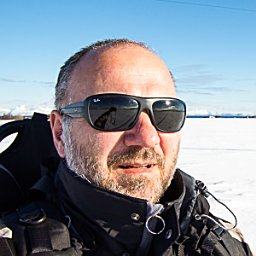 Ralph Latteck合作论文数Leibniz-Institute of Atmospheric Physics, the Rostock University18
 JL Chau合作论文数Institute of Physics, University of Rostock17C.E. Meek合作论文数Institute of Space and Atmospheric Studies, University of Saskatchewan17Rudolf Schminder合作论文数16
 Gunter Stober合作论文数Institute of Applied Physics, Faculty of Science, University of Bern15Jurgen Bremer合作论文数15D. Kürschner合作论文数14Ch. Jacobi合作论文数14
 Gerd Baumgarten合作论文数Leibniz-Institute of Atmospheric Physics, Kühlungsborn, Germany13
 Franz Josef Lubken合作论文数Leibniz-Institut fur Atmospharenphysik (IAP) Kuhlungsborn;Mathematisch-Naturwissenschaftliche Fakultat, Universitat Rostock12
 David C. Fritts合作论文数Colorado Division, GATS11
 Claudia Borries合作论文数9Andrei Serafimovich合作论文数8
 Maosheng He (贺茂生)合作论文数8Manja Placke合作论文数8M. Zecha合作论文数7YI Portnyagin合作论文数7Vivien Matthias合作论文数7Chris Hall合作论文数Tromsø Geophysical Observatory, Arctic University of Norway7
 Norbert Jakowski合作论文数DLR, Institute of Communications and Navigation, Kalkhorstweg 53, 17235 Neustrelitz, Germany7
 Erich Becker合作论文数Leibniz-Institut of Atmospheric Physics e.V., the University Rostock7
 Takuo Tsuda (津田卓雄)合作论文数Department of Computer and Network Engineering, Graduate School of Informatics and Engineering, The University of Electro-Communications;Nagoya University;National Institute of Polar Research;RIKEN;Center for Space Science and Radio Engineering, The University of Electro-Communications7Takuji Nakamura合作论文数6
 Dennis M. Riggin合作论文数6Dierk Kuerschner合作论文数6Evgeny G. Merzlyakov合作论文数6
 A.I. Pogoreltsev合作论文数6
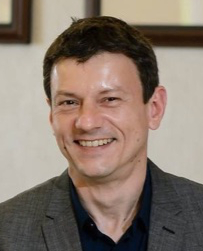 Jens Oberheide合作论文数Department of Physics and Astronomy, Clemson University6
 Nicholas John Mitchell合作论文数6Masaki Tsutsumi合作论文数6
 Paulo Prado Batista合作论文数Instituto Nacional de6RR Clark合作论文数6j fiedler合作论文数6M. Tsutsumi合作论文数5P. Dalin合作论文数5cy she合作论文数5
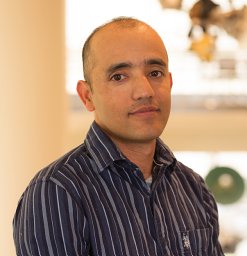 Fazlul Laskar合作论文数Laboratory for Atmospheric and Space Physics5H. G. Muller合作论文数5
 Guozhu Li (李国主)合作论文数Institute of Geology and Geophysics, Chinese Academy of Sciences5
 Vincent Robert合作论文数Institut de Recherche pour le Développement5Damian J. Murphy合作论文数5
 Volker Matthias合作论文数5
 Steven J. Franke合作论文数Department of Electrical & Computer Engineering, The Grainger College of Engineering, University of Illinois at Urbana-Champaign5




