Unconventional superconductivity in heavy-fermion systems appears often near magnetic quantum critical points (QCPs). This seems to be the case also for CeRh2As2 (Tc ≈0.31 K). CeRh2As2 shows two superconducting (SC) phases, SC1 and SC2, for a magnetic field along the c axis of the tetragonal unit cell, but only the SC1 phase is observed for a field along the basal plane. Furthermore, another ordered state (phase I) is observed below T0≈0.48K whose nature is still unclear: Thermodynamic and magnetic measurements pointed to a nonmagnetic multipolar state, but recent µSR and nuclear quadrupole resonance/nuclear magnetic resonance (NMR) experiments have clearly detected antiferromagnetic (AFM) order below T0. Also, quasi-two-dimensional AFM fluctuations were observed in NMR and neutron-scattering experiments above T0. The proximity of a QCP is indicated by non-Fermi-liquid (NFL) behavior observed above the ordered states in both specific heat C(T)/T∝T−0.6 and resistivity ρ(T)∝T. These T dependencies are not compatible with any generic AFM QCP. Because of the strong magnetic-field anisotropy of both the SC phase and phase I, it is possible to study a field-induced SC QCP as well as a phase-I QCP by varying the angle α between the field and the c axis. Thus, by examining the behavior of the electronic specific-heat coefficient C(T)/T across these QCPs, we can determine which phase is associated with the NFL behavior. Here, we present low-temperature specific-heat measurements taken in a magnetic field as high as 21 T applied at several angles α. We observe that the NFL behavior very weakly depends on the field and the angle α, a result that is at odds with observations in standard magnetic QCPs. This suggests a nonmagnetic origin of the quantum critical fluctuations. Published by the American Physical Society 2025
CeRh2As2 is a multiphase superconductor with T-c = 0.26 K. The two superconducting (SC) phases, SC1 and SC2, observed for a magnetic field H parallel to the c axis of the tetragonal unit cell, have been interpreted as even- and odd-parity SC states, separated by a phase boundary at mu H-0* = 4 T. Such parity switching is possible due to a strong Rashba spin-orbit coupling at the Ce sites located in locally noncentrosymmetric environments of the globally centrosymmetric lattice. The existence of another ordered state (phase I) below a temperature T-0 approximate to 0.4 K suggests an alternative interpretation of the H* transition: It separates a mixed SC+I (SC1) and a pure SC (SC2) state. Here, we present a detailed study of higher-quality single crystals of CeRh2As2, showing much sharper signatures at T-c = 0.31 K and T-0 = 0.48 K. We refine the T-H phase diagram of CeRh2As2 and demonstrate that T-0(H) and T-c(H) lines meet at mu H-0 approximate to 6 T, well above H *, implying no influence of phase I on the SC phase switching. A basic analysis with the Ginzburg-Landau theory indicates a weak competition between the two orders.
Fifty years after Anderson’s resonating valence-bond proposal, the spin-1/2 triangular-lattice Heisenberg antiferromagnet (TLHAF) remains the ultimate platform to explore highly entangled quantum spin states in proximity to magnetic order. Yb-based delafossites are ideal candidate TLHAF materials, which allow experimental access to the full range of applied in-plane magnetic fields. We perform a systematic neutron scattering study of CsYbSe 2 , first proving the Heisenberg character of the interactions and quantifying the second-neighbor coupling. We then measure the complex evolution of the excitation spectrum, finding extensive continuum features near the 120°-ordered state, throughout the 1/3-magnetization plateau and beyond this up to saturation. We perform cylinder matrix-product-state (MPS) calculations to obtain an unbiased numerical benchmark for the TLHAF and spectacular agreement with the experimental spectra. The measured and calculated longitudinal spectral functions reflect the role of multi-magnon bound and scattering states. These results provide valuable insight into unconventional field-induced spin excitations in frustrated quantum materials.
CeRh$_2$As$_2$ is an unconventional superconductor with multiple superconducting phases and $T_\mathrm{c} = 0.26$ K. When $H\parallel c$, it shows a field-induced transition at $\mu_0H^* = 4$ T from a low-field superconducting state SC1 to a high-field state SC2 with a large critical field of $\mu_0H_\mathrm{c2} = 14$ T. In contrast, for $H\perp c$, only the SC1 with $\mu_0H_\mathrm{c2} = 2$ T is observed. A simple model based on the crystal symmetry was able to reproduce the phase-diagrams and their anisotropy, identifying SC1 and SC2 with even and odd parity superconducting states, respectively. However, additional orders were observed in the normal state which might have an influence on the change of the superconducting state at $H^*$. Here, we present a comprehensive study of the angle dependence of the upper critical fields using magnetic ac-susceptibility, specific heat and torque on single crystals of CeRh$_2$As$_2$. The experiments show that the state SC2 is strongly suppressed when rotating the magnetic field away from the $c$ axis and it disappears for an angle of 35$^{\circ}$. This behavior agrees perfectly with our extended model of a pseudospin triplet state with $\vec{d}$ vector in the plane and hence allows to nail down that SC2 is indeed the suggested odd-parity state.
CeRh2As2 has recently been reported to be a rare case of multi-phase unconventional superconductor [S. Khim et al., arXiv:2101.09522] close to a quantum critical point (QCP). Here, we present a comprehensive study of its normal state properties and of the phase (I) below To 0.4 K which preempts superconductivity at Tc = 0.26 K. The 2nd-order phase transition at To presents signatures in specific heat and thermal expansion, but none in magnetization and ac-susceptibility, indicating a non-magnetic origin of phase I. In addition, an upturn of the in-plane resistivity at To points to a gap opening at the Fermi level in the basal plane. Thermal expansion indicates a strong positive pressure dependence of To , dTo/dp = 1.5 K/GPa, in contrast to the strong negative pressure coefficient observed for magnetic order in Ce-based Kondo lattices close to a QCP. Similarly, an in-plane magnetic field shifts To to higher temperatures and transforms phase I into another non-magnetic phase (II) through a 1st-order phase transition at about 9 T. Using renormalized band structure calculations, we found that the Kondo effect (TK 30 K) leads to substantial mixing of the excited crystalline-electric-field (CEF) states into the ground state. This allows quadrupolar degrees of freedom in the resulting heavy bands at the Fermi level which are prone to nesting. The huge sensitivity of the quadrupole moment on hybridization together with nesting would cause an unprecedented case of phase transition into a quadrupole-density-wave (QDW) state at a temperature To << TK , which would explain the nature of phase I and II.
We investigated magnetic vortices in two stoichiometric LiFeAs samples by means of scanning tunneling microscopy and spectroscopy. The vortices were revealed by measuring the local electronic density of states (LDOS) at zero bias conductance of samples in magnetic fields between 0.5 and 12 T. From single vortex spectroscopy we extract the Ginzburg-Landau coherence length of both samples as $4.4\pm0.5$ nm and $4.1\pm0.5$ nm, in accordance with previous findings. However, in contrast to previous reports, our study reveals that the reported hexagonal to square-like vortex lattice transition is absent up to 12 T both in field-cooling and zero-field-cooling processes. Remarkably, a highly ordered zero field cooled hexagonal vortex lattice is observed up to 8 T. We argue that several factors are likely to determine the structure of the vortex lattice in LiFeAs such as (i) details of the cooling procedure (ii) sample stoichiometry that alters the formation of nematic fluctuations, (iii) details of the order parameter and (iv) magnetoelastic coupling.
CsYbSe2 Tao Xie, ∗ Jie Xing, ∗ S. E. Nikitin, S. Nishimoto, 5 M. Brando, P. Khanenko, J. Sichelschmidt, L. D. Sanjeewa, Athena S. Sefat, and A. Podlesnyak Neutron Scattering Division, Oak Ridge National Laboratory, Oak Ridge, TN 37831, USA Materials Science and Technology Division, Oak Ridge National Laboratory, Oak Ridge, Tennessee 37831, USA Paul Scherrer Institut, CH-5232 Villigen, Switzerland Department of Physics, Technical University Dresden, 01069 Dresden, Germany Institute for Theoretical Solid State Physics, IFW Dresden, 01069 Dresden, Germany Max Planck Institute for Chemical Physics of Solids, Nöthnitzer Str. 40, D-01187 Dresden, Germany
 M. Brando合作论文数5
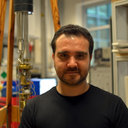 Javier Francisco Landaeta合作论文数4
 E. Hassinger合作论文数University of Sherbrooke, Universite de Sherbrooke4
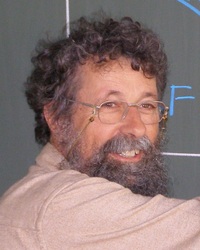 Geibel, Christoph合作论文数Max Planck Institute for Chemical Physics of Solids4
 Seunghyun Khim合作论文数Physics of Quantum Materials Department, Max Planck Institute for Chemical Physics of Solids4T. Luehmann合作论文数3J. Banda合作论文数3Hafner Daniel合作论文数3
 Sanu Mishra合作论文数2Konstantin Semeniuk合作论文数2
 Gertrud Zwicknagl合作论文数Institut für Mathematische Physik, Fakultät für Elektrotechnik, Informationstechnik, Physik, Technische Universität Braunschweig2
 Liurukara D. Sanjeewa合作论文数University of Missouri2Jie Xing合作论文数Nanjing University, Nanjing University2
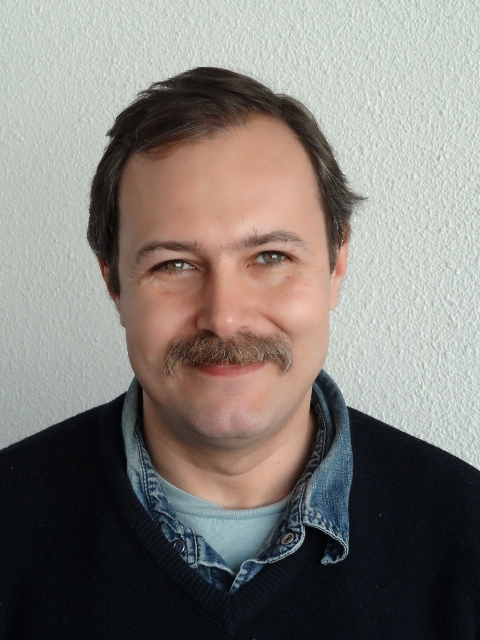 Ilya Sheikin合作论文数Laboratoire National des Champs Magnétiques Intenses, French National Centre for Scientific Research2R. Kuechler合作论文数1Y. Fasano合作论文数1P. G. Naumov合作论文数1A. A. Turrini合作论文数1Ronny Schlegel合作论文数1E. -O. Eljaouhari合作论文数1
 Pranab Kumar Nag合作论文数Condensed Matter Physics Department, Weizmann Institute of Science1S E Nikitin合作论文数1Robert Beck合作论文数1Alexander A. Eberharter合作论文数1
 Tao Xie (谢涛)合作论文数School of Physics, Sun Yat-sen University1D. C. Cavanagh合作论文数Dept Phys, Univ Otago1
 D. G. Mazzone合作论文数Laboratory for Neutron Scattering and Imaging, Paul Scherrer Institut1
 Athena Sefat合作论文数Oak Ridge National Laboratory;Materials Sciences and Engineering Division, Office of Science, U.S. Department of Energy1Saicharan Aswartham合作论文数Leibniz Institute for Solid State and Materials Research Dresden1
 Bernd Büchner合作论文数Institute of Complex Materials, Leibniz Institute for Solid State and Materials Research Dresden;Institute of Solid State Research, Leibniz Institute for Solid State and Materials Research Dresden;TU Dresden1
 Bruce George Alexander Normand合作论文数EPFL;Laboratory for Theoretical and Computational Physics, PSI Center for Scientific Computing, Theory and Data, Paul Scherrer Institut1Sven Hoffmann合作论文数1
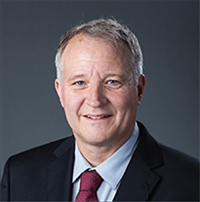 Neil Harrison合作论文数The National High Magnetic Field Laboratory;Los Alamos National Laboratory1
 Jörg Sichelschmidt合作论文数Max Planck Institute for Chemical Physics of Solids1Satoshi Nishimoto合作论文数Chiba Univ.1
 Andrey Podlesnyak合作论文数Institute of Metal Physics, Russian Academy of Sciences1
 Joachim Wosnitza合作论文数Dresden High Magnetic Field Laboratory, Helmholtz-Zentrum Dresden-Rossendorf;University of Technology Dresden1
 Christian Salazar合作论文数1
 Daniel Agterberg合作论文数College of Letters & Science, University of Wisconsin-Milwaukee1Christian Hess合作论文数Leibniz-Institut für Festkörper- und Werkstoffforschung Dresden/Bergische Universität Wuppertal1Philip M. R. Brydon合作论文数1
 Stan Sykora合作论文数1
 Sabine Wurmehl合作论文数Department Synthesis and Crystal Growth, Leibniz Institute for Solid State and Materials Research1
 Andreas M. Lauchli合作论文数Institut Romand de1




