Artificial Intelligence (AI) algorithms have shown their capability to complement human analysis in the understanding of complex phenomena. Their advantages essentially rely on the flexibility of their construction that allows capturing complex relationships between inputs and outputs of a problem and also on their ability to adapt themselves via a learning phase to the available information. As a result, AI is widely used in many scientific fields and especially those related to the nuclear industry. This work deals an application of AI based on several classical machine learning approaches for the study of Reactivity Initiated Accidents (RIA) in the CABRI experimental pulse reactor located at the Cadarache research center, southern France. We focus on the interpretation of the fuel rod behaviour during the power pulse using the online fuel motion monitoring system called the hodoscope. The objective of this paper is to investigate how AI algorithms can be used for the automatic detection of a generic fuel delocalization from the signals recorded by the hodoscope.
This paper describes a novel inpainting algorithm that is capable of filling in holes in overlapping texture and cartoon image layers. This algorithm is a direct extension of a recently developed sparse-representation-based image decomposition method called MCA (morphological component analysis), designed for the separation of linearly combined texture and cartoon layers in a given image (see [J.-L. Starck, M. Elad, D.L. Donoho, Image decomposition via the combination of sparse representations and a variational approach, IEEE Trans. Image Process. (2004), in press] and [J.-L. Starck, M. Elad, D.L. Donoho, Redundant multiscale transforms and their application for morphological component analysis, Adv. Imag. Electron Phys. (2004) 132]). In this extension, missing pixels fit naturally into the separation framework, producing separate layers as a by-product of the inpainting process. As opposed to the inpainting system proposed by Bertalmio et al., where image decomposition and filling-in stages were separated as two blocks in an overall system, the new approach considers separation, hole-filling, and denoising as one unified task. We demonstrate the performance of the new approach via several examples.
Galaxies are arranged in interconnected walls and filaments forming a cosmic web encompassing huge, nearly empty, regions between the structures. Many statistical methods have been proposed in the past in order to describe the galaxy distribution and discriminate the different cosmological models. We present in this paper multiscale geometric transforms sensitive to clusters, sheets, and walls: the 3D isotropic undecimated wavelet transform, the 3D ridgelet transform, and the 3D beamlet transform. We show that statistical properties of transform coefficients measure in a coherent and statistically reliable way, the degree of clustering, filamentarity, sheetedness, and voidedness of a data set.
The Maximum Entropy Method is well-known and widely used in image analysis in astronomy. In its standard form it presents certain drawbacks, such an underestimation of the photometry. Various refinements of MEM have been proposed over the years. We review in this paper the main entropy functionals which have been proposed and discuss each of them. We define: from a conceptual point of view, what a good definition of entropy should be in thr framework of astronomical data processing. We show how a definition of multiscale entropy fulfills these requirements. We show how multiscale entropy can be used for many applications, such as signal or image filtering, multi-channel data filtering, deconvolution, background fluctuation analysis, and astronomical image context analysis.
We introduce in this paper the notion of wavelet Karhunen–Loève transform (WT–KLT) and apply it to the problem of noise removal. Decorrelating first the data in the spatial domain using the WT and afterwards using the KLT in spectral domain allows us to derive a robust noise modeling in the WT–KLT space, and hence to filter the transformed data in an efficient way. Experiments are performed in order to derive (i) the best way to calculate the covariance matrix in the case of noisy data, (ii) the best method to correct the noisy WT–KLT coefficients. Finally, we investigate if the curvelet transform could be an alternative to the wavelet transform for color image filtering.
We introduce in this paper the notion of Wavelet-Karhunen-Loeve transform (WT-KLT) and apply it to the problem of noise removal. Decorrelating first the data in the spatial domain using the WT and afterwards using the KLT in spectral domain allows us to derive a robust noise modeling in the WT-KLT space, and hence to filter the transformed data in an efficient way. Experiments are performed in order to derive (i) the best way to calculate the covariance matrix in the case of noisy data, (ii) the best method to correct the noisy WT-KLT coefficients. Finally we investigate if the curvelet transform could be an alternative to the wavelet transform for color image filtering.
 Jean-Luc Starck合作论文数CosmoStat laboratory, Institute of Research into The Fundamental Laws of The Universe, Departement D'Astrophysique, CEA-Saclay4
 David Donoho合作论文数Department of Statistics, School of Humanities and Sciences, Stanford University;Institute for Computational & Mathematical Engineering, Stanford University3
 S. Mirotta合作论文数1J-L Starck合作论文数1
 Vicent J. Martinez合作论文数1
 Ofer Levi合作论文数The Edward S. Rogers Sr. Department of Electrical & Computer Engineering, Faculty of Applied Science and Engineering, University of Toronto1
 Michael Elad合作论文数Department of Computer Science, Technion1
 Fionn Murtagh合作论文数Centre of Mathematics and Data Science, University of Huddersfield;Goldsmiths, University of London;Royal Holloway, University of London1Francois Bonnarel合作论文数1Jean Baccou合作论文数1
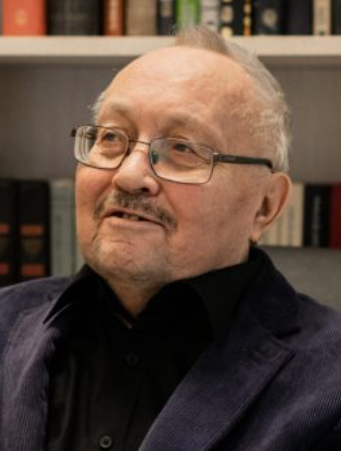 Enn Saar合作论文数Estonian Academy of Sciences;Cosmology Department, Tartu Observatory1




