Based on studies in mice, hemophilic dogs, and non-human primates demonstrating long-term (>5 yrs) expression of Factor IX (FIX) after infusion of an AAV vector expressing FIX into the portal vein or the hepatic artery, we undertook a Phase I dose escalation study of AAV-FIX in humans with severe hemophilia B. The first two doses, 2x10¹¹ vg/kg, and 1x10¹² vg/kg, were safe but subtherapeutic. Two subjects treated at a dose of 5x10¹² vg/kg showed detectable circulating levels of FIX (up to 11.8% and 3% respectively), but expression was transient and accompanied in one case (subject E) by a transient asymptomatic transaminitis. There was never evidence of a FIX inhibitor. Two differences between the large animal models and humans with the disease were hypothesized to contribute to the difference in duration of expression; long-term in hemophilic dogs, short-term in hemophilic humans. First was pre-existing immunity to wild-type AAV-2, which infects humans, but not dogs; and the other was prior exposure to viral hepatitis , found in humans but not in animals. To further assess the roles of viral hepatitis and of the immune response to AAV-2, we treated an additional subject (subject G) at a dose of 1x10¹² vg/kg. This subject was 20 yrs. of age and had never been infected with hepatitis. Nevertheless, his transaminases began to rise 3 weeks after vector injection, peaked 6 weeks after injection, and resolved spontaneously as had been seen in subject E. In subject G, magnitude of the peak ALT response was 5-fold less than that found in subject E (5-fold higher dose). Both subjects had similar and low baseline anti-AAV antibody titers. Immune response to AAV-2 was assessed by ELISpot at serial time points before and after vector injection in subject G. The subject's PBMCs were incubated with a peptide library arrayed in a matrix of 24 pools, each containing 12 peptides of 15-mers overlapping by 10 and spanning the entire VP-1 protein. There was no detectable IFN- γ secretion in response to AAV-2 peptides at baseline, although there was a strong IFN- γ response to PHA. Two weeks after vector infusion, three pools elicited IFN- γ secretion from the subject's PBMCs. Response to the same pools of peptides, but not to other pools, was repeatedly detected over the next 6 weeks. By week 12, IFN- γ responses were no longer detectable. The matrix array allowed identification of two specific AAV-2 capsid peptides as the T cell immunoreactive epitopes. These peptides are highly conserved in AAV serotypes 1–8. Similar experiments were conducted with a FIX peptide library and demonstrated no response. These data are consistent with a model in which a T cell response to AAV capsid epitopes results in elimination of the transduced cells. This response is only briefly detectable in PBMCs, and hepatitis is not an important risk factor. These immune responses may limit use of standard serotypes of AAV for gene transfer into human liver. Transient immunomodulation may prevent these responses.
Studies in mice, hemophilic dogs, and non-human primates have shown long-term expression of Factor IX (FIX) after administration of a recombinant AAV-2 vector expressing FIX into the portal vein or hepatic artery. Specifically, infusion of ~1×10¹² vg/kg AAV vector expressing canine FIX in hemophilic dogs showed sustained (>3 years) circulating levels of FIX in the range of 4-12% of normal (Blood 99:2670). In a Phase I dose escalation study of hepatic artery infusion of AAV-2-F.IX in humans with severe hemophilia B, two subjects receiving a dose of 2×10¹² vg/kg (titered against a supercoiled standard) showed expression of detectable levels of FIX, but expression was transient, with peak levels of 3% in one subject and 11.8% in the other. FIX levels had returned to baseline by 4 weeks and 10 weeks post vector infusion respectively. In the latter subject, the decline in circulating FIX levels was accompanied by a transient rise in serum transaminase levels. This subject had a low baseline neutralizing antibody titer (NAB) to AAV-2 (1:2), which rose to >1:1000 two weeks later. The other subject experienced no change in serum transaminases; his pre-treatment NAB to AAV-2 was 1:17, and increased to 1:96,000 two weeks later. To further assess the role of the immune response, PBMCs from these two subjects were incubated with peptides derived from the AAV-2 capsid sequence and from the wild-type hF.IX sequence. IFN-γ secretion was measured in ELISpot assays, which showed, in the latter subject, a 10-fold elevation in IFN-γ compared to media control at the 4 wk time point following incubation with one of the AAV peptide pools and with the F.IX peptide pool. When normalized to levels of maximal IFN-γ secretion in response to a positive control, IFN-γ response was >10-fold that of normal controls for the F.IX peptide pool, and >2-fold that of normal controls for the reactive AAV-2 peptide pool. We conclude that: 1) AAV-F.IX can transduce human hepatocytes in vivo, resulting in therapeutic circulating factor levels; 2) the vector dose required to achieve a therapeutic factor level was accurately predicted by animal models; 3) the transient nature of expression seen in subjects treated at 2×10¹² vg/kg was not predicted by earlier studies in animal models; 4) T cell responses to AAV-2 and to F.IX may determine the outcome of AAV-2-mediated gene transfer in human subjects. More recently the clinical study has resumed with a planned target dose of 1.2×10¹² vg/kg. The goal is to determine whether subjects can achieve therapeutic levels of expression at this dose, and whether specific immune responses to either AAV or F.IX will limit duration of expression in humans.
Aims To determine whether Asian Indians (Indians), a group known to have high rates of coronary heart disease, have increased platelet activation and fibrinogen levels relative to white Americans of European origin (whites).Methods and Results Forty healthy, non-smoking Indians, aged 25-45; were matched with 40 healthy whites for age (within 3 years) and gender. Platelet activation was tested in blood exiting a bleeding time wound at 1 and 2 min post-incision (wound-induced activation), as well as in venous blood stimulated in vitro with collagen, using whole blood flow cytometry. Other risk factors, including fibrinogen levels, family history of diabetes or coronary heart disease, fasting insulin and lipid levels, and Lp(a) were also assessed. Fibrinogen levels were higher among Indians than whites, even after adjustment for gender or family history of coronary heart disease (P<0.05). Indians had higher levels of wound-induced glycoprotein IIb/IIIa binding and platelet secretion (P-selectin expression) than whites, with the greatest differences found when comparing the upper quintile of activation for each group (Ps<0.05). Indians with a family history of coronary heart disease (n=15) had higher levels of platelet secretion (wound-induced and in vitro) than Indians without a family history (Ps<0.05), while the relationship was reversed among whites. Platelet activation measures were not consistently related to other coronary risk factors, while fibrinogen was related to triglyceride and insulin levels among Indians.Conclusion Indians have elevated fibrinogen and platelet activation levels relative to whites. These factors may contribute to the increased coronary risk observed in Indians.
This study characterizes a new phagocytic assay system utilizing technetium-99m sulfur colloid as the phagocytic particle. Uptake of sulfur colloid by human polymorphonuclear leukocytes is a time and temperature dependent process that requires glucose for optimal uptake. In contrast to many other systems, sulfur colloid phagocytosis appears to be serum and divalent cation independent. An attractive feature of this system is the 10-fold increase in particle uptake with phagocytosis as compared to that at zero time.
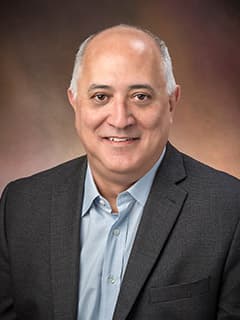 Valder R. Arruda合作论文数Department of Pediatrics, Perelman School of Medicine, University of Pennsylvania;Children's Hospital Research Institute, The Children's Hospital of Philadelphia6
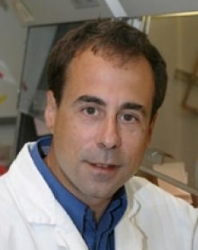 Mark A. Kay合作论文数Departments of Pediatrics and Genetics, School of Medicine, Stanford University;Division of Human Gene Therapy, Department of Pediatrics, School of Medicine, Stanford University6
 Katherine A. High合作论文数Department of Pediatrics, Perelman School of Medicine, University of Pennsylvania;Center for Cellular and Molecular Therapeutics, The Children's Hospital of Philadelphia;RhyGaze6
 M Dake合作论文数5B Glader合作论文数5R Kaye合作论文数4ruth lessard合作论文数4
 Margaret V. Ragni合作论文数Division Hematology/Oncology, Department of Medicine, School of Medicine, University of Pittsburgh;Hemophilia Center of Western PA, University of Pittsburgh4Linda B Couto合作论文数4Jurg M. Sommer合作论文数Avigen Inc.4JEJ Rasko合作论文数3K Addya合作论文数3R Herzog合作论文数3B. Konkle合作论文数3Cs Manno合作论文数3D Sabatino合作论文数3K Hoots合作论文数3A Chew合作论文数3
 M Razavi合作论文数Ceramic Department, Materials and Energy Research Center, P.O. Box 31787/316, Karaj, Iran3P Blatt合作论文数3M Tigges合作论文数2DGB Leonard合作论文数2HY Jiang合作论文数2F Johnson合作论文数2
 Alvin Luk合作论文数Biogen Idec Hemophilia2C Manno合作论文数2
 Federico Mingozzi合作论文数N/A;Inserm2Mahmood K. Razavi合作论文数2
 Bertil Glader合作论文数Pediatrics Department, Stanford University2
 Alan Mcclelland合作论文数2
 Roland W. Herzog合作论文数School of Medicine, Indiana University2
 Glenn Pierce合作论文数Third Rock Ventures;World Federation of Hemophilia2Aj Chew合作论文数1s sleep合作论文数1Kristen Jaworski合作论文数1Y. Chen合作论文数1De Sabatino合作论文数1Lb Couto合作论文数1G. Pierce合作论文数1S Larsen合作论文数1A NIENHUIS合作论文数1c rosales合作论文数1Ulrike M Reiss合作论文数1
 John E. J. Rasko合作论文数Faculty of Medicine, University of Sydney1Kiefe Catarina I合作论文数1Fardella P合作论文数1Basner-Tschakarjan Etiena合作论文数1Davidoff Andrew M合作论文数1Pascal J. Goldschmidt-Clermont合作论文数1




