After a long device enhancement phase, scientific operation resumed in 2022. The main new device components are the water cooling of all plasma facing components and the new water-cooled high heat flux divertor units. Water cooling allowed for the first long-pulse operation campaign. A maximum discharge length of 8 min was achieved with a total heating energy of 1.3 GJ. Safe divertor operation was demonstrated in attached and detached mode. Stable detachment is readily achieved in some magnetic configurations but requires impurity seeding in configurations with small magnetic pitch angle within the edge islands. Progress was made in the characterization of transport mechanisms across edge magnetic islands: Measurement of the potential distribution and flow pattern reveals that the islands are associated with a strong poloidal drift, which leads to rapid convection of energy and particles from the last closed flux surface into the scrape-off layer. Using the upgraded plasma heating systems, advanced heating scenarios were developed, which provide improved energy confinement comparable to the scenario, in which the record triple product for stellarators was achieved in the previous operation campaign. However, a magnetic configuration-dependent critical heating power limit of the electron cyclotron resonance heating was observed. Exceeding the respective power limit leads to a degradation of the confinement.
The Wendelstein 7-X stellarator (W7-X) started operation in December 2015 and has performed three experimental campaigns up to November 2018. Since then the device has been completed to the planned configuration (most importantly with predominantly actively cooled first wall, including the High Heat Flux divertor and a divertor cryo pump) to be able to perform stationary plasma programs. After this completion pFhase, at the end of 2021, the commissioning has been performed and scientific operation has started in the fall of 2022.
We present recent highlights from the most recent operation phases of Wendelstein 7-X, the most advanced stellarator in the world. Stable detachment with good particle exhaust, low impurity content, and energy confinement times exceeding 100 ms, have been maintained for tens of seconds. Pellet fueling allows for plasma phases with reduced ion-temperature-gradient turbulence, and during such phases, the overall confinement is so good (energy confinement times often exceeding 200 ms) that the attained density and temperature profiles would not have been possible in less optimized devices, since they would have had neoclassical transport losses exceeding the heating applied in W7-X. This provides proof that the reduction of neoclassical transport through magnetic field optimization is successful. W7-X plasmas generally show good impurity screening and high plasma purity, but there is evidence of longer impurity confinement times during turbulence-suppressed phases.
The super conducing stellarator Wendelstein 7-X (Bosch a al., 2017) started its first operational phase in October 2015 at the Max-Planck-Institute for Plasma Physics in Greifswald with the goal to verify that a stellarator magnetic confinement concept is a viable option for a fusion power plant, i.e. showing confinement comparable to tokamaks and running in steady state operation. Between 2015 and 2018 the first three experimental campaigns (operational phases) OP1.1, OP1.2a and OP1.2b of the W7-X stellarator have been successfully completed. Roughly 13 Months of operational time have been accumulated and have already shown the impressive capability and reliability of W7-X in achieving the physical and technical goals as set by the project. The working group Device Operation (DO) has implemented an organizational structure and workflow to ensure safe and reliable operation of the W7-X device. DO is responsible for planning and executing the commissioning and operation of the W7-X device. The operations plan is based on the physics planning which is a selection of individual physics proposals keeping in mind the technical limitations of W7-X. The operations plan is iterated between the lead physicists and device operation team (DOT). The "technischer Leiter vom Dienst" (TLvD or Engineer in Charge) plays a central role within the DOT in coordinating and supervising the technical operation of W7-X. To ensure safe and reliable operation of W7-X several procedures have been implemented and improved. This involves commissioning templates, checklists, procedures for e.g. plasma heating energy release, operation malfunction cards, logbooks, coordination meetings, duty-on-call and shift-planning. This paper will summarize the organizational aspects of W7-X technical operation as performed in the first three phases. It will also provide an outlook on the upcoming OP2 (actively cooled divertor) with the requirements for technical operation regarding commissioning and operation towards steady state plasma operation.
Wendelstein 7-X (W7-X) completed its second operation phase in December 2017. A large number of diagnostics were operated in nearly 1000 experiment programs (XP) by an international research team. For the documentation of W7-X XPs, a new electronic logbook software has been developed. The software has been designed for the needs of W7-X researchers and engineers: a web-based logbook application for the entire team. For an effective documentation, large parts of the logbook content comes from automatically generated logs, complemented by the team members via web browser or REST API. The W7-X control software generates log entries for an XP during program execution. This includes automatic extraction of configuration information from the planned program, which is later represented as searchable tags within the logbook. In addition, users can add supplementary tags and rich-text comments to all logs. The logbook allows full-text search and range queries for numeric values: both with millisecond response times. A dedicated web page for each XP log contains overview plots from measurement data, generated on the fly from archived data. Separate component logs are created in the same way for diagnostics and machine sub-systems for different use cases, e.g., XPs, standalone tests, or calibrations. The logbook hosts separate pages for device operation and the W7-X components, providing status information and additional features. In this way it effectively supports the operation of W7-X.
The optimized superconducting stellarator device Wendelstein 7-X (with major radius , minor radius , and plasma volume) restarted operation after the assembly of a graphite heat shield and 10 inertially cooled island divertor modules. This paper reports on the results from the first high-performance plasma operation. Glow discharge conditioning and ECRH conditioning discharges in helium turned out to be important for density and edge radiation control. Plasma densities of with central electron temperatures were routinely achieved with hydrogen gas fueling, frequently terminated by a radiative collapse. In a first stage, plasma densities up to were reached with hydrogen pellet injection and helium gas fueling. Here, the ions are indirectly heated, and at a central density of a temperature of with was transiently accomplished, which corresponds to with a peak diamagnetic energy of and volume-averaged normalized plasma pressure . The routine access to high plasma densities was opened with boronization of the first wall. After boronization, the oxygen impurity content was reduced by a factor of 10, the carbon impurity content by a factor of 5. The reduced (edge) plasma radiation level gives routinely access to higher densities without radiation collapse, e.g. well above line integrated density and central temperatures at moderate ECRH power. Both X2 and O2 mode ECRH schemes were successfully applied. Core turbulence was measured with a phase contrast imaging diagnostic and suppression of turbulence during pellet injection was observed.
In 2015, the optimized stellarator Wendelstein 7-X stellarator (W7-X) started with operation. The main objective of W7-X is the demonstration of the integrated reactor potential of the optimized stellarator line. An important element of this mission is the achievement of high heating power and high confinement in the steady-state operation. The approach to this mission is the following three steps. First, plasmas were produced in a limiter configuration [operation phase (OP 1.1)], then a test divertor unit is being installed (temporary divertor unit) for the next campaign, OP 1.2, before the full steady-state capability will be achieved implementing active cooling of all in-vessel components and a steady-state high heat-flux divertor. In December 2015, the first helium plasma was generated using electron cyclotron resonance heating (ECRH), in February 2016, the working gas was switched to hydrogen. The first OP (OP 1.1) was successfully finished in March 2016. At the end of OP 1.1, the discharge duration was close to 6 s, the limit for the integrated heating power was increased to 4 MJ and electron temperatures of ~10 keV were achieved. Due to the low densities in the range of 1019 cm−3 and the pure electron heating by ECRH, the ion temperatures reached only 2 keV. At present, W7-X is undergoing the next completion phase, including the installation of the test divertor unit, the installation of the carbon tiles on the inner plasma vessel wall, an upgrade of existing diagnostics, and the installation of new diagnostics. This paper discusses the first operational phase, lessons learned and implemented, and the status before the start of the second OP (OP 1.2).
After completing the main construction phase of Wendelstein 7-X (W7-X) and successfully commissioning the device, first plasma operation started at the end of 2015. Integral commissioning of plasma start-up and operation using electron cyclotron resonance heating (ECRH) and an extensive set of plasma diagnostics have been completed, allowing initial physics studies during the first operational campaign. Both in helium and hydrogen, plasma breakdown was easily achieved. Gaining experience with plasma vessel conditioning, discharge lengths could be extended gradually. Eventually, discharges lasted up to 6 s, reaching an injected energy of 4 MJ, which is twice the limit originally agreed for the limiter configuration employed during the first operational campaign. At power levels of 4 MW central electron densities reached 3 x 10(19) m(-3), central electron temperatures reached values of 7 keV and ion temperatures reached just above 2 keV. Important physics studies during this first operational phase include a first assessment of power balance and energy confinement, ECRH power deposition experiments, 2nd harmonic O-mode ECRH using multi-pass absorption, and current drive experiments using electron cyclotron current drive. As in many plasma discharges the electron temperature exceeds the ion temperature significantly, these plasmas are governed by core electron root confinement showing a strong positive electric field in the plasma centre.
The main objective of the Wendelstein 7-X (W7-X) stellarator is to demonstrate the integrated reactor potential of the optimized stellarator line. An important element of this mission is the achievement of high heating-power and high confinement in steady-state operation. Such an integrated plasma operation has not yet been demonstrated and represents the major scientific goal of W7-X. The way towards this goal is staged. In the first phase, called OP 1.1, December 2015-March 2016, a limiter configuration was used. In this paper, the preparation of the first operation phase as well as lessons learned during the first commissioning and the operation phase are discussed, while the physics results from OP 1.1 are reported elsewhere (Wolf et al 2017 Nucl. Fusion 57 102020).
The largest modular stellarator Wendelstein 7-X (W7-X) has successfully passed commissioning and first phase of operation in Greifswald, Germany. The limiter configurations of plasma with 2.5 T of magnetic induction on the plasma axis produce already considerable loads (MN) in the W7-X systems. The sophisticated W7-X superconducting magnet system with its non-linear support system is instrumented with an extensive set of mechanical and temperature sensors. Measurement results showed that magnet system behavior is in good correspondence with original predictions from numerical models. However, several areas require modeling improvements and/or proper adjustment of parameters to reflect "as-built" situation. Moreover, high temperature dependence of strain gauge signal accuracy in the range below 10 K requires its compensation in order to avoid fault alarms during monitoring. The work is considered as benchmarking of numerical models and as a preparation for upcoming more demanding phases with longer plasma pulses to guarantee safe and reliable W7-X operation with different divertor configurations. Both results of W7-X measurements and implemented improvements as well as lessons learned so far are also given.
Assembly of the superconducting stellarator Wendelstein 7-X is well advanced, and commissioning of the device is being prepared. A first draft of the commissioning tasks has been developed and will be discussed in this paper.
The Wendelstein 7-X modular advanced stellarator is in the commissioning phase at the Max Planck Institute for Plasma Physics in Greifswald, Germany. The focus of the numerical analysis has been shifted from support of the machine design and assembly towards preparation of commissioning steps, assessment of possible field disturbances under operational loads, and exploration of operational limits.The paper emphasizes on the development, evolution and realization of new analysis strategies, as well as on implemented numerical approaches for electromagnetic, thermal and structural analyses. Remarkable results of first comparisons with measurements from the extended mechanical instrumentation system obtained during evacuation and flooding of the cryostat, the first cool-down of the magnet system and also during first part of the superconducting coil groups commissioning are presented in detail.Finally, some lessons learned during the transition phase are highlighted which might be relevant for other large fusion machines.
The Wendelstein 7-X (W7-X) modular stellarator is in the assembly phase at the Max-Planck-Institut fur Plasmaphysik in Greifswald, Germany. The design of the "basic machine", i.e. without in-vessel components, diagnostics and periphery, is largely completed, structural parameters such as bolt preload, initial conditions for contact elements, etc. are defined, and most of the components are manufactured and partly assembled. Therefore, the focus of structural analysis was shifted towards fast analyses of non-conformities, changes in the assembly procedure, and exploration of operational limits. Assembly-related work is expected to continue until commissioning of the machine, however, with decreasing intensity. In parallel the analysis requirements for in-vessel components, diagnostics and periphery will increase.This paper focuses on the most remarkable results, on special problems which had to be solved, on strategic issues like parameterization, complex finite element model structuring and benchmarking with alternative models in different codes, on assumptions of reasonable safety margins and expected tolerances. and on confirmation of analysis results by tests. Finally it highlights some lessons learned so far, which might be relevant also for other large fusion machines, and gives an outlook on future work. (C) 2011 Elsevier B.V. All rights reserved.
TheWendelstein 7-X (W7-X) modular stellarator is in the assembly phase at the Max-Planck-Institut für Plasmaphysik (IPP) in Greifswald, Germany. The goal of the project is to demonstrate that this type of machine is a viable option for a fusion power-plant. The “pentagonal” magnet system of the machine encompasses 50 non-planar and 20 planar superconducting coils with sophisticated support structure. Structural reliability of components as well as resulting deformations and displacements during various modes of operation have to be considered not only for the magnet system but also throughout the whole cryostat whose main components are the plasma vessel, outer vessel, ports, and thermal insulation. A reliable prediction of the W7-X structural behaviour is only possible by employing complex finite element (FE) simulations with a hierarchical set of FE models. A special strategy has been developed and implemented for the task. The design is basically completed, main parameters are defined, and most of the W7-X components are manufactured. Therefore, the focus in the analysis is being shifted to the creation of parametric FE models which allow performing fast analyses of possible nonconformities, changes in the assembly procedure, and future exploration of operational limits. This paper gives an overview of the implemented analysis strategy, the applied safety margins, and focuses on the most remarkable results.
The goal of the Wendelstein 7-X (W7-X) stellarator project is to demonstrate that this type of machine is a viable option for a fusion power-plant. At present the W7-X experiment is in the assembly phase at the Max-Planck-Institut for plasma physics in Greifswald, Germany. The reliable prediction of the structural behavior of the W7-X machine is only possible by employing complex finite element (FE) analyses with a hierarchical set of FE models. A special strategy has been developed for the structural analysis which is under implementation now. This paper gives an overview of the analysis strategy, the applied structural criteria and critical issues, and focuses on the most remarkable results. The main attention is paid to the components that have been changed or optimized recently.
The Wendelstein 7-X (W7-X) stellarator project goal is to demonstrate that the stellarator is a viable option for a fusion power plant. W7-X is in an advanced state of construction and has entered the assembly phase at the Max-Planck-Institute fur Plasmaphysik (IPP) in Greifswald, Germany.The W7-X "pentagonal" basic magnet system is highly sensitive to parameter variations; the cryostat comprises two vessels, which are interconnected elastically by 299 ports. The strategy of the structural analysis for this complex mechanical system is being developed and implemented with the ultimate goal to create a tree of numerical models which reliably predict the stellarator structural behaviour.This paper gives an overview of the strategy, addresses the critical issues and focuses on the most interesting results of the analyses. (C) 2007 Elsevier B.V. All rights reserved.
 H.-S. Bosch合作论文数14
 Victor Bykov合作论文数13
 Rudolf Brakel合作论文数10
 Joris Fellinger合作论文数Max Planck Institute for Plasma Physics9Klinger, T.合作论文数8F. Schauer合作论文数8
 Thomas Rummel合作论文数8Anett Spring合作论文数8T. Braeuer合作论文数7Lutz Wegener合作论文数7S. Degenkolbe合作论文数7M. Nagel合作论文数Institut fur Physikalische und Theoretische Chemie, Universitat Tubingen7
 Heike Laqua合作论文数Max Planck Institute for Plasma Physics7Jörg Schacht合作论文数Max Planck Institutefor Plasma Physics7
 Dirk Naujoks合作论文数7A. Carls合作论文数6Tamara Andreeva合作论文数6Michael Grahl合作论文数6
 Christoph Biedermann合作论文数6
 Martin Hirsch合作论文数Instituto de Fisica Corpuscular6
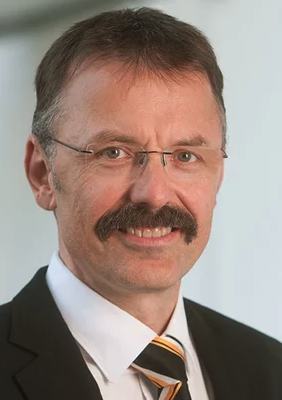 Robert Wolf合作论文数Stellarator Heating and Optimisation Division, Max Planck Institute of Plasma Physics;Greifswald Branch, Max Planck Institute of Plasma Physics6A. Werner合作论文数6
 D. Hartmann合作论文数6
 Konrad Risse合作论文数6Dag Hathiramani合作论文数6K. Egorov合作论文数5R. Schroeder合作论文数5
 h braune合作论文数5P. Kornejew合作论文数5Humberto Trimino Mora合作论文数Max Planck Inst Plasma Phys, MV, D-17491 Greifswald, Germany5T. Stange合作论文数5
 Reinhard Vilbrandt合作论文数5Pedersen T S合作论文数5Oliver P. Ford合作论文数Max Planck Institute for Plasma Physics5Stefan Marsen合作论文数5James P. Knauer合作论文数5
 Matthias Otte合作论文数Evangelische Kirche in Deutschland5Olaf Grulke合作论文数5
 Juergen Baldzuhn合作论文数Max-Planck Institute for Plasma Physics5Torsten Bluhm合作论文数5P. Mcneely合作论文数5A. Kraemer-Flecken合作论文数4G. Plunk合作论文数4P. Aleynikov合作论文数4G. Offermanns合作论文数4C. Nuehrenberg合作论文数4M. Banduch合作论文数4D. Hoeschen合作论文数4U. Kamionka合作论文数4




