Restricted accessAbstractFirst published online March 1, 2016Thrombotic Ramifications of Ophthalmologic Diagnosis of Familial and Acquired Thrombophilia as Pathoetio Logy for Otherwise Unexplained UveitisCT Bruce, SG Dixon, […], CJ Glueck, P Wang, and RK Hutchins+2-2View all authors and affiliationsVolume 64, Issue 4https://doi.org/10.1136/jim-2016-000120.67
Background Thrombotic retinal vascular occlusive disease, central retinal vein occlusion (CRVO) and central retinal artery occlusion (CRAO), are well known causes of visual loss. They are often associated with familial thrombophilia, which may predispose to other thrombotic events. Abstract ID: 40 Table 1 Coagulation disorders in 77 women with retinal thrombosis (16 CRAO, 61 CRVO). Factor V Leiden PTG MTHFR PAIG Homocys- teine1 Factor VIII Factor XI Protein C Protein S Free S Antithrombin III Abnormal range TC,TT TC, TT TT 4G4G umol/L >150% >150% <73% <63% <66% <80 62 Normal female controlsAge 44±12, med=43 2/61(3%) 2/62(3%) 21/61(34%) 13/56(23%) 0/62(0%) 6/57(11%) 2/55(4%) 2/53(4%) 4/53(8%) 2/53(4%) 1/52(2%) 16 CRAO womenAge 52±19, med=54 2/16(13%) 0/16(0%) 7/16(44%) 3/13(23%) 2/16(13%)* 6/16(38%)† 4/16(25%)† 0/16(0%) 1/15(7%) 4/15(27%)† 0/15(0%) 61 CRVO womenAge 64±17, med=63 8/60(13%) 6/57(11%) 19/61(31%) 19/58(33%) 16/61(26%)§§ 24/56(43%)§ 12/54(22%)†† 2/57(4%) 1/57(2%) 4/51(8%) 1/54(2%) All 77 Ocular thrombosisAge 61±18, med=61 10/76(13%) 6/73(8%) 26/77(34%) 22/71(31%) 18/77(23%)§§ 30/72(42%)§§ 16/70(23%)†† 2/73(3%) 2/72(3%) 8/66(12%) 1/69(2%) 1 dated cut point for Homocysteine high: ≥15 (11/15/08–12/2/14); ≥10.4 (after 2/3/14). *p<.05, †p<.025, ††p<.01, §p<.001, §§p<.0001, comparing with 62 normal female controls by Fisher's test. Specific aim We compared measures of thrombophilia in 77 women with retinal vascular occlusion, 16 with CRAO (mean±SD age 52±19) and 61 with CRVO (mean±SD age 64±17), compared to 62 healthy female controls (mean±SD age 44±12) without ocular thrombosis to better delineate the role of thrombophilia in retinal vascular occlusion. Results Of 11 measures of thrombophilia, the 77 women with retinal vascular occlusion were more likely to have ≥1 abnormal level (90%) when compared to 62 normal female controls (44%, p<0.0001). Among the 77 women with RVO, homocysteine was elevated in 23%, compared to 0% in 62 normal female controls (p<0.0001). Factor VIII was elevated in 42%, compared to 11% in normal female controls (p<0.0001). Factor XI was elevated in 23%, compared to 4% in normal female controls (p=0.0020). Further analysis based on diagnosis of CRAO or CRVO in 77 total women with retinal vascular occlusion revealed that homocysteine was elevated in 13% of women with CRAO and in 26% of women with CRVO compared to 0% of 62 healthy normal female controls (p=0.04, <0.0001). Factors VIII and XI were elevated in 16 women with CRAO (38%, 25% [p=0.019, 0.021]) and in 61 women with CRVO (43%, 22% [p=0.0001, 0.0041]) compared to normal female controls (11%, 4%). The 16 women with CRAO were significantly more likely than normal female controls (27% vs 4%, p=0.019) to have low free protein S (<66%). Conclusion By screening for thrombophilia in women with CRAO and CRVO who have early onset of disease, severe phenotypes, or lack typical risk factors of retinal vascular occlusion, ophthalmologists may assist in diagnosis of common familial thrombophilias. Appropriate diagnosis has relevance not only for retinal vascular occlusion, but also for obstetric and thrombotic outcomes in the probands and in their first-degree relatives.
Restricted accessAbstractFirst published online March 1, 2016Venous Thromboembolism (VTE) after Routine Knee Arthroscopy in 10 Patients with Previously Unknown Familial ThrombophiliaV Jetty, M Prince, […], P Wang, and CJ Glueck+1-1View all authors and affiliationsVolume 64, Issue 4https://doi.org/10.1136/jim-2016-000120.15
Restricted accessAbstractFirst published online March 1, 2016Atherothrombosis, Thrombophilia, and Relentless Progression of Coronary Artery DiseaseD Ayalew, M Prince, […], N Motayar, P Shah, J Glueck, and P Wang+3-3View all authors and affiliationsVolume 64, Issue 4https://doi.org/10.1136/jim-2016-000120.5
Aim: Our specific aim was to document the pathoetiologic importance of thrombophilia among females presenting with severe ischemic retinal vein (RVO) or retinal artery (RAO) occlusion, without typical risk factors, and to emphasize that the ophthalmologists' diagnosis of thrombophilia has important diagnostic and therapeutic downstream ramifications for nonocular thrombosis, including reproductive outcomes.Methods: We evaluated familial and acquired thrombophilia in 60 females with RVO (central RVO, n=52; branch RVO, n=8) and 16 with RAO (central RAO, n=11; branch RAO, n=5). They were referred by retinologists, without typical risk factors for RVO/RAO and/or severe ocular ischemic presentation. We focused on extraocular thrombotic events, particularly pregnancy complications, including unexplained spontaneous abortion, pre-eclampsia-eclampsia. Thrombophilia measurements in the 76 females were compared with 62 healthy normal females without ocular vascular occlusions (OVOs).Results: The 76 females with OVO were more likely than 62 normal female controls to have high homocysteine (24% vs 0%, P<0.0001), high anticardiolipin antibody (immunoglobulin M, 17% vs 3%, P=0.012), high (>150%) factor VIII (42% vs 11%, P<0.0001), and high (>150%) factor XI (22% vs 4%, P=0.004). Of the 76 females, 26 (34%) had >= 1 spontaneous abortion; 17 (22%) had >2 spontaneous abortions and/or pre-eclampsia-eclampsia. Compared to 62 healthy female controls, these 17 females with pregnancy complications had high homocysteine (29% vs 0%, P=0.0003), high anticardiolipin antibody immunoglobulin M (24% vs 3%, P=0.02), high factor VIII (38% vs 11%, P=0.02), and were marginally more likely to be heterozygous for the factor V Leiden mutation (19% vs 3%, P=0.058).Conclusion: In females lacking typical risk factors for retinal vascular occlusion or severely ischemic presentation, by diagnosing thrombophilia as an etiology for OVO, the ophthalmologist opens a window to family screening and preventive therapy, with particular relevance to pregnancy outcomes and venous thromboembolism.
 CJ Glueck合作论文数138N. Goldenberg合作论文数36T Tracy合作论文数34L Sieve-Smith合作论文数30Luann Sieve合作论文数23
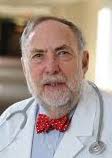 Charles Glueck合作论文数Cholesterol, Metabolism, and Thrombosis Research Center18RN Fontaine合作论文数17Richard A. Freiberg合作论文数13
 Desta Aregawi合作论文数12
 Madan Gowda合作论文数Div Nephrol, SUNY Buffalo10
 Waqas Ahmed合作论文数9James E. Lang合作论文数9
 Joel Pranikoff合作论文数7D STROOP合作论文数7
 Anis Khan合作论文数School of Pharmacy, Childrens Hospital Los Angeles7J. Munjal合作论文数6Howard Bell合作论文数6M Haque合作论文数6S. Min合作论文数6K. Lee合作论文数6N. Khan合作论文数6Loftspring Matthew C合作论文数6
 Prince Marloe合作论文数Jewish Hospital Internal Medicine Residency Program6
 Magdalena Winiarska合作论文数Cholesterol Center, Cincinnati, Ohio.6G. Boriel合作论文数5S Bornovali合作论文数5Alexander Milgrom合作论文数5M. Maddipati合作论文数5N. A. Khan合作论文数5
 Ilana Schlam合作论文数Department of Hematology and Oncology, Tufts Medical Center5
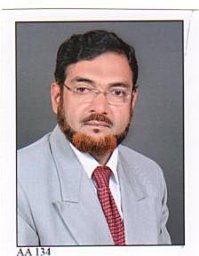 Z. Khan合作论文数Sect Pulm Crit Care & Sleep Med, Yale Sch Med5Ralph Gruppo合作论文数5A. Sherman合作论文数5S Dharashivkar合作论文数4M. Kammineni合作论文数4C. Abuchaibe合作论文数4J. Padda合作论文数4M. Agloria合作论文数4Frini Makadia合作论文数4P. Raj合作论文数4H Phillips合作论文数4M. Rothschild合作论文数4Robert K. Hutchins合作论文数4C. Mahida合作论文数3S. Munsif合作论文数3D Cameron合作论文数3D Hungerford合作论文数3Sg Dixon合作论文数3Ct Bruce合作论文数3




