Experiments with ultracold quantum gases are a rapidly advancing research field with many applications in fundamental physics and quantum technology. Here, we report on a high-flux generation of Bose-Einstein condensate mixtures of 41K and 87Rb, using a fully integrated sounding rocket setup. We compare the release and the free expansion of the quantum mixtures obtained with the apparatus placed on ground or in free fall in an Einstein-Elevator. The release dynamics are governed by the intra- and interspecies interactions as well as the decaying magnetic field during the release. The latter can be minimized by a dedicated switch-off protocol of the trap generating currents where an exact model enabled us to characterize the interaction effects. Our results establish a new benchmark for generating ultracold mixtures on mobile platforms, with direct relevance for future experiments on interacting quantum gases and tests of the equivalence principle in space.
We present the design of laser systems for the Bose-Einstein Condensate and Cold Atom Laboratory (BECCAL) payload, enabling numerous quantum technological experiments onboard the International Space Station (ISS), in particular dual species 87Rb and 41K Bose-Einstein condensates. A flight model (FM) and a commercial off the shelf (COTS) based model are shown, both of which meet the BECCAL requirements in terms of functionality, but have differing size, weight and power (SWaP) and environmental requirements. The capabilities of both models are discussed and characteristics compared. The flight model of BECCAL uses specifically developed and qualified custom components to create a compact and robust system suitable for long-term remote operation onboard the ISS. This system is based on ECDL-MOPA lasers and free-space optical benches made of Zerodur, as well as commercial fibre components. The COTS-based system utilizes entirely commercial parts to create a functionally equivalent system for operation in a standard laboratory, without the strict SWaP and environmental constraints of the flight model.
This document presents a summary of the 2023 Terrestrial Very-Long-Baseline Atom Interferometry Workshop hosted by CERN. The workshop brought together experts from around the world to discuss the exciting developments in large-scale atom interferometer (AI) prototypes and their potential for detecting ultralight dark matter and gravitational waves. The primary objective of the workshop was to lay the groundwork for an international TVLBAI proto-collaboration. This collaboration aims to unite researchers from different institutions to strategize and secure funding for terrestrial large-scale AI projects. The ultimate goal is to create a roadmap detailing the design and technology choices for one or more km-scale detectors, which will be operational in the mid-2030s. The key sections of this report present the physics case and technical challenges, together with a comprehensive overview of the discussions at the workshop together with the main conclusions.
We theoretically investigate cooperative effects in cold atomic gases exhibiting both electric and magnetic dipole-dipole interactions, such as occurring for example in clouds of dysprosium atoms. We distinguish between the quantum degenerate case, where we take a many body physics approach and the quantum non-degenerate case, where we use the formalism of open system dynamics. For quantum non-degenerate gases, we illustrate the emergence of tailorable spin models in the high-excitation limit. In the low-excitation limit, we provide analytical and numerical results detailing the effect of magnetic interactions on the directionality of scattered light and characterize sub- and superradiant effects. For quantum degenerate gases, we study the interplay between sub- and superradiance effects and the fermionic or bosonic quantum statistics nature of the ensemble.
Quantum-optical experiments situated in a gravitationally bound experimental setup are fundamentally limited in numerous ways, such as the gravitational sag experienced by the trapped atoms or the limited free-evolution times of an atomic interferometer.These constraints can be overcome by deploying the experiment in a microgravity platform, such as the International Space Station (ISS).The Bose-Einstein Condensate and Cold Atom Laboratory (BECCAL), a collaboration between NASA and DLR and successor to NASA's CAL mission, aims to achieve just that.Planned as a multi-user experimental facility, it will enable numerous quantum-optical experiments with ultracold atomic clouds of different isotopes of rubidium and potassium in the microgravity environment of the ISS.The optical capabilities of this experiment will be manifold: Atoms can be cooled and trapped using a 2D-and 3D-magneto optical trap (MOT).They can then be loaded into a red-detuned crossed optical dipole trap.Using blue-detuned light, arbitrary painted optical potentials can be applied.Atom interferometry along two separate interferometry axes is also possible.Fluorescence and absorption detection are available for imaging of the atomic ensemble.In this paper, we present a compact and robust optical distribution system which is required to enable this functionality.To this end, we use a combination of fiber-to-fiber coupled optical benches, and fiber-based components.This distribution system needs to withstand the vibrational loads during launch to the ISS, and needs to retain a good fiber-to-fiber coupling efficiency under varying environmental conditions, such as temperature fluctuations, without maintenance, through the multi-year mission time.We have designed a total of ten optical benches, eight for light distribution and two as spectroscopic units.The optical benches make use of our micro-optical bench toolkit based on the glass-ceramic Zerodur, which has mechanical properties akin to aluminium and a negligible coefficient of thermal expansion.The toolkit has been
We report on the design and the construction of a sounding rocket payload capable of performing atom interferometry with Bose-Einstein condensates of 41K and 87Rb. The apparatus is designed to be launched in two consecutive missions with a VSB-30 sounding rocket and is qualified to withstand the expected vibrational loads of 1.8 g root-mean-square in a frequency range between 20-2000 Hz and the expected static loads during ascent and re-entry of 25 g. We present a modular design of the scientific payload comprising a physics package, a laser system, an electronics system and a battery module. A dedicated on-board software provides a largely automated process of predefined experiments. To operate the payload safely in laboratory and flight mode, a thermal control system and ground support equipment has been implemented and will be presented. The payload presented here represents a cornerstone for future applications of matter wave interferometry with ultracold atoms on satellites.
We summarise the discussions at a virtual Community Workshop on Cold Atoms in Space concerning the status of cold atom technologies, the prospective scientific and societal opportunities offered by their deployment in space, and the developments needed before cold atoms could be operated in space. The cold atom technologies discussed include atomic clocks, quantum gravimeters and accelerometers, and atom interferometers. Prospective applications include metrology, geodesy and measurement of terrestrial mass change due to, e.g., climate change, and fundamental science experiments such as tests of the equivalence principle, searches for dark matter, measurements of gravitational waves and tests of quantum mechanics. We review the current status of cold atom technologies and outline the requirements for their space qualification, including the development paths and the corresponding technical milestones, and identifying possible pathfinder missions to pave the way for missions to exploit the full potential of cold atoms in space. Finally, we present a first draft of a possible road-map for achieving these goals, that we propose for discussion by the interested cold atom, Earth Observation, fundamental physics and other prospective scientific user communities, together with the European Space Agency (ESA) and national space and research funding agencies.
Bose-Einstein condensates (BECs) in free fall constitute a promising source for space-borne interferometry. Indeed, BECs enjoy a slowly expanding wave function, display a large spatial coherence and can be engineered and probed by optical techniques. Here we explore matter-wave fringes of multiple spinor components of a BEC released in free fall employing light-pulses to drive Bragg processes and induce phase imprinting on a sounding rocket. The prevailing microgravity played a crucial role in the observation of these interferences which not only reveal the spatial coherence of the condensates but also allow us to measure differential forces. Our work marks the beginning of matter-wave interferometry in space with future applications in fundamental physics, navigation and earth observation.
In contrast to light, matter-wave optics of quantum gases deals with interactions even in free space and for ensembles comprising millions of atoms. We exploit these interactions in a quantum degenerate gas as an adjustable lens for coherent atom optics. By combining an interaction-driven quadrupole-mode excitation of a Bose-Einstein condensate (BEC) with a magnetic lens, we form a time-domain matter-wave lens system. The focus is tuned by the strength of the lensing potential and the oscillatory phase of the quadrupole mode. By placing the focus at infinity, we lower the total internal kinetic energy of a BEC comprising 101(37) thousand atoms in three dimensions to 3/2 k_{B}·38_{-7}^{+6} pK. Our method paves the way for free-fall experiments lasting ten or more seconds as envisioned for tests of fundamental physics and high-precision BEC interferometry, as well as opens up a new kinetic energy regime.
Microgravity eases several constraints limiting experiments with ultracold and condensed atoms on ground. It enables extended times of flight without suspension and eliminates the gravitational sag for trapped atoms. These advantages motivated numerous initiatives to adapt and operate experimental setups on microgravity platforms. We describe the design of the payload, motivations for design choices, and capabilities of the Bose-Einstein Condensate and Cold Atom Laboratory (BECCAL), a NASA-DLR collaboration. BECCAL builds on the heritage of previous devices operated in microgravity, features rubidium and potassium, multiple options for magnetic and optical trapping, different methods for coherent manipulation, and will offer new perspectives for experiments on quantum optics, atom optics, and atom interferometry in the unique microgravity environment on board the International Space Station.
Fiber-coupled optical benches are an integral part of many laser systems. The base of such an optical bench is usually a slab of solid material, onto which optical components are fixed. In many environments, the ability to retain high fiber coupling efficiency under mechanical loads is essential. In this article, we study the fiber-to-fiber coupling efficiency under the application of static mechanical loads experimentally and theoretically: We constructed a simple three-point bending setup to interferometrically measure the deformation of an optical bench under load. Using the same setup, we further recorded the resulting coupling efficiency variations. The examined optical benches are based on Zerodur optical benches used in sounding rockets and International Space Station missions. We also developed an analytical model that incorporates an Euler-Bernoulli beam deformation model and a simple model for calculating the coupling efficiency, to which the experimentally obtained data are compared. Furthermore, we use a finite element method simulation to compare to the recorded deformation data. Recorded data, the analytical model, and simulations show good agreement. We also show how the presented analytical model can easily be expanded to contain more complex beam paths and, thus, be used to estimate coupling losses for experimentally relevant optical benches under load.
Controlled manipulation, storage and retrieval of quantum information is essential for quantum communication and computing. Quantum memories for light, realized with cold atomic samples as the storage medium, are prominent for their high storage efficiencies and lifetime. We demonstrate the controlled transport of stored light over 2.4 mm in such a storage system and show that the transport process and its dynamics only have a minor effect on the coherence of the storage. Extending the presented concept to longer transport distances and augmenting the number of storage sections will allow for the development of novel quantum devices such as optical race track memories or optical quantum registers.
We report on spectroscopy of cold dysprosium atoms on the 1001-nm transition and present measurements of the excited-state lifetime which is at least 87(7) ms long. Due to the long excited-state lifetime we are able to measure the ratio of the excited-state polarizability to the ground-state polarizability at 1064 nm to be 0.83(0.13) by parametric heating in an optical dipole trap. In addition we measure the isotope shifts of the three most abundant bosonic isotopes of dysprosium on the 1001-nm transition with an accuracy better than 30 kHz.
Controlled manipulation, storage, and retrieval of quantum information is essential for quantum communication and computing. Quantum memories for light, realized with cold atomic samples as the storage medium, are prominent for their high storage efficiencies and lifetime. We demonstrate the controlled transport of stored light over 1.2 mm in such a storage system and show that the transport process and its dynamics only have a minor effect on the coherence of the storage. Extending the presented concept to longer transport distances and augmenting the number of storage sections will allow for the development of novel quantum devices such as optical racetrack memories or optical quantum registers.
We present an optical element for the separation of superimposed beams that only differ in angle. The beams are angularly resolved and separated by total internal reflection at an air gap between two prisms. As a showcase application, we demonstrate the separation of superimposed beams of different diffraction orders directly behind acousto-optic modulators for an operating wavelength of 800 nm. The wavelength as well as the component size can easily be adapted to meet the requirements of a wide variety of applications. The presented optical element allows one to reduce the lengths of beam paths and thus to decrease laser system size and complexity.
We report on sawtooth wave adiabatic passage (SWAP) slowing of bosonic and fermionic dysprosium isotopes by using a 136 kHz wide transition at 626 nm. A beam of precooled atoms is further decelerated in one dimension by the SWAP force and the amount of atoms at near zero velocity is measured. We demonstrate that the SWAP slowing can be twice as fast as in a conventional optical molasses operated on the same transition. In addition, we investigate the parameter range for which the SWAP force is efficiently usable in our set-up, and relate the results to the adiabaticity condition. Furthermore, we add losses to the hyperfine ground-state population of fermionic dysprosium during deceleration and observe more robust slowing with SWAP compared to slowing with the radiation pressure force.
Numerous quantum technologies make use of a microgravity environment e.g. in space. Operating in this extreme environment makes high demands on the experiment and especially the laser system regarding miniaturization and power consumption as well as mechanical and thermal stability. In our systems, optical modules consisting of ZERODUR based optical benches with free-space optics are combined with fiber components. Suitability of the technology has been demonstrated in the successful sounding rocket missions FOKUS, KALEXUS and MAIUS-1. Here, we report on our toolkit for stable optical benches including mounts, fixed and adjustable mirrors as well as polarization maintaining fiber collimators and couplers made from ZERODUR. As an example, we present the optical modules for the scientific rocket payload of MAIUS-2, a quantum gas experiment performing dual-species atom interferometry with Bose-Einstein condensates. The modules are used on the one hand to stabilize the laser frequencies and on the other hand to distribute, overlap and switch the laser beams. This includes the overlap and joint fiber coupling of beams at 767nm and 780nm in the same polarization state to cool and manipulate atoms of both species simultaneously. Future projects include the development of a platform for experiments with cold atoms onboard the International Space Station. The laser system again involves ZERODUR based optical benches in conjunction with fiber optical components. The experiment is planned as multi-user facility and currently in the design phase. The next step is to build the training, test and flight hardware.
Lasergekühlte Atome in einer Hohlkernfaser sind ein ideales System, um Fragestellungen der Quantensimulation und Quanteninformation zu untersuchen. Unsere Gruppe an der Universität Mainz verwendet ein optisches Förderband, um die Atome in die Hohlkernfaser zu transportieren. Damit erreichen wir eine präzise Kontrolle über Ort, Temperatur und Anzahl der Atome.
 Achim Peters合作论文数24Wenzlawski André合作论文数23
 Ortwin Udo Hellmig合作论文数23
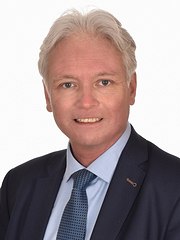 Klaus Sengstock合作论文数Institute for Quantum Physics, Department of Physics, Universität Hamburg19
 Ernst Maria Rasel合作论文数Institute for Quantum Optics, Faculty of Mathematics and Physics, Leibniz Universität Hannover18
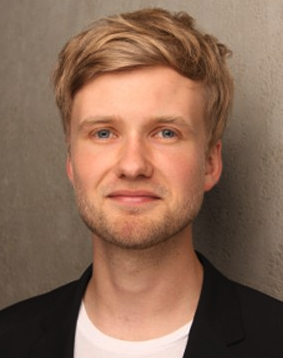 Markus Krutzik合作论文数Joint Lab Integrated Quantum Sensors, Humboldt-Universität zu Berlin;Rydberg Photonics;Ferdinand-Braun-Institut, Leibniz-Institut für Höchstfrequenztechnik17Thijs Wendrich合作论文数13
 Julian Struck合作论文数Institut für Laserphysik, Universität Hamburg12
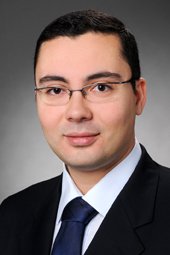 Naceur Gaaloul合作论文数Institut für Quantenoptik, Fakultät für Mathematik und Physik, Leibniz University of Hanover12
 Kai Bongs合作论文数School of Physics and Astronomy, College of Engineering and Physical Sciences, University of Birmingham11
 Wolfgang Ertmer合作论文数Institute of Quantum Optics, Faculty of Mathematics and Physics, Leibniz University Hannover11
 Vladimir Schkolnik合作论文数Institut für Quantenoptik, Leibniz Universität Hannover10Hannes Duncker合作论文数9
 Niels Kjaergaard合作论文数Niels Bohr Institute, University of Copenhagen9
 Philippe Bouyer合作论文数Institute of Physics, University of Amsterdam;Eindhoven University of Technology;Institut d'optique Graduate School;MuQuans;Laboratoire Photonique, Numérique et Nanosciences9
 Moritz Mihm合作论文数8
 F. Sorrentino合作论文数INFN, Sezione di Genova, I-16146 Genova, Italy.8Christian Kürbis合作论文数8
 Claus Lämmerzahl合作论文数Gauß-Olbers Space Technology Transfer Center, Universität Bremen8
 Claus Braxmaier合作论文数Institut für Mikroelektronik, Universität Ulm8
 Eugene Polzik合作论文数Niels Bohr Institute, University of Copenhagen8
 Weinberg Malte合作论文数7
 Simonet Juliette合作论文数7Andreas Wicht合作论文数7
 Sven Herrmann合作论文数Center of Applied Space Technology and Microgravity, University Bremen7
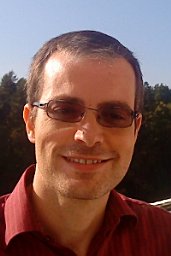 Albert Roura合作论文数Institute of Quantum Technologies, German Aerospace Center7R. Walser合作论文数7
 Daniel Oblak合作论文数Niels Bohr Institute;University of Copenhagen;Niels Bohr Institute, University of Copenhagen7
 Andrea Bertoldi合作论文数LP2N Laboratory, Institut d'Optique d'Aquitaine7
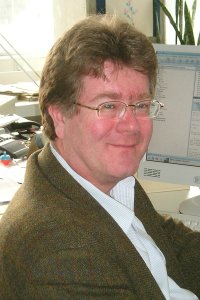 Wolfgang P. Schleich合作论文数Institut für Quantenphysik, Universität Ulm7Maria Langbecker合作论文数6Ahmad Bawamia合作论文数6
 Luigi Cacciapuoti合作论文数ESA Research and Scientific Support Department6
 Tristan Valenzuela合作论文数Institut fuer Physik, Johannes Gutenberg University6
 Jurgen Appel合作论文数Niels Bohr Institute;Copenhagen University;Niels Bohr Institute, Copenhagen University6
 Maciej Lewenstein合作论文数Instituciò Catalana de Recerca i Estudis Avancats;ICFO-Institut de Ciencies Fotoniques6
 Baptiste Battelier合作论文数5
 Mohammad Noaman合作论文数5Anja Kohfeldt合作论文数5Dennis Becker合作论文数Leibniz Univ Hannover, Inst Quantenopt, D-30167 Hannover, Germany5
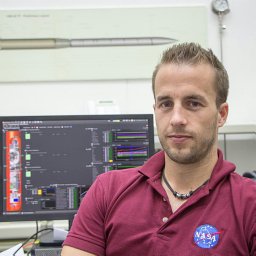 Jens Grosse合作论文数Univ Bremen, Ctr Appl Space Technol & Micrograv ZARM, D-28359 Bremen, Germany5Manuel Popp合作论文数5
 Philipp Hauke合作论文数Pitaevskii BEC Center, University of Trento;Department of Physics, University of Trento5
 Wolf Von Klitzing合作论文数Institute of Electronic Structure and Laser;Foundation for Research and Technology;Institute of Electronic Structure and Laser, Foundation for Research and Technology5Waldemar Herr合作论文数5
 André Eckardt合作论文数Institut für Theoretische Physik, Technische Universität Berlin5
 Stephan Seidel合作论文数Airbus5




