In this work, we tackle a Vehicle Routing Problem with Time Windows, Occasional Drivers and stochastic travel times (Stoch-VRPODTW). We propose a sim-heuristic approach, that combines a Variable Neighborhood Search metaheuristic with simulation (Sim-VNS) to solve the stochastic variant of the problem. The considered approach takes into account the uncertainty of travel times and the penalties derived by time windows violations. The experimental results show the Sim-VNS has better performance of the existing robust model, significantly reducing routing costs and penalties, improving the reliability of the solutions. In particular, Sim-VNS outperforms the robust model on big instances with at least 100 customers.
Abstract This paper introduces the Stochastic Clustered Team Orienteering Problem (SCTOP), a variant of the recently defined CluTOP where travel times are non-negative random variables. This problem aligns with the growing interest in prize-collecting problems and the challenge of optimizing routes under uncertainty. To address the Stochastic CluTOP, we propose a Simheuristic method integrating Monte Carlo simulations within an Adaptive Large Neighborhood Search (SimALNS). Additionally, we incorporate two policies, Continuous and Reactive, to adaptively manage the maximum route length in route generation process. The proposed approaches are validated on a well-established benchmark of the scientific literature to test the benefits of including Monte Carlo simulations in the route-design process and to evaluate the possible contributions of the two policies in case of higher profit variances. The results demonstrate that the Monte Carlo simulation allows SimALNS to consistently achieve higher stochastic performance compared to its deterministic counterpart. Moreover, the results highlight that across all algorithms tested, the Reactive strategy is the most effective.
Metaheuristic algorithms are commonly used for efficiently solving intractable optimization problems, given their ability to provide solutions while requiring relatively low computational efforts.This paper presents KDE-STOP, a novel strategy based on Kernel Density Estimation (KDE) to improve the efficiency of any target single-solution metaheuristic. In our framework, the algorithm analyzes objective function values attained during its initial iterations to estimate the distribution of encountered solutions. This distribution is then used to evaluate the probability of improving the current best solution, enabling the algorithm to reduce runtimes by terminating its execution as soon as it is unlikely to generate better solutions.The effectiveness of KDE-STOP is validated through experiments on a diverse set of metaheuristic and optimization problems, demonstrating its capability of improving the efficiency and effectiveness of a wide variety of target algorithms.
This chapter overviews some string selection and comparison problems, with special emphasis on the optimization and operational research perspective. It also proposes a simple and efficient ILP-based heuristic that can be used for any of the considered problems.
In this paper, we address the problem of routing a fleet of electric vehicles (EVs) to serve a set of customers, geographically distributed, within their time windows. We assume that EVs may also be recharged en route, and the amount of energy recharged at a recharging station (RS) is a decision variable itself, that is, partial recharges are allowed. We also assume that each RS has a limited number of chargers, and, therefore, possible overlaps at RSs among EVs have to be properly managed. We formulate the resulting electric vehicle routing problem with time windows and capacitated recharging stations (EVRPTW-CRS) through mixed integer linear programming (MILP). Given the hardness of the EVRPTW-CRS, we design a MILP-based adaptive large neighborhood search. A result comparison with the state-of-the-art exact algorithm shows both the effectiveness and the efficiency of the proposed matheuristic, on a set of benchmark instances, considering both a linear and a piecewise-linear recharging function. An extensive sensitivity analysis on possible variation of some critical parameters is also carried out.
GRASP is a well-established metaheuristic algorithm that efficiently designs optimized solutions for complex problems. It has achieved notable results in scientific literature, particularly when addressing scenarios with many intricacies, where optimal solutions can be difficult to achieve in short computational times. This is often the case for challenging optimization problems aiming to foster sustainable practices. Our paper discusses the basic components of a GRASP and some of the most notable improvement strategies, while presenting an implementation that is specifically tailored to plan a sustainable framework for distributed additive manufacturing. The problem we address is planning a production schedule for a set of additively manufactured parts required by customers, followed by their subsequent shipment from the fabrication plants to the customers’ location. A comparison between GRASP and CPLEX showed that GRASP can obtain optimal or high-quality solutions while significantly reducing computational times.
The past few years of the COVID-19 pandemic outbreak have shown that optimal management of medical specimens is a key aspect of healthcare logistics, both for addressing the delivery of perishable items such as vaccines, and for ensuring the timely analysis of swabs and samples. Accordingly, recent optimization literature described the problem of optimal collection and delivery of medical specimens, modeled as a multitrip vehicle routing problem with time windows and a completion time objective function. Aiming to achieve good-quality solutions in short computational times, this work describes a hybrid approach, combining a matheuristic construction phase with an adaptive large neighborhood search (ALNS). Our matheuristic relies on a clustering algorithm to yield subsets of the medical specimens that are optimally served by single vehicles of the fleet. The solutions of the matheuristic phase serve as starting points for the ALNS intensification phase. Extensive experimentation on both new and established benchmark problem instances shows that our hybrid method is able to match the optimality of the state of the art on small instances and outperforms the existing exact method by one order of magnitude on larger problems.
The paper explores the Biased Random-Key Genetic Algorithm (BRKGA) in the domain of logistics and vehicle routing. Specifically, the application of the algorithm is contextualized within the framework of the Vehicle Routing Problem with Occasional Drivers and Time Window (VRPODTW) that represents a critical challenge in contemporary delivery systems. Within this context, BRKGA emerges as an innovative solution approach to optimize routing plans, balancing cost-efficiency with operational constraints. This research introduces a new BRKGA, characterized by a variable mutant population which can vary from generation to generation, named BRKGA-VM. This novel variant was tested to solve a VRPODTW. For this purpose, an innovative specific decoder procedure was proposed and implemented. Furthermore, a hybridization of the algorithm with a Variable Neighborhood Descent (VND) algorithm has also been considered, showing an improvement of problem-solving capabilities. Computational results show a better performances in term of effectiveness over a previous version of BRKGA, denoted as MP. The improved performance of BRKGA-VM is evident from its ability to optimize solutions across a wide range of scenarios, with significant improvements observed for each type of instance considered. The analysis also reveals that VM achieves preset goals more quickly compared to MP, thanks to the increased variability induced in the mutant population which facilitates the exploration of new regions of the solution space. Furthermore, the integration of VND has shown an additional positive impact on the quality of the solutions found.
The vehicle routing problem with time windows and occasional drivers (VRPODTW) is an extension of the vehicle routing problem with time windows, where ordinary people may perform deliveries support-ing company drivers to serve a set of customers. We consider a VRPODTW variant with uncertain travel times and a penalty for each missed delivery, i.e., when either company drivers or occasional drivers ar-rive after the ending of the time window and the delivery does not take place. We formulate the problem with a chance-constrained stochastic model imposing a probability on the maximum number of missing deliveries. Then, we propose an equivalent adjustable robust formulation via uncertain polytope whose feasibility guarantees the probability constraint. We define two optimal solution approaches based on Benders' decomposition and column-and-row generation. For the former, we consider logic and optimal-ity cuts. The column-and-row generation relies on a relaxation of the uncertain polytope where mean-ingful realizations of the uncertain travel times are included on the fly. Numerical results are collected on benchmarks for the VRPODTW, properly modified to take into account the uncertainty. We analyze the behavior of the proposed optimal strategies, and discuss the benefit of addressing the uncertain prob-lem showing better resource allocation with the robust solutions compared with the nominal ones, via a sampling analysis.(c) 2022 Elsevier Ltd. All rights reserved.
Crowd-shipping is an innovative delivery model, based on the sharing economy concept. In this framework, delivery operations are carried out by using existing underused resources, i.e., ordinary people who usually travel on the roads with their own vehicles and have empty space to share, in addition to the company’s conventional vehicles. We refer to these non-professional couriers as “occasional drivers”. Occasional drivers are not company’s employees: they are common people who may decide to perform a delivery service during their free time, for a small compensation. Usually, this process is possible thanks to a crowd-shipping platform, which connects the company, the occasional drivers, and the customers. In this paper, we tackle the crowd-shipping model, by developing an approach inspired to variable neighborhood search (VNS) approach, where several machine learning techniques are used to explore the most promising areas of the search space. VNS is a well-known meta-heuristic already used in crowd-shipping applications. In this paper, the learning strategies embedded into the framework have shown to improve the effectiveness of the basic framework.
This paper describes a biased random-key genetic algorithm (BRKGA) with implicit path-relinking for the Vehicle Routing Problem with Occasional Drivers (VRPOD). After a review of the relevant literature, the paper describes a proposed decoder and how BRKGA parameters are set. Experimental results show the efficacy of the proposed approach.
Every day, resources are allocated to the transportation of prisoners to and from services such as hospitals and court proceedings. The optimal allocation of the resources - such as protected vehicles, drivers, and guards - is a complex task that requires significant efforts of human planners. For this reason, a recent paper described the Prisoner Transportation Problem (PTP), that aims to optimize the transportation of convicts between origin-destination pairs within pre-defined time windows. In addition to the similarities with the Vehicle Routing Problem with Time Windows, the PTP presents many additional challenges induced by the use of multi-comparted vehicles and incompatibility constraints, related to the safety of both prisoners and personnel. To efficiently solve the PTP, this paper proposes a GRASP approach, that was tested on a dataset of real -size instances, and the results show significant improvements with respect to the only competing approach proposed in the literature, both in terms of solution quality and computational times required to find them.
In this article, the Resource Constrained Clustered Shortest Path Tree Problem is defined. It generalizes the classic Resource Constrained Shortest Path Tree Problem since it is defined on an undirected, complete and weighted graph whose set of nodes is partitioned into clusters. The aim is then to find a shortest path tree respecting some resource consumption constraints and inducing a connected subgraph within each cluster. The main support and motivation for studying this problem are related, among the others, to the design of telecommunication networks, and to Disaster Operations Management. In this work, we present a path-based formulation for the problem, addressing the case of local resource constraints, that is, resource constraints on single paths. For its resolution, a Branch&Price algorithm featuring a Column Generation approach with Multiple Pricing Scheme is devised. A comprehensive computational study is conducted, comparing the proposed method with the results achieved by the CPLEX solver, adopted to solve the mathematical model. The numerical results underline that the Branch&Price algorithm outperforms CPLEX, both in terms of solution cost and time.
Given an undirected and edge-colored graph with non-negative edge lengths, the aim of the Rainbow Steiner Tree Problem (RSTP) is to find a minimum Steiner Tree that uses at most one edge for each color. In this paper, the RSTP is introduced, a mathematical model is proposed to formally represent the problem and its theoretical properties are investigated. Since the RSTP belongs to the NP-class, two heuristic methods are designed: a Lagrangian relaxation approach and a multistart algorithm. Extensive computational experiments are carried out on a significant set of test problems to empirically evaluate the performance of the proposed approaches. The computational results show that the two approaches are both effective and efficient compared to the ILOG CPLEX solver.
Due to the recent worries about the environment, the transportation companies are incentivized to use Alternative Fuel Vehicles (AFVs) instead of the conventional ones. However, due to the limited AFV driving range and since the Alternative Fuel Stations (AFSs) are usually not widespread on the territory, the routes of AFVs have to be properly planned in order to prevent them from remaining without the sufficient fuel to reach the depot or the closest station. The Green Vehicle Routing Problem (G-VRP) aims at determining the AFVs routes, each one serving customers within a maximum duration, minimizing the total travel distance and, if necessary, including stops at AFSs. Contrary to G-VRP, G-VRP with Capacitated AFSs (G-VRP-CAFS) more realistically assumes that each AFS has a limited number of fueling pumps and therefore prevents overlapping in refueling operations. In this paper, we propose a Greedy Randomized Adaptive Search Procedure (GRASP), which properly uses some theoretical results and efficiently solves large-sized instances of G-VRP-CAFS. Computational results carried out on both benchmark instances and large-sized instances show the effectiveness and the efficiency of the proposed GRASP.
The Shortest Path Problem (SPP) is among the most studied problems in Operations Research, for its theoretical aspects but also because it appears as sub-problem in many combinatorial optimization problems, e.g. Vehicle Routing and Maximum Flow-Minimum Cost problems. Given a sequence of SPPs, suppose that two subsequent instances solely differ by a slight change in the graph structure: that is the set of nodes, the set of arcs or both have changed; then, the goal of the reoptimization consists in solving the kth SPP of the sequence by reusing valuable information gathered in the solution of the (k−1)th one. We focused on the most general scenario, i.e. multiple changes for any subset of arcs, for which, only the description of a dual-primal approach has been proposed so far [S. Pallottino and M.G. Scutell‘a, A new algorithm for reoptimizing shortest paths when the arc costs change, Oper. Res. Lett. 31 (2003), pp. 149-160.]. We implemented this framework exploiting efficient data structures, i.e. the Multi Level Bucket. In addition, we compare the performance of our proposal with the well-known Dijkstra's algorithm, applied for solving each modified problem from scratch. In this way, we draw the line – in terms of cost, topology, and size – among the instances where the reoptimization approach is efficient from those that should be solved from scratch.
 Daniele Ferone合作论文数Univ Milano Bicocca, Dept Informat Syst & Commun DISCo, Milan, Italy37
 Mauricio G. C. Resende合作论文数Department of Industrial and Systems Engineering, University of Washington;Faculty of Center for Applied Optimization, University of Florida30
 Tommaso Pastore合作论文数Department of Structures for Engineering and Architecture, University of Naples “Federico II”,18
 Francesca Guerriero合作论文数Univ. della Calabria, Dip. di Elettronica Informatica e Sistemistica14
 Panos M. Pardalos合作论文数Center for Applied Optimization, University of Florida;Department of Industrial and Systems Engineering, University of Florida10Giancarlo Raiconi合作论文数10
 Antonio Napoletano合作论文数Optit srl9
 Serena Fugaro合作论文数Inst Applicat Calculus Mauro Picone, Natl Res Council Italy8
 Raffaele Cerulli合作论文数Dipartimento di Matematica e Informatica, Università degli Studi di Salerno8
 Luigi Di Puglia Pugliese合作论文数5
 Angel A. Juan合作论文数Open University of Catalonia, Barcelona, Spain5
 Ricardo Silva合作论文数5Giovanni Felici合作论文数Istituto di Analisi dei Sistemi ed Informatica "Antonio Ruberti"- CNR4Mgc Resende合作论文数3Galeotti Angela合作论文数3
 Carlos A. S. Oliveira合作论文数3
 Renato De Leone合作论文数School of Science and Technology, Università degli Studi di Camerino3
 Jose Francisco Goncalves Jr合作论文数Instituto de Ciências Biológicas, Universidade Federal de Minas Gerais3Geraldo R. Mateus合作论文数Department of Computer Science, Federal University of Minas Gerais3
 Clayton W. Commander合作论文数Eglin Air Force Base Air Force Research Laboratory, Munitions Directorate3
 Christian Blum合作论文数Artificial Intelligence Research Institute, Spanish National Research Council3Emilia Marchitto合作论文数3Paola Bertolazzi合作论文数Istituto di Analisi dei Sistemi ed Informatica "A. Ruberti" - CNR, Italy3
 Celso C. Ribeiro合作论文数Department of Computer Science, Catholic University of Rio de Janeiro;AT&T Labs Research, Information Sciences Research Center3G C De Vincentiis合作论文数2
 Marc Ruiz合作论文数2
 Edoardo Scalzo合作论文数2Federica Laureana合作论文数2
 Fernando Morales合作论文数Dept Mfg Engn, Univ Nacl Educ Distancia2Dario Asprone合作论文数2
 Giusy Macrina合作论文数Dept Mech Energy & Management Engn, Univ Calabria2
 Aljoscha Gruler合作论文数IN3 Comp Sci Dept, Open Univ Catalonia2A Michelotti合作论文数2
 Angelo Facchiano合作论文数CNR, Inst Food Sci, Avellino, Italy2
 Vincenzo D'Anto合作论文数Dept Oral & Maxillofacial Sci, Univ Naples Federico II2
 Iacopo Cioffi合作论文数Faculty of Dentistry, Graduate Program in Orthodontics, University of Toronto/Centre for the Study of Pain, University of Toronto/Department of Dentistry, Mount Sinai Hospital2
 Luis Velasco合作论文数2G. Scala合作论文数2
 Diego M. Silva合作论文数Federal University of Lavras, Federal University of Minas Gerais2
 Ornella Pisacane合作论文数Dipartimento di Elettronica, Informatica e Sistemistica, Università della Calabria2
 Rafael Martí合作论文数Statistics and Operations Research Department, School of Mathematics, University of Valencia2
 Domenico Asprone合作论文数Department of Structural Engineering, University of Naples “Federico II”,2Martino Pavone合作论文数2
 Costantino Menna合作论文数Department of Structures for Engineering and Architecture, University of Naples Federico II2
 Maurizio Bruglieri合作论文数Dipartimento di Design, Politecnico di Milano2Anna Marabotti合作论文数Institute of Biochemical Sciences, University of Parma2
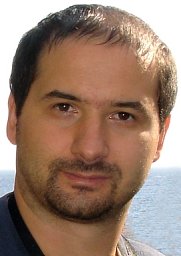 Francesco Carrabs合作论文数Department of Mathematics and Computer Science, University of Salerno2
 Sergio Di Martino合作论文数Dipartimento di Ingegneria Elettrica e Delle Tecnologie Dell'Informazione, University of Naples Federico II2
 Anna Martinez-Gavara合作论文数Departament Estadística i Investigació Operativa, Universitat de València2




