Having a bot for seamless conversations is a much-desired feature that products and services today seek for their websites and mobile apps. These bots help reduce traffic received by human support significantly by handling frequent and directly answerable known questions. Many such services have huge reference documents such as FAQ pages, which makes it hard for users to browse through this data. A conversation layer over such raw data can lower traffic to human support by a great margin. We demonstrate QnAMaker, a service that creates a conversational layer over semi-structured data such as FAQ pages, product manuals, and support documents. QnAMaker is the popular choice for Extraction and Question-Answering as a service and is used by over 15,000 bots in production. It is also used by search interfaces and not just bots.
Existing Machine Learning techniques yield close to human performance on text-based classification tasks. However, the presence of multi-modal noise in chat data such as emoticons, slang, spelling mistakes, code-mixed data, etc. makes existing deep-learning solutions perform poorly. The inability of deep-learning systems to robustly capture these covariates puts a cap on their performance. We propose NELEC: Neural and Lexical Combiner, a system which elegantly combines textual and deep-learning based methods for sentiment classification. We evaluate our system as part of the third task of ‘Contextual Emotion Detection in Text’ as part of SemEval-2019. Our system performs significantly better than the baseline, as well as our deep-learning model benchmarks. It achieved a micro-averaged F1 score of 0.7765, ranking 3rd on the test-set leader-board. Our code is available at https://github.com/iamgroot42/nelec
Most often, chat-bots are built to solve the purpose of a search engine or a human assistant: Their primary goal is to provide information to the user or help them complete a task. However, these chat-bots are incapable of responding to unscripted queries like Hi, what's up, What's your favourite food. Human evaluation judgments show that 4 humans come to a consensus on the intent of a given query which is from chat domain only 77% of the time, thus making it evident how non-trivial this task is. In our work, we show why it is difficult to break the chitchat space into clearly defined intents. We propose a system to handle this task in chat-bots, keeping in mind scalability, interpretability, appropriateness, trustworthiness, relevance and coverage. Our work introduces a pipeline for query understanding in chitchat using hierarchical intents as well as a way to use seq-seq auto-generation models in professional bots. We explore an interpretable model for chat domain detection and also show how various components such as adult/offensive classification, grammars/regex patterns, curated personality based responses, generic guided evasive responses and response generation models can be combined in a scalable way to solve this problem.
Search logs of commercial search engines like Bing or Google reflect the topics of interest in humans at any given point of time. While many of these topics are predictable information needs, some are unusual and point to a curious human mind. In this paper, we propose a novel solution for mining unusual search behaviors triggered by some recent physical events using Bing search logs. Our algorithm successfully identified unusual search behaviors related to physical events during 2016. We define unusual-relatedness and use crowdsource judgment to evaluate quality of our results along with a qualitative analysis. Our results show a 9.5 times improvement over baseline.
In this paper, we solve the following data summarization problem: given a multi-dimensional data set augmented with a binary attribute, how can we construct an interpretable and informative summary of the factors affecting the binary attribute in terms of the combinations of values of the dimension attributes? We refer to such summaries as explanation tables. We show the hardness of constructing optimally-informative explanation tables from data, and we propose effective and efficient heuristics. The proposed heuristics are based on sampling and include optimizations related to computing the information content of a summary from a sample of the data. Using real data sets, we demonstrate the advantages of explanation tables compared to related approaches that can be adapted to solve our problem, and we show significant performance benefits of our optimizations.
With scalable high-performance storage entirely in DRAM, RAMCloud will enable a new breed of data-intensive applications.
Existing uncertain databases have difficulty managing data when exact confidence values or probabilities are not available. Confidence values may be known imprecisely or coarsely, or even be missing altogether. We propose a generalized uncertain database that can manage data with such incomplete knowledge of uncertainty. We develop a semantics for generalized uncertain databases based on Dempster-Shafer theory. We propose a representation scheme for generalized uncertain databases that generalizes the Trio representation. Our approach builds upon Trio's query processing techniques to extend them to operate on generalized uncertain databases.
Prior work has identified set based comparisons as a useful primitive for supporting a wide variety of similarity functions in record matching. Accordingly, various techniques have been proposed to improve the performance of set similarity lookups. However, this body of work focuses almost exclusively on symmetric notions of set similarity. In this paper, we study the indexing problem for the asymmetric Jaccard containment similarity function that is an error-tolerant variation of set containment. We enhance this similarity function to also account for string transformations that reflect synonyms such as "Bob" and "Robert" referring to the same first name. We propose an index structure that builds inverted lists on carefully chosen token-sets and a lookup algorithm using our index that is sensitive to the output size of the query. Our experiments over real life data sets show the benefits of our techniques. To our knowledge, this is the first paper that studies the indexing problem for Jaccard containment in the presence of string transformations.
There has been considerable past work studying data integration and uncertain data in isolation. We develop the foundations for local-as-view (LAV) data integration when the sources being integrated are uncertain. We motivate two distinct settings for uncertain-data integration. We then define containment of uncertain databases in these settings, which allows us to express uncertain sources as views over a virtual mediated uncertain database. Next, we define consistency of a set of uncertain sources and show intractability of consistency-checking. We identify an interesting special case for which consistency-checking is polynomial. Finally, the notion of certain answers from traditional LAV data integration does not generalize to the uncertain setting, so we define a corresponding notion of correct answers.
The query models of the recent generation of very large scale distributed (VLSD) shared-nothing data storage systems, including our own PNUTS and others (e.g. BigTable, Dynamo, Cassandra, etc.) are intentionally simple, focusing on simple lookups and scans and trading query expressiveness for massive scale. Indexes and views can expand the query expressiveness of such systems by materializing more complex access paths and query results. In this paper, we examine mechanisms to implement indexes and views in a massive scale distributed database. For web applications, minimizing update latencies is critical, so we advocate deferring the work of maintaining views and indexes as much as possible. We examine the design space, and conclude that two types of view implementations, called remote view tables (RVTs) and local view tables (LVTs), provide good tradeoff between system throughput and minimizing view staleness. We describe how to construct and maintain such view tables, and how they can be used to implement indexes, group-by-aggregate views, equijoin views and selection views. We also introduce and analyze a consistency model that makes it easier for application developers to cope with the impact of deferred view maintenance. An empirical evaluation quantifies the maintenance costs of our views, and shows that they can significantly improve the cost of evaluating complex queries.
In uncertain and probabilistic databases, confidence values (or probabilities) are associated with each data item. Confidence values are assigned to query results based on combining confidences from the input data. Users may wish to apply a threshold on result confidence values, ask for the "top-$k$'' results by confidence, or obtain results sorted by confidence. Efficient algorithms for these types of queries can be devised by exploiting properties of the input data and the combining functions for result confidences. Previous algorithms for these problems assumed sufficient memory was available for processing. In this paper, we address the problem of processing all three types of queries when sufficient memory is not available, minimizing retrieval cost. We present algorithms, theoretical guarantees, and experimental evaluation.
Entity-resolution was one of the original motivating applications for the Trio system, which has been under development at Stanford over the past several years. Trio-ER is a new variant of the Trio system tailored specifically as a workbench for entity-resolution. Trio-ER enables rapid prototyping of an important basic class of entity-resolution algorithms. We begin by showing several new (and some old) constructs in Trio's data model and query language, and how they enable easy specification and refinement of entity-resolution matching and merging. We then show how iterative entity-resolution algorithms are performed using Trio, how Trio's lineage capabilities are integral to the process, and how confidence values are incorporated at several levels.
We present extensions to Trio for incorporating continuous uncertainty into the system. Data items with uncertain possible values drawn from a continuous domain are represented through a generic set of functions. Our approach enables precise and efficient representation of arbitrary probability distribution functions, along with standard distributions such as Gaussians. We also describe how queries are processed efficiently over this representation, without knowledge of specific distributions. For queries that cannot be answered exactly, we can provide approximate answers using sampling or histogram approximations, offering the user a cost-precision trade-off. Our approach exploits Trio’s lineage and confidence features, with smooth integration into the overall data model and system.
We study how best to schedule scans of large data files, in the presence of many simultaneous requests to a common set of files. The objective is to maximize the overall rate of processing these files, by sharing scans of the same file as aggressively as possible, without imposing undue wait time on individual jobs. This scheduling problem arises in batch data processing environments such as Map-Reduce systems, some of which handle tens of thousands of processing requests daily, over a shared set of files. As we demonstrate, conventional scheduling techniques such as shortest-job-first do not perform well in the presence of cross-job sharing opportunities. We derive a new family of scheduling policies specifically targeted to sharable workloads. Our scheduling policies revolve around the notion that, all else being equal, it is good to schedule nonsharable scans ahead of ones that can share IO work with future jobs, if the arrival rate of sharable future jobs is expected to be high. We evaluate our policies via simulation over varied synthetic and real workloads, and demonstrate significant performance gains compared with conventional scheduling approaches.
The Trio project at Stanford for managing data, uncertainty, and lineage is developed on top of a conventional DBMS. Uncertain data with lineage is encoded in relational tables, and Trio queries are translated to SQL queries on the encoding. Such a layered approach reaps significant benefits in terms of architectural simplicity, and the ability to use an off-the-shelf query processing engine. In this paper, we present special-purpose indexes and statistics that complement the layered approach to further enhance its performance. First, we identify a well-defined structure of Trio queries, relations, and their encoding that can be exploited by the underlying query optimizer to improve the performance using Trio's layered approach. We propose several mechanisms for indexing Trio's uncertain relations and study when these indexes are useful. We then present an interesting order, and an associated operator, which are especially useful to consider when composing query plans. The decision of which query plan to use for a Trio query is dictated by various statistical properties of the input data. We identify the statistical data that can guide the underlying optimizer, and design histograms that enable estimating the statistics accurately.
Trio is a new kind of database system that supports data, uncertainty, and lineage in a fully integrated manner. The first Trio prototype, dubbed Trio-One, is built on top of a conventional DBMS using data and query translation techniques together with a small number of stored procedures. This paper describes Trio-One's translation scheme and system architecture, showing how it efficiently and easily supports the Trio data model and query language.
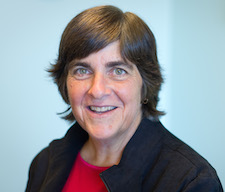 Jennifer Widom合作论文数School of Engineering, Stanford University8
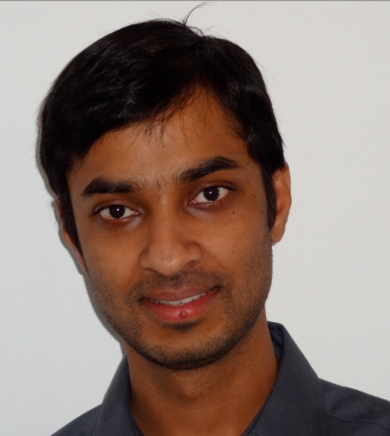
 Anshuman Suri合作论文数DatologyAI3
 Anish Das Sarma合作论文数ClearList Inc.;Airbnb3ram prasad合作论文数2
 Tulasi Menon合作论文数Microsoft Corporation2
 Arvind Arasu合作论文数Stealth Startup2A.K. Suri合作论文数2Hyunjung Park合作论文数Google2
 Christopher Olston合作论文数Google2R.P. Tangri合作论文数2
 Brian F. Cooper合作论文数Google2
 Raghu Ramakrishnan合作论文数Microsoft2
 Robert Ikeda合作论文数MathPapa;InfoLab, Stanford University2
 Utkarsh Srivastava合作论文数Patreon2
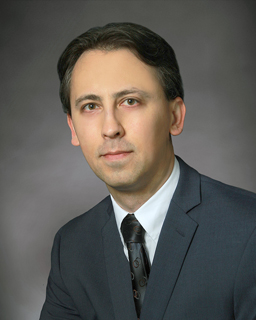 Dan Kifer合作论文数Department of Computer Science & Engineering, School of Electrical Engineering and Computer Science, College of Engineering, Penn State University;Huck Institutes of the Life Sciences, Penn State University2Simerpreet Kaur合作论文数1Gurvinder Singh合作论文数1Aya Kam合作论文数1Eric Stratmann合作论文数1
 Michel Naim Gerguis合作论文数Microsoft Corporation1Duggal Anand合作论文数Microsoft Corporation1
 Somi Reddy Satti合作论文数Microsoft Corporation1Choudhari Prashant合作论文数Microsoft Corporation1Chalabi Achraf合作论文数Microsoft Corporation1Neha Rajput合作论文数Microsoft Corporation1Bansal Prakul合作论文数Microsoft Corporation1Pratik Vineet合作论文数Microsoft Corporation1Katakam Sahithi合作论文数Microsoft Corporation1Kulkarni Rohan合作论文数Microsoft Corporation1Chouragade Chaikesh合作论文数Microsoft Corporation1Ramana Yerneni合作论文数1Niranjan Nayak合作论文数1Puneet Agrawal合作论文数Microsoft1Kedhar Nath Narahari合作论文数Microsoft1
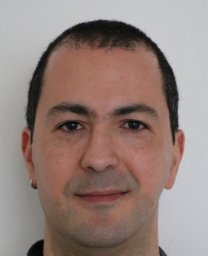 Omar Benjelloun合作论文数Stanford University1
 Christos Kozyrakis合作论文数Department of Electrical Engineering, School of Engineering, Stanford University;Department of Computer Science, School of Engineering, Stanford University1Raghav Kaushik合作论文数1
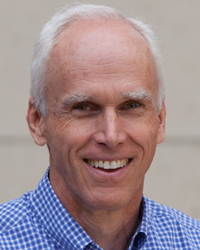 John Ousterhout合作论文数Department of Computer Science, Stanford University1
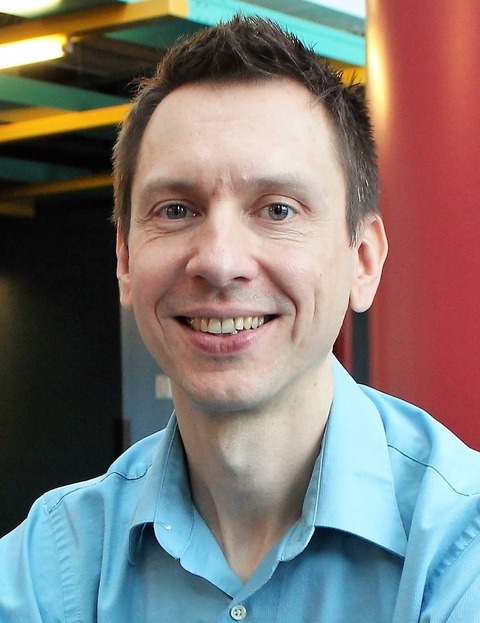 Lukasz Golab合作论文数Department of Management Science and Engineering, Faculty of Engineering, University of Waterloo;David R. Cheriton School of Computer Science, University of Waterloo1
 Subhasish Mitra合作论文数Department of Electrical Engineering, Stanford University;Department of Computer Science, Stanford University1
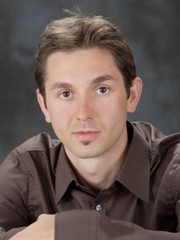 Martin Theobald合作论文数Institut fur Datenbanken und Informationssysteme1Shriraghav Kaushik合作论文数1
 Diego Ongaro合作论文数Stanford University1
 Divesh Srivastava合作论文数AT&T Chief Data Office1
 Jeffrey D. Ullman合作论文数Department of Computer Science, Stanford University;Gradiance Corp1
 Flip Korn合作论文数Google Research1
 Guru M. Parulkar合作论文数Edge Software Products Division, Intel Corporation1Aravind Narayanan合作论文数Stanford University1
 Mendel Rosenblum合作论文数Department of Electrical Engineering, Stanford University;Department of Computer Science, School Engineering, Stanford University1




