5G networks are designed for providing several different services as high speed Internet, low latency and M2M (Machine to Machine) communications. For enforcing such guaranteed services, slicing techniques are of essential importance to ensure isolation between resources allocated to each of these services, especially at the level of RAN (Radio Access Networks) and its time/frequency matrix. Given the scarcity of radio resources, this paper aims at proposing efficient radio resource allocation algorithms and mechanisms for 5G networks, avoiding resource wastes and enforcing slices isolation. The proposed solution highlights a new way of using reinforcement learning, and more specifically the Double DQN (Deep Q-Network) algorithm, based on a slotted approach for 5G resource allocations. The slotted use of Double DQN evaluation exhibits its benefits in terms of allocation performance and low latency.
Although the Service Function Chains (SFCs) embedding problem is broadly investigated in the literature, few works address it in a sliced multi-administrative network federation. In this work, we provide several insights into the problem. First, we describe a new federated-level topology abstraction. Second, we introduce a novel optimization model and heuristic (for large scale), which solve SFC embedding. Third, we conduct experiments on various multi-domain topologies and compare the algorithms regarding resource allocation efficiency and runtime. We analyze the trade-off between slice deployment costs and link utilization. Finally, we emulate two security scenarios on Containernet, Docker, and Open vSwitch architecture.
Low-Power Wide-Area Networks (LPWANs) provide connectivity to widely-spread battery-powered devices. In such networks, very large numbers of terminals compete for radio access. Frame collisions naturally occur in the absence of coordination, which is detrimental to network performance. However, each terminal transmits relatively small and sporadic amounts of data. The design of strategies to operate large-scale LPWAN is challenging. In fact, any introduction of protocol overhead for terminal coordination purposes has a detrimental impact on device energy efficiency and ultimately battery life. Herein, this paper summarizes a doctoral thesis [1] focused on the design of scalable yet energy efficient access schemes for LPWAN. One of the key takeaways of this work is the need for dynamic access protocols, capable of adapting their behavior to the traffic load while minimizing the amount of control plane messages. In order to take a step back from the work accomplished, methodological insights about the approaches and performance evaluation tools used during the thesis are also provided. Finally, research perspectives are discussed. More specifically, the application of such schemes to Direct-to-Satellite IoT networks is foreseen as a means to enable worldwide and efficient low-power networks.
The latest release by the 3rd generation partnership project (3GPP) defines how a nonterrestrial narrowband IoT (NB-IoT) link may be set up between user equipments (UEs) on the ground and low Earth orbit (LEO) satellites equipped with evolved nodes B (eNB). However, a strong assumption is undertaken. Each UE must have global navigation satellite systems (GNSSs) capabilities to properly precompensate the Doppler frequency shift and the propagation delay according to the time-varying relative motion of satellites. Additionally, although Release 18 accounts for discontinuous coverage by LEO satellites, the management of next passes over any spot on the Earth is undefined, thus affecting the system scalability. Remarkably, this contribution enables GNSS-free NB-IoT direct-to-satellite communications with sparse LEO satellite constellations. To do that, the UE periodically wakes up until it detects a satellite pass in its range. By listening to several NB-IoT beacons, the estimated Doppler curve is used to precompensate ongoing communications in frequency and time. Furthermore, the UE uses the standard information sent from the eNB, together with its own estimated location, to guess the next satellite pass without using GNSS. Simulation results reveal that the introduced wake-up strategy allows GNSS-free UEs to save more energy than if equipped with the most power-efficient GNSS chipsets surveyed in 3GPP specifications, promoting the broader deployment of Internet of Things (IoT) devices in remote and underserved areas.
Direct-to-satellite (DtS) communications are becoming increasingly popular in the field of connected objects, since Low Earth Orbit (LEO) satellites can be easily deployed at lower and lower costs. In fact, a DtS Internet of Things (IoT) paves the way for the development of an incredibly vast gamut of monitoring applications for very inaccessible areas, e.g., oceans, mountains, and deserts. In this context, the medium access protocol used for Long Range Wide Area Network (LoRaWAN) has recently been proposed as a viable solution for policing the communication between ground low power devices and LEO satellites equipped with LoRaWAN gateways. However, the default LoRaWAN medium access scheme is based on a "transmit first" policy that inevitably augments the collision rate among the increased number of concurrent devices in the satellite coverage. Instead, this paper focuses on a "listen first" policy enabled through LoRaWAN Class B beacons and the sole adoption of Activation-By-Personalization (ABP). In more detail, a wake-up strategy allowing ground LoRaWAN devices to intermittently switch on and off their own radio for listening to incoming beacons is studied and analyzed through simulations. By means of this investigation, it is possible to find the best timer settings guaranteeing a good compromise between energy-saving and the need to reduce the time to catch the first beacon. Some preliminary results related to the availability of a single LoRaWAN-enabled LEO satellite show that a reduction of 33% in energy consumption can be achieved at the cost of a slightly increased "first catch" time.
Low-Power Wide-Area Networks (LPWANs) provide a low-cost solution for connecting low-power devices over long distances. Among LPWAN technologies, Narrowband IoT (NB-IoT) has gained prominence because of its wide coverage and high reliability. Recently, as the demand for IoT connectivity in remote and underserved regions continues to grow, integrating NB-IoT with Low-Earth Orbit (LEO) satellite networks has gained increasing attention. Due to satellite communication's dynamic nature, this integration poses significant challenges, including synchronization issues and managing high-density User Equipment (UE) during the random access procedure. This digest paper summarizes key contributions from a doctoral thesis that addresses these challenges. A systematic framework based on key performance indicators (KPIs) is proposed to evaluate and optimize satellite IoT communication, addressing reliability, latency, throughput, and energy efficiency trade-offs. A lightweight downlink synchronization method is proposed, which reduces device complexity in LEO satellite environments. In addition, a GNSS-free wake-up strategy is developed to improve energy efficiency, particularly in scenarios with intermittent satellite coverage. To address the challenge of random access in high-density environments, an early detection method is introduced. This method reduces collisions during the random access procedure and improves the network capacity to support many UEs. These contributions provide a comprehensive set of solutions to address the limitations of current NB-IoT and LEO satellite integration strategies, paving the way for efficient and scalable IoT networks in challenging environments.
The Global Navigation Satellite System (GNSS) is the most widely used technology for localization, offering realtime, high-accuracy positioning with global coverage. However, its limitations, such as high energy consumption and signal obstruction in certain environments, make it unsuitable for some emerging applications. One such challenge is the localization of very low-power devices, which require alternative positioning solutions. As a result, research efforts are increasingly focused on improving localization precision and addressing challenges related to energy efficiency, coverage limitations, and signal reliability. This paper provides an overview of existing Internet of Things (IoT) solutions, with a particular emphasis on LoRaWAN (Long Range Wide Area Networks) as the deployed technology and Time Difference of Arrival (TDoA) as the primary localization technique.
The design of a Direct-to-Satellite (DtS) network infrastructure based on the availability of Low Earth Orbit (LEO) satellite constellations has recently emerged as a key enabler of global Internet of Things (IoT) connectivity. In this context, Narrowband IoT (NB-IoT) communications can be leveraged as a standards-based DtS solution that can grant reliable data collection in areas not reachable by traditional terrestrial IoT networks. However, the large coverage area of satellites and the limited connection time increase the probability of collisions during the NB-IoT Random Access (RA) procedure. This is especially true when many concurrent User Equipments (UEs) attempt to access the network simultaneously during the RA procedure. In this sense, the goal of this contribution is to show that the first message exchange between UEs and NB-IoT equipped LEO satellites (i.e., an uplink Msg1 frame followed by a downlink Msg2 frame) can be exploited by UEs to decide whether to try transmitting data into an uplink Msg3 frame or not. Herein, 2 early collision detection methods able to improve the RA success rate in satellite NB-IoT systems are presented. In detail, for both methods UEs estimate their relative position to the satellite and apply a corresponding time shift when transmitting Msg1. By comparing the Time Advance (TA) value received in Msg2 with their expected TA, UEs can determine whether to proceed with Msg3. The Closest First Method (CFM) requires no changes to the satellite and only uses the TA value of the first received Msg1. Instead, the Non-collided First Method (NFM) assumes the satellite can identify individual Msg1 transmissions and responds only to non-collided ones. Some preliminary simulation results show that both methods increase the number of successful accesses compared to the standard approach, even in the presence of position estimation errors.
Low-power wide-area networks connect a large number of battery-powered wireless devices over long distances. Among them, long range wide area networks (LoRaWAN) implement a pure ALOHA medium access scheme to save device energy by minimizing the radio usage. However, frame collisions restrain the network scalability when the traffic load increases. In this context, synchronization can be used to exploit the available bandwidth more efficiently by controlling the timing of frame transmissions and reducing the collision probability. Such strategy allows to increase the network throughput at the cost of an extra energy demand due to the inherent overhead. In that, the entailed network scenario is still supposed to address low power applications. Therefore this article timely presents LoRaSync, an energy-efficient synchronization scheme designed for LoRa networks of any size. An accurate clock drift model was established based on measurements made on real cheap devices, and leveraged to support the design of LoRaSync. Our mechanism has been used to evaluate the same ALOHA-based random access but on a time-slotted basis, thus increasing the maximum achievable throughput compared to the legacy access. Throughput and energy efficiency models are established to evaluate the performances of a LoRaSync-operated network. These models are validated with a simulation environment mimicking large-scale deployments, and then used to determine the most energy efficient slot size for any traffic load. As a final proof of concept, LoRaSync has been implemented and tested on a LoRa testbed to demonstrate the feasibility of our solution on real hardware. LoRaSync is an energy-efficient synchronization mechanism designed to support the implementation of slotted medium access control protocols for LoRa networks. Its robust design is based on real clock drift measurements, and a synchronization beacon skipping strategy is used in order to save power on the end-devices image
When providing services in multi-administrative multi-domain networks, domains usually disclose a topology aggregation composed of a set of abstract links connecting their border nodes. Such an aggregation is motivated by the will of limiting the information exposed to other domains. This, however, leads to inefficient resource usage. In order to enable effective collaborations between domains, in this paper, we propose to enrich the topology aggregation exposed by domains by promoting the inclusion of abstracted non-border network nodes and the network slices supported by each domain. Our evaluations on real and random topologies show the significant potential gains in terms of admission ratios and resource usage that such additions bring.
Accurate assessment of performance is a key and challenging topic in satellite communication (SatCom) systems. Key performance indicators (KPI) include latency, availability, capacity, and flexibility. KPI are important to assess and monitor at different steps of the design, implementation, and operation of a SatCom system. An efficient concept of operations, describing the capabilities of the system and how the system should be operated is also relevant and must rely on accurate performance assessment of selected KPI. This paper proposes a common framework (MAPAN-Management and Performance of Access Networks) for performance assessment at the different phases of the system: planned performance based on theorical assessment and expected configuration, actual or effective performance based on actual measurements, and predictive performance based on actual configuration and projection of expected or desired events. A concept of operations of a live SatCom system based on the MAPAN framework is also proposed. It aims to optimize the efficiency of SatCom systems thanks to continuous adjustment of the contractible and allocable resources, based on actual and predicted system performances. The paper introduces a reference terminal for planned performances, an algorithm for performance averaging throughout a beam and real-time link budget for performance prediction.
This paper presents a method to embed end-to-end federated service chains. First, the ILP model is provided, which solves the resource allocation problem (network and compute), where each demand is defined via bandwidth, delay, and service function chain requirements. Second, an efficient heuristic is proposed and compared experimentally with the ILP model on various known multi-domain topologies. Finally, a network emulation security scenario is implemented in Containernet as a proof of concept.
In this paper, we propose a controllable virtual network service that can be provided on a multi-administrative multi-domain network, and whose behaviour can be programmed and customized according to user needs. A resource allocation algorithm is proposed to compute the resources, from different domains, that are needed to support the virtual network with the required QoS (Quality of Service) and capabilities. An implementation of the service on an OpenFlow-enabled multi-domain network is described. The service is then applied in the context of coalition military network to show its benefits and potential.
5G is a new key technology for future communication networks. It aims at providing a broad range of new services and capabilities for users as well as facilitating its management for network operators (NetOps). Whereas networks still have monolithic architectures, 5G design takes advantage of softwarization and virtualization of its functionalities, for this purpose. However, 5G is also raising a lot of critics, especially related to its energy consumption. This paper then deals with assessing the energetic cost of the future softwarized 5G facilities. To this aim, an experimental platform has been setup taking advantage of the software 5G OpenAirInterface (OAI) implementation. This paper shows the complexity of designing energy consumption measurement tools. It then exhibits the level of energy consumption of the main 5G components, pointing out the ones that need to be optimized.
A federated network can be seen as a collection of network domains, typically under different authorities, who collaborate and share network resources to enable the provision of end-to-end multi-domain services with possibly performance guarantees. To provide these services, domains need to disclose a compact portrayal of their topology. The interconnection of all exposed abstracted topologies serves as input to compute the appropriate paths that are needed to support an end-to-end service. Domains basically resort to a topology abstraction that reduces to a mesh of abstract links that connect to their border nodes. Such an abstraction voluntarily limits the information disclosed to other domains, but, on the other hand, leads to inefficient resource usage. In order to enable effective collaborations between domains, in this paper, we propose to enrich the topology aggregation exposed by domains by including additional abstract topology constructs, e.g. abstract non-border nodes, domain-level slices, etc. We then revisit the virtual link embedding problem to include the proposed aggregation. Our evaluations on real and random topologies show significant gains in terms of admission ratios and resource usage.
5G has been designed for providing the appropriate services for a large range of applications requiring high throughput, low latency, a support for the IoT, or for Industry 4.0 business, etc. One of its strong statements is the sofwarization of most of its functions for providing more flexibility, and a support that can easily evolve for providing new services. In that context, OpenSource implementations of 5G functions arise. One of this implementation is the 5G OpenAirInterface (OAI). This paper then describes how a 5G experimental platform taking advantage of the 5G OAI software suite was designed and deployed at LAAS-CNRS. The aim of the platform is to be as generic as possible for being able to experiment and evaluate all 5G new mechanisms and protocols issued from researchers. This paper then specifically addresses how the compatibility issues between 5G OAI and the equipments (USRP, servers, operating systems, etc.) were fixed. The paper also proposes a performance evaluation of the 5G OAI platform and analyzes its limits.
With the increasing success of the Internet of Things (IoT) industry and the consequent conception of new IoT applications, a significant variety of network design challenges has been unfolded. As a consequence, different Low Power Wide Area Networks (LPWAN) technologies have been developed and marketed to address each specific application need. Among them, the Narrowband IoT (NB-IoT) was developed to target reliable communications over the licensed spectrum, while the Long Range (LoRa) was conceived as a loss-tolerant means over unlicensed frequencies. Recently, satellite LPWAN appeared as a new connectivity option and an affordable solution, particularly suitable for remote and not easily accessible areas. This book chapter timely addresses the opportunities and challenges of such satellite LPWAN architecture by providing a general framework for the evaluation of its performances. The chapter also describes a methodological approach for designing the network, selecting the configuration parameters and the traffic patterns, fitting the best trade-off among reliability, latency, throughput, and energy efficiency.
In the last decade, it has been quickly recognized that backhauling Low Power Wide Area Networks (LPWAN) through Low Earth Orbit (LEO) satellites paves the way to the development of novel applications for a truly ubiquitous Internet of Things (IoT). Among LPWAN communications technologies, Narrowband IoT (NB-IoT) does not suffer from interference by other concurrent technologies since it works on a licensed frequency spectrum. At the same time, thanks to its medium access scheme based on contention resolution and resource allocation, NB-IoT is a key enabler for the specific market slice of IoT applications requiring a good level of reliability. In the architectural configuration analyzed throughout this contribution, an NB-IoT low power User Equipment (UE) can communicate with a LEO satellite equipped with an Evolved Node B (eNB) for a time limited to the visibility window of that satellite from the UE position on the Earth. However, the Doppler effect inherent to the time-varying relative speed of the eNB needs to be dealt with additional resources. The solutions proposed until now are non-trivial, thus making the use of NBIoT for ground-to-satellite communications still expensive and energetically inefficient. Timely, this contribution proposes a procedure for a UE to infer the future values of the Doppler shift from the beacon signals so that frequency pre-compensation can be easily applied in the following interactions during the visibility time. The presented simulation results show that a UE needs to listen to about 10 beacon signals in 1 second to accurately and robustly predict the Doppler curve, thus enabling a lightweight (and eventually truly energy-efficient) implementation of NB-IoT over ground-to-satellite links.
The Long Range (LoRa) modulation keeps gaining relevance in the landscape of low-power sensor networks. Most models used to evaluate the performances of LoRa deployments are based on the assumption that two colliding frames are necessarily lost. Recent findings have shown that the capture effect occurs in these networks, allowing the receiver to sometimes demodulate the frame featured with the highest signal power. This finding notably improves the overall throughput compared to expectations, but in turn decreases the network fairness. In this paper, we analyze the benefits and drawbacks of such an effect. We therefore provide new throughput models for LoRa networks operating Pure and Slotted ALOHA access schemes. For this purpose, an experimental testbed has been setup and used to measure the occurrence probabilities of capture events in several transmission scenarios. The resulting models are validated with real-life data gathered on the same setup. We additionally analyze the fairness in our deployment, showing that the devices featured with the highest average power at the receiver benefit from a higher success rate than others. By computing Jain's index, we show that this unfairness gets more pronounced as the traffic load increases.
 Thierry Gayraud合作论文数LAAS77
 Akram Hakiri合作论文数LAAS35
 Slim Abdellatif合作论文数31Philippe Owezarski合作论文数CNRS (the French center for scientific research)26
 Cédric Baudoin合作论文数15
 Nicola Accettura合作论文数14
 Olivier Alphand合作论文数LAAS-CNRS12
 Anirüddhā Gokhālé合作论文数Institute for Software Integrated Systems, Department of Computer Science, Vanderbilt University;School of Engineering, Vanderbilt University;Department of Electrical and Computer Engineering, Vanderbilt University9Michel Diaz合作论文数Laboratoire d'Analyse et d'Architecture des Systemes9
 Daniela Dragomirescu合作论文数LAAS9Guillaume Kremer合作论文数LAAS, France and Université/ de Toulouse9
 Samir Medjiah合作论文数CNRS, LAAS8
 Lionel Bertaux合作论文数8Carvin, D.合作论文数7Thierry Villemur合作论文数7matthieu gineste合作论文数6
 Laurent Chasserat合作论文数6Armel Francklin Simo Tegueu合作论文数CNRS, LAAS, 7 Ave Colonel Roche, F-31400 Toulouse, France6Baptiste Jacquemin合作论文数6Sébastien Josset合作论文数5Stéphane Combes合作论文数5
 Dallal Belabed合作论文数5
 Douglas C. Schmidt合作论文数Computer Science Department, School of Engineering, Vanderbilt University;Data Science Institute, Vanderbilt University5
 Yann Labit合作论文数5
 Ahmed Akl合作论文数The John Radcliffe Hospital, University of Oxford5Aubin Lecointre合作论文数5
 Fabrice Arnal合作论文数5Dariusz Nogalski合作论文数4patrick gelard合作论文数4Imane Oussakel合作论文数4
 Bassem Sellami合作论文数Faculty of Sciences, University of Tunis El Manar4Roxana Albu合作论文数4Frederic Nivor合作论文数4Olivier Grémillet合作论文数3
 Fehri, Chékra El合作论文数3Drif Youssouf合作论文数3
 Boris Tiomela Jou合作论文数Airbus Defence & Space, Telecom System Department, Toulouse, France3
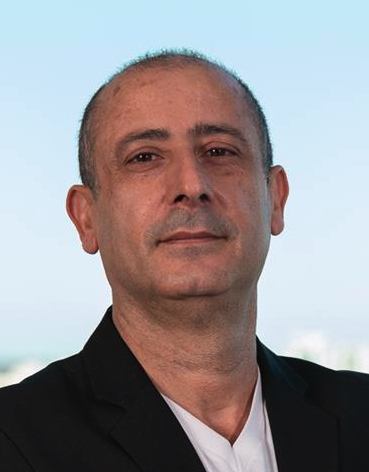 Sadok Ben Yahia合作论文数Center for Industrial Software, The Maersk Mc-Kinney Moller Institute, The Faculty of Engineering, Southern Denmark University;Faculté des Sciences de Tunis3
 Robert Plana合作论文数LAAS3Eddy Fromentin合作论文数3
 Romain Delpoux合作论文数3Gineste, M.合作论文数2David Gauchard合作论文数2M. Diaz合作论文数2Thierry Plesse合作论文数2Clément Cassé合作论文数2David Pradas合作论文数2Julien Henaut合作论文数LAAS-CNRS, Univ. de Toulouse;c2Mikael Capelle合作论文数INSA, Univ Toulouse2




