On Alice in Wonderland Pascal Bruckner (bio) Translated by Nathan J. Bracher A great book is a book that has consequences. We read thousands of pages, but we only remember about ten that sketch a landscape or memories, or evoke an atmosphere in our minds. When these books have the good fortune to be part of children's literature and also read by adults, they continue to suffuse our lives until adulthood and even resonate beyond our mature years through our progeny's acquaintance with them. We wish to revisit the ones that we loved with the spontaneity of our first reading: we have forgotten them, or rather, we remember that we loved and forgot them. Alice in Wonderland, first published in 1862, introduces the century of the pampered child that we continue to live in even now: at some point between 1850 and 1968, this "little democratic devil," as Henry James put it, became the new god of the democratic universe, particularly after the Freudian revolution. But Alice is also a very special ambassador from the earliest years: as ordinary humanity's emissary in the land of nonsense, that very British art of inconsistent syllogism, she plunges into the hurrying rabbit's burrow, just as we plunge into meaningful unreason in order to delight these "old children" that we, who scurry around pointlessly before our eternal slumber, have become. Childhood is the interlude of all these eventualities, the matrix containing all destinies without accomplishing any one of them. But Alice is not just one more fairy tale to be added to those by Grimm or Andersen: more than anyone else, Lewis Carroll succeeded in appropriating traditional stories of magicians and fairies to his own ends. He took hold of a cliché all the better to transgress the genre, which is what Nabokov well understood in translating the book into Russian in 1923. Carroll cleverly summons up all the mythologies of the kittycat, the doggie, all sorts of pets and games like croquet, in order to reassure his readers and then plunge them headfirst into a huge confusion. We find kings, queens, giants, dragons, and unicorns in his texts, but the characters do the opposite of what we expect from them: they blatantly disregard their given role, change their shape, size, and even species, such as the baby boy that Alice holds in her arms and who changes into a little pig (Lewis Carroll, alias Charles Ludwig Dodgson, did not like boys very much). [End Page 23] Shrinking up, stretching out as in that Transformation of a crocodile in Sylvie and Bruno, compressed into just his forehead or strung out over several miles: that is the main interest for Carroll. An elementary Freudian would see an allusion to an erection, but we are obviously not elementary Freudians. With Carroll, trouble always comes after a faultless line of thinking, like the pathological result of extreme logic. There are several enigmas in this book, just as there are a number of charades that various creatures play out for Alice. The first concerns the possible source of puritanism: due to his family background, Lewis Carroll was destined to become a priest. He wound up being a deacon, since his stammering prevented him from preaching with all the passion that he would have liked. Imbued with Anglican culture, pathologically shy, Carroll managed to invent a text that was sufficiently inoffensive to be pleasing to the society of his time, but subversive enough to interest future generations and captivate open minds. He distilled uncomfortable truths all while hiding behind the masks of mischief and riddles. The hidden meanings can be deduced from the literal sense, and these children's dreams remain innocuous to the casual reader. For the ramblings of a chaste math teacher who never married concealed inclinations that would be condemned in our day. We know that Charles Ludwig Dodgson only liked little girls up to the age of 11. He would invite them to dinner, or for an afternoon snack, or to go boating, and liked nothing better than to take pictures of them, often nude, as if in the garden of Eden. As soon as they turned 12, the Reverend turned...
The essay published here is from Bruckner's most recent book, A Brief Eternity, forthcoming with Verso Books.
French essayist and public figure Pascal Bruckner looks at the dissolution and creation of enemies after the end of the Cold War and the rise of Putin in Russia in "The Return of the Enemy". In a biting commentary on the loss of the simple First/Third World structure that marked the global world order before the fall of the Soviet Union, Bruckner exposes the chaos and corruption that has resulted from the power vacuum and also the resuscitation of former ghosts through Putin's use of rhetoric taken from despotic figures like Stalin and Hitler. Bruckner argues that all of the rejoicing with the fall of the Iron Curtain has only made it harder to define the enemy and has allowed those like Putin to return to authoritarian practices of the past and create new monsters.
In two already classic works, Margarete Buber-Neumann, a German communist who took refuge in Moscow after Hitler’s victory, tells how she was deported to Siberia by Stalin, then handed over as a Jew to the Gestapo by the NKVD in 1940, and held prisoner at Ravensbruck. Upon her liberation from the camp in 1945, she recounts how she wandered around a devastated Germany and more particularly how she met up with French communists to whom she explained her double imprisonment. Their reaction was one of astonishment and then outright hostility and almost panic. What, there was collusion between the Little Father of the peoples and the Fürher, between the liberator of Man and the enemy of men? Between one system and the other there was just a difference of degree, not of nature? This was impossible. Had she herself not been manipulated by a fifth German column without knowing it? How could the doctrine of emancipation, Marxism-Leninism, turn into the doctrine of oppression? This exchange says it all. Communism is remarkable in that it was criminal out of love for humanity. Which makes it the modern heresy of a certain Christianity and allows us to see in magnified form the flaws of the former. Marxist powers persecuted, and with great ferocity, Christians of all persuasions—Protestants, Catholics, Orthodox—but they took their principal concepts from that faith. What is the working class if not the redemptive class par excellence , the class that, being nothing, becomes everything? Marxist theoreticians envisioned future society as the earthly fulfillment of the scriptures. Rosa Luxemburg took her cue from the Church Fathers and saw in the communist dream the secular religion of the downtrodden. Che Guevara himself appears in his iconography as a modern reincarnation of Christ when he was known for his cruelty during the Castro revolution. In addition, both systems require a fundamentalist adherence that leaves no critical space in one’s consciousness. "Outside the Church, no salvation," said the Council of Trent in 1545, during the Counter-Reformation. Likewise, the various communist parties would not have words harsh enough to criticize reformist parties (social democratic ones or others) guilty of not wanting to be subsumed in them.
New Perspectives QuarterlyVolume 25, Issue 1 p. 72-73 The Third Wave's Third Way: Networks vs. Elementary Particles - Summer 2006 ALVIN TOFFLER, ALVIN TOFFLERSearch for more papers by this authorRICHARD SENNETT, RICHARD SENNETTSearch for more papers by this authorRICHARD RODRIGUEZ, RICHARD RODRIGUEZSearch for more papers by this authorPASCAL BRUCKNER, PASCAL BRUCKNERSearch for more papers by this authorAYAAN HIRSI ALI, AYAAN HIRSI ALISearch for more papers by this authorLEON DE WINTER, LEON DE WINTERSearch for more papers by this authorHANS MAGNUS ENZENSBERGER, HANS MAGNUS ENZENSBERGERSearch for more papers by this authorMUNAWAR ANEES, MUNAWAR ANEESSearch for more papers by this authorSHIRIN EBADI, SHIRIN EBADISearch for more papers by this authorSAYYID IYAD JAMALEDDINE, SAYYID IYAD JAMALEDDINESearch for more papers by this authorDANIEL ELLSBERG, DANIEL ELLSBERGSearch for more papers by this authorPAN YUE, PAN YUESearch for more papers by this authorJAY ZWALLY, JAY ZWALLYSearch for more papers by this authorMATHIAS DÖPFNER, MATHIAS DÖPFNERSearch for more papers by this authorEDWARD O. WILSON, EDWARD O. WILSONSearch for more papers by this authorALAN MacDIARMID, ALAN MacDIARMIDSearch for more papers by this author ALVIN TOFFLER, ALVIN TOFFLERSearch for more papers by this authorRICHARD SENNETT, RICHARD SENNETTSearch for more papers by this authorRICHARD RODRIGUEZ, RICHARD RODRIGUEZSearch for more papers by this authorPASCAL BRUCKNER, PASCAL BRUCKNERSearch for more papers by this authorAYAAN HIRSI ALI, AYAAN HIRSI ALISearch for more papers by this authorLEON DE WINTER, LEON DE WINTERSearch for more papers by this authorHANS MAGNUS ENZENSBERGER, HANS MAGNUS ENZENSBERGERSearch for more papers by this authorMUNAWAR ANEES, MUNAWAR ANEESSearch for more papers by this authorSHIRIN EBADI, SHIRIN EBADISearch for more papers by this authorSAYYID IYAD JAMALEDDINE, SAYYID IYAD JAMALEDDINESearch for more papers by this authorDANIEL ELLSBERG, DANIEL ELLSBERGSearch for more papers by this authorPAN YUE, PAN YUESearch for more papers by this authorJAY ZWALLY, JAY ZWALLYSearch for more papers by this authorMATHIAS DÖPFNER, MATHIAS DÖPFNERSearch for more papers by this authorEDWARD O. WILSON, EDWARD O. WILSONSearch for more papers by this authorALAN MacDIARMID, ALAN MacDIARMIDSearch for more papers by this author First published: 15 January 2008 https://doi.org/10.1111/j.1540-5842.2008.00949.xCitations: 1AboutPDF ToolsRequest permissionExport citationAdd to favoritesTrack citation ShareShare Give accessShare full text accessShare full-text accessPlease review our Terms and Conditions of Use and check box below to share full-text version of article.I have read and accept the Wiley Online Library Terms and Conditions of UseShareable LinkUse the link below to share a full-text version of this article with your friends and colleagues. Learn more.Copy URL Share a linkShare onFacebookTwitterLinkedInRedditWechat No abstract is available for this article.Citing Literature Volume25, Issue1Winter 2008Pages 72-73 RelatedInformation
This essay examines the complexities and paradoxes of nationalism and patriotism in France and Europe. Specifically, how has the creation of the EU affected notions of national identity in contemporary Europe? And how is it possible to be “nationalistic” in the European context after the horrors committed in the name of nationalism in Europe’s bloody twentieth century? How do recent concerns with the “duty to remember” the victims of these horrors shape conceptions of Europe’s past? Finally, what impact does today’s individualism have on national sentiment in Europe?
Pascal Bruckner is one of France's leading "public intellectuals" and novelists, whose work has elicited praise and stirred controversy for almost three decades. This issue of South Central Review includes two essays by Pascal Bruckner, as well as appreciations of is work and contributions by the French "New Philospher" Andre Glucksmann, Luc Ferry, a philosopher and former Minister of Eduction under Jacques Chirac, the French novelist Serge Koster, and Paul Berman, Writer in Residence at New York University and regular contributor to the New Republic, the Village Voice, and other publications. It also includes scholarly contributions dealing with Bruckner's essays and fiction by two American scholars, Ralph Schoolcraft, Nathan Bracher, and one by the South American scholar and poet Eduardo Espina. Bruckner's contributions to the issue examine two controversial topics, European Anti-Americanism and the concept of vulgarity. From Bruckner's perspective, European anti-Americanism constitutes first and foremost a kind of Girardian scapegoating, where all the ills of modernity as well as other flaws—both of which Europe shares—are blamed on the "other". The reasons are several in Bruckner's diagnosis. The most obvious is a resentment and envy of American power and influence. More central is a deep seated European self-loathing that manifests itself in a misguided idealization of formerly colonized people and an overwhelming sense of guilt over the horrors and abuses of Europe's recent past. Bruckner's second contribution, again following a Girardian logic, examines "vulgarity" as a consequence of a "loss of degree" a failure of a legitimate and legitimizing cultural hierarchy that defines social and cultural virtues and makes them broadly acceptable. When cultural hierarchy is absent or in a state of dissolution "vulgarity" extends its reach, and traditional notions of "good" and "bad" become inoperable, and are even subject to inversion.
New Perspectives QuarterlyVolume 23, Issue 3 p. 23-25 Multiculturalism: Nationalism of the Minorities PASCAL BRUCKNER, PASCAL BRUCKNER One of the so-called “nouvelle philosophes” along with Bernard-Henri Levy and Andre Glucksmann, is one of France's most acclaimed novelists. His books include Bitter Moonand his just published The Saint and a Gigolo. He spoke with NPQ contributing editor Michael Skafidas recently at the PEN Festival for International Literature in New York.Search for more papers by this author PASCAL BRUCKNER, PASCAL BRUCKNER One of the so-called “nouvelle philosophes” along with Bernard-Henri Levy and Andre Glucksmann, is one of France's most acclaimed novelists. His books include Bitter Moonand his just published The Saint and a Gigolo. He spoke with NPQ contributing editor Michael Skafidas recently at the PEN Festival for International Literature in New York.Search for more papers by this author First published: 26 July 2006 https://doi.org/10.1111/j.1540-5842.2006.00821.xAboutPDF ToolsRequest permissionExport citationAdd to favoritesTrack citation ShareShare Give accessShare full text accessShare full-text accessPlease review our Terms and Conditions of Use and check box below to share full-text version of article.I have read and accept the Wiley Online Library Terms and Conditions of UseShareable LinkUse the link below to share a full-text version of this article with your friends and colleagues. Learn more.Copy URL Share a linkShare onFacebookTwitterLinkedInRedditWechat No abstract is available for this article. Volume23, Issue3June 2006Pages 23-25 RelatedInformation
1 . You enjoy a very successful career as one of France s leading public intellectuals and commentators on current French and global events. At the same time, you have been widely recognized as one of your country s most distinguished contemporary novelists. I wonder if you see the two activities as complementary and interwoven, or do they satisfy very different intellectual and creative impulses?
For a half century now, Europe has been beset by the torments of repentance. Reflecting on its past crimes-imperialism, fascism, Stalinism-it sees nothing more in its long history than continual episodes of slaughter and plunder culminating in two world wars. The average European, man or woman, is highly sensitive, forever ready not only to be moved by the world's misfortunes but to claim responsibility for them. For proof, we need only look at the evening of September 11: in spite of their compassion for the victims, a majority of my fellow French citizens arrived at the conclusion that the Americans had deserved it. But let there be no doubt: the same reasoning would have prevailed had the terrorists destroyed the Eiffel Tower or the Notre Dame cathedral. Someone strikes us, we must be guilty. Of our own accord, we validate our enemies' claims in the judgments we bring to bear upon ourselves. Europe has, of course, given birth to its share of monsters, but it has also, in the very same movement, given birth to the theories that would make it possible to understand and destroy those monsters. Here lies Europe's great paradox: feudal despotism engendered democracy, an oppressive Church gave rise to critical thinking, overseas conquests led to anti-colonialism, and revolutionary ideologies have ended up generating anti-totalitarian thought. Similar to a jailer who
Bruckner Pascal. Le cosmopolitisme comme debris. In: Communications, 43, 1986. Le croisement des cultures. pp. 117-126.
 Yue Pan合作论文数Wuhan National Laboratory for Optoelectronics, Huazhong University of Science and Technology1
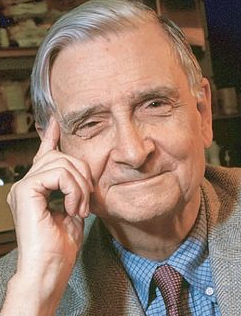 Edward O. Wilson合作论文数Pellegrino University1
 Jay Zwally合作论文数1Sayyid Iyad Jamaleddine合作论文数1Daniel Ellsberg合作论文数1Munawar Anees合作论文数1
 Richard joseph Golsan合作论文数1Ralph Schoolcraft合作论文数1Didier Tabuteau合作论文数1Mathias Dopfner合作论文数1Mary Byrd. Kelly合作论文数1Alvin Toffler合作论文数1
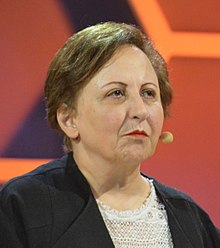 Shirin Ebadi合作论文数Defenders of Human Rights Center1Leon De Winter合作论文数1
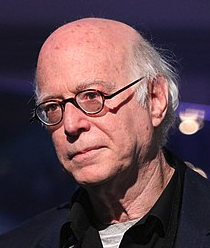 Richard Sennett合作论文数London School of Economics;Center on Capitalism and Society, Columbia University1Alan Macdiarmid合作论文数1Jean-Pol Durand合作论文数1
 Ayaan Hirsi Ali合作论文数1Hans Magnus Enzensberger合作论文数1




