In additive manufacturing (AM), low geometrical tolerances, high-quality material properties, and low surface roughness are challenges. To increase the process capabilities, a promising concept is to tailor process parameters for the fabrication of a part. Instead of selecting identical process parameters to the geometry of the whole part, different sets of process parameters are assigned to different regions named manufacturing elements (MEs). The ME approach offers three main advantages: significant reduction of required sacrificial support structures based on the reduced build angles and less post-processing efforts; reduced AM processing time due to less sacrificial support structures and a higher laser speed; and local adjustment of the material and surface properties. Previous studies have examined the ME approach and applied it to simplified test samples. This study shows an end-to-end implementation of the ME approach for the fabrication of a real-world industrial part and highlights the associated opportunities and challenges for the implementation. The application is demonstrated for a complex-shaped industrial part that can only be manufactured using the ME approach. The industrial part is a winding former of a superconducting solenoid coil. The implementation consists of three major steps: (1) the development of a process parameter model for laser-based powder bed fusion (L-PBF) and stainless steel 316 L; (2) segmentation of the part into MEs; and (3) use of the enhanced design freedom for surface texturing. The ME approach facilitated support-free fabrication of the part with build angles of as low as 25 degrees. The enhanced design freedom enabled surface texturing, which allowed the maximum shear strength to be improved by 63% compared to that of a nontextured surface. The results are discussed, and possible enhancements and research directions are outlined, such as the automated assignment of process parameter sets. The results are applicable to reduce the costs of a superconducting solenoid coil for the treatment of cancer with proton beams. This can enable a larger number of patients to have access to this cancer treatment. In addition, the results are further applicable to increase the performance of the future circular collider at CERN.
We introduce design transformations for rule-based procedural models, e.g., for buildings and plants. Given two or more procedural designs, each specified by a grammar, a design transformation combines elements of the existing designs to generate new designs. We introduce two technical components to enable design transformations. First, we extend the concept of discrete rule switching to rule merging, leading to a very large shape space for combining procedural models. Second, we propose an algorithm to jointly derive two or more grammars, called grammar co-derivation. We demonstrate two applications of our work: we show that our framework leads to a larger variety of models than previous work, and we show fine-grained transformation sequences between two procedural models.
We present the novel grammar language CGA++ for the procedural modeling of architecture. While existing grammar-based approaches can produce stunning results, they are limited in what modeling scenarios can be realized. In particular, many context-sensitive tasks are precluded, not least because within the rules specifying how one shape is refined, the necessary knowledge about other shapes is not available. Transcending such limitations, CGA++ significantly raises the expressiveness and offers a generic and integrated solution for many advanced procedural modeling problems. Pivotally, CGA++ grants first-class citizenship to shapes, enabling, within a grammar, directly accessing shapes and shape trees, operations on multiple shapes, rewriting shape (sub)trees, and spawning new trees (e.g., to explore multiple alternatives). The new linguistic device of events allows coordination across multiple shapes, featuring powerful dynamic grouping and synchronization. Various examples illustrate CGA++, demonstrating solutions to previously infeasible modeling challenges.
PushPull tools are implemented in most commercial 3D modeling suites. Their purpose is to intuitively transform a face, edge, or vertex, and then to adapt the polygonal mesh locally. However, previous approaches have limitations: Some allow adjustments only when adjacent faces are orthogonal; others support slanted surfaces but never create new details. Moreover, self-intersections and edge-collapses during editing are either ignored or work only partially for solid geometry. To overcome these limitations, we introduce the PushPull++ tool for rapid polygonal modeling. In our solution, we contribute novel methods for adaptive face insertion, adjacent face updates, edge collapse handling, and an intuitive user interface that automatically proposes useful drag directions. We show that PushPull++ reduces the complexity of common modeling tasks by up to an order of magnitude when compared with existing tools.
We present a method for interactive procedural generation of parcels within the urban modeling pipeline. Our approach performs a partitioning of the interior of city blocks using user‐specified subdivision attributes and style parameters. Moreover, our method is both robust and persistent in the sense of being able to map individual parcels from before an edit operation to after an edit operation – this enables transferring most, if not all, customizations despite small to large‐scale interactive editing operations. The guidelines guarantee that the resulting subdivisions are functionally and geometrically plausible for subsequent building modeling and construction. Our results include visual and statistical comparisons that demonstrate how the parcel configurations created by our method can closely resemble those found in real‐world cities of a large variety of styles. By directly addressing the block subdivision problem, we intend to increase the editability and realism of the urban modeling pipeline and to become a standard in parcel generation for future urban modeling methods.
3D geoinformatics have entered the digital age, hesitantly in some areas, and rampantly in others. Google Earth and Microsoft Virtual Earth are household names. However, these projects are limited to textured 3D landscapes, aerial 2D images and a few boxy building envelopes. The V-City project is a European research initiative to surpass these limitations, and create a system for intuitively exploring large urban areas with a high degree of detail. Bringing together technologies from geoinformatics, virtual reality, computer graphics, and computer vision, the system constructs detailed 3D city models from geopositioned aerial images and building footprints. For networked browsing, city models are compressed and streamed for interactive viewing of entire landscapes. A unique tactile table has also been developed to let multiple users visualize the same city model in stereo 3D, and interact with it simultaneously using hand gestures.
Traditionally, modeling urban spaces has been a mostly manual task that consumes significant amounts of resources. With the growing requirements of quantity and quality in urban content, there is an imperative need for alternative solutions that allow for fast, semiautomatic urban modeling. This course explains new modeling techniques for urban environments as an important complement to traditional modeling software. It explains how to use procedural, image-based, and simulation-based techniques to efficiently create highly detailed three-dimensional urban models for computer games, movies, architecture, and urban planning. The course surveys five major topics: • Urban layouts and road modeling • Computational building design • Image-based modeling of facades and buildings • Urban simulation and visualization work • Procedural urban modeling in industry
In this paper we propose a real-time rendering approach for procedural cities. Our first contribution is a new lightweight grammar representation that compactly encodes facade structures and allows fast per-pixel access. We call this grammar F-shade. Our second contribution is a prototype rendering system that renders an urban model from the compact representation directly on the GPU. Our suggested approach explores an interesting connection from procedural modeling to real-time rendering. Evaluating procedural descriptions at render time uses less memory than the generation of intermediate geometry. This enables us to render large urban models directly from GPU memory.
The rapid development of computer graphics and imaging provides the modern archeologist with several tools to realistically model and visualize archeological sites in 3D. This, however, creates a tension between veridical and realistic modeling. Visually compelling models may lead people to falsely believe that there exists very precise knowledge about the past appearance of a site. In order to make the underlying uncertainty visible, it has been proposed to encode this uncertainty with different levels of transparency in the rendering, or of decoloration of the textures. We argue that procedural modeling technology based on shape grammars provides an interesting alternative to such measures, as they tend to spoil the experience for the observer. Both its efficiency and compactness make procedural modeling a tool to produce multiple models, which together sample the space of possibilities. Variations between the different models express levels of uncertainty implicitly, while letting each individual model keeping its realistic appearance. The underlying, structural description makes the uncertainty explicit. Additionally, procedural modeling also yields the flexibility to incorporate changes as knowledge of an archeological site gets refined. Annotations explaining modeling decisions can be included. We demonstrate our procedural modeling implementation with several recent examples.
Rome Reborn is a virtual reconstruction of the entire city of ancient Rome at the height of its urban development in 320 AD. The model consists of two kinds of digital reconstructions: Class I elements (whose position, identification, and design are known with great accuracy); and Class II elements (whose building type and location are known only in a general way). Within the Aurelian walls, there are more than 7000 buildings. Of these, ca. 250 fall into Class I, and the rest into Class II. By their very nature, Class I elements can be digitally modeled with a high level of detail and confidence; Class II elements cannot. The challenge in modeling an entire city such as ancient Rome (and, by extension, many other sites known from incomplete archaeological data) is to harmonize the mode of representation of these two classes of buildings. This paper describes how we utilized procedural and parametric modeling techniques to create visually compelling and detailed models of the Class II elements of the digital model of ancient Rome. Procedural modeling methods made the modeling process very efficient without sacrificing detail or quality. Furthermore, the flexibility of the approach helps to quickly change and regenerate the model as new scholarship or discoveries warrant.
The complexity of urban spaces and of the phenomena that take place in them calls for the use of customized computational tools within the city planning and design workflow. We develop a framework that benefits different parts of this workflow, including the design of 3D representations of planned developments, the estimated prediction of the effects of these developments on city behavior, and the visualization of these effects for further analysis. Our approach infers values of urban model variables from user-specified geometric and behavioral constraints and high-level design goals, enforces the procedural generation process to produce geometric assets that behaviorally and geometrically resemble plausible real-world cities, and automatically creates 3D urban models for visualizing behavioral phenomena occurring in urban spaces. Our framework allows users to experiment with alternative spatial and functional configurations of a city, while interactively receiving visual and quantitative feedback that facilitates assessing and understanding the effects of their choices.
We present a simulation system that can simulate a three‐dimensional urban model over time. The main novelty of our approach is that we do not rely on land‐use simulation on a regular grid, but instead build a complete and inherently geometric simulation that includes exact parcel boundaries, streets of arbitrary orientation, street widths, 3D street geometry, building footprints, and 3D building envelopes. The second novelty is the fast simulation time and user interaction at interactive speed of about 1 second per time step.
Film and game studios can no longer meet audience demand for visual content by increasing production budgets. Instead they are turning to procedural modeling, particularly for modeling cities. The authors review procedural modeling, examine the CityEngine tool, and study the use of procedural urban modeling in Electronic Arts' Need for Speed games.
Live multimedia performance demands elaborate interactive media-processing systems. The task of these systems is to serve as expressive instruments that support the artist during composition and performance. In order to deal with the rapidly growing amount and complexity of digital content, we propose the application of computer-assisted content editing techniques. Specifically, we present a software component that addresses the artistic workflow by organising the design space of an art work, and providing means of navigation therein. In addition, we present a framework that employs audio and video analysis methods for automatic non-linear video editing. Together, these techniques effectively help the artist to focus on live composition and performance flow instead of getting lost in an unmanageable parameter space.
Rome Reborn (www.romereborn.virginia.edu) is an international initiative, started in 1996 and based at the Institute for Advanced Technology in the Humanities (IATH; see www.iath.virginia.edu), to create 3D urban models illustrating the development of ancient Rome from the first settlement in the late Bronze Age (ca. 1,000 B.C.) to the depopulation of the city in the early Middle Ages (ca. A.D. 550). Other institutional partners have included the Politecnico di Milano, UCLA, the Université de Caen, and the Ausonius Institute at the Université de Bordeaux-III. Commercial rights to Rome Reborn have been exclusively licensed to Past Perfect Productions s.r.l., a corporation based in Rome, Italy (http://www.pastperfectproductions.com/).
This paper addresses the problem of interactively modeling large street networks. We introduce an intuitive and flexible modeling framework in which a user can create a street network from scratch or modify an existing street network. This is achieved through designing an underlying tensor field and editing the graph representing the street network. The framework is intuitive because it uses tensor fields to guide the generation of a street network. The framework is flexible because it allows the user to combine various global and local modeling operations such as brush strokes, smoothing, constraints, noise and rotation fields. Our results will show street networks and three-dimensional urban geometry of high visual quality.
 Luc Van Gool合作论文数Computer Vision Lab, Department of Information Technology and Electrical Engineering, ETH Zurich;Institute for Computer Science, Artificial Intelligence and Technology20
 Peter Wonka合作论文数Computer, Electrical and Mathematical Science and Engineering Division, King Abdullah University of Science and Technology11
 Didier Rognan合作论文数Laboratoire d'Innovation Therapeutique, Faculte de Pharmacie, Universite de Strasbourg5
 Stefan Müller Arisona合作论文数Future Cities Laboratory, University of Applied Sciences and Arts Northwestern5
 Matthias Specht合作论文数4Simon Haegler合作论文数4T. Vereenooghe合作论文数3
 Daniel G. Aliaga合作论文数Department of Computer Science, Purdue University3
 Gang Zeng (曾钢)合作论文数School of Intelligence Science and Technology, Peking University3
 Esther Kellenberger合作论文数Laboratoire de RMN, Ecole Supérieure de Biotechnologie de Strasbourg3Simon Schubiger-Banz合作论文数3
 Maarten Vergauwen合作论文数Department of Civil Engineering, Faculty of Engineering Technology, KU Leuven3
 Benjamin Watson合作论文数Department of Computer Science;North Carolina State's Digital Games Research Center3
 Eric Meux合作论文数Laboratoire d’Electrochimie des Matériaux, Université de Metz3Andreas Ulmer合作论文数2
 Eric Boilard合作论文数Department of Microbiology and Immunology, Faculty of Medicine, Université Laval;Centre de Recherche du CHU de Québec-Université Laval;Mitrix.bio2Gilles Guichard合作论文数2
 Markus Lipp合作论文数Vienna University of Technology2
 Gerard Lambeau合作论文数Institut de Pharmacologie Moléculaire et Cellulaire, Université de Nice-Sophia Antipolis;Institut de Pharmacologie Moléculaire et Cellulaire, Centre National de la Recherche Scientifique2Gersande Lena合作论文数2
 Marc Proesmans合作论文数Faculty of Engineering Science, KU Leuven;Department of Electrical Engineering, KU Leuven2Gregor A. Kalberer合作论文数2
 Carlos A. Vanegas合作论文数Purdue University2Basil Weber合作论文数2
 Bernard Frischer合作论文数University of Virginia2Guillaume Bret合作论文数2
 Andy Fuller合作论文数2Jan Halatsch合作论文数ETH2YIH Parish合作论文数1E Koller-Meier合作论文数1Claire Schalon合作论文数1Jordi Rodrigo合作论文数1Kenneth A. Huff合作论文数1André Brem合作论文数1Peter Hofstee合作论文数1
 Chris Sexton合作论文数1
 Julian Ferchow合作论文数inspire AG;z;inspire AG1
 Chris Engels合作论文数ESAT PSI IBBT, Katholieke Univ Leuven1jeanbaptiste de la riviere合作论文数1
 Manuel Biedermann合作论文数ETH Zurich Product Development Group;z Leonhardstrasse 21 8092 Zürich Switzerland;ETH Zurich Product Development Group1Cheryl Lau合作论文数1
 Antje Kunze合作论文数Chair of Information Architecture, ETH Zurich1
 Mirko Meboldt合作论文数Department of Mechanical and Process Engineering, Eidgenossische Technische Hochschule Zurich1Michael Schwarz合作论文数1S. Lienhard合作论文数1Paul Nicodème合作论文数1
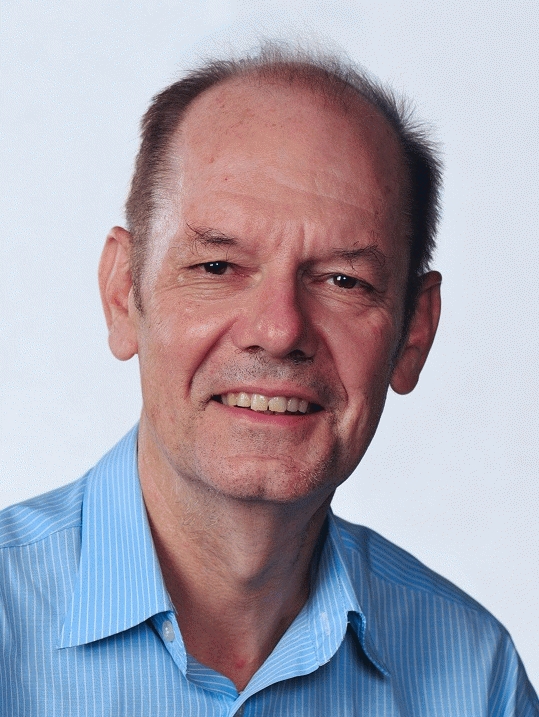 Daniel Thalmann合作论文数EPFL;MIRALab Sarl1
 Eugene Zhang合作论文数School of Electrical Engineering and Computer Science, College of Engineering, Oregon State University1
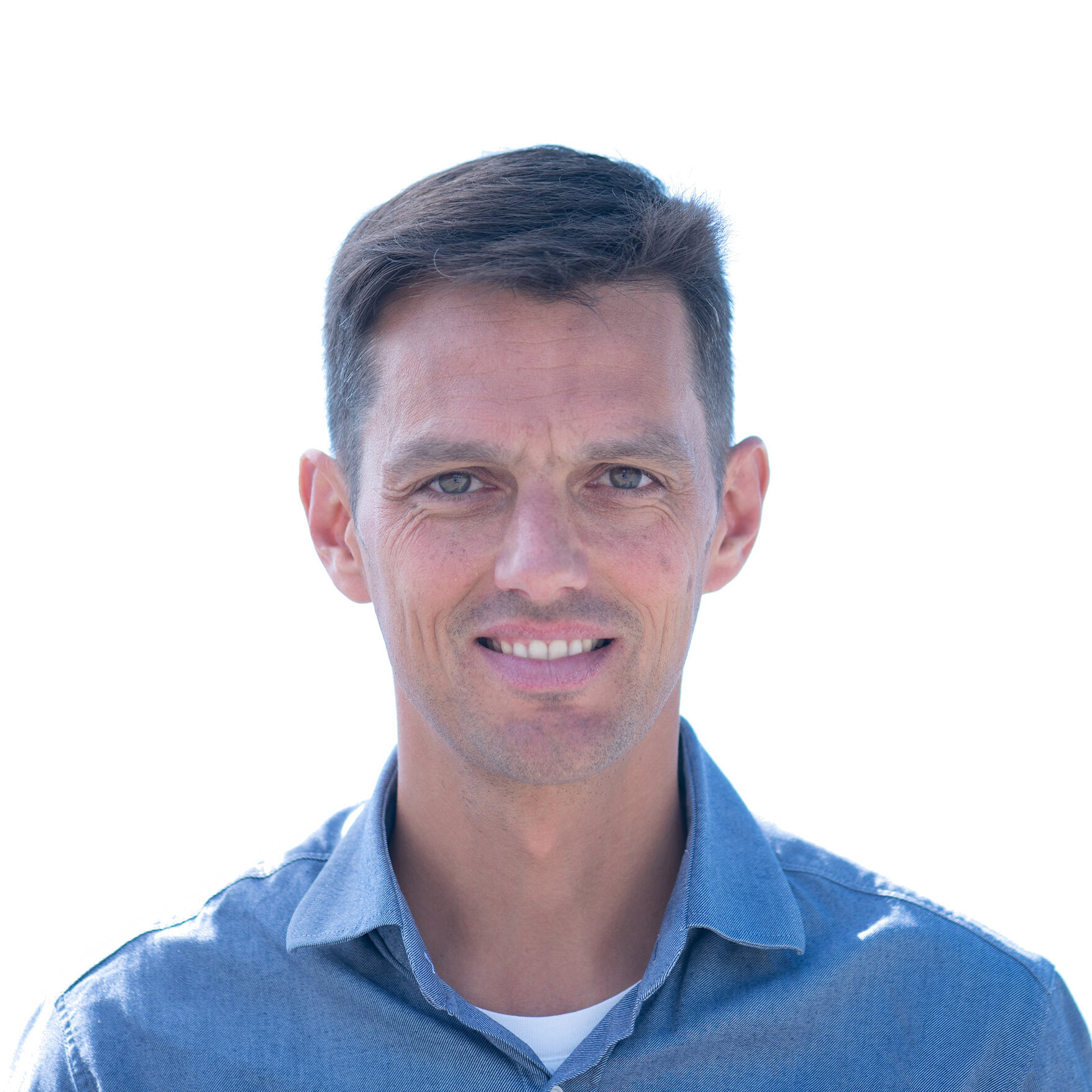 Mark Pauly合作论文数School of Computer and Communication Sciences, École polytechnique fédérale de Lausanne;Rayform SA1




