Spagyrische Mittel helfen nicht nur gegen akute Symptome. Sie packen das Übel an der Wurzel und gehen die Ursachen der Beschwerden an. Es werden spagyrische 7 Mittel vorgestellt, die im Urlaub häufig auftretende Beschwerden lindern können.
Recent studies have shown that the elemental abundances in the Sun are anomalous when compared to most (about 85%) nearby solar twin stars. Compared to its twins, the Sun exhibits a deficiency of refractory elements (those with condensation temperatures T-C >= 900 K) relative to volatiles (T-C <= 900K). This finding is speculated to be a signature of the planet formation that occurred more efficiently around the Sun compared with the majority of solar twins. Furthermore, within this scenario, it seems more likely that the abundance patterns found are specifically related to the formation of terrestrial planets. In this work we analyze abundance results from six large independent stellar abundance surveys to determine whether they confirm or reject this observational finding. We show that the elemental abundances derived for solar analogs in these six studies are consistent with the T-C trend suggested as a planet formation signature. The same conclusion is reached when those results are averaged heterogeneously. We also investigate the dependency of the abundances with first ionization potential (FIP), which correlates well with T-C. A trend with FIP would suggest a different origin for the abundance patterns found, but we show that the correlation with T-C is statistically more significant. We encourage similar investigations of metal-rich solar analogs and late F-type dwarf stars, for which the hypothesis of a planet formation signature in the elemental abundances makes very specific predictions. Finally, we examine a recent paper that claims that the abundance patterns of two stars hosting super-Earth like planets contradict the planet formation signature hypothesis. Instead, we find that the chemical compositions of these two stars are fully compatible with our hypothesis.
We have determined precise stellar parameters and lithium abundances in a sample of 117 stars with basic properties very similar to the Sun. This sample selection reduces biasing effects and systematic errors in the analysis. We estimate the ages of our sample stars mainly from isochrone fitting but also from measurements of rotation period and X-ray luminosity and test the connection between lithium abundance, age, and stellar parameters. We find strong evidence for increasing lithium depletion with age. Our sample includes 14 stars that are known to host planets and it does not support recent claims that planet-host stars have experienced more lithium depletion than stars without planets. We find the solar lithium abundance normal for a star of its age, mass, and metallicity. Furthermore, we analyze published data for 82 stars that were reported to support an enhanced lithium depletion in planet hosts. We show that those stars in fact follow an age trend very similar to that found with our sample and that the presence of giant planets is not related to low lithium abundances. Finally, we discuss the systematic biases that led to the incorrect conclusion of an enhanced lithium depletion in planet-host stars.
An unbiased sample of solar twins shows that the Sun has a normal Li abundance km its age and that, a low Li abundance does not imply the presence of planets We find a tight correlation between Li and age, which holds for all stars analyzed in our sample solar stars with and without, detected giant planets; and stars that may host, terrestrial planets
Aconitum napellus (blauer Eisenhut) ist eine der giftigsten Heilpflanzen. Dennoch setzen sie Homöopathie, TCM, Spagyrik und Anthroposophie in unterschiedlichen Darreichungsformen gerne ein, beispielsweise bei akuten, hoch fieberhaften Infekten oder chronischen Angststörungen. Die Bedeutung der Pflanze in den einzelnen Heilweisen, die Indikationen und Dosierungsempfehlungen beschreiben in diesem Beitrag die vier Fachleute
 Martin Asplund合作论文数Research School of Astronomy and Astrophysics, Australian National University3
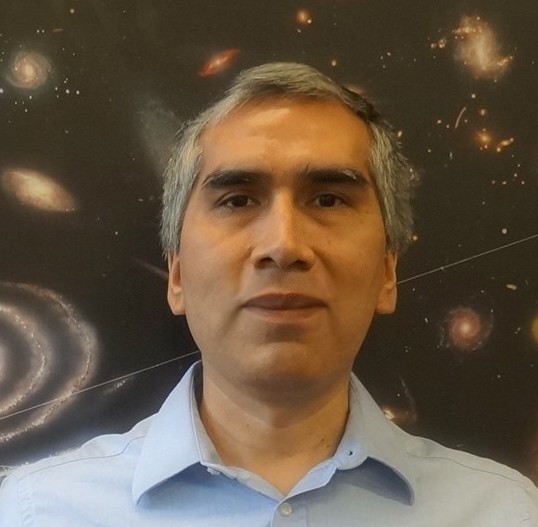 Jorge Luis Meléndez Moreno合作论文数Departamento de Astronomia, Instituto de Astronomia, Geofísica e Ciências Atmosféricas, Universidade de São Paulo3
 Ivan Ramirez合作论文数3
 Karin Lind合作论文数1
 Thomas Bensby合作论文数Lund Observatory, Division of Astrophysics, Department of Physics, Faculty of Science, Lund University1Christa Ehrlich合作论文数1Florian Ploberger合作论文数Universitat Wien1




