This report quantifes the accuracy of passive face presentation attack detection (PAD) algorithms (software only, no hardware solutions) operating on conventional 2D imagery of various presentation attack instruments (PAI). The algorithms were submitted to the Presentation Attack Detection track of the Face Analysis Technology Evaluation (FATE) executed by the National Institute of Standards and Technology (NIST).
This report summarizes the results of the FATE Quality Vector assessment track, which tests face image quality algorithms’ ability to detect specific defects such as non-frontal pose and background non-uniformity in the context of facial images. All algorithms submitted have some success at measuring various quality-related parameters.
This report summarizes the results of the FATE Quality Vector assessment track, which tests face image quality algorithms’ ability to detect specific defects such as non-frontal pose and background non-uniformity in the context of facial images. All algorithms submitted have some success at measuring various quality-related parameters.
This report documents the ability of face recognition algorithms to correctly distinguish face images of identical and fraternal twins. The algorithms were submitted to the ongoing one-to-one verifcation track of the Face Recognition Vendor Test (FRVT) executed by the National Institute of Standards and Technology (NIST).
John Daugman correctly summarized the state of forensic iris recognition circa 2006 for the book Forensic Human Identification: an Introduction by Thompson (CRC Press, 2006). Iris recognition has limited forensic value, because (unlike fingerprints or DNA, for example) (1) iris patterns are not left behind at crime scenes; (2) and in death the pupil usually dilates significantly, the cornea clouds, and the iris tissue degrades relatively rapidly. (3) Moreover, currently available iris databases are quite small (only a few million digitized samples of iris patterns exist today); and because of the novelty of this biometric, (4) such data currently has no legal or established forensic status as admissible evidence. [Numbers () added.] In the intervening ?15 years, all of Daugman s observations, save one, have been overtaken by events: (1) The advent of ubiquitous high resolution video/photography has led to widespread collection/retention/dissemination of imagery of sufficient resolution for iris recognition. (2) Demonstrations of post-mortem iris recognition have been made. (3) Large iris databases have been constructed. The last issue (4) regarding admissible evidence remains to be resolved. Forensic iris was a topic at the June 2018 Iris Experts Group Meeting1. Key issues discussed there were: measurements and analysis that need to be done to provide the underpinnings for a resolution of the forensic status of iris recognition and the development of documentation for such measurements and analysis that will enable explanation of iris collection and recognition to lay audiences, including those in a courtroom. An important point was that the perceptions of the public and the popular media with respect to biometrics and to iris recognition in particular are frequently inaccurate and must be considered in any development of materials designed to explain iris recognition to the lay public. To help resolve the questions discussed at that meeting, this paper reviews the current state of the art in iris recognition, the perceptions of the public regarding iris recognition, and makes suggestions regarding measurements and analysis that will help enable use of forensic iris in appropriate settings going forward. We welcome comments for the next revision of this document. Please send comments to james.matey@nist.gov.
This report is a part of a series of studies on the topic of face morphing, its relevance and implications as a vulnerability to automated face recognition, and methods to aid in detecting morphs. Expanding on concepts introduced in a study conducted by the Dutch Vehicle Authority, this report presents a methodology and quantitative results on the use of automated one-to-many (1:N) face recognition algorithms as a mechanism to potentially detect the presence of morphs. This report is intended to inform end-users and identity credential issuance entities, especially those that accept user-submitted photos, in understanding how a 1:N search against a centralized database might be used to flag suspicious activity related to face morphing. Our proposed methodology analyzes the rank 1 and rank 2 scores that are returned on candidate lists from searching morph and bona fide photos against both consolidated and unconsolidated galleries of 1.6 million unique subjects under new enrollment and renewal scenarios. Morph classifiers are trained using the rank 1 and 2 score pairs from a number of modern 1:N face recognition algorithms to quantify the utility of these scores in detecting morphs.
WhileEvaluation face recognition research has been perennial and popular since its inception, there has been a marked escalation in this research in recent years due to the confluence of several factors, primarily the development of advanced machine learning algorithms, free and robust software implementations thereof, ever faster GPU processors for running them, vast web-scraped face image databases, open performancePerformance benchmarks, and a vibrant face recognition literature.
This is the second of a series of reports on the performance of face recognition algorithms on faces occluded by protective face masks commonly worn to reduce inhalation and exhalation of viruses. This is a continuous study is being run under the Ongoing Face Recognition Vendor Test (FRVT) executed by the National Institute of Standards and Technology (NIST). In our first report, we tested "pre-pandemic" algorithms that were already submitted to FRVT 1:1 prior to mid-March 2020. This report augments its predecessor with results for more recent algorithms provided to NIST after the COVID-19 pandemic was declared. While we do not have information on whether or not a particular algorithm was designed with face coverings in mind, the results show evidence that a number of developers have adapted their algorithms to support face recognition on subjects potentially wearing face masks. The algorithms tested were one- to-one algorithms submitted to the FRVT 1:1 Verification track. Future editions of this document will also report accuracy of one-to- many algorithms.
Human face recognition (Computer science); NIST (National Institute of Standards and Technology)
Although considerable work has been done in recent years to drive the state of the art in facial recognition towards operation on fully unconstrained imagery, research has always been restricted by a lack of datasets in the public domain. In addition, traditional biometrics experiments such as single image verification and closed set recognition do not adequately evaluate the ways in which unconstrained face recognition systems are used in practice. The IARPA Janus Benchmark-C (IJB-C) face dataset advances the goal of robust unconstrained face recognition, improving upon the previous public domain IJB-B dataset, by increasing dataset size and variability, and by introducing end-to-end protocols that more closely model operational face recognition use cases. IJB-C adds 1,661 new subjects to the 1,870 subjects released in IJB-B, with increased emphasis on occlusion and diversity of subject occupation and geographic origin with the goal of improving representation of the global population. Annotations on IJB-C imagery have been expanded to allow for further covariate analysis, including a spatial occlusion grid to standardize analysis of occlusion. Due to these enhancements, the IJB-C dataset is significantly more challenging than other datasets in the public domain and will advance the state of the art in unconstrained face recognition.
5 Issues Not Yet Fully Addressed by Standards 5.1 Capture Sequence and Cardinality Issues:
BackgroundThe Tattoo Recognition Technology -Evaluation (Tatt-E) was organized by the National Institute of Standards and Technology (NIST) in collaboration with law enforcement to assess and measure the capability of algorithms to perform automated image-based tattoo recognition.Tatt-E is the follow-on to the Tattoo Recognition Technology -Challenge (Tatt-C) 2015 activity [1], which engaged researchers with an open dataset of operationally collected tattoo images and challenge problems to advance image-based tattoo recognition research and development.The Tatt-E activity assesses comparative and absolute accuracy, along with run-time measures on larger, operationally realistic datasets than seen in Tatt-C. Tatt-E Test ActivityThe Tatt-E program was open to participation worldwide.The participation window opened on December 1, 2016, and the submission deadine to the final phase was September 29, 2017.There was no charge to participate.Tatt-E was performed as a large scale empirical evaluation of a total of 12 tattoo recognition algorithms, with participation from two providers -one commercial, MorphoTrak, and one university, the Chinese Academy of Sciences (CAS).The test leveraged large operational datasets comprising tattoo images from law enforcement databases, enabling evaluation with enrollment database sizes of up to 100 000.NIST employed a "lights-out", black-box testing methodology designed to model operational reality where software is shipped and used as-is, without algorithmic training.Core tattoo identification accuracy was baselined over tattoo images used as-is, then traded off against gallery size and search speed.The effects of cropping around the primary tattoo content, skintone, contrast, and tattoo-to-image ratio were assessed, and matching accuracy on sketch images and tattoos collected in the shortwave infrared (SWIR) spectrum are also reported.In addition, performance on algorithmic capability to do tattoo detection and tattoo localization as separate tasks are also documented. Key ResultsKey results for the use cases studied are summarized below.A legend mapping the algorithm letter code to the participating organization is provided in the footer of every page of this report and in Table 1.For the definition of hit rate, true positive detection rate, and localization accuracy, see Section 3. Generally speaking, the higher the hit rate, true positive detection rate, and localization accuracy value, the more accurate the algorithm.
The report describes and presents the results for Text Recognition Algorithm Independent Evaluation (TRAIT) in support of forensic investigations of digital media. These images are of interest to NIST’s partner law enforcement agencies that seek to employ text recognition in investigating serious crimes. This evaluation used images seized in child exploitation investigations. The primary application is the identifcation of previously known victims and suspects, as well as detection of new victims and suspects. The presence of text, for example, on a wall poster or on an item of clothing, may allow a location to be identifed and linked to prior cases. In total, 3 groups took part in this evaluation over three Phases. The evaluation results show that the initial performance of text recognition is low. However, from Phase 1 to Phase 3, the performance of text recognition algorithms has shown signifcant improvement. We hope this evaluation will stir more research in this feld.
Despite the importance of rigorous testing data for evaluating face recognition algorithms, all major publicly available faces-in-the-wild datasets are constrained by the use of a commodity face detector, which limits, among other conditions, pose, occlusion, expression, and illumination variations. In 2015, the NIST IJB-A dataset, which consists of 500 subjects, was released to mitigate these constraints. However, the relatively low number of impostor and genuine matches per split in the IJB-A protocol limits the evaluation of an algorithm at operationally relevant assessment points. This paper builds upon IJB-A and introduces the IARPA Janus Benchmark-B (NIST IJB-B) dataset, a superset of IJB-A. IJB-B consists of 1,845 subjects with human-labeled ground truth face bounding boxes, eye/nose locations, and covariate metadata such as occlusion, facial hair, and skintone for 21,798 still images and 55,026 frames from 7,011 videos. IJB-B was also designed to have a more uniform geographic distribution of subjects across the globe than that of IJB-A. Test protocols for IJB-B represent operational use cases including access point identification, forensic quality media searches, surveillance video searches, and clustering. Finally, all images and videos in IJB-B are published under a Creative Commons distribution license and, therefore, can be freely distributed among the research community.
 Elham Tabassi合作论文数Information Technology Laboratory, National Institute of Standards and Technology25
 Mei Ngan合作论文数21
 George W. Quinn合作论文数19
 James R. Matey合作论文数Department of Electrical and Computer Engineering, United States Naval Academy18
 Arun Ross合作论文数Integrated Pattern Recognition and Biometrics Lab, Department of Computer Science and Engineering, College of Engineering, Michigan State University18
 Geppy Parziale合作论文数10
 Xin Geng (耿新)合作论文数School of Computer Science and Engineering, Southeast University10
 Karthik Nandakumar合作论文数Computer Vision Department, Mohamed Bin Zayed University of Artificial Intelligence;Security, Privacy and Trustworthiness in Artificial Intelligence Laboratory, Mohamed Bin Zayed University of Artificial Intelligence10
 Natalia Schmid合作论文数Lane Department of Computer Science and Electrical Engineering, West Virginia University10Nick Bartlow合作论文数10
 Marios Savvides合作论文数Department of Electrical & Computer Engineering, College of Engineering, Carnegie Mellon University;CyLab Biometrics Center, Carnegie Mellon University;UltronAI;Oosto;Bossa Nova Robotics;HawXeye Inc.10Kaoru Uchida合作论文数9Kayee Hanaoka合作论文数9
 Patrizio Campisi合作论文数Dept. of Applied Electronics, Roma TRE University;Biometric Systems & Multimedia Forensics Laboratory, Roma Tre University9Victor Minchih Lee合作论文数8Leon Gu合作论文数8Takis Perakis合作论文数8Mayank Vasta合作论文数8Nicholas W. D. Evans合作论文数8
 Nigel Allinson合作论文数School of Engineering & Physical Sciences, College of Health and Science, University of Lincoln;School of Computer Science, University of Lincoln8
 Ioannis Patras合作论文数School of Electronic Engineering and Computer Science, Queen Mary University of London8
 Xudong Jiang (蒋旭东)合作论文数School of Electrical and Electronic Engineering, College of Engineering, Nanyang Technological University8
 Dong Yi合作论文数National Pattern Recognition Laboratory, Chinese Academy of Sciences8
 Kai Cao合作论文数Department of Computer Science and Engineering, Michigan State University8
 Shiguang Shan (山世光)合作论文数Key Lab of Intelligent Information Processing, Institute of Computing Technology, Chinese Academy of Sciences;School of Computer, University of Chinese Academy of Sciences8
 Richa Singh合作论文数Department of Computer Science and Engineering, IIT Jodhpur8
 Takeo Kanade合作论文数Robotics Institute, Carnegie Mellon University8
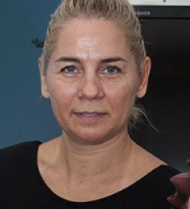 Maja Pantic合作论文数Department of Computing, Faculty of Engineering, Imperial College London;NatWest Group8
 Stan Z. Li (李子青)合作论文数School of Engineering, Westlake University8
 Onur C. Hamsici合作论文数The Ohio State University8
 Aleix M Martinez合作论文数Amazon;Computational Biology and Cognitive Science Laboratory, Department of Electrical and Computer Engineering, College of Engineering, The Ohio State University;Center for Cognitive and Brain Science, College of Engineering, The Ohio State University8
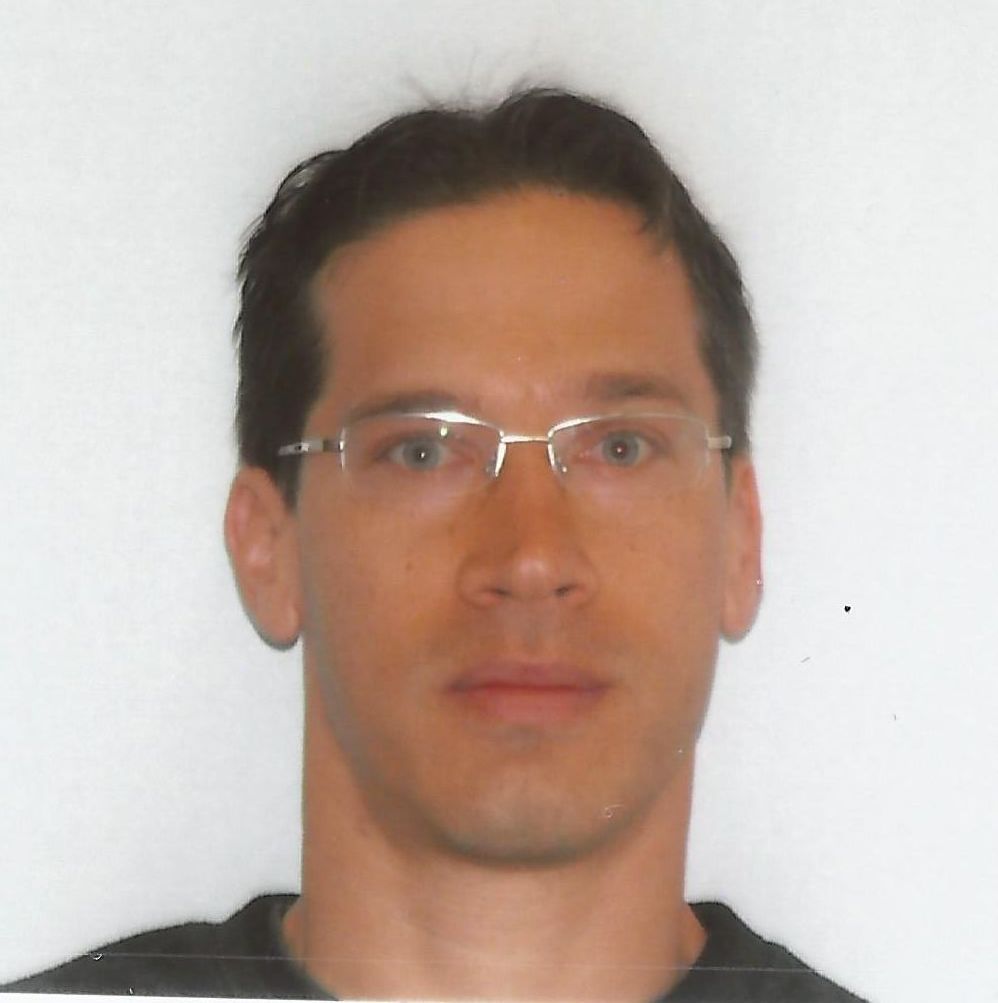 Lior Wolf合作论文数Mentee Robotics;School of Computer Science, Tel Aviv University8
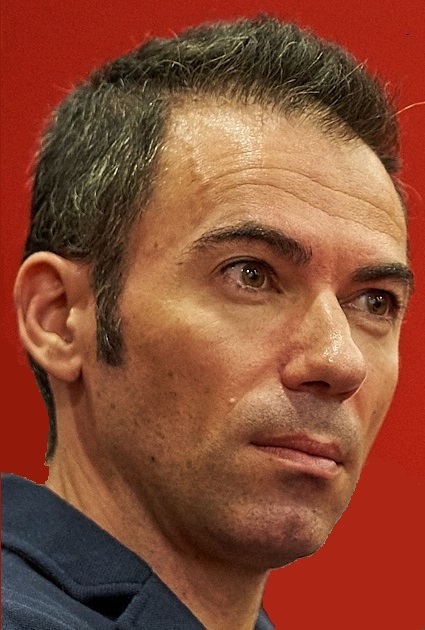 Julian Fierrez合作论文数School of Engineering, Universidad Autonoma de Madrid8
 Michael Bromby合作论文数Department of Law, Glasgow Caledonian University8
 Ming-Hsuan Yang合作论文数Vision and Learning Lab, University of California, Merced;Google DeepMind8
 Robert W. Ives合作论文数8
 Javier Ortega Garcia合作论文数Biometrics and Data Pattern Analytics Lab, Universidad Autonoma de Madrid8
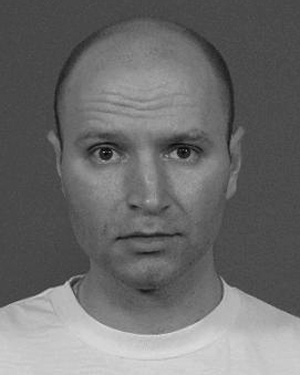 Nathan D. Kalka合作论文数8
 David W. Jacobs合作论文数Department of Computer Science, University of Maryland;Brendan Iribe Center for Computer Science and Engineering, University of Maryland;University of Maryland Institute for Advanced Computer Studies8Ruben Vera Rodriguez合作论文数7
 Norman Poh合作论文数university of surrey7
 Massimo Tistarelli合作论文数Department of Polcoming, Università degli Studi di Sassari7Herman Bergman合作论文数6Brian A. Yamashita合作论文数6Maria Pavlou合作论文数6Wen Gao合作论文数6Jean-François Mainguet合作论文数6Jie Tian合作论文数6Arie Zeelenberg合作论文数6




