Increasing the circularity of resource use in our society has been recognized as a path to sustainability, i.e., transitioning into a more circular economy. There are many different circular strategies to do so, such as reusing products and components, refurbishing and remanufacturing used products, or recycling left-over or used materials. To enable these strategies, it is necessary to share information at the infrastructure level and to communicate between industry sectors along the product life cycle. Enabling semantic interoperability in this information sharing and communication is therefore a key to increasing circularity. However, knowledge representation for the circular economy (CE) domain, which involves many relevant industry sectors related to product life cycles, remains challenging. To bridge this gap, we developed the Circular Economy Ontology Network (CEON) within the Onto-DESIDE project. This ontology network aims to fill gaps in CE by defining cross-sectorial concepts and to enable semantics-aware data documentation. We demonstrate CEON through cross-industry data documentation scenarios spanning construction, electronics, and textile sectors.
Additive manufacturing (AM) is an innovative production approach that has gained significant attention due to its ability to overcome many limitations associated with traditional manufacturing techniques. As a consequence of efforts to optimize various AM processes, especially across different methods, a vast amount of data is either utilized (e.g., material properties, printer specifications, and process settings) or generated (e.g., monitoring data during printing, slicing strategies, and parameter configurations). Effectively managing, understanding, and retrieving information from this data remains a major challenge. The data often exhibits complex interrelationships and is distributed across heterogeneous sources, making it difficult for researchers and industry professionals to extract meaningful insights or make informed decisions. To address these challenges, we propose a knowledge-based approach designed to support the structured management of AM data. The core of this approach is a modular ontology (PBF-AMP-Onto), which serves as a semantic foundation for integrating diverse data sources, enabling semantic querying, and supporting decision-making systems. This ontology facilitates semantics-aware data management, enhances the interpretability of AM processes, and contributes to the optimization of manufacturing outcomes. In this paper, we focus on one of the most advanced AM techniques, powder bed fusion (PBF), with a particular emphasis on electron beam (EB-PBF). To validate the feasibility and practical utility of our approach, we constructed a knowledge graph using a workbench (PBF-AMP-KG Workbench) and based on our ontology using data from real-world EB-PBF use cases. We then demonstrate how domain-relevant queries, such as those concerning process parameters, material behavior, and machine settings, can be answered efficiently using this knowledge graph, showcasing its potential to support researchers in navigating and leveraging AM data more effectively.
The evaluation of player performance is an important topic in sports analytics and is used for team management, scouting, and in sports broadcasts. When evaluating the performance of ice hockey players, many metrics are used, including traditional metrics such as goals, assists, and points and more recent metrics such as Corsi and expected goals. One weakness of such metrics is that they do not consider the context in which the value for the metric was assigned. Other advanced metrics have been introduced, but as they are not easily explainable to practitioners, they may not make it into the hockey discourse. In this paper we introduce new goal-based metrics that (i) are based on traditional, well-known metrics, and thus easily understandable, (ii) take context into account in the form of time, manpower differential, and goal differential and (iii) add a new aspect by taking into account the importance of goals regarding their contribution to team wins and ties. We describe the intuitions behind the metrics, give formal definitions, evaluate the metrics and show correlations to the traditional metrics. We have used data from seven NHL seasons and show which players stand out with respect to the number of goals and the importance of goals.
Accurate player valuation is essential for professional recruitment and transfer negotiations. Yet, widely used sources like Transfermarkt rely on crowd-sourced estimates prone to bias and limited transparency. We present and evaluate data-driven models for predicting the market value of European players using only objective, on-field performance metrics. Our position-aware models, trained on over 24,000 player-season observations using Random Forest and XGBoost are evaluated in a three-stage experimental design that progresses from basic features to domain-informed metrics. Our models are shown to achieve high predictive accuracy, with XGBoost models reaching R-squared values above 0.80 for several positions. Benchmarking against both Transfermarkt and actual transfer fees reveals strong performance in mid-fee ranges and greater deviation in high-value transfers due to external market factors. The results demonstrate the feasibility of scalable, interpretable, and position-specific valuation models based on performance data.
Performance and age have an intertwined relationship in soccer. However, despite the sport's popularity and the great value of insight into this topic to decision-making personnel, this is a fairly unexplored topic, particularly for lower-ranked leagues. In this paper, we use a novel performance metric to investigate the peak age among soccer players in Sweden for goalkeepers, defenders, midfielders, and forwards. Each playing position is analyzed separately using univariate and bivariate methods and is also modeled by a hierarchical Bayesian model with playerspecific age trajectories. The results indicate an average overall peak age between 25 and 27. Forwards typically peak at 25, while defenders and midfielders reach their peak performance between the ages of 25 and 27. For goalkeepers, the peak generally occurs by age 27. The performance decline post-peak is the steepest among forwards and midfielders. Defenders and goalkeepers see a long-lasting and slow decline.
The quality of ontologies and their alignments is crucial for developing high-quality semantics-based applications. Traditional debugging techniques repair ontology networks by removing unwanted axioms and mappings, but may thereby remove consequences that are correct in the domain of the ontology network. In this paper we propose a framework for repairing ontology networks that deals with this issue. It defines basic operations such as debugging, weakening and completing. Further, it defines combination operators that reflect choices in how and when to use the basic operators, as well as choices regarding the autonomy level of the ontologies and alignments in the ontology network. We show the influence of the combination operators on the quality of the repaired network and present an implemented tool. By using our framework together with existing algorithms for debugging, weakening and completing, we essentially provide a blueprint for extending previous work and systems.
Understanding the role of a particular player, or set of players, in a team is an important tool for players, scouts, and managers, as it can improve training, game adjustments and team construction. In this paper, we propose a probabilistic method for quantifying player roles in ice hockey that allows for a player to belong to different roles with some probability. Using data from the 2021-2022 NHL season, we analyze and group players into clusters. We show the use of the clusters by an examination of the relationship between player role and contract, as well as between role distribution in a team and team success in terms of reaching the playoffs.
In a GraphQL Web API, a so-called GraphQL schema defines the types of data objects that can be queried, and so-called resolver functions are responsible for fetching the relevant data from underlying data sources. Thus, we can expect to use GraphQL not only for data access but also for data integration, if the GraphQL schema reflects the semantics of data from multiple data sources, and the resolver functions can obtain data from these data sources and structure the data according to the schema. However, there does not exist a semantics-aware approach to employ GraphQL for data integration. Furthermore, there are no formal methods for defining a GraphQL API based on an ontology. In this work, we introduce a framework for using GraphQL in which a global domain ontology informs the generation of a GraphQL server that answers requests by querying heterogeneous data sources. The core of this framework consists of an algorithm to generate a GraphQL schema based on an ontology and a generic resolver function based on semantic mappings. We provide a prototype, OBG-gen, of this framework, and we evaluate our approach over a real-world data integration scenario in the materials design domain and two synthetic benchmark scenarios (Linköping GraphQL Benchmark and GTFS-Madrid-Bench). The experimental results of our evaluation indicate that: (i) our approach is feasible to generate GraphQL servers for data access and integration over heterogeneous data sources, thus avoiding a manual construction of GraphQL servers, and (ii) our data access and integration approach is general and applicable to different domains where data is shared or queried via different ways.
In the materials design domain, much of the data from materials calculations is stored in different heterogeneous databases with different data and access models. Therefore, accessing and integrating data from different sources is challenging. As ontology-based access and integration alleviates these issues, in this paper we address data access and interoperability for computational materials databases by developing the Materials Design Ontology. This ontology is inspired by and guided by the OPTIMADE effort that aims to make materials databases interoperable and includes many of the data providers in computational materials science. In this paper, first, we describe the development and the content of the Materials Design Ontology. Then, we use a topic model-based approach to propose additional candidate concepts for the ontology. Finally, we show the use of the Materials Design Ontology by a proof-of-concept implementation of a data access and integration system for materials databases based on the ontology.11 This paper is an extension of (In The Semantic Web – ISWC 2020 – 19th International Semantic Web Conference, Proceedings, Part II (2000) 212–227 Springer) with results from (In ESWC Workshop on Domain Ontologies for Research Data Management in Industry Commons of Materials and Manufacturing 2021 1–11) and currently unpublished results regarding an application using the ontology.
 Huanyu Li合作论文数Division for Databases and Information Techniques, Department of Computer and Information Science, Linköping University34
 He Tan合作论文数Dept. of Computer and Information Science
Linköpings universitet
27
He Tan合作论文数Dept. of Computer and Information Science
Linköpings universitet
27 Valentina Ivanova合作论文数Applied AI & IoT Unit, RISE Research Institutes of Swede26
 Zlatan Dragisic合作论文数Sectra21
 Niklas Carlsson合作论文数Linköping University20
 Vaida Jakoniene合作论文数20Ying Li合作论文数18
 Catia Pesquita合作论文数LASIGE, Department of Informatics, Faculty of Sciences, University of Lisbon18
 Ernesto Jiménez-Ruiz合作论文数Department of Computer Science, School of Science and Technology, City St George's, University of London;Advance HE;The Alan Turing Institute15
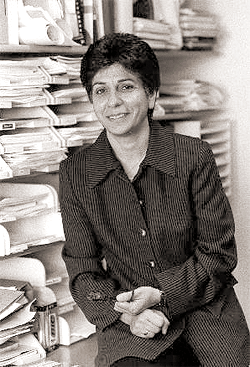 Nahid Shahmehri合作论文数Databases and Information Techniques (ADIT)15
 Ondřej Zamazal合作论文数Department of Information and Knowledge Engineering, Prague University of Economics and Business15
 Daniel Faria合作论文数INESC-ID;Instituto Superior Técnico14
 Qiang Liu合作论文数Department of Computer and Information Science, Linköpings universitet13
 Cássia Trojahn Dos Santos合作论文数Universite Toulouse II Jean Jaurès13
 Eva Blomqvist合作论文数KMACS Lab, HCS Division, Department of Computer and Information Science, Linköping University13Mina Abd Nikooie Pour合作论文数12
 Lin Padgham合作论文数School of Computing Technologies, RMIT University12
 François Fages合作论文数INRIA Rocquencourt12
 Pavel Shvaiko合作论文数Trentino Digitale11
 Rolf Backofen合作论文数Institut für Informatik, Albert-Ludwigs-Universität Freiburg11
 Rickard Armiento合作论文数Dept Phys Chem & Biol IFM, Linkoping Univ11
 Tzanina Saveta合作论文数Computer Science Department, University of Crete10
 Irini Fundulaki合作论文数Institute of Computer Science, Foundation for Research and Technology - Hellas10
 Michael Schroeder合作论文数Biotechnology Center of the TU Dresden (BIOTEC)10
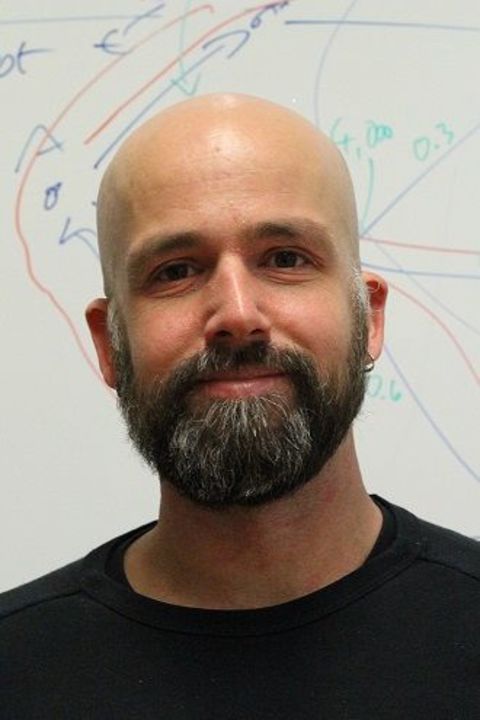 Heiko Paulheim合作论文数School of Business Informatics and Mathematics, University of Mannheim10Gihan Dawelbait合作论文数Biotec, Dresden University of Technology10Lena Strömbäck合作论文数Department of Computer and Information Science, Linkoping University10
 Albert Burger合作论文数and Medical Research Council, Heriot-Watt University9
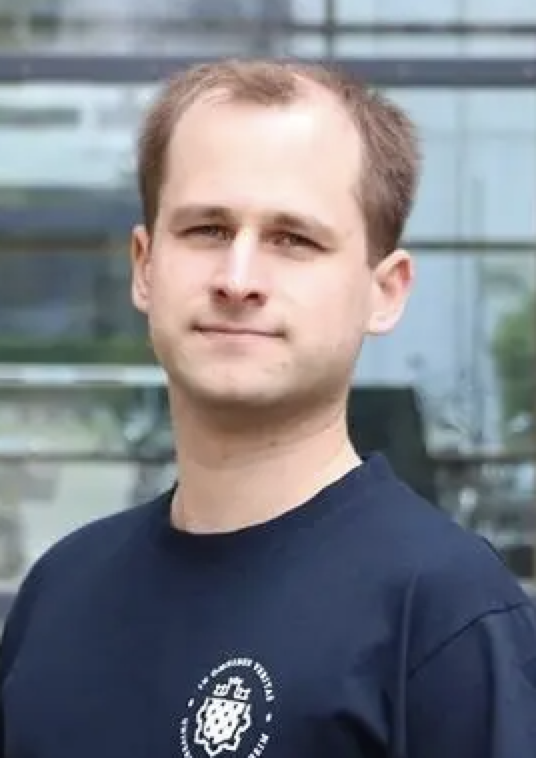 Sven Hertling合作论文数School of Business Informatics and Mathematics, University of Mannheim9
 Sylvain Soliman合作论文数[Short paper] CMBSlib: a Library for Comparing Formalisms and Models of Biological Systems9
 Lu Zhou合作论文数Kansas State University, Manhattan, KS, USA8
 Sebastian Will合作论文数Chair for Bioinformatics;Institute of Computer Science;Chair for Bioinformatics, Institute of Computer Science8
 Werner Nutt合作论文数Faculty of Computer Science, Free University of Bozen-Bolzano;Faculty of Engineering, Free University of Bozen-Bolzano7Andreas Doms合作论文数7
 Naouel Karam合作论文数Fraunhofer FOKUS;Institute for Applied Informatics7
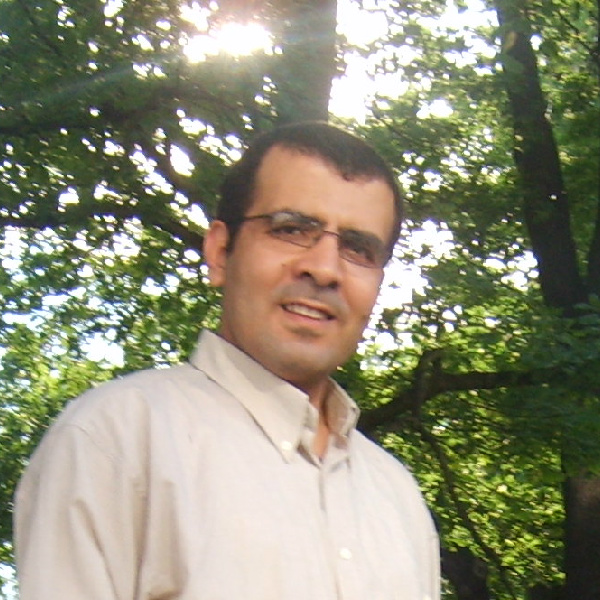 Alsayed Algergawy合作论文数Computer Science Department, Friedrich-Schiller-Universitat Jena, Germany7
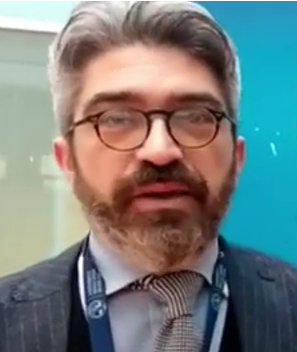 Alfio Ferrara合作论文数ISLab, Dipartimento di Informatica, Università degli Studi di Milano7Jana Vatascinová合作论文数6Beyza Yaman合作论文数Dublin City University6
 Stefano Montanelli合作论文数Department of Computer Science, University of Milan6
 Pedro Barahona合作论文数Dep . de Informática;Universidade Nova de Lisboa;Dep . de Informática, Universidade Nova de Lisboa6
 Kenneth Campbell McLeod合作论文数6
 Ian Harrow合作论文数Ian Harrow Consulting6
 Ludwig Krippahl合作论文数Departamento de Informática, Faculdade de Ciências e Tecnologia, Universidade NOVA de Lisboa6Rasmus Säfvenberg合作论文数5
 Jerome Euzenat合作论文数INRIA;Laboratoire D'informatique De Grenoble;Université Grenoble Alpes5
 Andrea Splendiani合作论文数IQVIA5Anca Hotaran合作论文数AI Lab;National Institute for Research and Development5
 Johan Aberg合作论文数Interaction and Service Design Research Group (IxS)
Department of Computer and Information Science
Linkoping University5
Johan Aberg合作论文数Interaction and Service Design Research Group (IxS)
Department of Computer and Information Science
Linkoping University5