Crow-Omaha kinship systems skew kin terms intergenerationally. Although occurring worldwide, they are relatively infrequent and often exist in historically unrelated clusters: “similar inventions in areas widely apart” (per Boas). Most analyses have been formalist, evolutionist, or sociological. Here, adding some historical linguistics and focusing on the core kin-term equations via the ethnographic and ethnohistoric record of Indigenous Australia and North America, we examine how these systems arise and spread among near neighbors, and across language-family boundaries. We address comparative dynamics, sociological and linguistic, of distribution patterns over time and space. We suggest that skewing, as a social technology that enhances matrilineal-matrilocal (Crow) and patrilineal-patrilocal (Omaha) systems (with some similar and other converse patterns), confers advantages over systems with “crossness” of “Iroquois” or “Dravidian” type in circumstances of demographic stress. We affirm the key to skewing lies in its dispersal of affinal alliance beyond binary exchange and suggest some socio-evolutionary implications.
Felicity Meakins was awarded the Kenneth L. Hale Award 2021 by the Linguistic Society of America (LSA) for outstanding work on the documentation of endangered languages Gurindji is a Pama-Nyungan language of north-central Australia. It is a member of the Ngumpin subgroup which forms a part of the Ngumpin-Yapa group. The phonology is typically Pama-Nyungan; the phoneme inventory contains five places of articulation for stops which have corresponding nasals. It also has three laterals, two rhotics and three vowels. There are no fricatives and, among the stops, voicing is not phonemically distinctive. One striking morpho-phonological process is a nasal cluster dissimilation (NCD) rule. Gurindji is morphologically agglutinative and suffixing, exhibiting a mix of dependent-marking and head-marking. Nominals pattern according to an ergative system and bound pronouns show an accusative pattern. Gurindji marks a further 10 cases. Free and bound pronouns distinguish person (1st inclusive and exclusive, 2nd and 3rd) and three numbers (minimal, unit augmented and augmented). The Gurindji verb complex consists of an inflecting verb and coverb. Inflecting verbs belong to a closed class of 34 verbs which are grammatically obligatory. Coverbs form an open class, numbering in the hundreds and carrying the semantic weight of the complex verb
The ‘section’ type of social categorisation is only found in Indigenous Australia, with one exception in South America that will be discussed briefly in this chapter. The sections are a system of four named divisions in which members of each section have a particular kinship relation to each other section. Corresponding pairs of sections have a relationship of marriage alliance with each other. In the older literature, sections are called ‘classes’, ‘sub-classes’ or ‘marriage classes’. The section ‘How Sections Work’ provides a sketch of the functioning of this system; however, the main aim of the chapter is to attempt to ascertain the origins of the section system.
Radcliffe‐Brown introduced the concept of a ‘Kariera’ type of kinship system in proposing his highly influential typology of Australian social organization, building on his earlier reports of fieldwork in the Pilbara of northern Western Australia, in which the Kariera (Kariyarra) people were taken to represent a widespread type. Radcliffe‐Brown's and other typologies of Australian kinship have generally disregarded the universalist categorizations (going back to Fison and Howitt's assignment of Kariera‐type systems to the Dravidian category), in favour of a scheme based on Australia alone. In the spirit of Radcliffe‐Brown's typology, we propose a diagnostic pattern of kinship term equivalences for grandkin such as FF = MMB (father's father is equivalent to mother's mother's brother), which can be operationalized in search‐map routines of a database known as AustKin and closely approximates to the set of systems generally recognized as ‘Kariera’. However another property of many Kariera grandkin systems which has been claimed to be criterial by some scholars – equivalence between grandkin and grandchild generations (+2 and −2), or Alternate Generation Equivalence – is shown to be more widespread than Kariera and independent of it. With regard to the −1 generation (children and niblings), the pattern among the Kariyarra and more generally in the western Pilbara and Western Desert (where ‘son’ and ‘daughter’ are distinguished) is radically different from the pattern found in the other ‘Kariera’ systems across the rest of the continent, (where ‘woman's child’ vs. ‘man's child’ is the prime distinction). This prompts analysis of the child patterns as independent of the Kariera system. This article also shows how the Kariera system is independent of the four‐section system with which it has been claimed to be related functionally, with sections being a later development. We also encounter overlaps, where more than one equivalence pattern intersect in one language, and overlays, where the variation between more than one equivalence also has social contextual functions. Examples of overlaps analysed here are (1) between Kariera and Aluridja (the Western Desert pattern with cross‐parallel neutralization); and (2) between Kariera and a more radical kind of Alternate Generation Equivalence, where parallel grandkin and grandchildren kin‐types are called siblings (generation 0).
Bioarchaeology provides sophisticated techniques for estimating intra- and intercemetery biological relationships (i.e., biodistances), which can significantly expand anthropological research on kinship, explaining multiple dimensions of social life and identity in prehistory. However, some assumptions guiding the interpretation of results may need reconsideration. Although it is often assumed that descent groups should be homogeneous, social organizational and marriage practices actually produce heterogeneity within descent groups. Interpretations of postmarital residence typically assume that spouses are buried together in the same cemetery, whereas cross-cultural ethnographic patterns suggest that postmortem location does not universally follow residence. Nevertheless, cross-cultural data do indicate that postmortem location is generally predictable by type of descent group and whether membership with natal groups is maintained or transferred upon marriage. These issues are discussed, leading to alternative models on intra-and intercemetery biodistance expectations for matrilineal descent groups, for patrilineal descent groups with and without wives' membership transfers, and for a range of smaller groups under bilateral descent. The influence of common marriage alliance systems on intra-and intergroup phenotypic heterogeneity versus homogeneity are also described. The proposed biodistance expectations for interpreting different kinship and marriage strategies may better position bio-archaeologists to engage other subfields and make substantial contributions to kinship research.
Alfred Howitt, a leading nineteenth-century original anthropologist of Australian Aboriginal people, contributed a detailed account of the sharing of cuts of game according to kinship categories among the Kurnai of Victoria. Other accounts followed in the late twentieth century, some attending to the verbal negotiation involved. A characterisation of these events became dominant: demand sharing in which a person demands a share with a justification in terms of a kinship link. This paper shows that such negotiation over meat sharing among the Gurindji is more indirect, with choice of language varieties sending a pragmatic message that bonds between local groups of people imply responsibilities to give and rights to receive. In so doing, the paper defends the approach to code-switching that emphasises group identity and rights and responsibilities.
Morgan had begun with a conception of the ‘human family’ that had pride of place in the title of his work, Systems of Consanguinity and Affinity of the Human Family. There was ambiguity in this title. It referred on the one hand to the unity and single origin of humankind, taking a position against the popular polygenism of the day. But further than this, it referred to an underlying unity in the systems of kinship terminology of humans. Fison made significant contributions to a theory of kinship based on this unity and universality, drawing evidence from comparison of known systems.
This study investigates the role of human agency in the gene flow and geographical distribution of the Australian baobab, Adansonia gregorii. The genus Adansonia is a charismatic tree endemic to Africa, Madagascar, and northwest Australia that has long been valued by humans for its multiple uses. The distribution of genetic variation in baobabs in Africa has been partially attributed to human-mediated dispersal over millennia, but this relationship has never been investigated for the Australian species. We combined genetic and linguistic data to analyse geographic patterns of gene flow and movement of word-forms for A. gregorii in the Aboriginal languages of northwest Australia. Comprehensive assessment of genetic diversity showed weak geographic structure and high gene flow. Of potential dispersal vectors, humans were identified as most likely to have enabled gene flow across biogeographic barriers in northwest Australia. Genetic-linguistic analysis demonstrated congruence of gene flow patterns and directional movement of Aboriginal loanwords for A. gregorii. These findings, along with previous archaeobotanical evidence from the Late Pleistocene and Holocene, suggest that ancient humans significantly influenced the geographic distribution of Adansonia in northwest Australia.
 Jane Simpson合作论文数College of Arts and Social Sciences, The Australian National University6
 Claire Bowern合作论文数Department of Linguistics, Yale University5
 Rachel Hendery合作论文数Australian Natl Univ, Canberra, ACT 0200, Australia4
 Nick Thieberger合作论文数ARC Centre of Excellence for the Dynamics of Language, Faculty of Humanities and Social Sciences, The University of Queensland4
 Patience L. Epps合作论文数Department of Anthropology, College of Liberal Arts, University of Texas at Austin3
 Felicity Meakins合作论文数School of Languages and Cultures, Faculty of Humanities and Social Sciences, The University of Queensland3
 Jane H. Hill合作论文数Anthropology Department, University of Arizona3
 Barry Alpher合作论文数2Margaret Florey合作论文数2D. J. Penton合作论文数2Thomas Saunders合作论文数2
 Helen Gardner合作论文数2
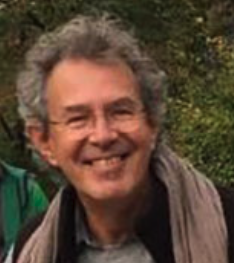 Nicholas (Nick) Evans合作论文数School of Culture, History & Language, Australian National University2Hannah J. Haynie合作论文数Dept Human Dimens Nat Resources, Colorado State Univ2
 Spronck Stef合作论文数Linguistics, School of Culture, History, and Language, The Australian National University;Linguistics, Katholieke Universiteit Leuven;The Australian National University, Katholieke Universiteit Leuven2Keen Ian合作论文数School of Archaeology and Anthropology, Australian National University2
 Tom Guldemann合作论文数2
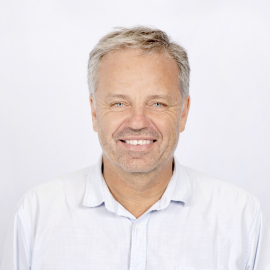 Steven Bird合作论文数Northern Institute, Charles Darwin University;Faculty of Arts & Society, Charles Darwin University2Richard A. Rhodes合作论文数2
 Mary Laughren合作论文数2
 Catherine P. Bow合作论文数University of Melbourne2Harold Koch合作论文数2
 Baden Hughes合作论文数ArtistVerified2
 Laurent Dousset合作论文数CREDO -- EHESS -- AMU2william arthur合作论文数1
 Karen Leanne Bell合作论文数1Peter M. Whiteley合作论文数Amer Museum Nat Hist, New York, NY 10024 USA1
 Catherine Sheard合作论文数Univ St Andrews, Sch Biol, St Andrews, Fife, Scotland1
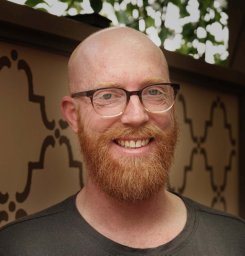 Piers Kelly合作论文数Department of Archaeology, Classics and History, University of New England1
 Maia Ponsonnet合作论文数Discipline Linguist, Univ Western Australia1
 Jo Caffery合作论文数1Clair Hill合作论文数School of Humanities & Languages, Faculty of Arts, Design & Architecture, The University of New South Wales1
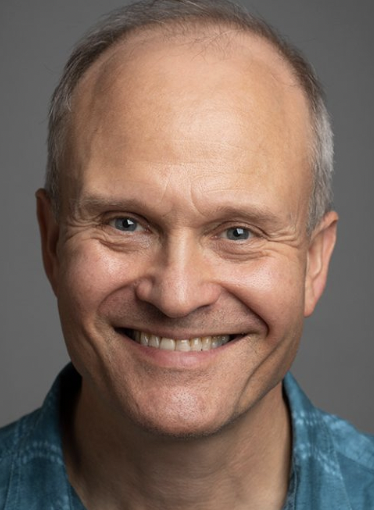 David Baum合作论文数Department of Botany, College of Letters and Science, University of Wisconsin-Madison1
 Zentz Jason合作论文数1
 Gillian Wigglesworth合作论文数University of Melbourne1
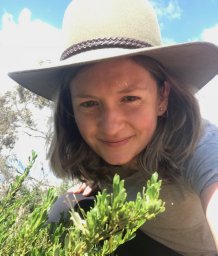 Fowler Rachael合作论文数Centre for Geography and Environmental Science, Monash University;Royal Botanic Gardens Melbourne;Centre for Geography and Environmental Science, Monash University1
 Russell Gray合作论文数Department of Linguistic and Cultural Evolution, Max Planck Institute for Evolutionary Anthropology1
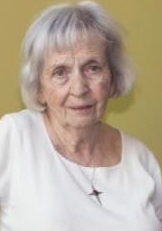 Anna Wierzbicka合作论文数School of Literature, Languages and Linguistics, ANU College of Arts & Social Sciences, Australian National University1
 Nicolas Peterson合作论文数Australian Alintional Uhiversity1
 Peter Kenneth Austin合作论文数School of Oriental;University of London;School of Oriental, University of London1
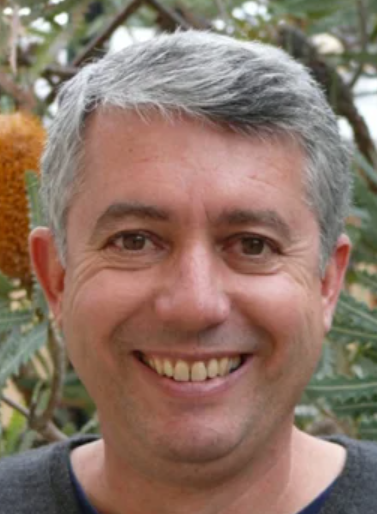 Daniel Vaughan Murphy合作论文数Centre for Sustainable Farming Systems Food Futures Institute, Murdoch University1Helen Mcnair合作论文数1
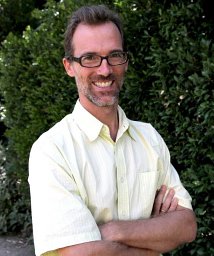 Christian A. Kull合作论文数School of Geography and Environmental Science, Monash University1
 Haripriya Rangan合作论文数School of Geography and Environmental Science, Monash University1
 Keith Hunley合作论文数Paleoanthropology Laboratory, University of Michigan1
 Frances Morphy合作论文数Centre for Aboriginal Economic Policy Research, The Australian National University1




