High-quality 3D streaming from multiple cameras is crucial for immersive experiences in many AR/VR applications. The limited number of views - often due to real-time constraints - leads to missing information and incomplete surfaces in the rendered images. Existing approaches typically rely on simple heuristics for the hole filling, which can result in inconsistencies or visual artifacts. We propose to complete the missing textures using a novel, application-targeted inpainting method independent of the underlying representation as an image-based post-processing step after the novel view rendering. The method is designed as a standalone module compatible with any calibrated multi-camera system. For this we introduce a multi-view aware, transformer-based network architecture using spatio-temporal embeddings to ensure consistency across frames while preserving fine details. Additionally, our resolution-independent design allows adaptation to different camera setups, while an adaptive patch selection strategy balances inference speed and quality, allowing real-time performance. We evaluate our approach against state-of-the-art inpainting techniques under the same real-time constraints and demonstrate that our model achieves the best trade-off between quality and speed, outperforming competitors in both image and video-based metrics.
Existing Gaussian avatar methods typically parameterize geometry on a body-template surface, which entangles the avatar's representation space with the template's deformation space and limits the capture of layered, off-body, and non-rigid clothing geometry. We present PiG-Avatar, which addresses this limitation by using the parametric body model solely for kinematic transport, while representing the avatar as Gaussians anchored in a volumetric canonical space governed by a continuous neural field. This decouples representation from template topology, avoiding the geometric constraints of surface-based parameterizations. Kinematic coherence is maintained through 3D barycentric anchor transport, which guides motion without constraining geometry and allows anchors to deviate freely from the template surface, yielding dense, stable temporal surface correspondences by construction. To make this unconstrained formulation tractable, we introduce dual-level spatially coherent optimization, combining Sobolev-preconditioned neural-field updates with a novel KNN-based preconditioning of canonical anchor geometry. Together, these mechanisms induce an emergent self-organization of anchor density: anchors migrate toward regions of high curvature, appearance variation, and non-coherent motion without explicit heuristics. As a result, complex clothing geometry and layered surfaces emerge as natural, high-fidelity outputs. This single representation further supports hierarchical reconstruction across multiple levels of detail, with coarse-level supervision propagating to finer levels through the shared field and coupled anchor graph. On established benchmarks featuring subjects with complex clothing and challenging non-rigid motion, PiG-Avatar achieves state-of-the-art rendering quality, generalizes robustly to imperfect body model initialization, and renders in real time across all detail levels.
emporally consistent surface reconstruction of dynamic 3D objects from unstructured point cloud data remains challenging, especially for very long sequences. Existing methods either optimize deformations incrementally, risking drift and requiring long runtimes, or rely on complex learned models that demand category-specific training. We present Neu-PiG, a fast optimization method based on a novel preconditioned surface encoding that estimates coherent non-rigid deformations without sacrificing temporal stability or accuracy. Our method encodes entire deformations across all time steps at various spatial scales into a multi-resolution latent grid, parameterized by the position and normal direction of a reference surface from a single keyframe. This latent representation is then augmented for time modulation and decoded into per-frame 6-DoF deformations via a lightweight multi-layer perceptron (MLP). To achieve high-fidelity, drift-free surface reconstructions in seconds, we employ Sobolev preconditioning during gradient-based training of the latent space, completely avoiding the need for any explicit correspondences or further priors. Experiments across diverse human and animal datasets demonstrate that Neu-PiG outperforms state-the-art approaches, offering both superior accuracy and scalability to long sequences while running at least 60× faster than existing training-free methods and even matching the inference-time performance of heavy pretrained models.
We present RHINO-AR, an interactive Augmented Reality (AR) museum exhibit that reintroduces the historical mobile robot RHINO into its original exhibition environment at the Deutsches Museum Bonn. The system builds on our previous work RHINO-VR, which reconstructed the robot and the environment in virtual reality. Although this created an engaging experience, it also revealed an important limitation, because visitors were separated from the real exhibition space and from the physical robot on display. RHINO-AR addresses this reality gap by placing a virtual reconstruction of the robot directly into the real museum space. Implemented on a Magic Leap 2 headset using Unity, our system combines real-time environment meshing with interactive visualizations of LiDAR sensing, traversability, and path planning to make otherwise invisible robotics processes understandable to non-expert visitors. We evaluated RHINO-AR in a two-day museum study with 22 participants, assessing usability, technical performance, satisfaction, conceptual understanding, and preference comparison to RHINO-VR. The results show that RHINO-AR was well received, effectively conveyed key navigation concepts, and generally preferred over the VR exhibit due to its stronger physical grounding and increased realism.
Immersive telepresence aims to authentically reproduce remote physical scenes, enabling the experience of real-world places, objects and people over large geographic distances. This requires the ability to generate realistic novel views of the scene with low latency. Existing methods either depend on depth data from specialized hardware setups or precomputed templates such as human models, which severely restrict their practicality and generalization to diverse scenes. To address these challenges, we introduce RIFTCast, a real-time template-free volumetric reconstruction framework that synthesizes high-fidelity dynamic scenes from a multi-view RGB only capture setup. The framework is specifically targeted at the efficient reconstruction, transmission and visualization of complex scenes, including extensive human-human and human-object interactions. For this purpose, our method leverages a GPU-accelerated client-server pipeline that computes a visual hull representation to select a suitable subset of images for novel view synthesis, substantially reducing bandwidth and computation demands. This lightweight architecture enables deployment from small-scale configurations to sophisticated multi-camera capture stages, achieving low-latency telepresence even on resource-constrained devices. For evaluation, we provide a comprehensive high-quality multi-view video data benchmark as well as our reconstruction and rendering code, including tools for loading and processing a variety of data input formats, to facilitate future telepresence research.
The recent success of 3D Gaussian Splatting (3DGS) has reshaped novel view synthesis by enabling fast optimization and real-time rendering of high-quality radiance fields. However, it relies on simplified, order-dependent alpha blending and coarse approximations of the density integral within the rasterizer, thereby limiting its ability to render complex, overlapping semi-transparent objects. In this paper, we extend rasterization-based rendering of 3D Gaussian representations with a novel method for high-fidelity transmittance computation, entirely avoiding the need for ray tracing or per-pixel sample sorting. Building on prior work in moment-based order-independent transparency, our key idea is to characterize the density distribution along each camera ray with a compact and continuous representation based on statistical moments. To this end, we analytically derive and compute a set of per-pixel moments from all contributing 3D Gaussians. From these moments, a continuous transmittance function is reconstructed for each ray, which is then independently sampled within each Gaussian. As a result, our method bridges the gap between rasterization and physical accuracy by modeling light attenuation in complex translucent media, significantly improving overall reconstruction and rendering quality.
Real-time understanding of dynamic human presence is crucial for immersive Augmented Reality (AR), yet challenging on resource-constrained Head-Mounted Displays (HMDs). This paper introduces Rhino-AR, a pipeline for ondevice 3D human pose estimation and dynamic scene integration for commercial AR headsets like the Magic Leap 2. Our system processes RGB and sparse depth data, first detecting 2D keypoints, then robustly lifting them to 3D. Beyond pose estimation, we reconstruct a coarse anatomical model of the human body, tightly coupled with the estimated skeleton. This volumetric proxy for dynamic human geometry is then integrated with the HMD’s static environment mesh by actively removing human-generated artifacts. This integration is crucial, enabling physically plausible interactions between virtual entities and real users, supporting real-time collision detection, and ensuring correct occlusion handling where virtual content respects realworld spatial dynamics. Implemented entirely on the Magic Leap 2, our method achieves low-latency pose updates (under 40 ms) and full 3D lifting (under 60 ms). Comparative evaluation against the RTMW3D-x baseline shows a Procrustes-Aligned Mean Per Joint Position Error below 140 mm, with absolute depth placement validated using an external Azure Kinect sensor. Rhino-AR demonstrates the feasibility of robust, realtime human-aware perception on mobile AR platforms, enabling new classes of interactive, spatially-aware applications without external computation.
Reconstructing an object's shape and appearance in terms of a mesh textured by a spatially-varying bidirectional reflectance distribution function (SVBRDF) from a limited set of images captured under collocated light is an ill-posed problem. Previous state-of-the-art approaches either aim to reconstruct the appearance directly on the geometry or additionally use texture normals as part of the appearance features. However, this requires detailed but inefficiently large meshes, that would have to be simplified in a post-processing step, or suffers from well-known limitations of normal maps such as missing shadows or incorrect silhouettes. Another limiting factor is the fixed and typically low resolution of the texture estimation resulting in loss of important surface details. To overcome these problems, we present ROSA, an inverse rendering method that directly optimizes mesh geometry with spatially adaptive mesh resolution solely based on the image data. In particular, we refine the mesh and locally condition the surface smoothness based on the estimated normal texture and mesh curvature. In addition, we enable the reconstruction of fine appearance details in high-resolution textures through a pioneering tile-based method that operates on a single pre-trained decoder network but is not limited by the network output resolution.
Dynamic surface reconstruction of objects from point cloud sequences is a challenging field in computer graphics. Existing approaches either require multiple regularization terms or extensive training data which, however, lead to compromises in reconstruction accuracy as well as over-smoothing or poor generalization to unseen objects and motions. To address these lim- itations, we introduce Preconditioned Deformation Grids, a novel technique for estimating coherent deformation fields directly from unstructured point cloud sequences without requiring or forming explicit correspondences. Key to our approach is the use of multi-resolution voxel grids that capture the overall motion at varying spatial scales, enabling a more flexible deformation representation. In conjunction with incorporating grid-based Sobolev preconditioning into gradient-based optimization, we show that applying a Chamfer loss between the input point clouds as well as to an evolving template mesh is sufficient to obtain accurate deformations. To ensure temporal consistency along the object surface, we include a weak isometry loss on mesh edges which complements the main objective without constraining deformation fidelity. Extensive evaluations demonstrate that our method achieves superior results, particularly for long sequences, compared to state-of-the-art techniques.
While neural radiance fields (NeRF) led to a breakthrough in photorealistic novel view synthesis, handling mirroring surfaces still denotes a particular challenge as they introduce severe inconsistencies in the scene representation. Previous attempts either focus on reconstructing single reflective objects or rely on strong supervision guidance in terms of additional user-provided annotations of visible image regions of the mirrors, thereby limiting the practical usability. In contrast, in this paper, we present NeRF-MD, a method which shows that NeRFs can be considered as mirror detectors and which is capable of reconstructing neural radiance fields of scenes containing mirroring surfaces without the need for prior annotations. To this end, we first compute an initial estimate of the scene geometry by training a standard NeRF using a depth reprojection loss. Our key insight lies in the fact that parts of the scene corresponding to a mirroring surface will still exhibit a significant photometric inconsistency, whereas the remaining parts are already reconstructed in a plausible manner. This allows us to detect mirror surfaces by fitting geometric primitives to such inconsistent regions in this initial stage of the training. Using this information, we then jointly optimize the radiance field and mirror geometry in a second training stage to refine their quality. We demonstrate the capability of our method to allow the faithful detection of mirrors in the scene as well as the reconstruction of a single consistent scene representation, and demonstrate its potential in comparison to baseline and mirror-aware approaches.
Fourier PlenOctrees have shown to be an efficient representation for real-time rendering of dynamic neural radiance fields (NeRF). Despite its many advantages, this method suffers from artifacts introduced by the involved compression when combining it with recent state-of-the-art techniques for training the static per-frame NeRF models. In this paper, we perform an in-depth analysis of these artifacts and leverage the resulting insights to propose an improved representation. In particular, we present a novel density encoding that adapts the Fourier-based compression to the characteristics of the transfer function used by the underlying volume rendering procedure and leads to a substantial reduction of artifacts in the dynamic model. We demonstrate the effectiveness of our enhanced Fourier PlenOctrees in the scope of quantitative and qualitative evaluations on synthetic and real-world scenes.
Implicit representations like Neural Radiance Fields (NeRF) showed impressive results for photorealistic rendering of complex scenes with fine details. However, ideal or near-perfectly specular reflecting objects such as mirrors, which are often encountered in various indoor scenes, impose ambiguities and inconsistencies in the representation of the reconstructed scene leading to severe artifacts in the synthesized renderings. In this paper, we present a novel reflection tracing method tailored for the involved volume rendering within NeRF that takes these mirror-like objects into account while avoiding the cost of straightforward but expensive extensions through standard path tracing. By explicitly modeling the reflection behavior using physically plausible materials and estimating the reflected radiance with Monte-Carlo methods within the volume rendering formulation, we derive efficient strategies for importance sampling and the transmittance computation along rays from only few samples. We show that our novel method enables the training of consistent representations of such challenging scenes and achieves superior results in comparison to previous state-of-the-art approaches.
In 1997, the very first tour guide robot RHINO was deployed in a museum in Germany. With the ability to navigate autonomously through the environment, the robot gave tours to over 2,000 visitors. Today, RHINO itself has become an exhibit and is no longer operational. In this paper, we present RHINO-VR, an interactive museum exhibit using virtual reality (VR) that allows museum visitors to experience the historical robot RHINO in operation in a virtual museum. RHINO-VR, unlike static exhibits, enables users to familiarize themselves with basic mobile robotics concepts without the fear of damaging the exhibit. In the virtual environment, the user is able to interact with RHINO in VR by pointing to a location to which the robot should navigate and observing the corresponding actions of the robot. To include other visitors who cannot use the VR, we provide an external observation view to make RHINO visible to them. We evaluated our system by measuring the frame rate of the VR simulation, comparing the generated virtual 3D models with the originals, and conducting a user study. The user-study showed that RHINO-VR improved the visitors' understanding of the robot's functionality and that they would recommend experiencing the VR exhibit to others.
We present incomplete gamma kernels, a generalization of Locally Optimal Projection (LOP) operators. In particular, we reveal the relation of the classical localized L1 estimator, used in the LOP operator for point cloud denoising, to the common Mean Shift framework via a novel kernel. Furthermore, we generalize this result to a whole family of kernels that are built upon the incomplete gamma function and each represents a localized Lp estimator. By deriving various properties of the kernel family concerning distributional, Mean Shift induced, and other aspects such as strict positive definiteness, we obtain a deeper understanding of the operator's projection behavior. From these theoretical insights, we illustrate several applications ranging from an improved Weighted LOP (WLOP) density weighting scheme and a more accurate Continuous LOP (CLOP) kernel approximation to the definition of a novel set of robust loss functions. These incomplete gamma losses include the Gaussian and LOP loss as special cases and can be applied to various tasks including normal filtering. Furthermore, we show that the novel kernels can be included as priors into neural networks. We demonstrate the effects of each application in a range of quantitative and qualitative experiments that highlight the benefits induced by our modifications.
In this paper, we present an inverse rendering method for the simple reconstruction of shape and appearance of real-world objects from only roughly calibrated RGB images captured under collocated point light illumination. To this end, we gradually reconstruct the lower-frequency geometry information using automatically generated occupancy mask images based on a visual hull initialization of the mesh, to infer the object topology, and a smoothness-preconditioned optimization. By combining this geometry estimation with learning-based SVBRDF parameter inference as well as intrinsic and extrinsic camera parameter refinement in a joint and unified formulation, our novel method is able to reconstruct shape and an isotropic SVBRDF from fewer input images than previous methods. Unlike in other works, we also estimate normal maps as part of the SVBRDF to capture and represent higher-frequency geometric details in a compact way. Furthermore, by regularizing the appearance estimation with a GAN-based SVBRDF generator, we are able to meaningfully limit the solution space. In summary, this leads to a robust automatic reconstruction algorithm for shape and appearance. We evaluated our algorithm on synthetic as well as on real-world data and demonstrate that our method is able to reconstruct complex objects with high-fidelity reflection properties in a robust way, also in the presence of imperfect camera parameter data.
In this paper, we present an inverse rendering method for the simple reconstruction of shape and appearance of real-world objects from only roughly calibrated RGB-images captured under collocated point-light illumination.To this end, we gradually reconstruct the lower-frequency geometry information using automatically generated occupancy mask images based on a visual hull initialization of the mesh, to infer the object topology, and a smoothness-preconditioned optimization.By combining this geometry estimation with learning-based SVBRDF parameter inference as well as intrinsic and extrinsic camera parameter refinement in a joint and unified formulation, our novel method is able to reconstruct shape and an isotropic SVBRDF from fewer input images than previous methods.Unlike in other works, we also estimate normal maps as part of the SVBRDF to capture and represent higher-frequency geometric details in a compact way.Furthermore, by regularizing the appearance estimation with a GAN-based SVBRDF generator, we are able to meaningfully limit the solution space.
Despite the impressive progress of telepresence systems for room-scale scenes with static and dynamic scene entities, expanding their capabilities to scenarios with larger dynamic environments beyond a fixed size of a few square-meters remains challenging. In this paper, we aim at sharing 3D live-telepresence experiences in large-scale environments beyond room scale with both static and dynamic scene entities at practical bandwidth requirements only based on light-weight scene capture with a single moving consumer-grade RGB-D camera. To this end, we present a system which is built upon a novel hybrid volumetric scene representation in terms of the combination of a voxel-based scene representation for the static contents, that not only stores the reconstructed surface geometry but also contains information about the object semantics as well as their accumulated dynamic movement over time, and a point-cloud-based representation for dynamic scene parts, where the respective separation from static parts is achieved based on semantic and instance information extracted for the input frames. With an independent yet simultaneous streaming of both static and dynamic content, where we seamlessly integrate potentially moving but currently static scene entities in the static model until they are becoming dynamic again, as well as the fusion of static and dynamic data at the remote client, our system is able to achieve VR-based live-telepresence at close to real-time rates. Our evaluation demonstrates the potential of our novel approach in terms of visual quality, performance, and ablation studies regarding involved design choices.
Previous work on interactive 3D labeling focused on improving user experience based on virtual/augmented reality and, thereby, speeding-up the labeling of scenes. In this article, we present a novel interactive, collaborative VR-based 3D labeling system for live-captured scenes by multiple remotely connected users based on sparse multi-user input with automatic label propagation and completion. Hence, our system is particularly beneficial in the case of multiple users that are able to label different scene parts from the respectively adequate views in parallel. Our proposed system relies on 1) the RGB-D capture of an environment by a user, 2) a reconstruction client that integrates this stream into a 3D model, 3) a server that gets scene updates and manages the global 3D scene model as well as client requests and the integration/propagation of labels, 4) labeling clients that allow an independent VR-based scene exploration and labeling for each user, and 5) remotely connected users that provide a sparse 3D labeling used to control the label propagation over objects and the label prediction to other scene parts. Our evaluation demonstrates the intuitive collaborative 3D labeling experience as well as its capability to meet the efficiency constraints regarding reconstruction speed, data streaming, visualization, and labeling.
Real-time 3D scene reconstruction from RGB-D sensor data, as well as the exploration of such data in VR/AR settings, has seen tremendous progress in recent years. The combination of both these components into telepresence systems, however, comes with significant technical challenges. All approaches proposed so far are extremely demanding on input and output devices, compute resources and transmission bandwidth, and they do not reach the level of immediacy required for applications such as remote collaboration. Here, we introduce what we believe is the first practical client-server system for real-time capture and many-user exploration of static 3D scenes. Our system is based on the observation that interactive frame rates are sufficient for capturing and reconstruction, and real-time performance is only required on the client site to achieve lag-free view updates when rendering the 3D model. Starting from this insight, we extend previous voxel block hashing frameworks by introducing a novel thread-safe GPU hash map data structure that is robust under massively concurrent retrieval, insertion and removal of entries on a thread level. We further propose a novel transmission scheme for volume data that is specifically targeted to Marching Cubes geometry reconstruction and enables a 90% reduction in bandwidth between server and exploration clients. The resulting system poses very moderate requirements on network bandwidth, latency and client-side computation, which enables it to rely entirely on consumer-grade hardware, including mobile devices. We demonstrate that our technique achieves state-of-the-art representation accuracy while providing, for any number of clients, an immersive and fluid lag-free viewing experience even during network outages.
The key prerequisite for accessing the huge potential of current machine learning techniques is the availability of large databases that capture the complex relations of interest. Previous datasets are focused on either 3D scene representations with semantic information, tracking of multiple persons and recognition of their actions, or activity recognition of a single person in captured 3D environments. We present Bonn Activity Maps, a large-scale dataset for human tracking, activity recognition and anticipation of multiple persons. Our dataset comprises four different scenes that have been recorded by time-synchronized cameras each only capturing the scene partially, the reconstructed 3D models with semantic annotations, motion trajectories for individual people including 3D human poses as well as human activity annotations. We utilize the annotations to generate activity likelihoods on the 3D models called activity maps.
 Reinhard Klein合作论文数Computer Graphics Group, Institute of Computer Science II, University of Bonn27
 Michael Weinmann合作论文数Faculty of Electrical Engineering, Mathematics and Computer Science, Delft University of Technology;Intelligent Systems Department, Delft University of Technology12
 Julian Kaltheuner合作论文数Institute of Computer Science, University of Bonn6
 Stefan Krumpen合作论文数6Leif Van Holland合作论文数4
 Maren Bennewitz合作论文数Humanoid Robots Lab, University of Bonn4Markus Plack合作论文数3
 Nils Dengler合作论文数Humanoid Robots Lab, University of Bonn3
 Dröge Hannah合作论文数University of Siegen3
 Lukas Bode合作论文数University of Bonn2Jan U. Müller合作论文数2
 Sebastian Merzbach合作论文数X-Rite2
 Sven Behnke合作论文数Institute for Computer Science, University of Bonn2Matthias B. Hullin合作论文数1Janelle Pfeifer合作论文数1Oh-Hun Kwon合作论文数1Ruben Bliersbach合作论文数1Domenic Zingsheim合作论文数1Andreas Görlitz合作论文数Department of Computer Science, University of Siegen1Jorge de Heuvel合作论文数Univ Bonn1
 Max Schwarz合作论文数Autonomous Intelligent Systems Group, University of Bonn1
 Tim Golla合作论文数1
 Julian Tanke合作论文数Epic Games1
 Andreas Weber合作论文数Institute of Plant Biochemistry, Department of Biology, Heinrich-Heine-Universitat1Christian Lenz合作论文数Autonomous Intelligent Systems AIS Group Computer Science Institute, University of Bonn1
 Michael Zollhoefer合作论文数Reality Labs Research, Meta1
 Matthias Hullin合作论文数Institute of Computer Science, University of Bonn;X-Rite Graduate School for Digital Material Appearance, University of Bonn1
 Jürgen Gall合作论文数Department of Information Systems and Artificial Intelligence, University of Bonn;Lamarr - Institute for Machine Learning and Artificial Intelligence1
 Matthias Nießner合作论文数Department of Informatics, Technical University of Munich;Visual Computing Lab, Technical University of Munich;Synthesia Technologies;SpAItial AI1
 Angela Yao合作论文数School of Computing, National University of Singapore1
 Radu Alexandru Rosu合作论文数Institute for Computer Science, University of Bonn1
 Christian Theobalt合作论文数Visual Computing and Artificial Intelligence Department, Max Planck Institute for Informatics;Saarbruecken Center for Visual Computing, Interacton and Artificial Intelligence, Max Planck Institute for Informatics;Department of Computer Science, Saarland University1
 Hassan Errami合作论文数Institut für Mathematik, Universität Kassel1
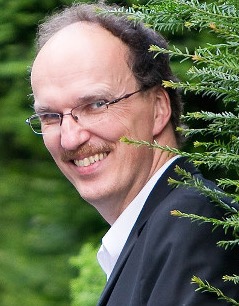 Andreas Kolb合作论文数Department of Electrical Engineering & Computer Science, Universität Siegen1




