In this paper we demonstrate that Pt(ii) complexes can function as efficient transmembrane chloride transporters. A series of Pt(ii) metal complexes with urea-appended isoquinoline ligands were synthesised and operate via classical hydrogen bonding interactions rather than ligand exchange. A number of the complexes exhibited potent transmembrane chloride activity in vesicle studies, while also showing strong antiproliferative activity in cisplatin-resistant cell lines via induction of apoptosis and inhibition of intracellular ROS.
A series of Pt(II) metal complexes with urea-appended isoquinoline ligands act as efficient transmembrane chloride transporters and operate via classical hydrogen bonding interactions rather than ligand exchange. A number of the complexes exhibited potent transmembrane chloride transport activity.
This review offers a broad overview of the advancements in anion receptor chemistry in 2021 and 2022. Detailed examples of acclaimed work in fundamental recognition, sensing and detection, catalysis, self-assembly, extraction, and transmembrane transport are included.
Understanding non-covalent molecular recognition events at biomembrane interfaces is important in biological, medicinal, and materials chemistry research.1 Despite the crucial regulatory roles of anion binding/transport processes at biomembranes, no information is available regarding how strongly anions can bind to naturally occurring or synthetic receptors in lipid bilayer environments compared to their well-established behaviour in solutions.2 To bridge this knowledge gap, we synthesised a flat macrocycle that possesses a record aqueous SO42– affinity among neutral receptors and exploited its unique fluorescence response at interfaces. We show that the determinants of anion binding are extraordinarily different in organic solvents and in lipid bilayers. The high charge density of dihydrogen phosphate and chloride ions prevails in DMSO, however in lipids they fail to bind the macrocycle. Perchlorate and iodide hardly bind in DMSO but show significant affinities for the macrocycle in lipids. Our results demonstrate a surprisingly great advantage of large, charge-diffuse anions to bind to a lipid-embedded synthetic receptor mainly attributed to their higher polarisabilities and deeper penetration into the bilayer, beyond the common knowledge of dehydration energy-governed selectivity. The elucidation of these principles enhances our understanding of biological anion recognition functions in membranes and guides the design of ionophores and molecular machines operating at biomembrane interfaces.
The vesicular anion transport activity assay, which uses 8-hydroxypyrene-1,3,6-trisulfonic acid to monitor the internal pH of the vesicles (the HPTS assay), is a widely used technique for analysing the activity of anionophore facilitated transport across a phospholipid membrane. This methods paper describes the stepwise technique to conduct this transport assay, detailing both the perks and pitfalls of using this method to determine the activity of an anionophore and the transport mechanism.
We report a series of easily accessible carbazole-based bis-ureas and thioureas as effective anion receptors and transporters. The compounds exhibit moderate Cl- binding affinity in wet DMSO and Cl- transport capabilities in phospholipid membranes predominantly through an electroneutral H+/Cl- and anion exchange mechanisms. [GRAPHICS]
Hydrophobins are a family of cysteine-rich proteins unique to filamentous fungi. The proteins are produced in a soluble form but self-assemble into organised amphipathic layers at hydrophilic:hydrophobic interfaces. These layers contribute to transitions between wet and dry environments, spore dispersal and attachment to surfaces for growth and infection. Hydrophobins are characterised by four disulphide bonds that are critical to their structure and function. Thus, obtaining correctly folded, soluble and functional hydrophobins directly from bacterial recombinant expression is challenging and in most cases, initial denaturation from inclusion bodies followed by oxidative refolding are required to obtain folded proteins. Here, we report the use of cell-free expression with E. coli cell lysate to directly obtain natively folded hydrophobins. All six of the hydrophobins tested could be expressed after optimisation of redox conditions. For some hydrophobins, the inclusion of the disulfide isomerase DsbC further enhanced expression levels. We are able to achieve a yield of up to 1 mg of natively folded hydrophobin per mL of reaction. This has allowed the confirmation of the correct folding of hydrophobins with the use of 15N-cysteine and 15N-1H nuclear magnetic resonance experiments within 24 h of starting from plasmid stocks.
Artificial receptors that recognise anionic species vianoncovalent interactions have a wide range of biomedical, industrial and environmental applications. A major challenge in this area of research is to achieve high affinity and selective anion binding in aqueous media. So far, only a few examples of receptors capable of strong (> 105M-1) anion binding in solutions containing > 50% water are available and none show selectivity for chloride. We report here the discovery of a D4h-symmetric fluorinated tetraurea macrocycle that fulfils this function owing to its unique self-assembly properties. The macrocycle has a strong tendency to self-associate into columnar aggregates viaintermolecular hydrogen bonds and aromatic stacking. In aqueous solutions, macrocycle aggregation generates hydrophobic and size-selective binding pockets favourable for hydrogen bonding with chloride. As a result, micromolar affinity and highly selective chloride binding has been achieved with this simple small molecule (MW < 700) in 60 vol% water/acetonitrile.
Artificial receptors that recognise anionic species via noncovalent interactions have a wide range of biomedical, industrial and environmental applications. A major challenge in this area of research is to achieve high affinity and selective anion binding in aqueous media. So far, only a few rare examples of receptors capable of strong (>105 M-1) anion binding in solutions containing > 50% water are available and none show selectivity for the highly biologically relevant anion chloride. We report here the discovery of a D4-symmetric fluorinated tetraurea macrocycle that fulfils this function owing to its unique self-assembly properties. The macrocycle has a strong tendency to self-associate into columnar aggregates via intermolecular hydrogen bonds and aromatic stacking interactions. In aqueous solutions, macrocycle aggregation generates size-selective and hydrophobic binding pockets favourable for interactions with chloride via urea hydrogen bond donors. As a result, micromolar affinity and highly selective chloride binding has been achieved with this simple small molecule (MV < 700) in 60 vol% water/acetonitrile.
 Xin Wu (吴欣)合作论文数School of Pharmaceutical Sciences, Xiamen University7
 Phil Gale合作论文数Faculty of Science, University of Technology Sydney7
 William Lewis合作论文数School of Chemistry, University of Nottingham5
 Mohamed Fares合作论文数Faculty of Pharmacy, Egyptian Russian University3
 Osman ÇATAL合作论文数2
 Alexander M. Gilchrist合作论文数School of Chemistry, The University of Sydney2
 Lauren K Macreadie合作论文数Univ Sydney, Sch Chem, Sydney, NSW 2006, Australia2
 Stephen J. Loeb合作论文数Loeb Research Group, University of Windsor2Peter Turner合作论文数2
 Donald S. Thomas合作论文数School of Biomedical & Chemical Sciences, University of Western Australia2
 William Ryder合作论文数1Radwa Eladwy合作论文数NICM Hlth Res Inst, Western Sydney Univ1Daniel Alonso-Carrillo合作论文数Dept Quim, Univ Burgos1
 Rezwan Siddiquee合作论文数Sch Life & Environm Sci, Univ Sydney1
 Daniel A. McNaughton合作论文数Sch Chem, Univ Sydney1
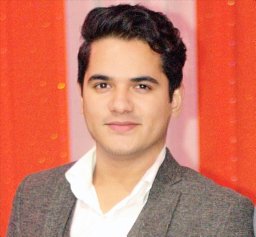 Deep Jyoti Bhuyan合作论文数NICM Health Research Institute, Western Sydney University1Ann Kwan合作论文数School of Life and Environmental Sciences, Faculty of Science, The University of Sydney1
 Margaret Sunde合作论文数School of Medicine Sciences, Faculty of Medicine and Health, The University of Sydney1
 Carreira-Barral Israel合作论文数Departamento de Química Fundamental, Universidade da Coruña1
 Gottfried Otting合作论文数College of Science, Australian National University1
 Yunbao Jiang (江云宝)合作论文数Department of Chemistry, College of Chemistry and Chemical Engineering, Xiamen University1
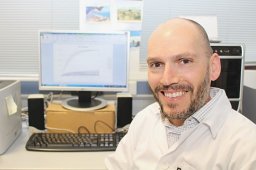 Roberto Quesada合作论文数School of Chemistry, University of Southampton1Ruhu Qi合作论文数1




