BACKGROUND:The question of how many marine species exist is important because it provides a metric for how much we do and do not know about life in the oceans. We have compiled the first register of the marine species of the world and used this baseline to estimate how many more species, partitioned among all major eukaryotic groups, may be discovered. RESULTS:There are ∼226,000 eukaryotic marine species described. More species were described in the past decade (∼20,000) than in any previous one. The number of authors describing new species has been increasing at a faster rate than the number of new species described in the past six decades. We report that there are ∼170,000 synonyms, that 58,000-72,000 species are collected but not yet described, and that 482,000-741,000 more species have yet to be sampled. Molecular methods may add tens of thousands of cryptic species. Thus, there may be 0.7-1.0 million marine species. Past rates of description of new species indicate there may be 0.5 ± 0.2 million marine species. On average 37% (median 31%) of species in over 100 recent field studies around the world might be new to science. CONCLUSIONS:Currently, between one-third and two-thirds of marine species may be undescribed, and previous estimates of there being well over one million marine species appear highly unlikely. More species than ever before are being described annually by an increasing number of authors. If the current trend continues, most species will be discovered this century.
—One of the three syntypes of Pagurus lepidochirus £Doflein, 19021 was reexamined. This female syntype was found to possess paired first pleopods modified as gonopods, broadly separated ocular acicles and subequal chelipeds, suggest ing reass ignment of this s p e c i e s t o e i t h e r t h e g e n u s Nematopagurus A. Milne-Edwards & Bouv ier , 1892, or to Ceratopagurus Yokoya, 1933. Study of supplemental material has revealed the presence of a long, fi lamentous right sexual tube in males, requiring reassignment of this species to Nematopagurus. Further comparisons have shown that Doflein's taxon is identical with a species reported from Japanese waters as N. squamichelis Alcock, 1905. Nematopagurus lepidochirus is redescribed and illustrated in detail on the basis of the lectotype, herein selected, and supplemental material. Differences between this species and other closely all i e d t a x a , i n c l u d i n g t h e t r u e N. squamichelis, are discussed.
Two species of Paguristes Dana, 1851 occurring in New Zealand waters, P. pilosus H. Milne Edwards, 1836 and P. setosus H. Milne Edwards, 1848, were the sources of errors and considerable confusion for many years. The misunderstanding regarding the identities of these taxa was further compounded by Filhol (1885) when he published a description of P. setosus Filhol, 1885, not realizing that this species had previously been published by H. Milne Edwards (1848) [see Forest & McLaughlin (2000: 77) for a historical account]. In his revision of the Anomura of New Zealand, Thomson (1899) redescribed Filhol’s Pagurus setosus, assigning it to his new genus Stratiotes Thomson as the type species. Although Alcock (1905) and Thompson (1930) expressed doubt about the validity of Stratiotes, it was not until Forest & McLaughlin (2000) reviewed all of the New Zealand species assignable to Paguristes, that Stratiotes was placed in synonymy with Dana’s taxon. However, when Rahayu (2005) found the gill number of Paguristes species in the collection of the Muséum national d’Histoire naturelle, Paris variable, she restricted Paguristes to species having 13 pairs of gills and reinstated Stratiotes for species with only 12 pairs. Unfortunately Stratiotes Thomson recently was found to be a junior homonym of Stratiotes Putzeys, 1846, (Coleoptera) and a replacement name became necessary. Areopaguristes is proposed as the replacement name; from the Greek Ares, the God of War, in combination with Paguristes. As Stratiotes means soldier, the proposed replacement name maintains the original sense of combat, while identifying the genus as closely allied to Paguristes s.s.; gender masculine. The type species, Pagurus setosus, is unchanged.
Annotated checklists of the world's Recent anomuran crustacean superfamilies Aegloidea, Hippoidea, Lithodoidea, Lomisoidea, Paguroidea and galatheoid family Porcellanidae are presented. Each is accompanied by brief reviews of the historical aspects of its classifi cation, general external morphology, features of larval development and current phylogenetic status. This presentation is divided into four parts because the only unifying threads among the Aegloidea, Hippoidea, Porcellanidae and the crab-like Lithodoidea and Lomisoidea are their shared anomuran apomorphies and mutually exhibited, but independently evolved, carcinization. That carcinization similarly links the latter two superfamilies with the Paguroidea is still a passionately debated matter that will be briefl y addressed, but certainly not resolved. The checklists include all currently recognized valid species, primary synonyms and homonyms, notes on matters of confusion and/or misunderstanding, and complete bibliographic references to all original descriptions. The lists are enhanced by a collection of photographs depicting the variety exhibited by members of these taxa.
Two species of Paguristes Dana, 1851 occurring in New Zealand waters, P. pilosus H. Milne Edwards, 1836 and P. setosus H. Milne Edwards, 1848, were the sources of errors and considerable confusion for many years. The misunderstanding regarding the identities of these taxa was further compounded by Filhol (1885) when he published a description of P. setosus Filhol, 1885, not realizing that this species had previously been published by H. Milne Edwards (1848) [see Forest & McLaughlin (2000: 77) for a historical account]. In his revision of the Anomura of New Zealand, Thomson (1899) redescribed Filhol’s Pagurus setosus, assigning it to his new genus Stratiotes Thomson as the type species. Although Alcock (1905) and Thompson (1930) expressed doubt about the validity of Stratiotes, it was not until Forest & McLaughlin (2000) reviewed all of the New Zealand species assignable to Paguristes, that Stratiotes was placed in synonymy with Dana’s taxon. However, when Rahayu (2005) found the gill number of Paguristes species in the collection of the Muséum national d’Histoire naturelle, Paris variable, she restricted Paguristes to species having 13 pairs of gills and reinstated Stratiotes for species with only 12 pairs. Unfortunately Stratiotes Thomson recently was found to be a junior homonym of Stratiotes Putzeys, 1846, (Coleoptera) and a replacement name became necessary. Areopaguristes is proposed as the replacement name; from the Greek Ares, the God of War, in combination with Paguristes. As Stratiotes means soldier, the proposed replacement name maintains the original sense of combat, while identifying the genus as closely allied to Paguristes s.s.; gender masculine. The type species, Pagurus setosus, is unchanged.
The fourth pereopods in the Paguroidea are considerably reduced in size, with propodi and dactyls uniquely modified for use inside a variety of shelters. In many Paguridae and some Diogenidae, the dactyl is provided with an intriguing structure known as the preungual process, located at the base of the corneous claw. This structure was discovered in 1969 in species of Solenopagurus de Saint Laurent and Catapagurus A. Milne‐Edwards by French carcinologist M. de Saint Laurent, who hypothesized that it had a sensory function. Since then, a similar although not necessarily homologous process has been found in species of 22 (or 29%) of the 76 genera in the Paguridae, and 3 (or 15%) of the 20 genera in the Diogenidae. The microstructure of the preungual process is described in detail for the first time in nine species of Paguridae, based on preliminary SEM and light microscopy observations. In these species, the process is variable in size and shape depending on the species, and can consist of a naked conical protuberance or a tube‐like structure with simple or complex seta‐like filaments in various degrees of density. The ontogenetic origin and phylogenetic significance of the process as well as any habitat or other environmental factors that may influence its development, remain to be investigated.
Annotated checklists of the world's Recent anomuran crustacean superfamilies Aegloidea, Hippoidea, Lithodoidea, Lomisoidea, Paguroidea and galatheoid family Porcellanidae are presented. Each is accompanied by brief reviews of the historical aspects of its classification, general external morphology, features of larval development and current phylogenetic status. This presentation is divided into four parts because the only unifying threads among the Aegloidea, Hippoidea, Porcellanidae and the crab-like Lithodoidea and Lomisoidea are their shared anomuran apomorphies and mutually exhibited, but independently evolved, carcinization. That carcinization similarly links the latter two superfamilies with the Paguroidea is still a passionately debated matter that will be briefly addressed, but certainly not resolved. The checklists include all currently recognized valid species, primary synonyms and homonyms, notes on matters of confusion and/or misunderstanding, and complete bibliographic references to all original descriptions. The lists are enhanced by a collection of photographs depicting the variety exhibited by members of these taxa.
A new intertidal species of the hermit crab genus Pagurus, recently discovered on the Olympic Peninsula of Washington, is described and illustrated. This species, Pagurus holmi n. sp., is compared and contrasted to other regional shallowwater species.
Phylogenetic relationships within the “symmetrical” hermit crab family Pylochelidae were analyzed for 41 of the 45 species and subspecies currently considered valid. In the analyses, 78 morphological characters comprised the data matrix and the outgroup consisted of Thalassina anomala, a member of the Thalassinidae, and Munida quadrispina, a member of the Galatheidae. A poorly resolved strict consensus tree was obtained from a heuristic parsimony analysis of unweighted and unordered characters, which showed the family Pylochelidae and the subfamilies Pylochelinae and Pomatochelinae to be monophyletic taxa – the latter two groups had the highest Bremer support values. Additionally, while the subgenus Pylocheles (Pylocheles) was strongly supported, the subgenera Xylocheles, and Bathycheles were not. More fully resolved trees were obtained when using implied weighting, which recognized the monotypic subfamilies Parapylochelinae, Cancellochelinae and Mixtopagurinae. The subfamily Trizochelinae was found to have four distinct clades and several ambiguously placed taxa.
>Abstract Inthe debate over phylogenetic relationships within the Decapoda that has raged for more than a century, the Anomura has been the source of many “conflicts”, including disagreements over which taxa belong in this morphologically diverse infraorder, and even what name is appropriate (Anomura or Anomala). The Anomura currently includes 17 families, 222 genera, and about 2,469 species, although 54% of the genera and 43% of the species are paguroids. Anumber of studies have summarized,the traditional as well as recent concepts of the infraorder that were based on morphology. This review addresses modern studies on systematics of this group over the last two decades that have been based on molecular as well asmorphological data, and which have continued to add controversy to concepts of anomuran phylogeny. The landmark study by C.W. Cunningham and co-workers (published in ‘Nature’ in 1992), proclaiming that molecular data confirmed the traditional hypothesis on the evolution of king crabs from hermit crabs, was the catalyst for several studies on anomuran evolution that followed, and is the starting point of this review. Modern studies are divided as follows, and discussed: 1) morphological, larval and molecular phylogenies exclusively of the Paguroidea and/or Anomura; 2) spermatologically de- rived phylogenies; 3) information from the fossil record; 4) phylogenetic assessments of anomuran taxa included in general decapod analyses; and 5) auxiliary information pertaining to the Paguroidea in general, and Pylochelidae in particular. These studies have made useful contributions to understandingthe “big picture” of anomuran relationships but they also have limi- tations. It is concluded that the Anomura remains today as much a source of discord as it was a century ago, and “conflicts” in analyses will continue to cloud the landscape until more basic, complete information is gathered for all members of this intriguing and varied infraorder. >Key,words
A new classification is presented based on the results of the recently completed cladistic analysis of the Pylochelidae. The subfamilies Pylochelinae and Pomatochelinae are retained, the latter with the genera Pylocheles and Cheiroplatea; however, the subgenera Xylocheles and Bathycheles are elevated to generic rank together with the nominal subgenus Pylocheles. In addition, one new species, B. phenax, is described in Bathycheles and B. profundus is shown to be conspecific with B. integer. The subfamilies Parapylochelinae, Cancellochelinae, Trizochelinae, and Mixtopagurinae are reduced to ranks of tribes and included in the subfamily Trizochelinae. A new genus Forestocheles is proposed in the tribe Trizochelini. Within the genus Trizocheles, subspecific rank for T. spinosus bathamae is deemed unjustified and this taxon is placed in synonymy with the nominal subspecies T spinosus spinosus. The correct identity of Trizocheles balssi is established and the species mistakenly thought to represent that taxon is described as T. hoensonae, new species. Trizocheles gracilis is found to be conspecific with T. boasi and an additional new species, T. mendanai, is added to the genus. The superfamilial ranks of Cheiroplateoidea, Pomatocheloidea, Pylocheloidea, and Cancellocheloidea proposed by Watabe (2007) are rejected, as is Birgusoidea.
The rare and unusual deep water hermit crab genera Porcellanopagurus Filhol and Solitariopagurus Turkay are reported for the first time from Hawaiian waters. Each genus is represented by a single specimen collected from Penguin Banks, off the southwest coast of Moloka'i, Hawaii. The specimen of Porcellanopagurus is identified as P. platei, a species that has not been reported since its original description in 1902 based on specimens from the Juan Fernandez Islands off southern Chile. Therefore, the record is a major range extension for the species. The specimen of P. platei from Hawaii is an ovigerous female found inhabiting a fissurellid limpet shell; the species is redescribed based on type material. The specimen of Solitariopagurus, S. tuerkayi, was found carrying (inhabiting) one half of a bivalve mollusk shell (the lucinid Ctena bella), the first confirmation of this habitat for the species. A second specimen, photographed but now missing, was associated with a different species of bivalve (a mytilid). In addition to being new records of these genera for the Hawaiian Islands, the report also marks the first record of the genus Porcellanopagurus from the central Pacific and only the second record of the genus Solitariopagurus in the northern hemisphere.
 Rafael Lemaitre合作论文数Department of Invertebrate Zoology, National Museum of Natural History, Smithsonian Institution23
 Dwi Rahayu合作论文数Monash University9
 Tomoyuki Komai (駒井 智幸)合作论文数Animal Sciences Division, Natural History Museum and Institute, Chiba5jennifer a crain合作论文数4Robert H. Gore合作论文数4Masayuki Osawa合作论文数4
 Christopher B. Boyko合作论文数4Janet Haig合作论文数3
 Martin Angel合作论文数Natural History Museum3john f pilger合作论文数2anthony barber合作论文数2
 Bert Hoeksema合作论文数Taxonomy and Systematics Group, Naturalis Biodiversity Center;Faculty of Science and Engineering, University of Groningen2
 Dennis Gordon合作论文数National Institute of Water & Atmospheric Research2Niel L. Bruce合作论文数2
 Ng Ngan Kee合作论文数Department of Biological Sciences, Faculty of Science, National University of Singapore2
 Chris Mah合作论文数Department of Invertebrate Zoology, National Museum of Natural History, Smithsonian Institution2
 Michael N Dawson合作论文数Dawson Lab, University of California, Merced2
 Michael D. Guiry合作论文数Ryan Institute, National University of Ireland2
 Fransen Charles H J M合作论文数Department of Marine Zoology, Naturalis Biodiversity Center;Email: charles.fransen@naturalis.nl.;Department of Marine Zoology, Naturalis Biodiversity Center2
 Farid Dahdouh Guebas合作论文数Faculte des Sciences, Universite Libre de Bruxelles;Vrije Universiteit Brussel2Tina Molodtsova合作论文数2Bock Phil合作论文数2Bartsch Ilse合作论文数2
 Gary L. Anderson合作论文数Department of Environmental Health Science, University of Georgia2
 William Perrin合作论文数2
 David I. Gibson合作论文数Life Sciences Department Parasites and Vectors Division Natural History Museum2
 Enrique Macpherson Mayol合作论文数CSIC - Centro de Estudios Avanzados de Blanes2
 Alan W. Harvey合作论文数Smithsonian Marine Station at Link Port2Birger Neuhaus合作论文数2Dennis M. Opresko合作论文数Oak Ridge National Laboratory2Dora P. Henry合作论文数2
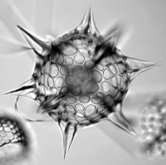 David Lazarus合作论文数Geological Institute, ETH-Zentrum2
 Reinhardt Møbjerg Kristensen合作论文数Nat Hist Museum Denmark, Univ Copenhagen2Hyun Sook Ko合作论文数2
 Jon Norenburg合作论文数Department of Invertebrate Zoology, National Museum of Natural History, Smithsonian Institution2
 Ulf Sorhannus合作论文数2
 Tom Artois合作论文数Center for Environmental Sciences, Hasselt University2
 Claus Nielsen合作论文数Statens Naturhistoriske Museum, Københavns Universitet2
 Nicole De Voogd合作论文数Department of Marine Zoology, Naturalis Biodiversity Center2
 Daphne Fautin合作论文数Department of Ecology;Natural History Museum and Biodiversity Research Center;University of Kansas;Natural History Museum and Biodiversity Research Center, University of Kansas2
 Allen G. Collins合作论文数National Systematics Lab of NOAA's Fisheries2
 Peter C. Dworschak合作论文数Dritte Zoologische Abteilung;Naturhistorisches Museum;Dritte Zoologische Abteilung, Naturhistorisches Museum2
 Andreas Kroh合作论文数Institut für Geologie und Paläontologie2Joseph Poupin合作论文数2
 Russell Hopcroft合作论文数Department of Oceanography, College of Fisheries and Ocean Sciences, University of Alaska Fairbanks;Institute of Marine Science, University of Alaska Fairbanks2
 Roger N. Bamber合作论文数Department of Zoology;Natural History Museum2Stephen W. Feist (Stephen Feist)合作论文数Division of Aquatic Health and Hygiene, Centre for Environment, Fisheries and Aquaculture Science2
 Laurence P. Madin (Larry Madin )合作论文数Woods Hole Oceanographic Institution2
 Marco Curini Galletti合作论文数Dipartimento di Zoologia e Genetica Evoluzionistica, Università di Sassari2




