Previous research indicates that university students generally disapprove of intimate student–professor relationships (ISPRs), largely due to power imbalances. Further, students may lose faith in their academic abilities and abandon their studies following sexual overture from a professor. The present research used two studies to explore undergraduate student perceptions of ISPRs. Study 1 employed a 2 (Gender of the Initiator: Male or Female) by 2 (Status of the Initiator: Professor or Student) between-groups vignette design. Study 2 employed the same design as Study 1, adding a third variable—the quality of a reference letter (Overly Positive or Negative) provided by the professor for the student in the relationship. Both studies included sexism as a covariate. Participants were asked to rate four dependent variables: the degree of sexual harassment, power imbalance, impacts on others, and the appropriateness of consequences. In Study 1, participants in the Professor as Initiator conditions rated sexual harassment, power imbalance, and impacts to others more severely, regardless of gender. In Study 2, participants in the Overly Positive Letter conditions rated the power imbalance more severely, regardless of gender or status. Adding the reference letter component in Study 2 resulted in participants rating all four dependent variables more severely than those in Study 1, as predicted.
Despite being a defining issue in the culture war, the political psychology of abortion attitudes remains poorly understood. We address this oversight by reviewing existing literature and integrating new analyses of several large‐scale, cross‐sectional, and longitudinal datasets to identify the demographic and ideological correlates of abortion attitudes. Our review and new analyses indicate that abortion support is increasing modestly over time in both the United States and New Zealand. We also find that a plurality of respondents (43.8%) in the United States are consistently “pro‐choice,” whereas 14.8% are consistently “pro‐life,” across various elective and traumatic abortion scenarios. We then show that age, religiosity, and conservatism correlate negatively, whereas Openness to Experience correlates positively, with abortion support. New analyses of heterosexual couples further reveal that women's and men's religiosity decrease their romantic partner's abortion support. Noting inconsistent gender differences in attitudes toward abortion, we then discuss the impact of traditional gender‐role attitudes and sexism on abortion attitudes and conclude that, rather than misogyny, benevolent sexism—the belief that women should be cherished and protected—best explains opposition to abortion. Our review thus provides a comprehensive overview of the demographic and ideological variables that underly abortion attitudes and, hence, the broader culture war.
Every day we communicate using complex linguistic and musical systems, yet these modern systems are the product of a much more ancient relationship with sound. When we speak, we communicate not only with the words we choose, but also with the patterns of sound we create and the movements that create them. From the natural rhythms of speech, to the precise timing characteristics of a consonant, these patterns guide our daily communication. By examining the principles of information processing that are common to speech and music, we peel back the layers to reveal the biological foundations of human communication through sound. Further, we consider how the brain’s response to sound is shaped by experience, such as musical expertise, and implications for the treatment of communication disorders. 83 Click here to view this article's online features: • Download figures as PPT slides • Navigate linked references • Download citations • Explore related articles • Search keywords ANNUAL REVIEWS Further A nn u. R ev . P sy ch ol . 2 01 6. 67 :8 310 3. D ow nl oa de d fr om w w w .a nn ua lr ev ie w s. or g A cc es s pr ov id ed b y N or th w es te rn U ni ve rs ity o n 01 /1 8/ 18 . F or p er so na l u se o nl y. PS67CH04-Kraus ARI 14 November 2015 11:40
Police shooting deaths of unarmed Blacks and African Americans led to psychological research on the influence of racial stereotypes on decisions to shoot, an effect called shooter bias. This article investigates how contextual cues signaling threat or safety interact with the race of the target to moderate shooter bias. Across two experimental studies using a first person shooter task, participants viewed Black or White male targets who held either a neutral (wallet or cellphone) or dangerous (gun) object. Study 1 manipulated the perceived safety or threat associated with the neighborhood context these shooting decisions occurred in, and Study 2 manipulated the perceived safety or threat associated with the targets' clothing. Participants made quick decisions to shoot or not shoot the presented target, with error rates serving as the dependent variable. Across both studies, results confirmed that racial bias in shooting decisions against Blacks was present in perceived threatening neighborhoods and in perceived threatening clothing, and it was reduced in perceived safe neighborhoods and when wearing perceived safe clothing. Results help to identify contextual factors that may lead to mistaken shooting decisions, which can be used to improve police training and decision making to reduce bias.
Michael Brown, age 18. Tony Robinson, age 19. Amadou Diallo, age 22. Oscar Grant III, age 22. Freddie Gray, age 25. Akai Gurley, age 28. Jerame Reid, age 36. Eric Garner, age 43. Tamir Rice, age 12. These are just some of the names of innocent Black men (and, in the case of Tamir Rice, boys) who fell prey to the use of deadly force by police officers over the past few years in the United States. Although these victims vary considerably in terms of their age, their place of residence, and the circumstances surrounding their death, a common thread unites them; they all poignantly bring to light race-based injustices within the criminal justice system.
Eyewitness misidentification is the primary cause of wrongful convictions in North America. Discovering a discernible pattern to these errors is a critical step toward creating procedures that reduce the occurrence of these tragic mistakes. To these ends, we hypothesized that both the victims’ race and the victims’ sex may impact eyewitness identification for perpetrators of certain crime types. In two experiments, we demonstrated that a Black male drive-by shooter’s level of phenotypic stereotypicality is accurately identified by eyewitnesses only when the victims are Black males. Specifically, when eyewitnesses believe the victims are White or female, the drive-by shooter’s level of Black phenotypic stereotypicality is falsely elevated. In contrast, when a Black male perpetrator is suspected of committing a stereotypically non-Black crime (i.e., serial killing), the perpetrator’s level of phenotypic stereotypicality is accurately identified regardless of the victims’ race or sex.
When members of a stigmatized group find themselves in a situation where negative stereotypes provide a possible framework for interpreting their behavior, the risk of being judged in light of those stereotypes can elicit a disruptive state that undermines performance and aspirations in that domain. This situational predicament, termed stereotype threat, continues to be an intensely debated and researched topic in educational, social, and organizational psychology. In this review, we explore the various sources of stereotype threat, the mechanisms underlying stereotype-threat effects (both mediators and moderators), and the consequences of this situational predicament, as well as the means through which society and stigmatized individuals can overcome the insidious effects of stereotype threat. Ultimately, we hope this review alleviates some of the confusion surrounding stereotype threat while also sparking further research and debate.
Although Benevolent Sexism (BS)-an ideology that highly reveres women who conform to traditional gender roles-is cloaked in a superficially positive tone, being placed upon a pedestal is inherently restrictive. Accordingly, because the paternalistic beliefs associated with BS are based on the idealization of traditional gender roles (which include motherhood), BS should predict people's attitudes toward women's reproductive rights. Using data from a nationwide longitudinal panel study (N = 12,299), Study 1 showed that BS (but not Hostile Sexism) had cross-lagged effects on opposition to both elective and traumatic abortion. Study 2 (N = 309) extended these findings by showing that the relationship between BS and support for abortion was fully mediated by attitudes toward motherhood. These results highlight the pernicious nature of BS by demonstrating that the idealization of women-and motherhood, in particular-comes at a substantial cost (namely, the restriction of women's reproductive rights).
A major goal of cognitive neuroscience is to delineate how brain systems give rise to mental function. Here we review the increasingly large role informatics-driven approaches are playing in such efforts. We begin by reviewing a number of challenges conventional neuroimaging approaches face in trying to delineate brain-cognition mappings—for example, the difficulty in establishing the specificity of postulated associations. Next, we demonstrate how these limitations can potentially be overcome using complementary approaches that emphasize large-scale analysis—including metaanalytic methods that synthesize hundreds or thousands of studies at a time; latent-variable approaches that seek to extract structure from data in a bottom-up manner; and predictive modeling approaches capable of quantitatively inferring mental states from patterns of brain activity. We highlight the underappreciated but critical role for formal cognitive ontologies in helping to clarify, refine, and test theories of brain and cognitive function. Finally, we conclude with a speculative discussion of what future informatics developments may hold for cognitive neuroscience. 587 Click here to view this article's online features: • Download figures as PPT slides • Navigate linked references • Download citations • Explore related articles • Search keywords ANNUAL REVIEWS Further A nn u. R ev . P sy ch ol . 2 01 6. 67 :5 87 -6 12 . D ow nl oa de d fr om w w w .a nn ua lr ev ie w s. or g A cc es s pr ov id ed b y U ni ve rs ity o f T ex as A us tin o n 03 /1 8/ 16 . F or p er so na l u se o nl y. PS67CH24-Poldrack ARI 13 November 2015 20:41
The present research investigates whether victim characteristics can exacerbate the effect of crime-type on eyewitness recall of perceived stereotypicality. To isolate the influence of victim characteristics, 43 participants watched a video of a Black male drive-by shooter (i.e., stereotypically Black crime) differing only in the alleged victims of the crime. Participants then identified the perpetrator using a software program that morphs the perpetrator’s face through 100 frames of stereotypicality (low to high). As predicted, participants who watched a drive-by shooter whose victims were Black, accurately remembered the perpetrator’s level of perceived stereotypicality (M = 48.50); whereas, those participants who watched a drive-by shooter whose victims were White, falsely remembered the perpetrator as looking more stereotypically Black (M = 67.30) than he is in reality, F(1,41) = 8.44, p < .01, partial eta-squared = .17. In short, there is a discernable pattern to eyewitness misidentifications. It is only after we understand both (a) when errors in eyewitness identification will occur and, (b) who will be mistakenly identified that we can begin to take proactive measures to ensure these biases do not translate into wrongful convictions.
This paper investigates whether within-group differences in phenotypic racial stereotypicality (i.e., extent to which individuals possess physical features typical of their racial group) of ingroup members serve as social identity contingency cues for Blacks evaluating organizations. It is hypothesized that Blacks draw information about whether their social identity would be valued based on the represented phenotypic racial stereotypicality of Black organization members. Participants viewed organizations that included high phenotypically stereotypic (HPS) Black (e.g., darker skin tones, broader facial features), low phenotypically stereotypic (LPS) Black, or only White employees. Results confirmed that Black, but not White, evaluators reported more diversity, salary, desire to work, and social identity-related trust toward the HPS, compared to LPS and White, organizations. The relationships between phenotypic racial stereotypicality condition on organizational attractiveness and diversity perceptions were mediated by identity-related trust. Results suggest considering diversity at both the group level and within group level to achieve broader benefits.
Ambivalent sexism theory highlights the pernicious effects of benevolent sexism on women's freedoms in society. Because the ideology idealizes women as nurturing mothers, benevolent sexism should be negatively associated with support for women's reproductive rights. The current study examined this possibility by assessing the relationship between benevolent sexism and support for (a) elective abortion (i.e., abortions pursued, regardless of the reason) and (b) traumatic abortion (i.e., abortions pursued when the woman's life is endangered) in a national probability sample of New Zealand adults (N = 6,132). As predicted, benevolent sexism was negatively associated with support for both elective and traumatic abortion. In contrast, hostile sexism-the punitive component of ambivalent sexism-was only negatively associated with support for traumatic abortion. These results demonstrate that ambivalent sexism-and particularly benevolent sexism-restricts women's reproductive rights even in extreme cases where a woman's life is in danger.
SummaryThe fallibility of eyewitness identifications is well documented. Nevertheless, research has yet to assess the possibility that the type of crime committed systematically influences who eyewitnesses mistakenly identify. We address this oversight by presenting a contextual model of eyewitness identification (CMEI). The CMEI asserts that discrete crimes automatically activate distinct stereotypes about a perpetrator's appearance. Depending on the congruence between these stereotypes and the perpetrator's actual appearance, eyewitnesses will remember the perpetrator as appearing more (or less) representative of his or her group (i.e., higher or lower on perceived stereotypicality). Estimator and system variables are posited to affect identifications at different stages of the identification process. The literatures on stereotype activation, perceived stereotypicality, and stereotype‐consistent memory biases are reviewed to support the CMEI. Our conceptual integration provides a model of eyewitness identification that explains when mistaken identifications are likely to occur and who they are likely to affect. Copyright © 2014 John Wiley & Sons, Ltd.
Mistaken identifications are the primary cause of wrongful convictions. Though studies have examined when these errors are likely to occur, none have specified whom these errors are most likely to affect. We address this oversight by arguing that the type of crime committed affects whom eyewitnesses misidentify. Study 1 demonstrated that people have stereotypes about a perpetrator's appearance that vary by the crime committed. Study 2 showed that these stereotypes affect identifications in a stereotype-consistent mannerparticipants who believed they saw a target accused of a stereotypically Black crime remembered him as being higher on perceived stereotypicality (viz., having more Afrocentric features) than did participants who believed they saw a target accused of a stereotypically White crime. This finding was replicated in Study 3 using a different pair of crimes. These studies demonstrate that the type of crime committed systematically affects whom eyewitnesses mistakenly identify.
Errors in eyewitness identification are the single greatest cause of wrongful convictions. To illustrate, there have been 302 post-conviction DNA exonerations in the United States, and eyewitness misidentification was a contributing cause in 72% of those false convictions. Our research explores how crimes-types and victim characteristics can influence both (a) when errors in eyewitness memory are likely to occur, and (b) who is likely to be the victim of eyewitness misidentification. Our initial research revealed that a Black perpetrator of a stereotypically Black crime (e.g., drive-by shooting) was mistakenly remembered as looking more stereotypically Black (e.g., broader nose, fuller lips, and darker complexion) than a Black perpetrator of a crime that is not stereotypically linked to Black individuals (e.g., serial killing). The present research investigates whether victim characteristics can exacerbate these crime-types effects. Past research has shown that if the victim of a crime is White, female, or a child, the perpetrator of that crime is normally treated more severely. Our question, however, is whether these victim characteristics can also impact the above crime-type effects. To isolate the influence of victim characteristics, 43 participants watched a video of a Black male drive-by shooter. Participants watched the same core video that differed only in the alleged victims of the crime; half the participants saw photos of Black male and Black female victims, while the remaining participants saw photos of White male and White female victims. Participants then identified the perpetrator using a software program that we designed to morph the perpetrator's face through 100 frames from low to high perceived Black stereotypicality. As predicted, participants who watched a drive-by shooter whose victims were Black, accurately remembered the perpetrator's level of perceived stereotypicality (M = 48.50); whereas, those participants who watched a drive-by shooter whose victims were White, falsely remembered the perpetrator as looking more stereotypically Black (M = 67.30) than he is in reality, F(1,41) = 8.44, p < .01, partial eta-squared = .17. In short, we believe there is a discernable pattern to eyewitness misidentifications. It is only after we understand both (a) when errors in eyewitness identification will occur and, (b) who will be mistakenly identified that we can begin to take proactive measures to ensure these biases do not translate into wrongful convictions.
Three studies show that people whose physical features are seen as more (versus less) racially stereotypical are more vulnerable to social rejection and exclusion from those outside their group. In Study 1, which used an online social networking site, Blacks perceived as more physically stereotypical were found to have fewer non-Black friends, compared to less-stereotypical Blacks. In Study 2, which used an experimental paradigm, requests for friendship made to non-Blacks by more-stereotypical Blacks were more likely to be rejected than those made by less-stereotypical Blacks. Finally, in a college dormitory, people judged to have more (vs. less) racially stereotypical physical features were found to interact less often with outgroup members. This work substantiates a growing body of research demonstrating that people who are perceived as more physically stereotypical of their racial group are particularly vulnerable to discriminatory treatment by outgroup members across a variety of life domains.
Though gender‐role attitudes correlate with attitudes toward abortion (Wang, 2004), past research has treated gender‐role attitudes as a unidimensional construct. The theory of ambivalent sexism (Glick & Fiske, 1996) holds that attitudes toward women form 2 distinct ideologies; namely, benevolent and hostile sexism. The current study examined the relationship between these ideologies and attitudes toward elective and traumatic abortion in a sample of Internet users (N = 529). As expected, both benevolent and hostile sexism predicted attitudes toward elective abortion, but only benevolent sexism predicted attitudes toward traumatic abortion. These results remained robust after controlling for important demographic factors. Such findings highlight the importance of differentiating between hostile and benevolent sexism when predicting attitudes toward complex issues.
 Danny Osborne合作论文数School of Psychology, Faculty of Science, The University of Auckland13
 Steven J. Spencer合作论文数University of Waterloo8
 Claude Steele合作论文数6
 Shirley Hutchinson合作论文数Department of Psychology, Irving K. Barber Faculty of Arts and Social Sciences, The University of British Columbia5
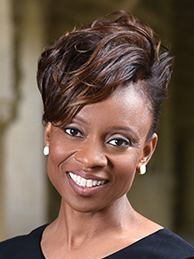 Jennifer Lynn Eberhardt合作论文数Department of Psychology, Stanford University5
 Phillip Atiba Goff合作论文数Department of African American Studies, Yale University4
 Kimberly Kahn合作论文数Dept Psychol, Portland State Univ4
 Christine Logel合作论文数4
 Huang Yanshu合作论文数The University of Auckland3
 Diane M. Quinn合作论文数University of Michigan3
 Chris Sibley合作论文数Faculty of Science, University of Auckland;School of Psychology, University of Auckland3Z Kunda合作论文数2Joseph A. Vandello合作论文数2Michelle R. Hebl合作论文数2
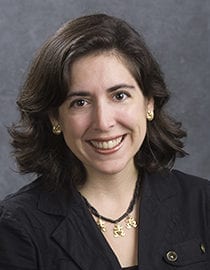 Victoria Plaut合作论文数School of Law, University of California, Berkeley2
 Deborah Prentice合作论文数Department of Psychology, Princeton University2
 Sapna Cheryan合作论文数Department of Psychology, University of Washington2J. Katherine Lee合作论文数1
 Aurelia T. Alston合作论文数1Steven Fein合作论文数1
 Alicia Andrzejewski合作论文数1
 Karen Douglas合作论文数School of Psychology, University of Kent1
 Aino Petterson合作论文数Corresponding author.1
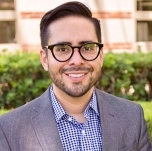 Miguel Unzueta合作论文数Department of Psychology, College of Life Sciences, University of California, Los Angeles1
 Valerie Purdie-Greenaway合作论文数Dept Psychol, Columbia Univ1Iserman Emma C合作论文数Department of Clinical Epidemiology and Biostatistics, McMaster University1
 Walker Sarah Singletary合作论文数1
 Kimberley Kaseweter合作论文数University of Northern British Columbia1
 Enrica Ruggs合作论文数1Harrison J. Kell合作论文数Rice University1Barbara D. Adams合作论文数1
 Melissa J. Williams合作论文数University of California;Rice University;University of California, Rice University1R. Gerhardstein合作论文数1
 Ruth Ditlmann合作论文数1
 Robbie M. Sutton合作论文数University of Kent, University of Kent at Canterbury1Jennifer Randall Crosby合作论文数1
 Sally Haslanger (萨利·哈斯兰格)合作论文数Department of Linguistics and Philosophy, Massachusetts Institute of Technology1
 Nickola Overall合作论文数School of Psychology, Faculty of Science, The University of Auckland1
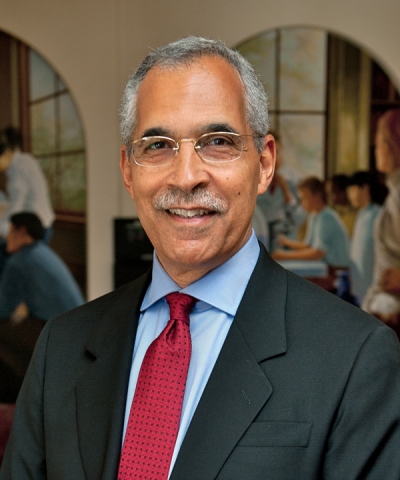 Claude Mason Steele合作论文数Department of Psychology, Stanford University1
 Cleoptra Abdou合作论文数1
 Hazel Rose Markus合作论文数Department of Psychology, Stanford University1
 Christian Jordan合作论文数Wilfrid Laurier University1




